These social studies pdf worksheets for 7th grade address what makes middle school social studies genuinely hard to teach: the content is enormous, standards vary by state, and students arrive with wildly uneven background knowledge. Each worksheet focuses on a single, named task — labeling a river system, sequencing turning-point events, or analyzing a political cartoon — so a teacher can reach for exactly the right practice at exactly the right moment in a unit.
What's Inside the Set
The worksheets divide across five skill strands that appear consistently in seventh-grade courses, regardless of whether a district's curriculum centers on world history, geography, civics, or a blended sequence.
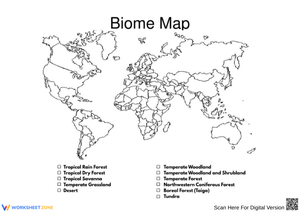
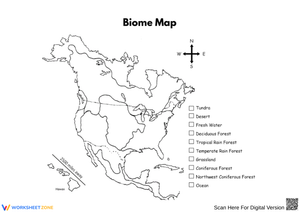
- Map practice: Students label physical features, shade regions, trace migration routes, or answer location-based questions. Strong map worksheets ask students to do something with the geography — compare two regions, draw a conclusion from a distribution pattern — rather than just fill in blank labels and move on.
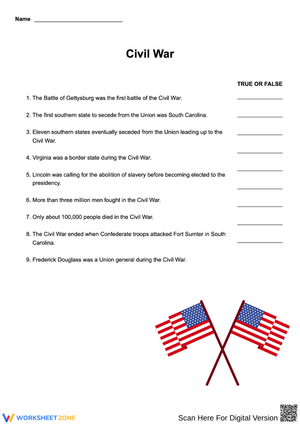
- Timeline and sequencing: Students arrange events in order, identify causes before effects, and mark turning points. These worksheets work especially well immediately after a reading, when students need to prove they extracted the sequence and not just the general topic.
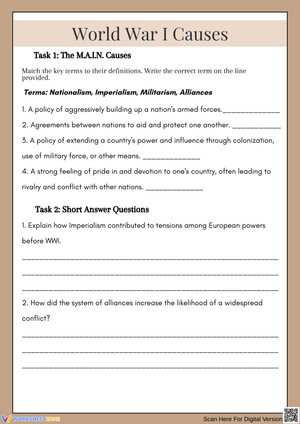
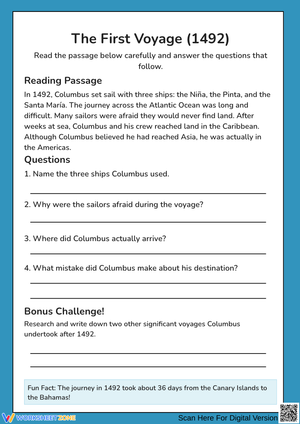
- Reading comprehension and short response: Short informational passages paired with text-dependent questions. Students underline evidence, identify main ideas, and write brief explanations. The format mirrors what students encounter on most state assessments.
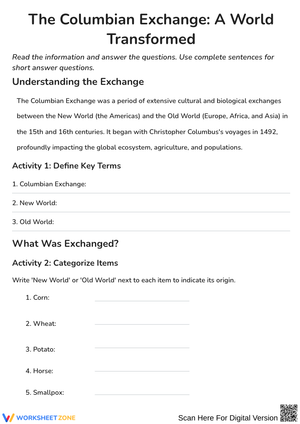
- Vocabulary and concept review: Matching, context clues, and sentence completion using the academic vocabulary students need before a reading, discussion, or quiz. Getting the terms in place first reduces the mid-lesson friction that stalls the whole class.
- Primary source analysis: Structured observation and inference tasks using documents, images, political cartoons, and maps. Students annotate, record observations, and respond to guided questions before drawing a conclusion — a sequence that builds the habit of grounding claims in visible evidence.
Student Mistakes That Surface Across Every Unit
The most persistent problem in primary source work is conflating observation with inference. A student looking at an 1800s political cartoon will write "this shows that people were angry" without first identifying what they actually see — the figures, the labels, the visual details. These worksheets address that by separating the two steps directly on the page: students record observations before drawing conclusions. That structure doesn't eliminate the error, but it makes the error visible and correctable in the moment rather than buried in a final essay.
On timeline worksheets, students frequently sequence events in the order they encountered them during instruction rather than true chronological order — a problem that sharpens when events span multiple regions or centuries. The confusion shows most clearly when cause and effect run counter to the sequence the teacher introduced during lecture. Having students physically sort a set of events, without seeing an answer key first, surfaces this consistently.
In vocabulary work, students often master surface definitions without gaining real flexibility with the term. A student who correctly matches "trade route" on a Monday exercise will still write "highway" when describing the Silk Road in a reading passage on Wednesday. Context-clue exercises build more durable knowledge than definition recall because they require students to work out meaning from surrounding text — the same skill they need on any passage-based assessment.
How to Build These Worksheets Into Your Lesson Plans
The most effective way to use social studies pdf worksheets for 7th grade is not to hold them in reserve for downtime. That approach leads to inconsistent use and missed practice. A more reliable structure is to assign one worksheet per day with a specific instructional purpose: a map task as a bell ringer on Monday, a vocabulary page before Tuesday's reading, a reading comprehension worksheet for Wednesday independent practice, and a source analysis or timeline exercise on Friday. That pattern puts students back in contact with the unit content through different skill lenses across the week, which does more for retention than re-reading notes the night before a quiz.
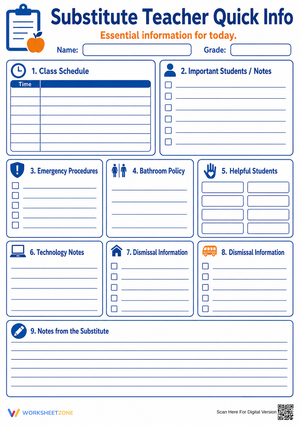
These worksheets also make sub plans significantly easier to write. Each worksheet has standalone directions and a defined endpoint, which means a substitute can run the session without any content background. A set of two or three worksheets from the current unit covers a full period and produces student work a teacher can sort quickly on return.
For formative assessment purposes, a short reading or vocabulary worksheet with four or five well-constructed questions gives faster feedback than a longer assignment. If students cannot correctly explain why the Silk Road mattered after completing a reading worksheet, that's a signal to address before moving forward — not a gap that surfaces for the first time on the unit quiz.
Reaching a Range of Learners With the Same Resources
Seventh graders in the same room often read at fourth- and tenth-grade levels simultaneously. Giving lower-reading-level students a simplified worksheet moves them away from the grade-level thinking they still need — it just makes the access problem invisible rather than solving it. The goal with differentiation in social studies pdf worksheets for 7th grade is to adjust how students get into a task, not what the task requires them to think about.
For map and timeline worksheets, a word bank or a partially completed example reduces the recall demand so students can concentrate on the spatial or sequential reasoning the worksheet actually targets. For reading comprehension worksheets, reading the passage aloud together before independent work gives below-grade readers a genuine shot at text-dependent questions. For short-response tasks, a sentence frame — "This source shows ___ because ___" — gives students a structure to organize evidence without doing the reasoning for them.
Students who finish early can extend the same task: compare two maps instead of analyzing one, add a second event to a timeline and explain where it belongs and why, or write an additional paragraph connecting a vocabulary term to a current event. The extension pushes synthesis rather than just repeating the same exercise a second time.
Standard Alignment
These worksheets align to the NCSS National Curriculum Standards for Social Studies, particularly the thematic standards for People, Places, and Environments (Theme III), Time, Continuity, and Change (Theme II), and Power, Authority, and Governance (Theme VI). At the seventh-grade level, most state standards expect students to analyze primary sources, use geographic tools to interpret information, and construct written explanations grounded in textual evidence — the exact tasks these worksheets target across every skill strand.
For teachers in districts using Common Core literacy frameworks, the reading comprehension and short-response worksheets address CCSS.ELA-LITERACY.RH.6-8.1 (citing evidence from informational text) and CCSS.ELA-LITERACY.RH.6-8.2 (determining central ideas). Those standards appear in both ELA and content-area literacy frameworks, which makes these worksheets viable during a literacy block as well as a dedicated social studies period — a practical advantage in schools where cross-curricular alignment is an expectation.
Frequently Asked Questions
Do these worksheets cover world history, geography, and civics, or just one content area?
The set spans multiple strands — world history, geography, civics, and economics — because seventh-grade curricula vary significantly from district to district. Teachers can pull from whichever strand matches their current unit without working through material that doesn't apply to their course sequence.
How long does a typical worksheet take to complete in class?
Most are built for 10–20 minutes of focused independent work, which fits a bell-ringer slot, a station rotation, or the last stretch of class before dismissal. Primary source and short-response worksheets can run longer if students write full paragraph responses rather than sentence-length answers.
Can these be used as homework?
Each worksheet has standalone directions and a defined endpoint, so students can complete it without additional teacher explanation. Vocabulary and short reading worksheets travel well as homework assignments. Map and timeline worksheets work better in class, where students can ask questions if a direction is unclear before they get stuck.
How do teachers quickly find the right worksheet for their current unit?
The strongest collections of social studies pdf worksheets for 7th grade organize resources by both content strand and skill type, so a teacher looking for a map activity during a geography unit — or a primary source worksheet during a world history lesson — can locate it in under a minute rather than scrolling through an undifferentiated list. That organizational structure is the first thing worth checking before committing to any worksheet set.