


























Views
Downloads

Printable Teacher Binder Table of Contents | K-12
Paste this activity's link or code into your existing LMS (Google Classroom, Canvas, Teams, Schoology, Moodle, etc.).
Students can open and work on the activity right away, with no student login required.
You'll still be able to track student progress and results from your teacher account.
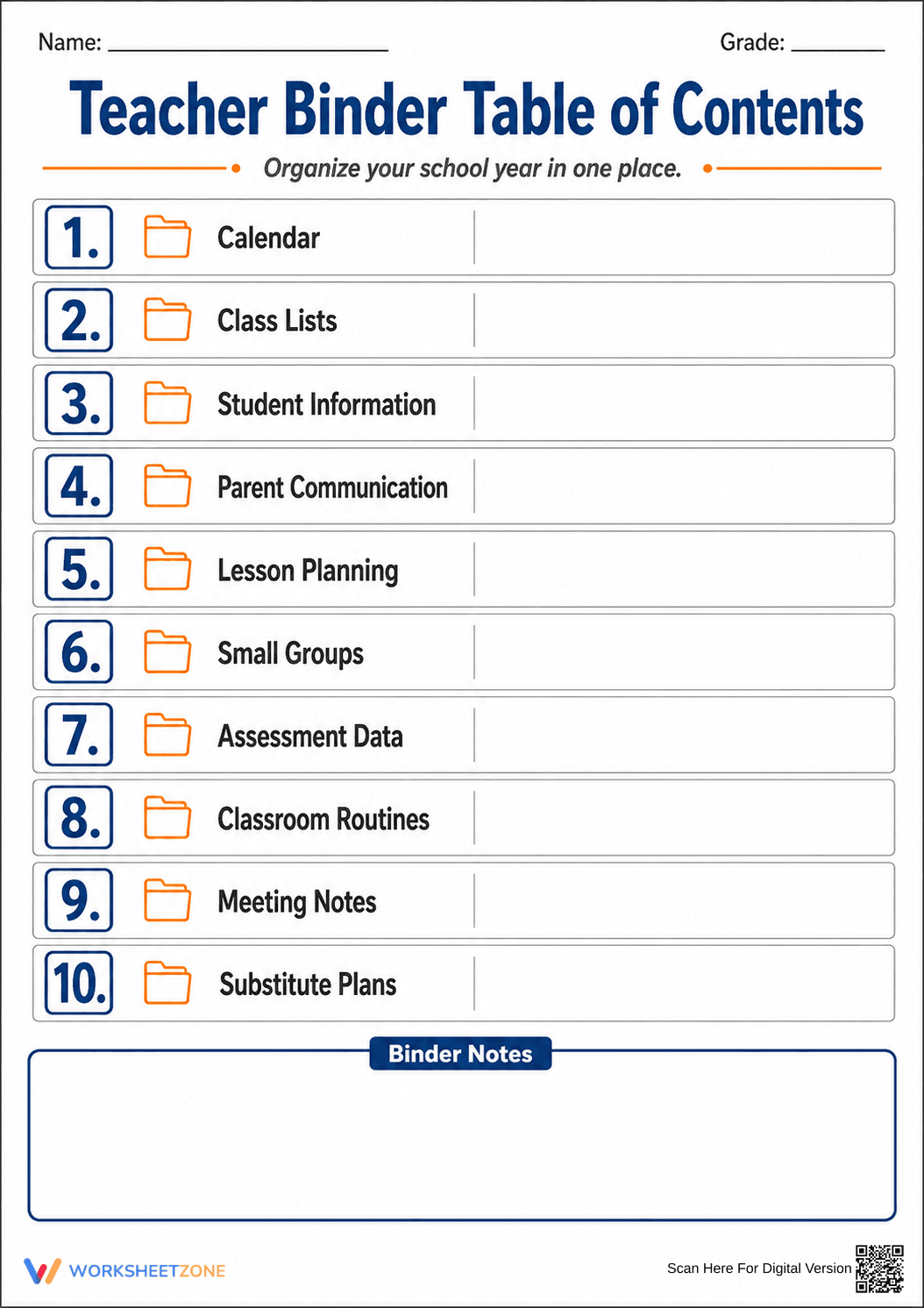
This printable teacher binder table of contents helps educators organize their essential classroom management documents. By providing a clear, structured overview of ten critical planning areas, this resource ensures teachers can quickly locate lesson plans, student data, and communication logs throughout the busy school year.
At a Glance
- Grade: K-12 · Subject: Classroom Management
- Standard:
Danielson-4b— Maintain accurate records for instructional and non-instructional events- Skill Focus: Teacher Organization
- Format: 1 page · 10 sections · No answer key · PDF
- Best For: Back-to-school planning and binder setup
- Time: 5–10 minutes
This single-page organizational tool features ten pre-labeled, numbered sections designed for a comprehensive teacher binder. Categories include Calendar, Class Lists, Student Information, Parent Communication, Lesson Planning, Small Groups, Assessment Data, Classroom Routines, Meeting Notes, and Substitute Plans. Each row provides dedicated space to note specific tab colors, page numbers, or sub-categories. A spacious "Binder Notes" box at the bottom allows for additional customization or quick reminders.
Set up your planner efficiently:
- Print (1 minute): Download the PDF and print a single copy on standard A4 or letter-sized paper.
- Distribute (1 minute): Place the printed sheet at the very front of your main teaching binder or slip it into the clear front cover.
- Review (3 minutes): Fill in the blank spaces next to each of the ten categories to map out your specific tabs and dividers.
Total teacher prep time is under five minutes, ideal for back-to-school weeks.
This resource supports professional expectations outlined in Danielson-4b: Maintaining Accurate Records. Effective teaching requires robust systems for tracking student completion of assignments, student progress in learning, and non-instructional records. By establishing a centralized binder system, educators ensure compliance with district record-keeping mandates and improve daily instructional efficiency. The standard code can be copied directly into professional development goals or teacher evaluation portfolios.
Use this during pre-planning week to structure a master binder. Gather your syllabus and curriculum maps, using the ten categories to sort documents into physical tabs. Alternatively, use it as a quick-reference guide for a long-term substitute teacher. By leaving this completed page on your desk, guest educators can immediately locate emergency routines, lesson plans, and student medical information without searching through multiple folders. Expect to spend about ten minutes initially setting up the categories.
This organizational tool is designed for K-12 classroom teachers, special education coordinators, and instructional coaches who manage extensive paperwork. It is especially helpful for first-year teachers establishing their initial classroom systems or veteran educators looking to streamline their desk clutter. Pair this table of contents with printable calendar templates and standardized assessment tracking sheets to build a complete, highly functional professional portfolio.
Administrative organization and effective classroom management directly impact instructional quality. According to a RAND AIRS 2024 report, educators who implement standardized record-keeping systems report significantly lower levels of daily stress and higher efficiency in tracking student outcomes. This resource supports Danielson-4b by helping teachers maintain accurate records for instructional and non-instructional events. By utilizing a structured ten-section binder system, educators reduce the cognitive load associated with locating essential documents like parent communication logs and assessment data. This streamlined approach ensures that more time and energy remain focused on direct student instruction rather than administrative searching. Establishing these routines early in the academic year creates a sustainable framework for professional success, allowing teachers to adapt quickly to unexpected schedule changes or substitute coverage requirements.


