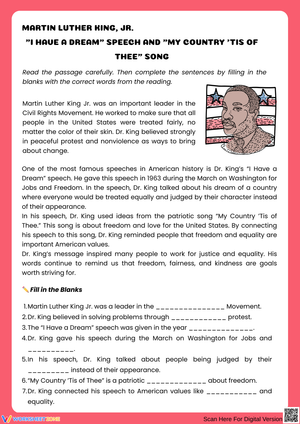
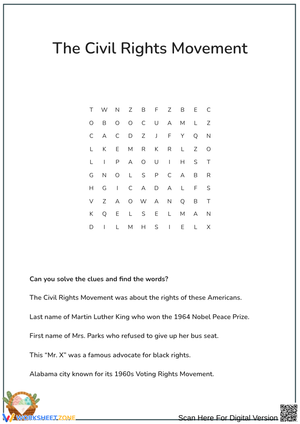
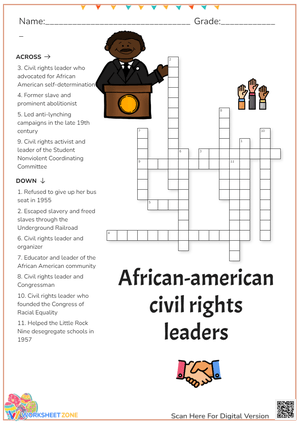
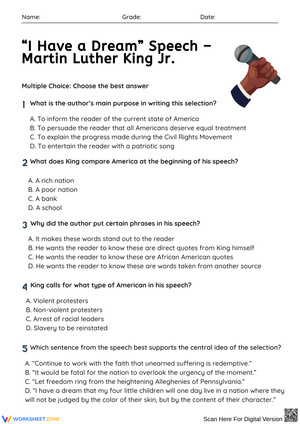
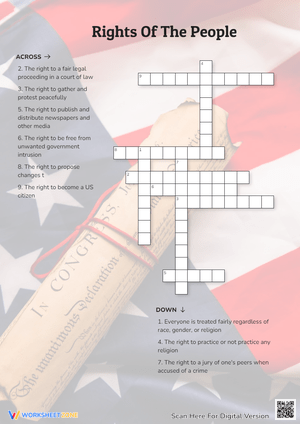
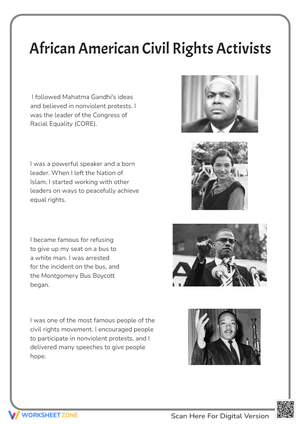
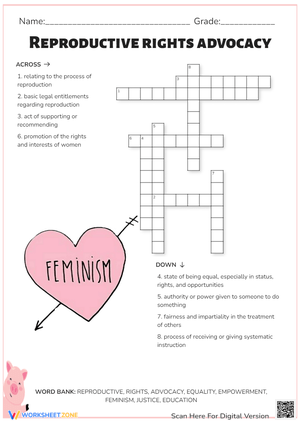
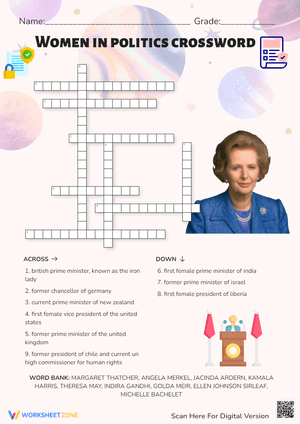
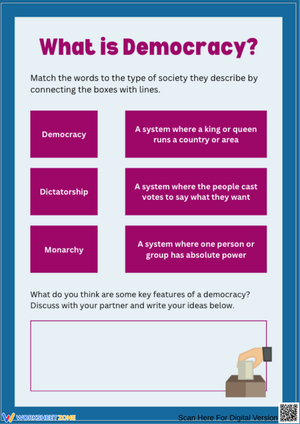
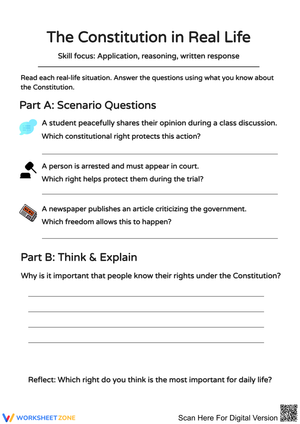
These 7th grade civics and government worksheets give middle school teachers focused, printable practice on the Constitution, the three branches of government, checks and balances, citizenship, and voting — the core content most state standards require at this grade. Each worksheet pairs content knowledge with at least one task that asks students to apply or explain rather than simply recall, so practice time moves past memorization into actual understanding.
What the Set Covers
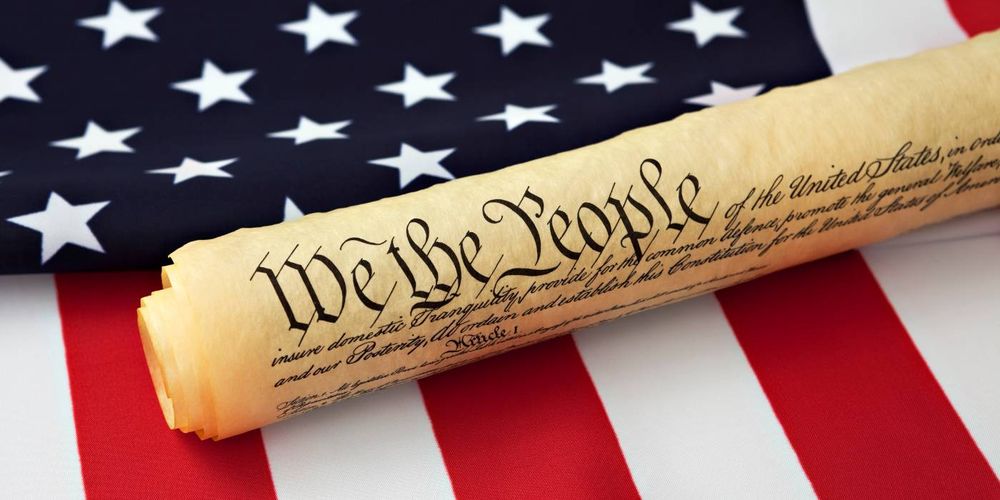
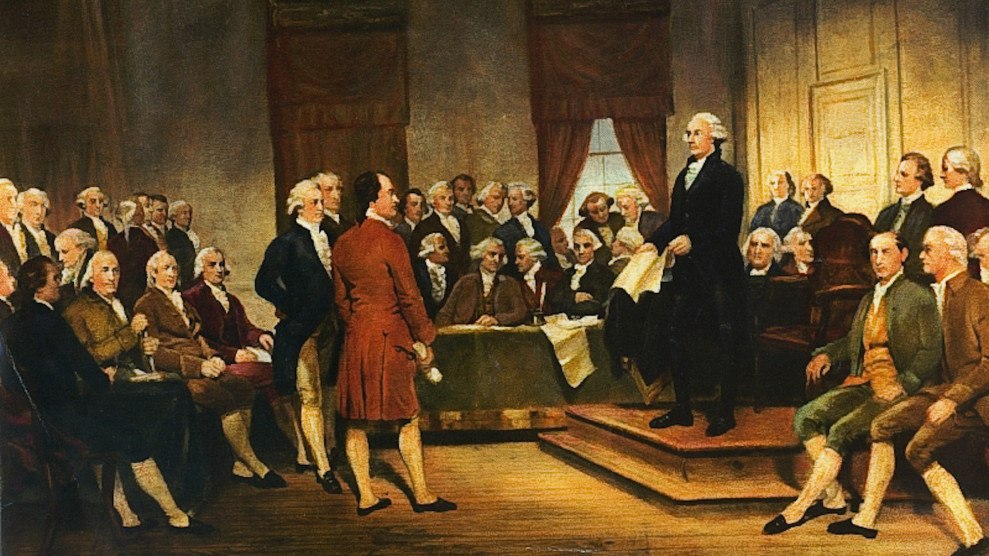
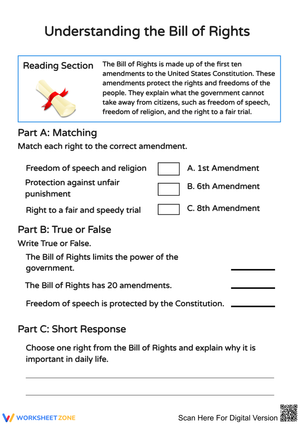
The resources move through the main topic clusters in a typical 7th grade civics course. The Constitution receives the most depth — students need to understand not just that it exists but what it actually does: establishing national government structure, protecting individual rights through the Bill of Rights, and providing a process for amendment. Worksheets on this topic ask students to identify key constitutional provisions, explain the purpose of specific amendments, and trace how founding principles connect to real situations students encounter or hear about.
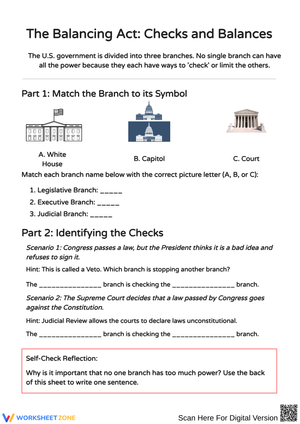
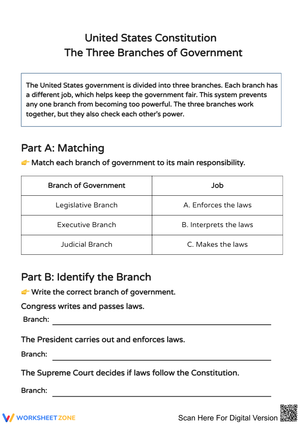
Branch-specific practice goes beyond naming. Students sort legislative powers from executive ones, explain what a presidential veto actually does in the lawmaking process, and distinguish between a district court trial and a Supreme Court ruling. Checks and balances gets its own focused treatment because it is frequently taught but only shallowly understood — students can define the term by the end of a lesson and still fail to explain the reasoning behind it.
The set also includes worksheets on:
- Citizenship: natural-born vs. naturalized status, civic duties, and the practical difference between rights and responsibilities
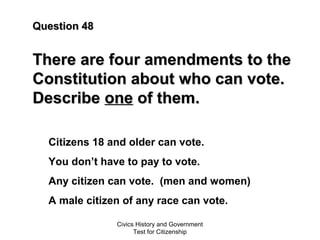
- Voting and elections: how federal and state elections operate, voter eligibility, and why participation rates matter
- Laws and public policy: how a bill becomes law, what federal agencies do, and how courts interpret legislation
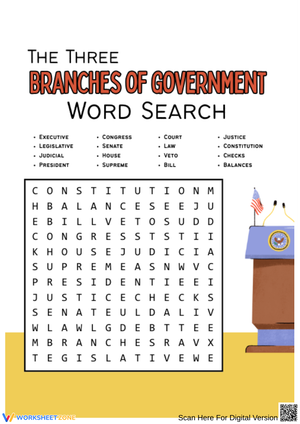
Each topic includes vocabulary practice for the terms students consistently trip over — amendment, veto, judicial review, enumerated powers, bicameral, ratification. Content comprehension depends on students actually owning that language before they encounter it in a reading task, so vocabulary work is integrated throughout rather than tacked on at the end.
Building These Worksheets Into Your Teaching Week
Where a worksheet lands in the instructional sequence changes what it does. At the start of a topic, a vocabulary or short-reading worksheet gives students pre-exposure — they encounter terms and basic structure before a whole-group lesson pushes deeper. Midunit, scenario-based worksheets carry more weight because students have enough background to reason through a situation rather than guess at it. In the two days before a civics assessment, a worksheet mixing identification, reading response, and application tasks gives a cleaner picture of actual student understanding than a verbal class review alone.
For daily pacing, bell ringers are the most common fit: five minutes to complete a vocabulary match or answer one branch-powers question. The Friday before a unit test is a particularly useful moment — assign a worksheet covering multiple concepts as a quick diagnostic that tells the teacher which ideas need one more pass Monday morning. Station rotation also works well with this content: one group works through a Bill of Rights reading, another sorts presidential powers on a graphic organizer, a third completes a checks-and-balances scenario, rotating every 12 to 15 minutes. These 7th grade civics and government worksheets are built to function across all of these configurations without significant modification between uses.
The Civics Misconceptions That Come Up Every Year
The error that appears most often — across reading levels and class periods — is students writing that the President "makes laws." This comes from a general cultural sense that the President runs the country, and it takes direct, repeated correction to establish that Congress passes legislation while the President signs or vetoes it. Worksheets that trace a bill through all three branches make the sequence visible in a way that lecture alone rarely achieves.
A second persistent gap: students can recite the branches and their functions but cannot explain why power is divided that way. Ask "why do we have checks and balances?" and most 7th graders produce something circular — "so the branches can check each other" — without naming the underlying concern about concentrated authority. The scenario-based tasks in this set ask students to imagine a single branch holding all government power and describe what could go wrong. That forces reasoning rather than retrieval.
Citizenship questions produce a third reliable confusion. Students list voting as both a right and a civic duty — which technically appears in civics education language in multiple places — but they struggle to explain what distinguishes a constitutional right from a social expectation. When a worksheet asks students to sort examples into those two categories and write a brief explanation, that muddiness becomes visible and correctable before it surfaces on an assessment.
Standard Alignment
These worksheets address several standards from the C3 Framework for Social Studies State Standards. D2.Civ.4.6-8 asks students to explain the powers and limits of the three branches of government, which the branch-specific and checks-and-balances worksheets address directly. D2.Civ.5.6-8 covers the origins, functions, and structure of government — the focus of the Constitution and founding principles worksheets. D2.Civ.1.6-8, addressing the roles of citizens, political parties, and the media, connects to the citizenship and voting practice across the set.
Common Core ELA-Literacy standards for grades 6-8 apply as well. RH.6-8.1 — citing textual evidence from informational text — is built into the text-dependent questions on reading-response worksheets. RH.6-8.4, which focuses on determining the meaning of domain-specific vocabulary in context, maps to the vocabulary practice included with each topic. WHST.6-8.1, covering evidence-based argument writing, is addressed in open-response and scenario tasks where students must support a position with examples drawn from the reading. Most state-level social studies frameworks for grade 7 align directly to these C3 codes, so the standards match holds even in districts that use a state framework rather than the C3 directly.
Supporting Different Readers and Thinkers With the Same Content
The biggest access barrier in 7th grade civics is usually the text, not the concepts. Constitutional language and formal civic vocabulary create a reading challenge that can look like a content gap — a student who genuinely understands that Congress passes laws may still struggle to write that down clearly because the vocabulary feels foreign. Pre-teaching five to eight key terms before assigning any reading-based worksheet changes what students produce, often significantly. That preparation takes less than ten minutes and removes the most common comprehension bottleneck without changing the core task. When differentiating with 7th grade civics and government worksheets, that vocabulary front-load should be the first adjustment, before any changes to the worksheet itself.
For students who need more structure, sentence frames help with written responses: "The legislative branch has the power to ___ because ___." For students ready for more challenge, the extension is more reasoning rather than more content. After completing the main task, they write a short argument — agreeing or disagreeing with a position on government power — using at least two examples from the reading. That requires the same core knowledge while pushing students to take and defend a position rather than retrieve information.
One practical caution: avoid assigning completely different worksheets to different groups during the same class period. When students notice they are working on different material, the social dynamic shifts from the content to the differentiation itself. Shared content with varied levels of support keeps everyone in the same conversation and makes whole-class debrief easier to run.
Frequently Asked Questions
What grade level do these worksheets target?
The reading complexity and task demands are written for 7th grade, but the content transfers readily to 6th grade civics review or 8th grade U.S. History units that revisit constitutional structure and the three branches.
Can these worksheets work as sub plans?
Yes. Each worksheet includes a short informational reading and clear task directions that students can follow without extended teacher setup. The vocabulary-plus-reading worksheets and the branch identification tasks are the most reliable sub-plan choices because they are self-contained and require no context from the previous class period.
How do these materials support state civics assessments?
Many states assess civics content at the middle school level, and these 7th grade civics and government worksheets cover the content most commonly tested: constitutional structure, the three branches, checks and balances, citizenship, and voting. The scenario-based tasks build the transfer skills students need to answer application-style test questions rather than pure recall items.
Do the worksheets include answer keys?
Answer keys are included for identification, vocabulary, and multiple-choice tasks. Open-response and scenario questions include suggested responses with scoring notes, since those answers legitimately vary by student reasoning and phrasing.












 Interactive Worksheet Maker
 Quiz Maker
 Word Search Maker
 Crossword Puzzle Maker
 Word Scramble Generator
 Sentence Scramble Generator
 Handwriting Worksheet Generator
 Name Tracing Generator
 Fill In The Blank Generator