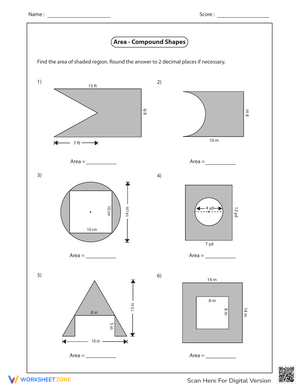
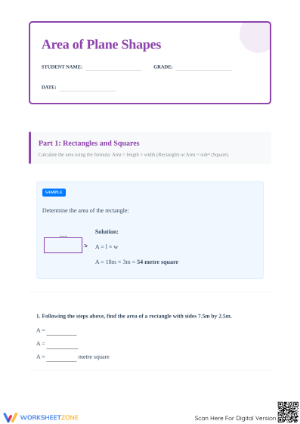
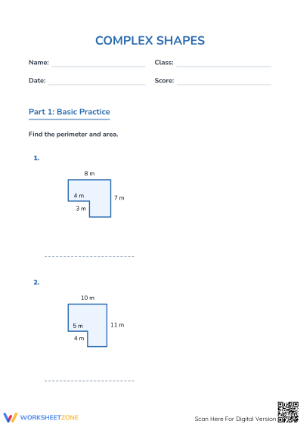
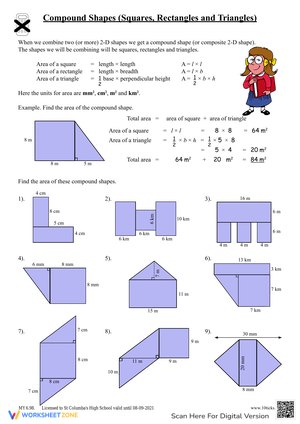
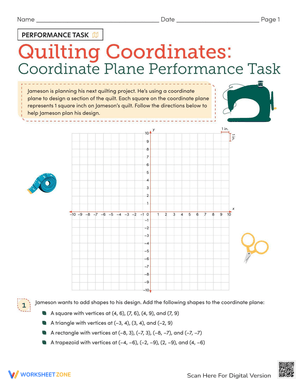
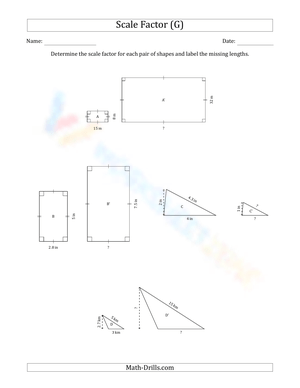
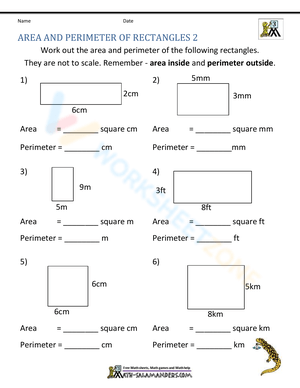
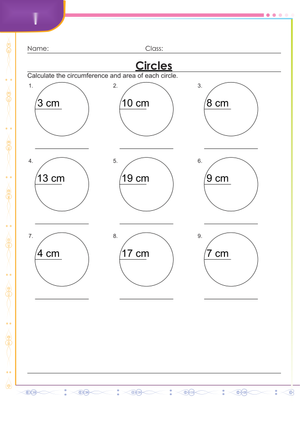
These 6th grade area printable worksheets resources cover every shape type that 6th grade geometry introduces — parallelograms, trapezoids, triangles, and composite figures that students must decompose before they can calculate anything. Each worksheet includes labeled diagrams, clear dimensions, and an answer key, so teachers move directly from instruction into student practice without extra prep.
What Students Work Through in Each Worksheet
The skills in this set follow the natural progression of 6th grade area instruction rather than grouping everything together at once. Students start with rectangles and squares to anchor the idea of square units, then move through each new shape type with its corresponding formula.
- Parallelograms: base times height — not base times slant side. That distinction matters more than it looks at first glance.
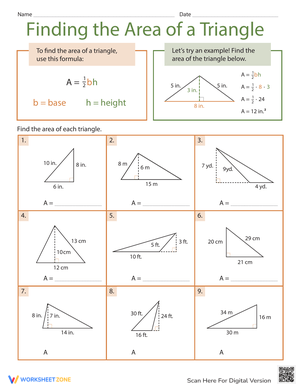
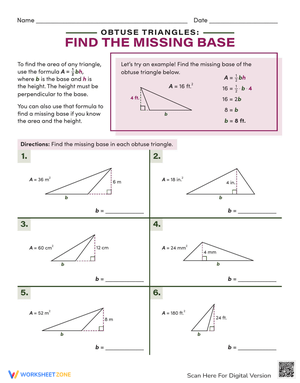
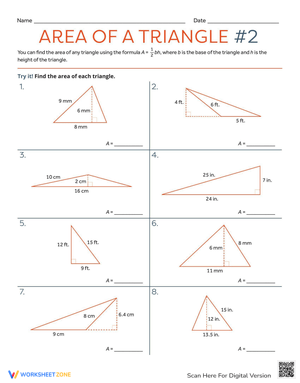
- Triangles: one-half times base times height, including figures where the height falls outside the triangle itself.
- Trapezoids: working with the average of the two bases, multiplied by the height.
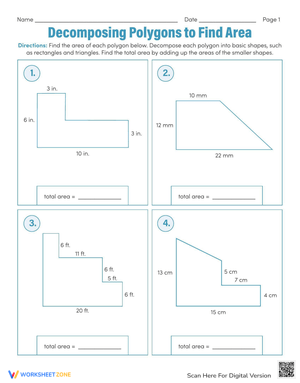
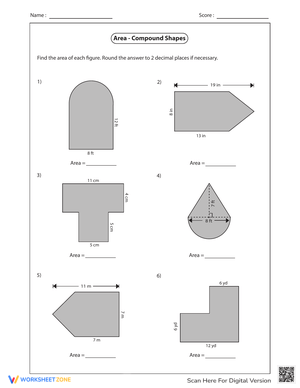
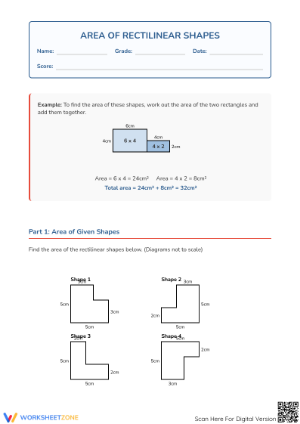
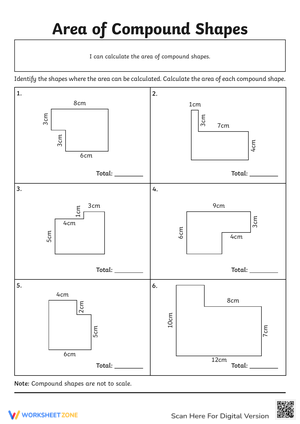
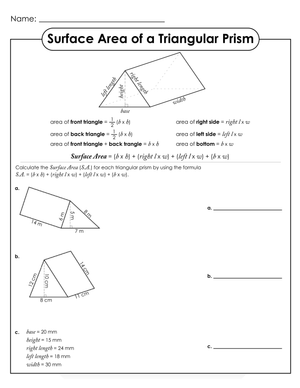
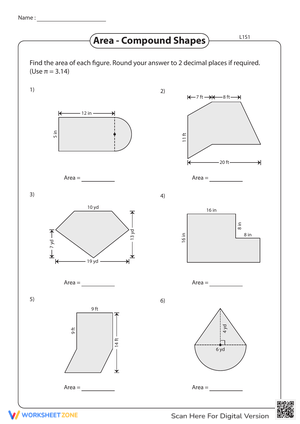
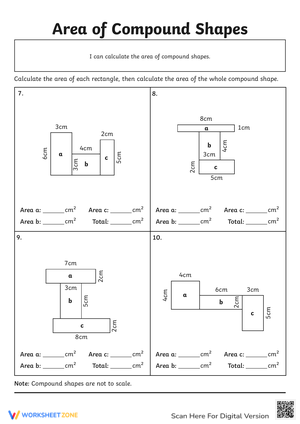
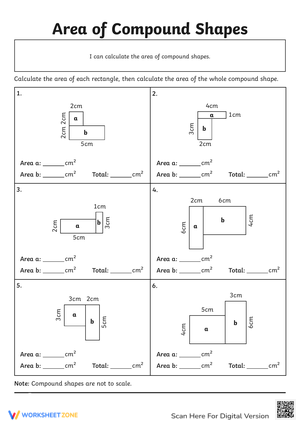
- Composite figures: decomposing irregular shapes into recognizable parts, finding each area separately, then summing the results.
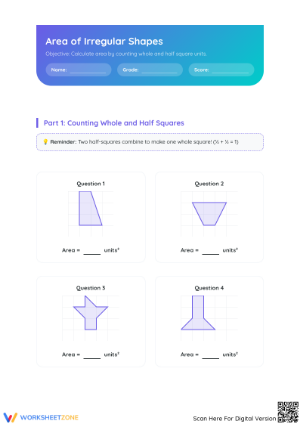
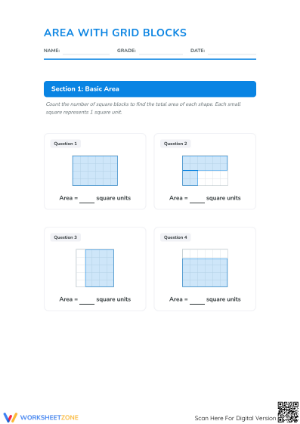
- Grid models: counting unit squares and connecting that count to a formula — a useful bridge for students still building the concept before formulas feel meaningful.
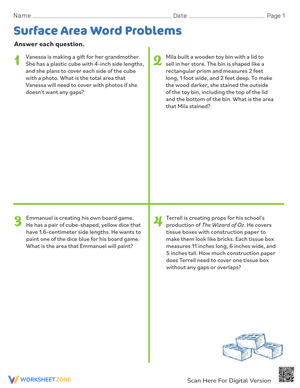
- Word problems: translating real-world contexts like floor plans, garden beds, and tile layouts into area calculations.
Every worksheet also requires students to label answers in square units. That requirement surfaces a notation gap that otherwise goes unaddressed until test day.
Where the Work Breaks Down: Student Errors to Address Early
The most persistent error in 6th grade area work is not a formula problem — it is a measurement problem. On parallelogram problems, students routinely confuse the slant side with the perpendicular height. Given a figure with a base of 9 cm, a slant side labeled 6 cm, and a height of 5 cm shown with a dashed line, most students compute 9 × 6 = 54 square cm. The correct answer is 45 square cm. This error survives direct instruction because students learn to multiply whatever two numbers they see before they learn to identify which dimension actually represents height.
Triangles produce a different slip: dropping the one-half during fast computation. Students who can recite the formula still omit that step when working quickly because it adds an operation that feels optional. Telling students explicitly — "the triangle formula exists because a triangle is exactly half of the parallelogram with the same base and height" — gives them a conceptual anchor that holds better than rule memorization. It also makes the formula feel earned rather than arbitrary.
Two other errors appear consistently in student work. Area-perimeter confusion — adding all side lengths when a problem asks for surface coverage — is a conceptual issue that needs direct comparison between the two measures, not just more area computation. Unit labeling — writing "cm" instead of "cm²" — is a notational issue that is distinct enough from the first error to deserve its own brief discussion rather than being bundled in with perimeter confusion. Treating these as separate problems helps teachers address the right thing.
Making the Most of Each Worksheet in Your Math Block
These worksheets work best when each one is assigned with a specific instructional purpose. A diagram-heavy worksheet focused on one shape type belongs in the lesson where students first meet that shape. A mixed-type worksheet — multiple shape types with no labels indicating which formula applies — belongs the following week, after students have practiced each type in isolation. A word-problem worksheet belongs later still, once formula fluency is solid enough that students can carry it into an unfamiliar context without losing track of the process.
Sorting a 6th grade area printable worksheets set into three labeled folders — model-based, formula-practice, and application — makes in-the-moment differentiation faster. When a student struggles, the issue is almost never "area in general." It is almost always a specific stage: they understand the visual but stall on the formula, or they execute the formula correctly but cannot identify which one fits the shape in front of them. The folder system lets teachers respond to the actual gap rather than defaulting to re-teaching the whole unit.
For bell ringers, two or three problems from a focused worksheet take about six minutes and give students a predictable daily entry point. A short exit worksheet — one computation problem and one "explain your thinking" prompt — provides formative data at the end of a lesson without requiring any grading infrastructure. Because these worksheets print cleanly in black-and-white, running a full class set does not require color ink or extra lead time before first period.
Differentiating for the Full Range of Your Class
In most 6th grade classrooms, students arrive with different geometry backgrounds. Some need to rebuild the concept of area from unit squares up. Others are ready for composite figures and missing-dimension problems on day one. These worksheets address that range through the type of representation used on each worksheet, not just the number of problems assigned.
Students who need a slower entry point benefit most from grid-based worksheets. Have them shade the region, count the unit squares, and record the count before they write any formula. That sequence — see it, count it, name it — removes the abstraction that makes formulas feel disconnected from what area actually measures. Removing that confusion early also prevents a specific failure mode that surfaces later: students who can execute a formula but cannot recognize when they are calculating area versus perimeter.
On-level practice mixes shape types so students have to identify the figure before selecting a formula. That mirrors what standardized assessments actually require — students rarely encounter a section labeled "Triangles Only." Mixed-type worksheets train the decision-making step that single-shape computation drills skip entirely.
For students ready for more, composite figure worksheets with missing side lengths or multi-part design tasks push the thinking further without requiring teacher-built materials. One strong extension format: two floor layout options configured differently, both requiring area calculations, with a written justification for which option uses space more efficiently. This kind of task also makes a clean 6th grade area printable worksheets extension that fits the existing unit without branching into a separate project.
Standard Alignment
These worksheets address CCSS 6.G.A.1: Find the area of right triangles, other triangles, special quadrilaterals, and polygons by composing into rectangles or decomposing into triangles and other shapes; apply these techniques in the context of solving real-world and mathematical problems. In the typical 6th grade scope and sequence, this standard appears after ratio and rate reasoning units and before surface area and volume — making it a conceptual bridge between two-dimensional computation and three-dimensional thinking. The standard explicitly calls for both decomposition and real-world application, not just formula recall, which is why the word-problem and composite figure worksheets in this set are not supplemental extras. They are the part of the standard that straight computation practice does not address.
Frequently Asked Questions
Do these worksheets include composite figures, or are they focused on individual shape types?
Both. Single-shape worksheets group problems by figure type — parallelograms, triangles, trapezoids — so teachers can assign focused practice when introducing a new shape. Composite figure worksheets appear separately and require students to decompose irregular shapes before calculating. Most teachers use the single-shape worksheets first, then introduce composite figures once students are confident with individual formulas.
What should students already know before starting this set?
Students need to multiply and divide fluently with whole numbers and simple fractions or decimals — the triangle formula requires multiplying by one-half, and some problems use decimal dimensions. They also need a working understanding of what area means: the number of square units that cover a flat region. Students who are shaky on either point will get more out of starting with the grid-based worksheets before moving to formula-only practice.
Can these be used for quiz review or pre-assessment?
The 6th grade area printable worksheets mixed-review options in this set work well for pre-assessment review. A mixed worksheet covering all shape types gives teachers a quick read on where students are before a unit test — the error patterns that surface during that review are exactly the ones worth addressing in the days before the assessment. After a test, targeted single-shape worksheets make better re-teaching tools than re-assigning the full mixed review, because students work on only the shape type they missed rather than repeating the entire unit.
Are answer keys included?
Yes. Every worksheet in the set includes an answer key. That makes these resources practical for independent work, math centers, substitute-led lessons, and peer correction — any situation where the teacher cannot check each worksheet in real time.













 Interactive Worksheet Maker
 Quiz Maker
 Word Search Maker
 Crossword Puzzle Maker
 Word Scramble Generator
 Sentence Scramble Generator
 Handwriting Worksheet Generator
 Name Tracing Generator
 Fill In The Blank Generator