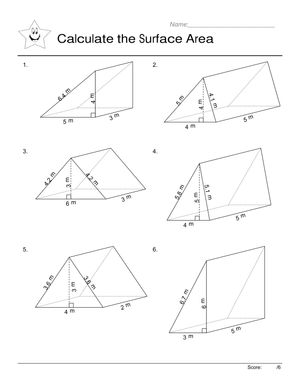
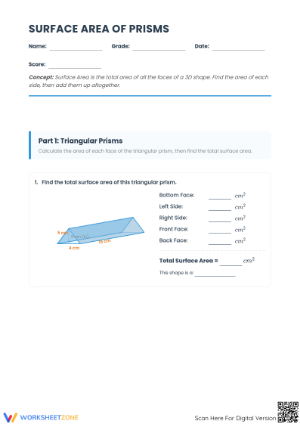
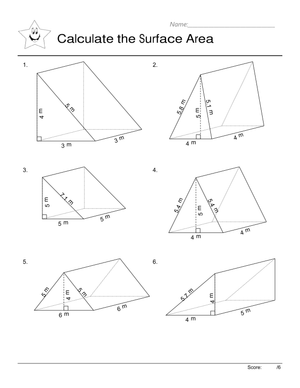
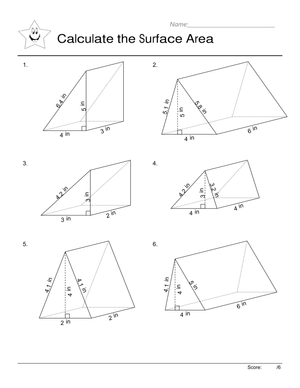
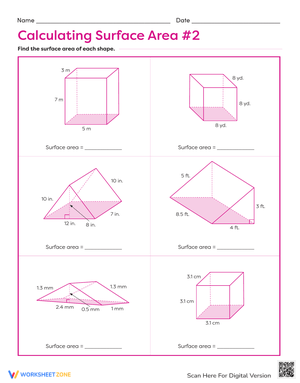
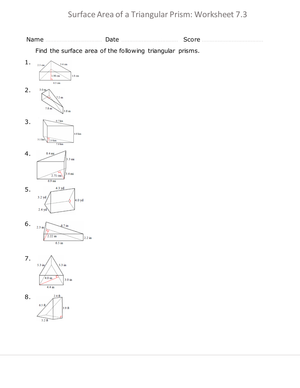
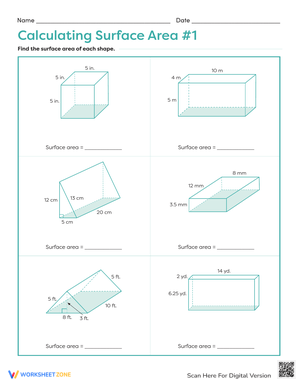
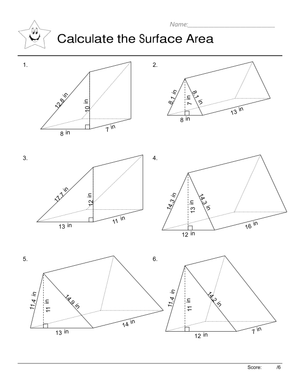
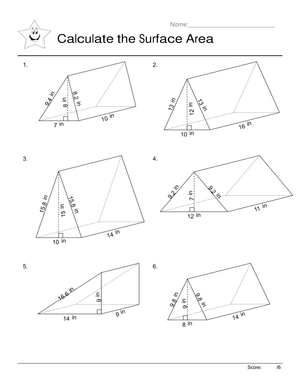
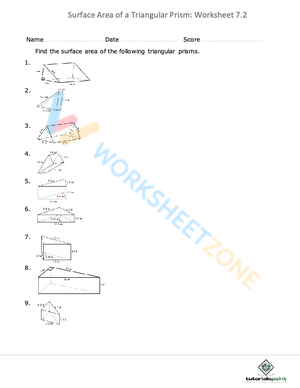
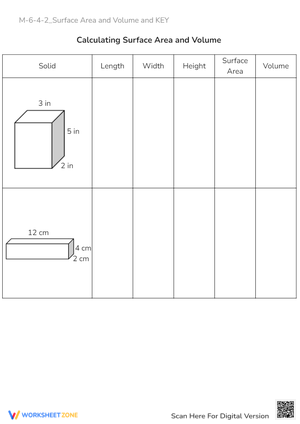
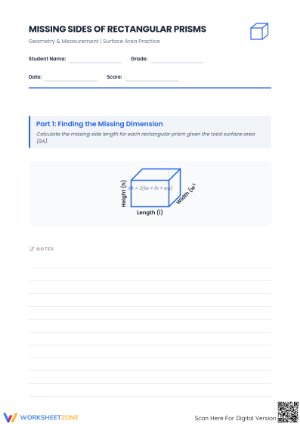
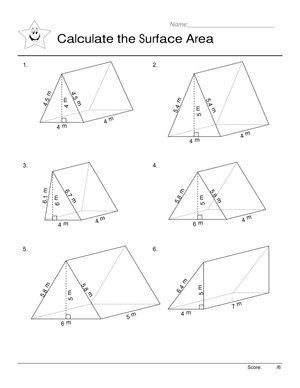
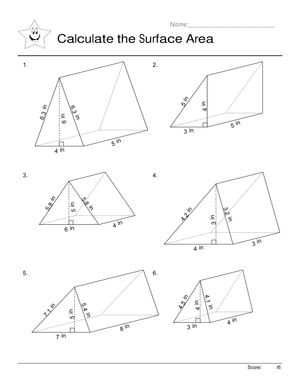
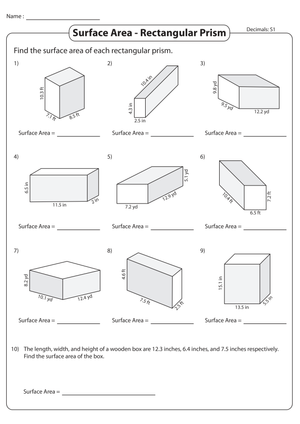
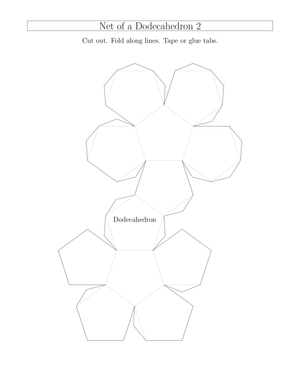
6th grade surface area worksheets give students the structured, visual repetition needed to move from identifying faces on a drawing to calculating total area with real confidence. Surface area is the first time most sixth graders have to hold a three-dimensional figure in mind while doing two-dimensional math — and that cognitive split is exactly where student thinking breaks down. This set addresses that gap directly, starting with nets and building toward prism calculations with real-world wrapping and packaging contexts.
Student Error Patterns Worth Catching Early
Surface area generates a predictable cluster of mistakes, and knowing them in advance changes how you sequence instruction. The most persistent is the unit error: students who correctly multiply length by width will still write cubic units in their final answer, because they associate three-dimensional figures with volume from earlier in the year. Requiring students to label each individual face area in square units before writing the total — not just at the end of the problem — forces them to think about covering a surface rather than filling a space. That single step catches a significant share of careless errors before they appear on assessments.
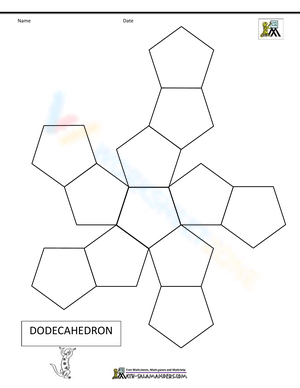
The second common problem is face counting. When students look at a rectangular prism drawn in perspective, they see three faces. The three hidden faces simply don't register until you make them visible. Nets solve this problem almost immediately because every face appears laid flat on the same drawing. A student who skips the hidden faces tends to land on an answer that is exactly half the correct total, which is one of the easier errors to diagnose in student work — and one that points straight back to the net as a re-teaching tool.
A third pattern: students applying L × W × H without stopping to ask whether that formula gives surface area or volume. In the weeks when both concepts appear in the same unit, the confusion spikes. Keeping the two calculations on separate worksheets during initial instruction — then introducing mixed review only after each is stable — produces cleaner understanding than mixing them from the start.
The Specific Skills Each Worksheet Targets
Each worksheet focuses on a distinct set of tasks rather than repeating one problem type across the full item set. The skills move from visual and conceptual work through procedural calculation:
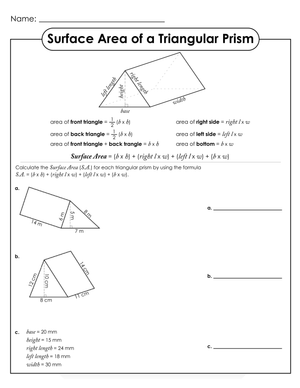
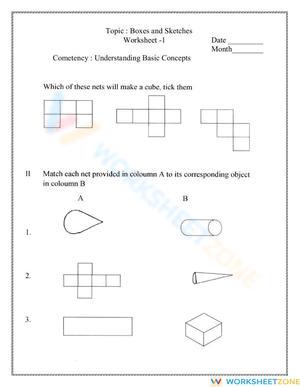
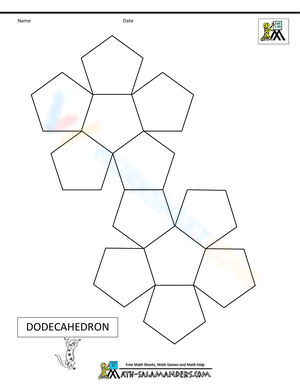
- Net identification: Students label each face of an unfolded figure, calculate individual face areas, and sum them for the total surface area.
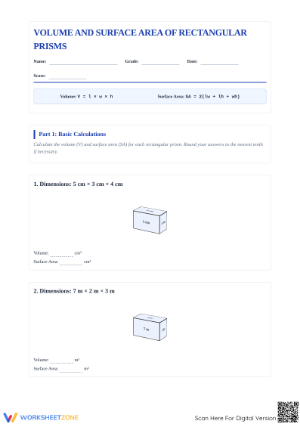
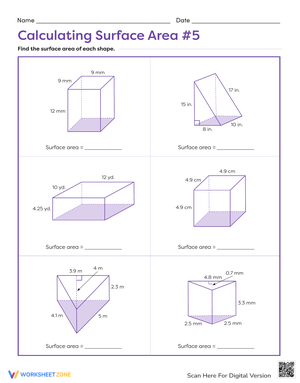
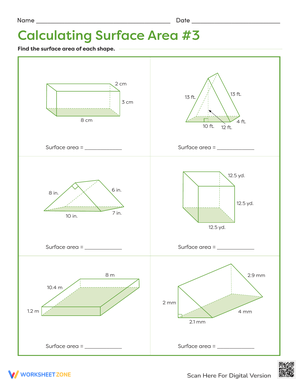
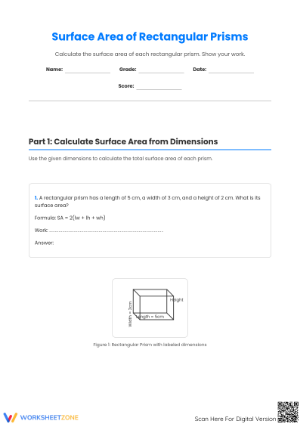
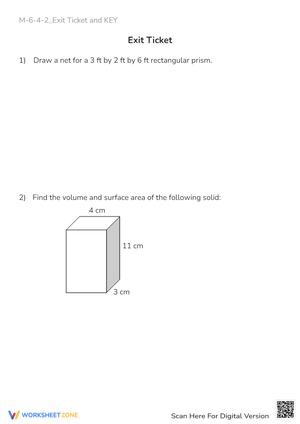
- Rectangular prism calculations: Given three labeled dimensions, students find the area of each pair of opposite faces and add all six values.
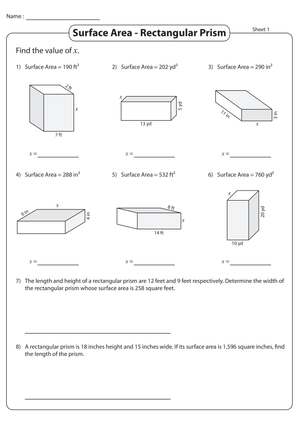
- Missing-dimension problems: Students use a known face area or total surface area to reason backward to an unknown side length.
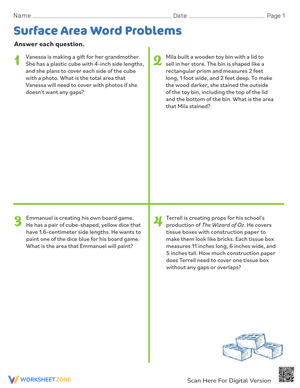
- Word problems: Contexts such as shipping boxes, painted room walls, and gift wrapping connect the arithmetic to actual covering and wrapping tasks.
- Error analysis items: Students examine worked problems containing face-counting mistakes or unit errors, then identify and explain what went wrong.
The error analysis items deserve particular attention. A student who can look at incorrect work and say "they only counted three faces instead of six" understands the concept more deeply than one who executes the formula without knowing why it works. When 6th grade surface area worksheets include this kind of reflective task, teachers get a cleaner picture of student reasoning than computation items alone can provide — especially in the days before a quiz.
Where These Worksheets Fit in the Teaching Sequence
Surface area instruction works best when it follows a clear path: physical or visual exploration first, then guided problem-solving as a class, then independent practice. Handing out a worksheet before students have touched a box or traced a net is usually what produces the most errors and the most disengaged students. These worksheets function as the third step, not the first.
Within a 50-minute class period, a single worksheet can fill several roles without feeling forced:
- Bell ringer: Two or three net-identification problems get students drawing and labeling before the mini-lesson begins.
- Post-instruction practice: After direct teaching with a physical prism, assign the core rectangular prism items while the concrete model is still visible on the table.
- Partner check: Have pairs compare individual face areas before writing the total — this catches dimension-matching errors before they become wrong final answers.
- Exit ticket: A single problem asking students to find the surface area of a box and label the answer in square units gives clean formative data in under five minutes.
The worksheets that pair a diagram with a related word problem in the same item are especially useful in the middle of the unit, when students can execute the arithmetic but still struggle to connect it to a gift-wrapping context. Projecting one of those items and cold-calling on face labels — not just the final total — surfaces the thinking that silent independent practice masks.
Adjusting the Set for a Range of Learners
The core rectangular prism problems work for most of the class. The adjustments happen at the edges. For students who are still uncertain about finding area of rectangles, pairing the worksheet with a multiplication reference card keeps the cognitive load on the surface area concept rather than on computing 13 × 8 from scratch. Some students also benefit from a faces checklist — a small table where they record each face area and mark it off before summing — because that structure reduces how much they have to hold in working memory at once without changing the underlying math.
On the other end, students who finish the standard items quickly can move to missing-dimension problems, which require working backward through the formula rather than applying it forward. Asking those students to write their own word problem using the dimensions on a completed item reveals whether they understand what surface area actually represents in a physical context. A student who can construct a plausible gift-wrapping scenario understands the concept at a level that standard 6th grade surface area worksheets don't always make visible on their own.
Standard Alignment
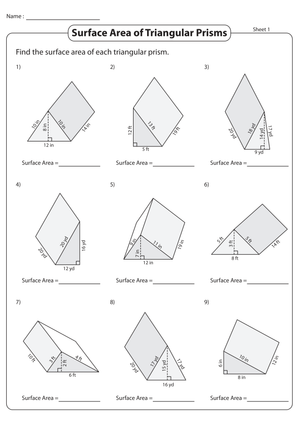
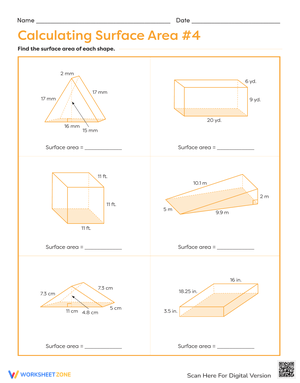
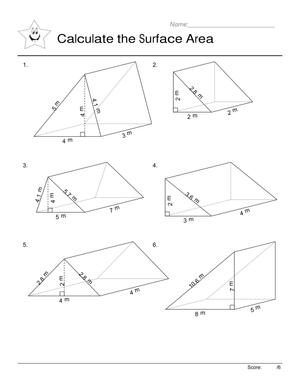
These worksheets align to CCSS 6.G.A.4, which asks students to represent three-dimensional figures using nets made up of rectangles and triangles, and to use those nets to find surface area in both real-world and mathematical contexts. In most grade 6 pacing guides, this standard falls in the second geometry unit of the year, after students have solidified area of rectangles and triangles and before the class shifts toward statistical thinking. The standard covers both rectangular and triangular faces, so worksheets that include triangular prisms or square pyramids are within scope — though most teachers address rectangular prisms first and treat those additional shapes as extension work once the core skill is stable.
Frequently Asked Questions
What prior knowledge do students need before starting these worksheets?
Students need reliable area-of-a-rectangle skills, including multiplying with decimals if those appear in your course. They also need to recognize the terms face, edge, and vertex, and to have at least a working understanding of what a net is. If students are still shaky on two-digit multiplication, start with items that use simple whole-number dimensions so the conceptual focus stays on surface area rather than arithmetic.
How do these worksheets address the surface area versus volume confusion?
Several items are written specifically to surface that confusion. Some require students to label their answer with the correct unit type before writing a number. Some error-analysis items show a student who found volume when the problem asked for surface area. The net-based items are the most effective here because they make the covering-versus-filling distinction concrete — it is hard to confuse the outside of an unfolded box with the capacity inside it.
Can these be used for small-group intervention after the unit ends?
The net-focused items are especially useful for re-teaching. When a student confuses surface area with volume weeks after the unit, net problems are the fastest route back to the concept because face-counting becomes explicit again. Rather than assigning a complete worksheet during intervention, pull two or three targeted items. An item from the 6th grade surface area worksheets set that places a surface area answer and a volume answer side by side on the same figure — with students asked to explain the difference in words — is often what finally distinguishes the two for students who have been mixing them up.
Do the worksheets include answer keys?
Each worksheet includes a complete answer key that shows the area of each individual face, not just the final total. That detail matters when teachers use the worksheets in stations or for peer checking: students can see exactly where their calculation diverged from the correct process, not simply that the total was wrong.













 Interactive Worksheet Maker
 Quiz Maker
 Word Search Maker
 Crossword Puzzle Maker
 Word Scramble Generator
 Sentence Scramble Generator
 Handwriting Worksheet Generator
 Name Tracing Generator
 Fill In The Blank Generator