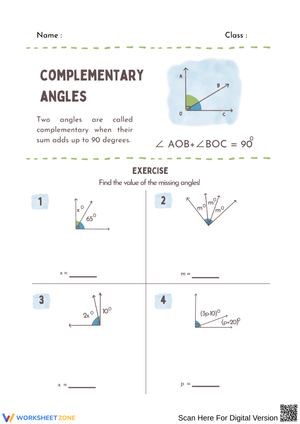
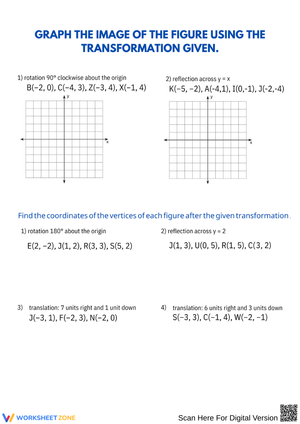
These geometry worksheets for 6th grade give teachers targeted, printable practice across the four domains that anchor Grade 6 geometry instruction: area, surface area, volume, and coordinate plane work. Each worksheet isolates a specific skill and keeps the layout clean enough that students can focus on the math, not on deciphering the directions.
The Core Topics Covered in the Set
The worksheets follow the natural instructional sequence of Grade 6 geometry, moving from flat-figure area into three-dimensional surface area and volume before ending with coordinate plane tasks. Within each topic, the problems progress from direct computation to application and then to written reasoning.
- Area of polygons: rectangles, triangles, trapezoids, and composite figures, all with labeled dimensions and consistent square-unit notation
- Surface area: rectangular prisms presented both as nets and as 3-D figures, with space for students to calculate each face separately before summing
- Volume: right rectangular prisms using the formula V = l × w × h and through unit-cube reasoning, plus word problems that ask students to set up and explain their approach
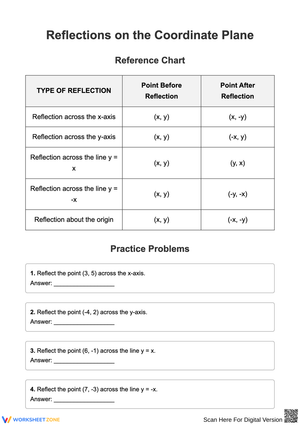
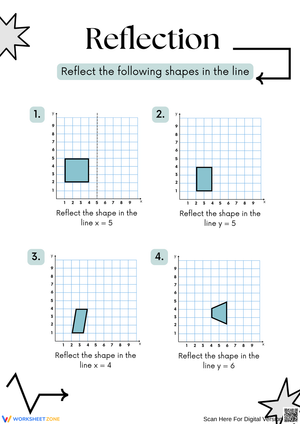
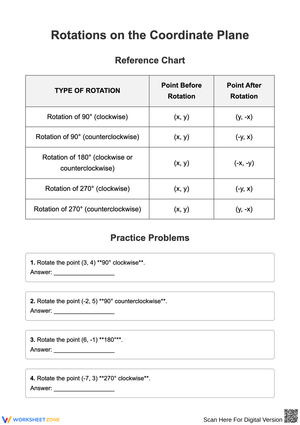
- Coordinate plane: plotting ordered pairs in all four quadrants, identifying vertex coordinates, and drawing polygons from a given list of points
- Reasoning tasks: error-analysis items in which students identify what went wrong in a sample solution — these give teachers a clear window into how students are actually thinking, not just what answer they reached
One practical organizational move: sort the worksheets by representation type rather than by standard alone. Keep net diagrams separate from rectangular-prism problems, and keep composite shapes separate from single-polygon area work. When a student struggles, that structure lets you assign the exact format that caused the difficulty instead of another undifferentiated mixed-review worksheet.
Student Errors That Surface Across These Topics
Grade 6 geometry carries a predictable set of misconceptions. Knowing them before distributing a worksheet makes the debrief far more productive.
The most consistent triangle error is dropping the division by two. Students who can recite "one half times base times height" will still write A = b × h on an untimed worksheet two weeks into the unit. A related mistake shows up in units: students correctly label side lengths in centimeters but then write the area answer as "cm" rather than "cm²" — especially on composite figures where they have been adding partial areas and lose track of what the final unit represents.
Surface area work produces a different pattern. Many students count five faces of a rectangular prism instead of six, most often forgetting the bottom face when working from a 3-D drawing. On net diagrams, the mistake flips: some students add an extra face because they count boundary edges instead of distinct face regions. Volume problems create their own confusion — students who just completed a surface area worksheet will sometimes add face areas instead of multiplying l × w × h because the previous task is still active in working memory. That sequence effect is worth flagging when you plan which worksheets to assign back-to-back.
On coordinate plane work, the (y, x) reversal is nearly universal at the start. Students who learned to plot in one quadrant often develop a habit of moving vertically first, then horizontally. That habit becomes harder to catch once they enter all four quadrants and the error no longer looks obviously wrong.
Building These Worksheets Into Your Lesson Sequence
Geometry worksheets for 6th grade are most useful when matched to a specific moment in the lesson cycle rather than assigned the same way every time. A four-problem set works well as a Monday warm-up when students are returning to a topic after the weekend. The same topic in a longer format works better mid-week, after direct instruction, when students have time to show full work and label every measurement.
Volume worksheets adapt particularly well to partner stations. One student sets up the formula; the other checks the unit label and the reasonableness of the answer before they switch roles. That structure catches the unit errors and formula-setup mistakes that individual seatwork misses. Coordinate plane worksheets make strong exit tickets — six to eight ordered pairs, one graph, five minutes — because accuracy is immediately visible without any grading ambiguity.
Surface area nets print cleanly and hold up well in substitute plans, as long as the directions tell students explicitly to label each face before calculating. When that instruction is built into the worksheet rather than delivered verbally, students can work through the task independently. For Friday spiral review, a mixed set pulling two or three problems from each topic gives you formative data on retention without the overhead of a full quiz setup.
Standard Alignment
The worksheets align to the Grade 6 Geometry domain of the Common Core State Standards (CCSS), specifically:
- 6.G.A.1 — area of triangles, quadrilaterals, and composite polygons, found by decomposing figures into rectangles and triangles
- 6.G.A.2 — volume of right rectangular prisms with fractional edge lengths, using both the unit-cube model and the formula
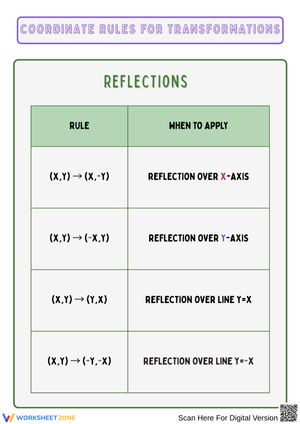
- 6.G.A.3 — drawing polygons in the coordinate plane from given coordinates; finding horizontal and vertical distances between points
- 6.G.A.4 — surface area of three-dimensional figures represented using nets of rectangles and triangles
In most instructional calendars, the 6.G domain arrives in the second or third quarter, after students have worked through ratios, rates, and number operations. That timing matters because 6.G.A.2 draws directly on fraction multiplication — so when a student can set up V = l × w × h but gets the computation wrong, the issue may be a fraction fluency gap rather than a geometry misunderstanding. Knowing where to look for the source of an error changes which follow-up practice you assign.
Adjusting the Set for a Range of Student Readiness
Geometry makes readiness gaps visible quickly because the errors show up in the work itself. A student who misreads a labeled diagram makes a different kind of mistake than a student who applies the wrong formula entirely, and those differences call for different adjustments rather than the same remediation.
For students who need more support, reduce the number of problems per worksheet and increase the diagram size so labeled dimensions are easy to read. Partially completed formula setups — something like A = ½ × ___ × ___ with blanks to fill — help students who freeze when facing an empty work box. These students often know more than a blank response suggests; the partial structure simply gives them a place to start. For on-level practice, a balanced set of a few straightforward calculations, one or two word problems that ask students to identify which dimensions are relevant, and one error-analysis item is usually the right mix.
Advanced students benefit most from missing-dimension tasks (where the area or volume is given and a side length is unknown), multi-figure composite shapes with non-obvious decompositions, and comparison prompts that ask them to explain why two different solution methods arrive at the same answer. Geometry worksheets for 6th grade also lend themselves to varying the language load as a differentiation strategy — a student who struggles to unpack a dense word problem may demonstrate strong geometric reasoning when the same situation is presented with a labeled diagram instead of a paragraph of text. Keeping low-language and high-language versions available means you can measure whether a student needs support with the geometry itself or with reading the problem.
Frequently Asked Questions
What geometry topics should these worksheets cover at the Grade 6 level?
The four core areas are area of polygons (including composite figures), surface area of rectangular prisms using nets, volume of right rectangular prisms, and coordinate plane work in all four quadrants. Error-analysis items round out the set and give students practice explaining their thinking — a skill the standards require and that teachers often want more targeted practice for.
How long does a typical worksheet take during a class period?
A four-to-six problem worksheet takes most students 8 to 12 minutes, which fits a bell ringer or exit ticket. A full practice set of 12 to 16 problems fits after a 15-minute mini-lesson, leaving time for student questions and a brief share-out. Resist assigning the full set as homework after using it in class — a short spiral version later in the week produces stronger retention than a second pass at the same problems the same day.
Do these worksheets work for students who are still shaky on fraction multiplication?
Some will and some won't. Volume with fractional edge lengths (6.G.A.2) requires fraction multiplication, so students who are not yet fluent there will hit a wall before they can demonstrate their geometry understanding. Area and coordinate plane worksheets do not require fraction work and are generally accessible to students who need extra support with rational numbers. Identifying which worksheets in the set are fraction-dependent before assigning them to an intervention group saves time and avoids unnecessary frustration.
Can a worksheet stand alone for review, or does it always need a teacher introduction first?
Either works, but the purpose should drive the choice. For initial learning, students need instruction before practice — the worksheet reinforces and extends the lesson, it does not replace it. For spiral review, geometry worksheets for 6th grade hold up well independently, particularly when each worksheet includes a worked example or formula reference at the top. Error-analysis items are especially strong for review precisely because they prompt student thinking without requiring a full teacher-led setup.













 Interactive Worksheet Maker
 Quiz Maker
 Word Search Maker
 Crossword Puzzle Maker
 Word Scramble Generator
 Sentence Scramble Generator
 Handwriting Worksheet Generator
 Name Tracing Generator
 Fill In The Blank Generator