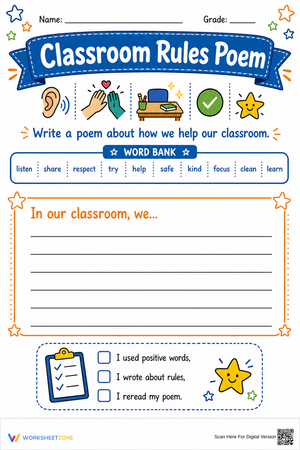
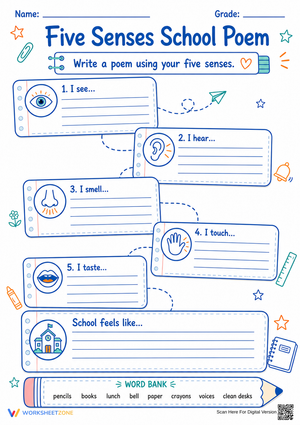
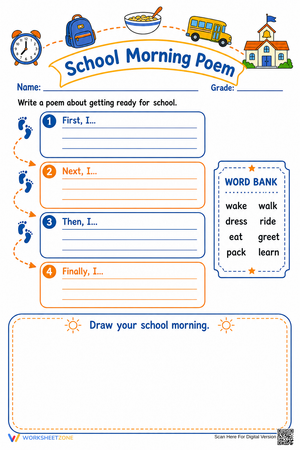
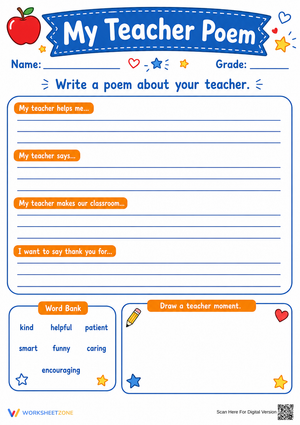
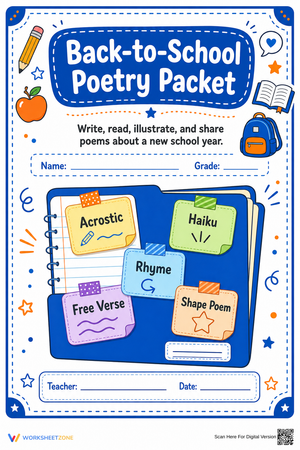
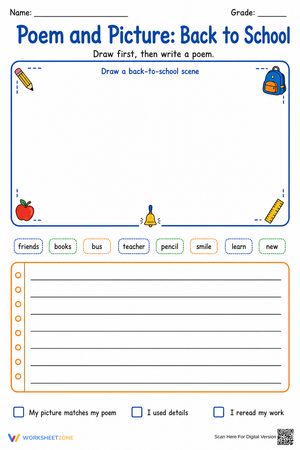
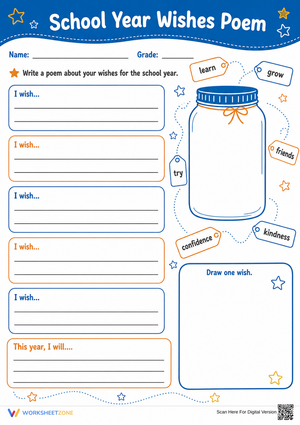
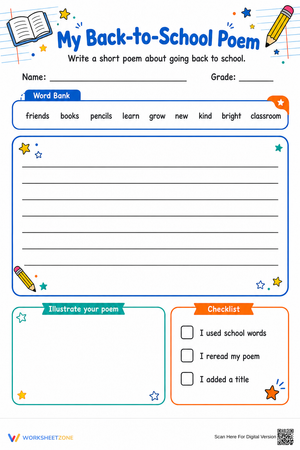
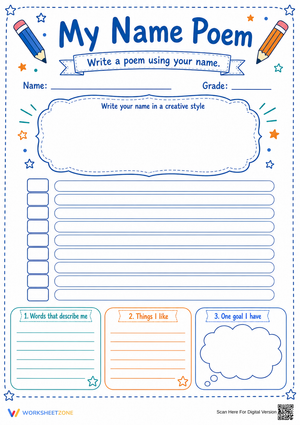
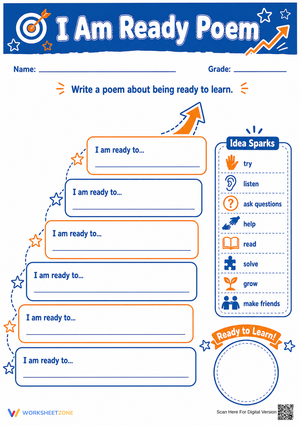
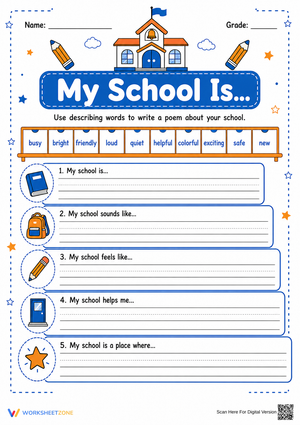
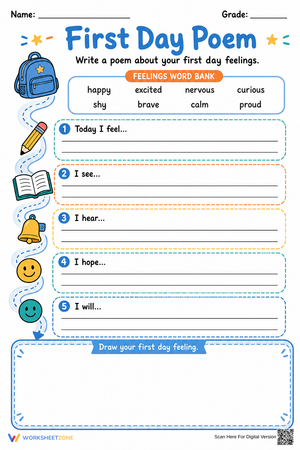
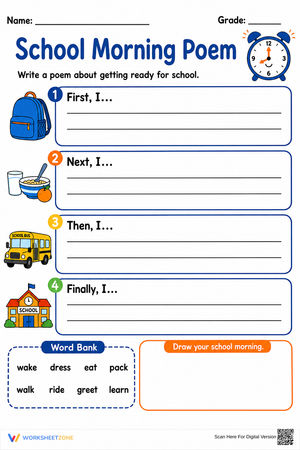
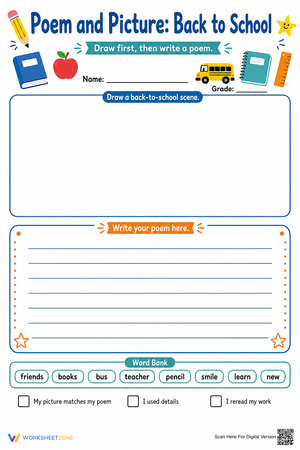
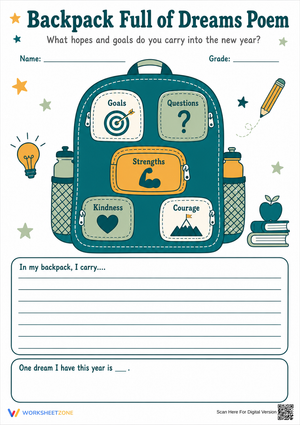
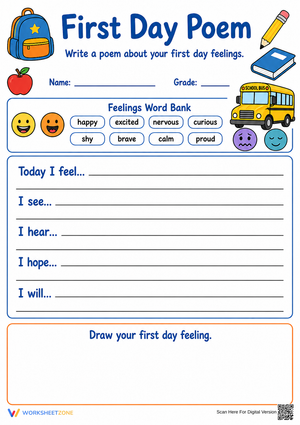
These 3rd grade poetry worksheets resources give teachers a structured path through one of the trickier ELA units of the year — not just having students write poems, but helping them understand why poets make the choices they do. The set covers stanza structure, three foundational poem formats, and several figurative language devices, with each worksheet targeting a discrete skill so you can sequence the unit deliberately or pull individual pieces when the moment calls for it.
Skills These Worksheets Build
The resources move through three overlapping areas. Students first work with the architecture of poetry — identifying lines, stanzas, and the visual logic of how a poem sits on the page. Then they practice writing within structured formats. Finally, they learn to recognize and use figurative language devices in original drafts.
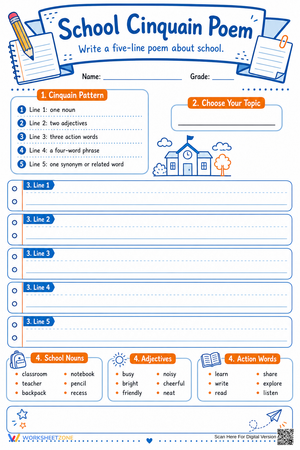
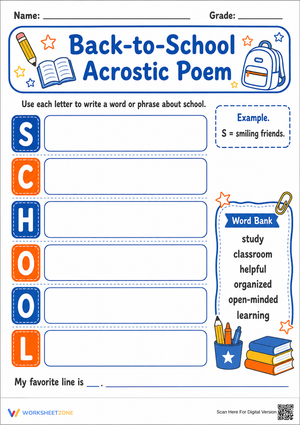
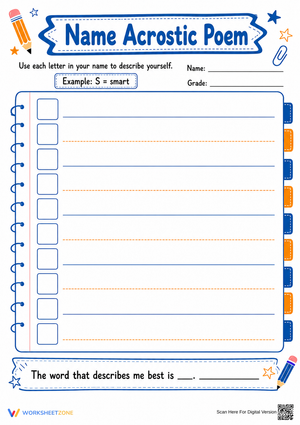
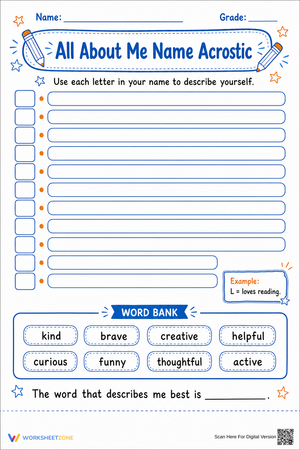
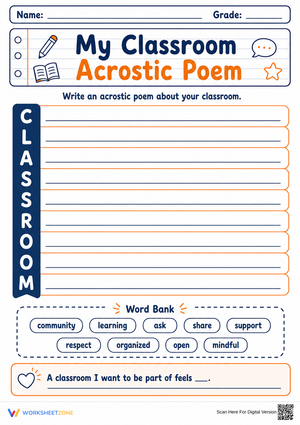
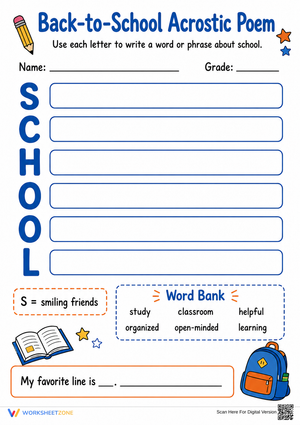
The three formats covered are haiku, acrostic, and cinquain. Haiku work is useful beyond the 5-7-5 counting exercise: it trains students to select precise nouns and strip out filler words, which is a transferable revision skill. Acrostic worksheets give reluctant writers an immediate foothold — the first letters are already there, so the task is about word selection rather than blank-page panic. Cinquain worksheets push students toward grammatical thinking, since the format asks for two adjectives in line two and three action verbs in line three; students have to actually sort words by part of speech to complete them correctly.
On the figurative language side, each worksheet isolates a single device — simile, alliteration, or onomatopoeia — before asking students to use it in an original line. This sequencing matters. When all three devices appear together, students often conflate them, particularly simile and metaphor. Addressing them one at a time helps students build precise vocabulary before they encounter device-identification questions on reading assessments.
Standard Alignment
CCSS RL.3.5 requires students to explain how the structure of a poem — specifically the relationships between lines and stanzas — contributes to its meaning. This is a more demanding standard than it first appears. In earlier grades, the expectation is recognition: students identify rhyme or repetition. At third grade, the expectation is explanation: why did the poet break the stanza here? What shifts when a new stanza begins?
Several worksheets ask students to annotate a printed poem — drawing brackets around stanzas, numbering lines, and writing a brief note about what changes when the next stanza starts. Students who can explain stanza breaks in someone else's poem are ready to make intentional structural choices in their own writing. The figurative language worksheets support CCSS L.3.5a (distinguishing literal and nonliteral meanings in context) and CCSS W.3.4 (producing writing appropriate to task and purpose).
Errors Worth Anticipating Before Your Students Make Them
Syllable counting in haiku breaks down fastest. Students who count syllables correctly in isolation — "sum-mer" is two, "but-ter-fly" is three — will still write "butterfly" in the five-syllable line and count it as two because they are reading it as a single familiar word rather than sounding it through. The fix is having students tap or clap each syllable aloud before writing the line, not after. Worksheets that include a syllable-counting column alongside the haiku lines make this step visible and hard to skip.
The stanza-versus-paragraph confusion runs deeper than most teachers expect. Students know paragraphs group related ideas, and they apply that same logic to stanzas — so when a stanza break does not mark a clear topic shift, they decide the poet made a mistake. The analogy that lands most reliably: a stanza break is like a pause for breath in a song. The subject has not changed; the feeling has shifted slightly, or the rhythm needs room. Once students hear it that way, they stop fighting the structure.
With figurative language, the error to watch is over-application once students learn a device. After the alliteration worksheet, some students rewrite every line so it alliterates, turning a poem about their dog into "Darcy digs deep dirt daily." Addressing this in a whole-class share — holding up an example and asking whether the alliteration helps the poem or just fills it with noise — works better than a written correction on the returned worksheet.
How to Work These Worksheets Into Your Lesson Plans
A week-long unit fits this set well. Open Monday with stanza and line structure — have students annotate two or three published poems before they write anything themselves. Tuesday and Wednesday are format days: haiku and acrostic on Tuesday, cinquain on Wednesday. Thursday introduces figurative language devices one at a time, with short mentor text examples drawn from collections like A Pizza the Size of the Sun or Valerie Worth's All the Small Poems. Friday is drafting and sharing.
For teachers who cannot carve out a full week, the worksheets hold up as stand-alone morning warm-ups. An acrostic worksheet as the Monday task after a school vacation — using "SUMMER" or "SPRING" as the spine word — takes about eight minutes and produces a room full of students who have actually thought about word choice before the first lesson of the day starts. That is a different opening to the week than a worksheet that just restores routine.
One classroom practice worth keeping: after students complete any poem worksheet, ask them to mark their strongest word choice with a star and their weakest line with a question mark. That two-minute self-review builds revision instinct faster than most corrections written on returned papers.
Adjusting the Worksheets for a Range of Learners
For students still working on phonological awareness, haiku worksheets benefit from a reference list of common seasonal and nature words with syllable counts already marked — au-tumn, spar-row, blos-som. Students still choose the words; the list removes the decoding barrier so the creative work can happen without getting stuck on phonics.
Advanced writers often find strict format constraints frustrating in a productive way — until that frustration tips into disengagement. The extension that works well is a companion-poem exercise: write the cinquain as specified, then write a free-verse version of the same subject with no word-count rules, and compare which version they think works better. That comparison surfaces genuine thinking about what constraints actually do for a piece of writing, which is the deeper lesson behind the format exercises.
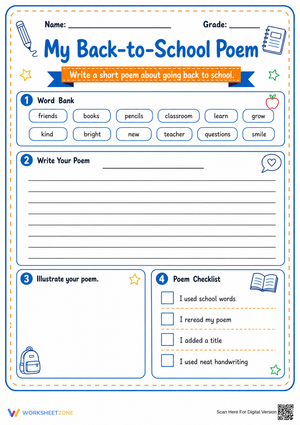
Students who freeze at even a short poem do better when the worksheet includes a small word bank tied to the subject. A haiku worksheet about seasons might offer eight nature words as options. The student still chooses which words to use and arranges them — the generative work stays with them — but the starting inventory is already there.
Frequently Asked Questions
Can these worksheets serve as assessment tools, or are they strictly for practice?
Both. Worksheets that ask students to label stanza structure or identify figurative language in a printed poem work as formative assessment — you can see at a glance who understands the line-break logic and who is guessing. The original-writing worksheets (haiku, acrostic, cinquain) work as summative pieces when collected after a full unit and scored against a simple rubric checking format accuracy and word choice. The 3rd grade poetry worksheets format makes them easy to keep as physical portfolio samples or scan for a digital record.
How do I explain the difference between a stanza and a paragraph to eight-year-olds?
The topic-grouping explanation for paragraphs causes confusion when students try to apply it to stanzas, because it does not always hold. A clearer explanation: a paragraph is a group of sentences that belong together in prose, and you signal the end by starting a new indented line. A stanza is a group of lines in a poem, and the poet signals the end by leaving a blank line on the page. Students can see that visual difference immediately on any printed poem. Once they can reliably point to stanzas, the harder question — why this grouping, not another — becomes something worth discussing.
What formats work best for reluctant writers in third grade?
Acrostic first, nearly every time. The student's own name, a favorite animal, or a season gives the poem a spine that already exists — every letter is a prompt, not a blank. Students who freeze when asked to "write a poem about fall" will fill an acrostic worksheet without complaint because the task is choosing a word for each letter, not generating a poem from nothing. Once an acrostic is done, even reluctant writers usually feel some ownership over it, which opens the door to haiku and more open formats. A well-sequenced 3rd grade poetry worksheets set moves through the formats in this order for exactly that reason.
How should I address the student instinct to fill every blank space with words?
Directly, in class, before students start writing. Students trained in paragraph writing learn that filling the page signals work completed. In poetry, white space is structural — it creates the pause that gives each word more weight. A 3rd grade poetry worksheets that shows a formatted haiku with visible blank space below the three lines, rather than squeezing the poem into a small box, models the expectation visually. Point to that blank space and tell students it is doing work too. That single reframe changes what students produce more reliably than any written instruction printed on the worksheet itself.












 Interactive Worksheet Maker
 Quiz Maker
 Word Search Maker
 Crossword Puzzle Maker
 Word Scramble Generator
 Sentence Scramble Generator
 Handwriting Worksheet Generator
 Name Tracing Generator
 Fill In The Blank Generator