


























Views
Downloads

Grade 3 Acrostic Poem — Printable No-Prep Worksheet
Paste this activity's link or code into your existing LMS (Google Classroom, Canvas, Teams, Schoology, Moodle, etc.).
Students can open and work on the activity right away, with no student login required.
You'll still be able to track student progress and results from your teacher account.
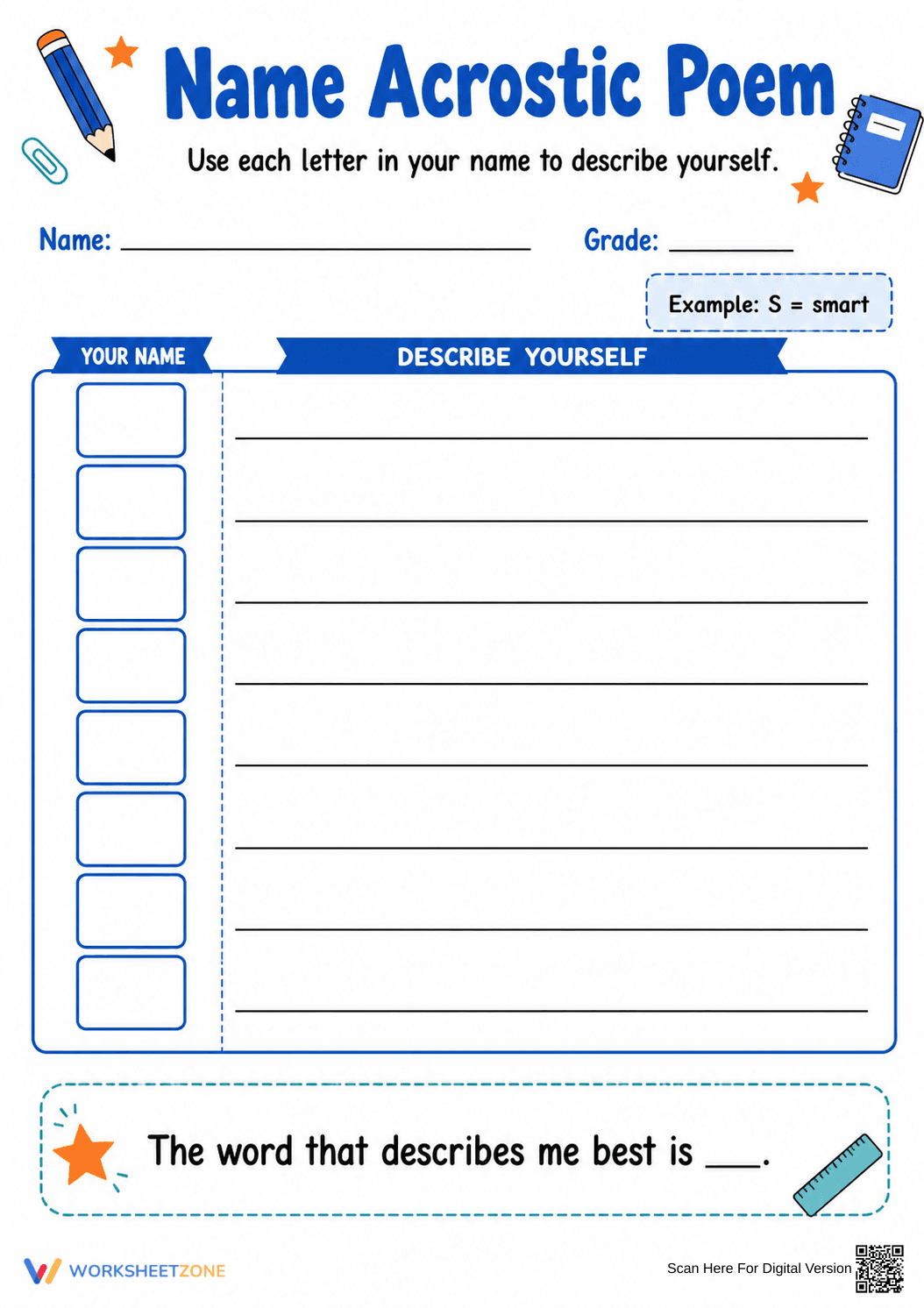
This ready-to-use worksheet helps students write a personalized name acrostic poem while practicing descriptive vocabulary. By using each letter of their name to brainstorm positive adjectives, learners build self-awareness and foundational writing skills. The clear layout ensures students can independently complete this engaging back-to-school or icebreaker activity.
At a Glance
- Grade: 3 · Subject: ELA
- Standard:
CCSS.ELA-LITERACY.W.3.4— Produce writing appropriate to task and purpose.- Skill Focus: Descriptive vocabulary and poetry
- Format: 1 page · 1 activity · No answer key · PDF
- Best For: Icebreakers and independent practice
- Time: 15–20 minutes
This single-page resource features a structured template for creating an acrostic poem. It includes eight blank letter boxes down the left side for the student's name, accompanied by wide writing lines for descriptive words. An example box clarifies the instructions, and a concluding reflection sentence prompts students to select the single word that best describes them. An answer key is not required.
This activity requires zero teacher preparation.
- Print (1 minute): Simply download the PDF and print a class set. The black-and-white friendly design saves ink.
- Distribute (1 minute): Hand out the worksheets along with pencils or colored markers for added creativity.
- Review (3 minutes): Briefly read the instructions and point out the provided example before letting students begin.
Total teacher prep time is under two minutes, making this an ideal emergency sub plan or morning work assignment.
This activity aligns with primary standard CCSS.ELA-LITERACY.W.3.4: With guidance and support from adults, produce writing in which the development and organization are appropriate to task and purpose. It also supports vocabulary acquisition by encouraging students to select precise adjectives that describe their personality traits. Both standard codes can be copied directly into lesson plans, IEP goals, or district curriculum mapping tools.
This worksheet fits perfectly into a back-to-school unit. Use it as an independent morning work task while you take attendance, or assign it during a dedicated writing block to introduce the concept of poetry. As a formative assessment observation tip, walk around the room and note which students easily generate descriptive adjectives and which struggle to move beyond basic words like "good" or "nice." Expected completion time ranges from 15 to 20 minutes.
This resource is designed for third-grade students, though it easily scales for second through fifth graders needing a structured creative writing prompt. For differentiation, provide a word bank of positive character traits for students who need vocabulary support, or challenge advanced learners to write full descriptive sentences rather than single words. It pairs naturally with a read-aloud book about identity or a classroom anchor chart featuring strong adjectives.
Integrating structured poetry exercises like this acrostic poem template significantly boosts student engagement and vocabulary retention. Aligned with CCSS.ELA-LITERACY.W.3.4, this activity requires learners to produce writing appropriate to task and purpose by carefully selecting descriptive words that match specific letters. According to Fisher & Frey (2014), providing students with highly scaffolded writing tasks allows them to focus cognitive energy on vocabulary selection and self-expression rather than formatting. This targeted practice helps solidify understanding of adjectives while fostering a positive classroom community through self-reflection. By connecting academic skills to personal identity, educators can create meaningful learning experiences that resonate with young writers. The clear constraints of the acrostic format provide just enough structure to support struggling writers while remaining open-ended enough to challenge advanced students to use more sophisticated vocabulary.


