


























Views
Downloads

Back-to-School Acrostic Poem | Essential Grade 3-5 ELA
Paste this activity's link or code into your existing LMS (Google Classroom, Canvas, Teams, Schoology, Moodle, etc.).
Students can open and work on the activity right away, with no student login required.
You'll still be able to track student progress and results from your teacher account.
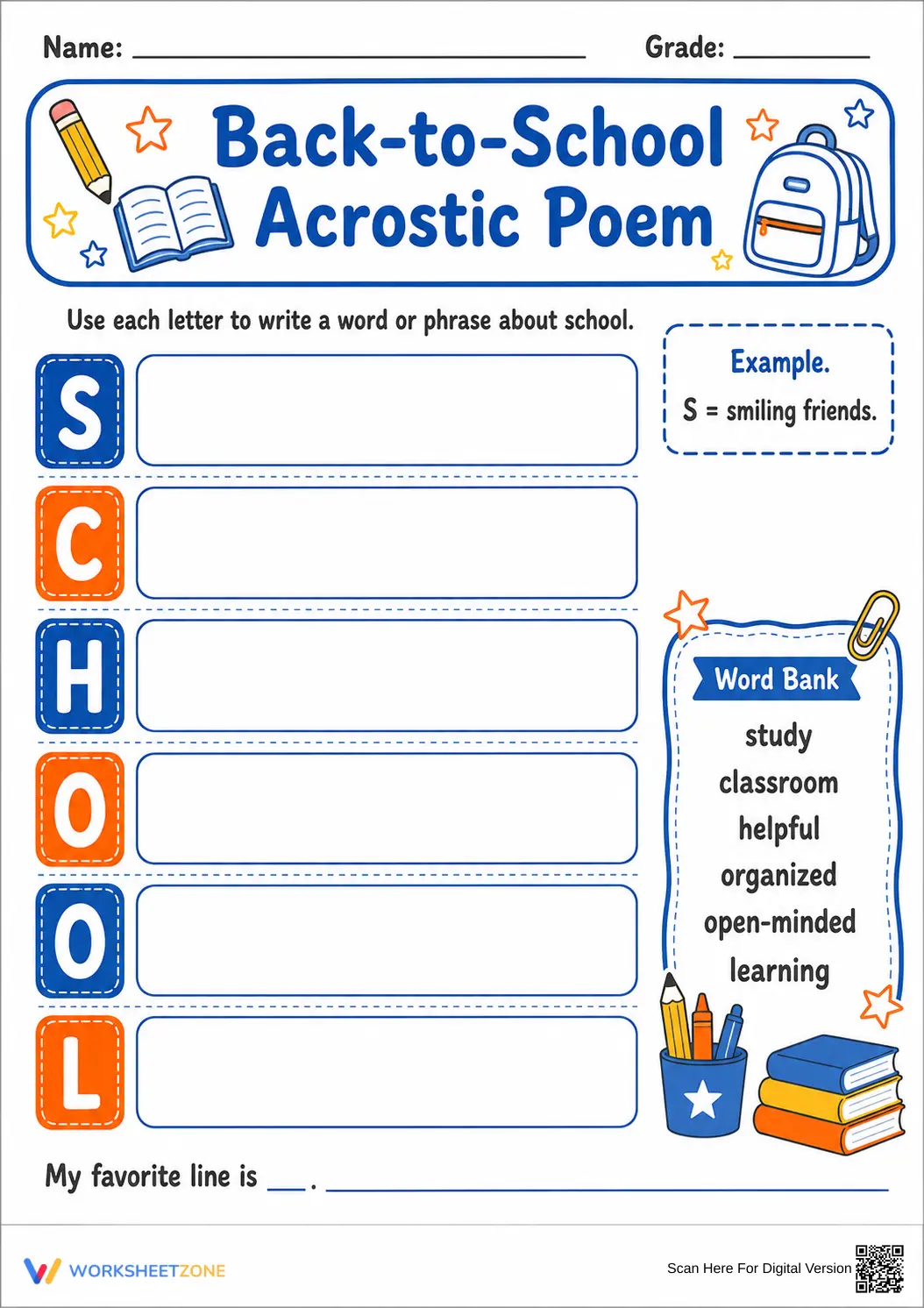
This creative writing worksheet helps elementary students master the acrostic poetry format while reflecting on the start of the academic year. By using the letters in "SCHOOL," learners practice word choice and descriptive phrasing to express their feelings about the classroom environment. It provides a structured yet flexible framework for early-year ELA assessments and creative expression.
At a Glance
- Grade: 3 · Subject: ELA
- Standard:
CCSS.ELA-LITERACY.W.3.10— Write routinely for a range of discipline-specific tasks, purposes, and audiences.- Skill Focus: Acrostic Poetry & Vocabulary
- Format: 1 page · 7 tasks · Word bank included · PDF
- Best For: First-week icebreaker or poetry introduction
- Time: 15–20 minutes
What's Inside
The worksheet features a vertical "SCHOOL" acrostic template with six dedicated writing lines. To support diverse learners, it includes a clear "smiling friends" example and a 6-word vocabulary bank containing terms like "organized," "helpful," and "open-minded." A final reflection prompt at the bottom encourages students to identify their strongest creative contribution, ensuring they think critically about their own work.
Zero-Prep Workflow
- Print: Select the single-page PDF and print enough copies for your roster in approximately 30 seconds.
- Distribute: Hand out the sheets as a morning bell-ringer or a transition activity during the first week of school.
- Review: Have students share their favorite lines aloud to build classroom community and celebrate diverse perspectives.
Total teacher preparation time is under 2 minutes, making this an ideal sub-plan or emergency filler for the busy back-to-school season.
Standards Alignment
The primary focus is `CCSS.ELA-LITERACY.W.3.10`, which requires students to write routinely for shorter time frames. Additionally, it supports `CCSS.ELA-LITERACY.L.3.1` by encouraging the use of adjectives and nouns in a specific context. Both standard codes can be copied directly into lesson plans, IEP goals, or district curriculum mapping tools to ensure compliance with state frameworks.
How to Use It
Use this as a formative assessment during the first week of school to gauge student handwriting, spelling, and creative thinking. It works best after a brief direct instruction session on poetry types. Observe how students utilize the word bank to determine which learners may need additional vocabulary scaffolding in future units. The expected completion time is 15 to 20 minutes depending on the grade level.
Who It's For
This resource is designed for general education students in Grades 2 through 5, but is particularly effective for English Language Learners (ELLs) who benefit from the provided word bank and example. Pair this with a "Back-to-School" read-aloud or an anchor chart about classroom expectations to provide thematic context and spark inspiration.
Research from Fisher & Frey (2014) emphasizes the importance of gradual release in writing instruction, where scaffolds like word banks and examples allow students to move toward independent mastery. This worksheet applies those principles by providing a clear structural constraint alongside supportive vocabulary cues. By focusing on the CCSS.ELA-LITERACY.W.3.10 standard, the activity ensures that students engage in the routine writing necessary to build stamina and fluency. Short-form poetry serves as an accessible entry point for reluctant writers, reducing the cognitive load while maintaining high expectations for word choice and thematic relevance. According to the NAEP, frequent opportunities for low-stakes creative expression are correlated with higher overall literacy performance in the upper elementary years. This resource provides that essential practice in a clean, classroom-ready format that requires zero teacher setup time while delivering measurable student engagement.


