


























Views
Downloads
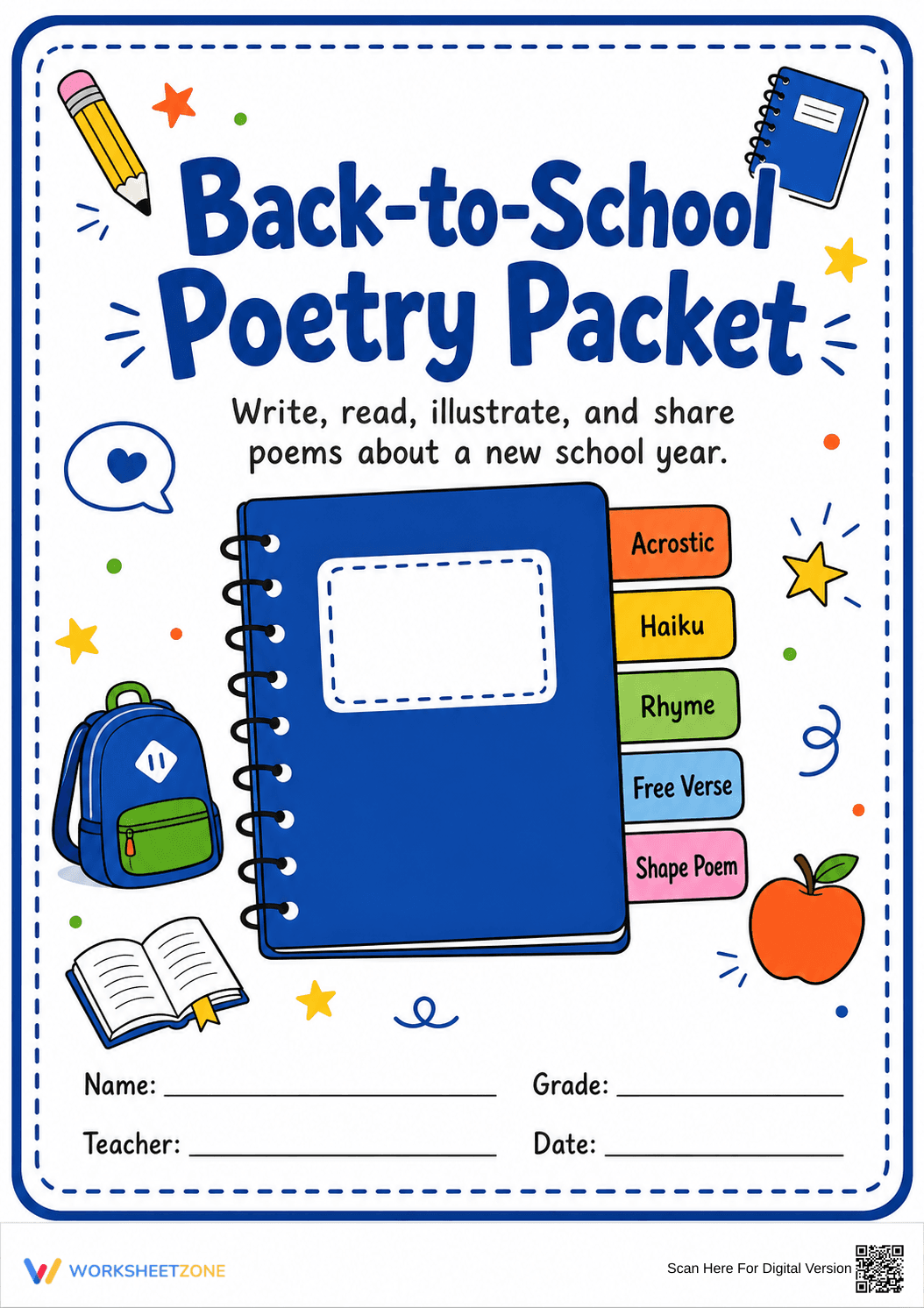

Back-to-School Poetry Packet Cover | Printable Grade 3 ELA
Paste this activity's link or code into your existing LMS (Google Classroom, Canvas, Teams, Schoology, Moodle, etc.).
Students can open and work on the activity right away, with no student login required.
You'll still be able to track student progress and results from your teacher account.
This printable back-to-school poetry packet cover sets the stage for students to write, read, illustrate, and share poems. Designed to organize student work, this engaging cover page introduces key poetry formats like acrostic, haiku, and free verse while building excitement for a new school year of creative writing.
At a Glance
- Grade: 3 · Subject: ELA
- Standard:
CCSS.ELA-LITERACY.RL.3.5— Refer to parts of poems when writing or speaking.- Skill Focus: Poetry organization and introduction
- Format: 1 page · 0 problems · No answer key · PDF
- Best For: Packet organization and unit introduction
- Time: 5–10 minutes
This single-page resource features a student-friendly design with spaces for the student's name, grade, teacher, and date. The central illustration highlights five poetry styles—acrostic, haiku, rhyme, free verse, and shape poem—serving as a visual table of contents. The clear layout makes it an ideal organizational tool for compiling a poetry portfolio.
Zero-Prep Workflow
This cover page is designed for immediate classroom implementation with a streamlined three-step process:
- Print (1 minute): Print copies directly from the PDF. The high-contrast design prints beautifully in both color and grayscale.
- Distribute (1 minute): Hand out the covers alongside blank paper. Students can immediately personalize their packets.
- Review (3 minutes): Briefly discuss the five poetry types listed on the cover to activate prior knowledge and set expectations for the unit.
Total teacher preparation requires under two minutes, making this perfect for busy first-week schedules.
Standards Alignment
This resource aligns with CCSS.ELA-LITERACY.RL.3.5, requiring students to refer to parts of poems when writing or speaking about a text. By explicitly listing various poetic forms, the cover helps students categorize different structural elements of poetry. Both standard codes can be copied directly into lesson plans, IEP goals, or district curriculum mapping tools.
How to Use It
Distribute this cover page before a poetry unit to help students organize their drafts. It works perfectly as the front page of a stapled booklet. During independent writing time, teachers can use the listed poetry types as a quick formative assessment, asking students to point to the specific style they are currently drafting. Expect students to spend five to ten minutes filling out their personal information and coloring the illustrations.
Who It's For
This resource is designed for third-grade students beginning a poetry unit. The clear layout provides visual support for students who benefit from structured organization, including English Language Learners. Pair this cover page with direct instruction lessons on haikus or acrostic poems to create a cohesive, engaging learning experience right from the first week of school.
Structured organizational tools support broader literacy goals by providing students with a clear roadmap of their upcoming academic expectations. Aligned directly with CCSS.ELA-LITERACY.RL.3.5, this resource helps students refer to parts of poems when writing or speaking by explicitly categorizing distinct structural forms like haiku, acrostic, and free verse. According to a recent ScienceDirect TpT Analysis, providing students with visually engaging, highly organized materials significantly increases task initiation and sustained attention during extended writing projects in the elementary classroom. When young writers understand the full scope of a unit—such as the five specific poetry types outlined on this cover page—they consistently demonstrate higher levels of motivation and personal ownership over their final compiled portfolios. This simple yet highly effective organizational tool bridges the gap between creative expression and executive functioning skills, ensuring all diverse learners can successfully complete the rigorous demands of a comprehensive back-to-school poetry unit.


