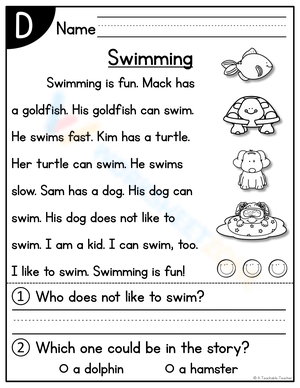
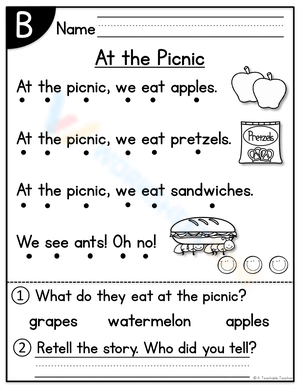
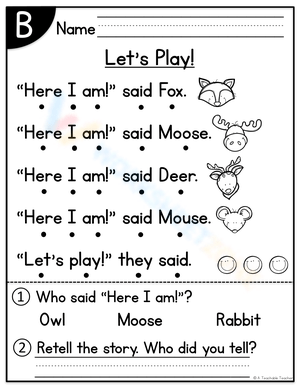
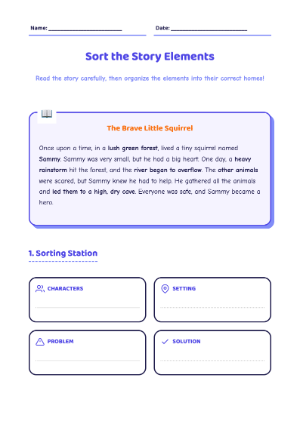
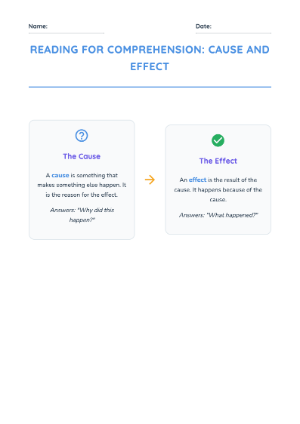
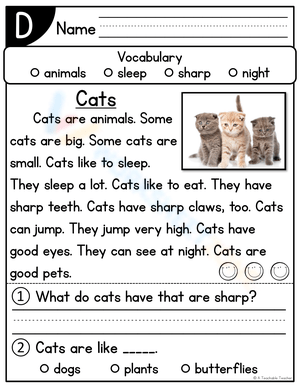
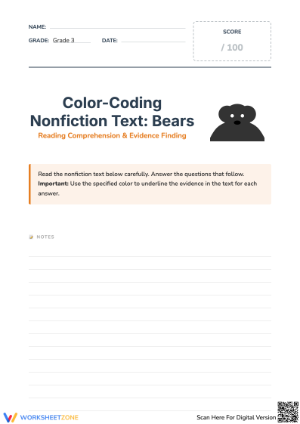
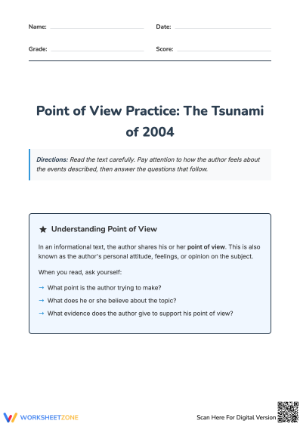
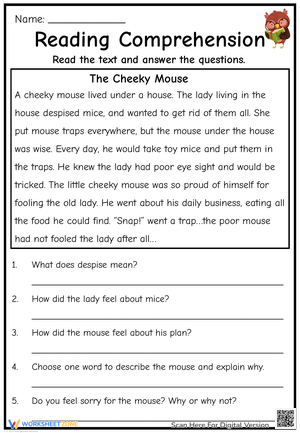
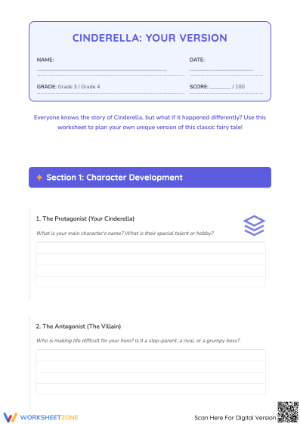
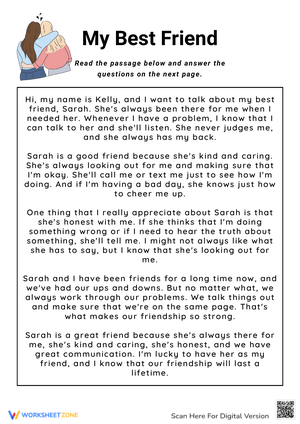
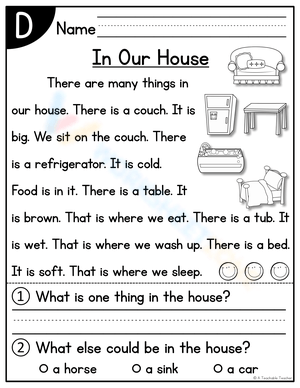
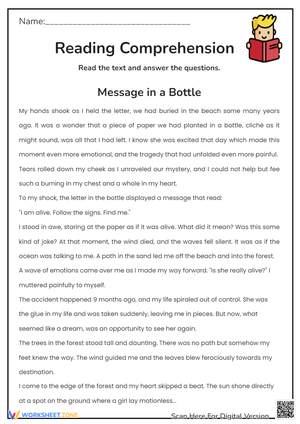
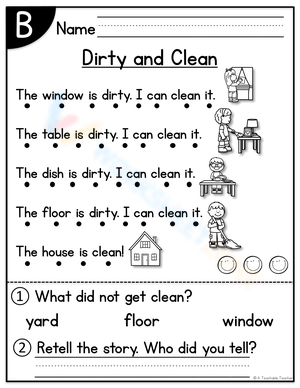
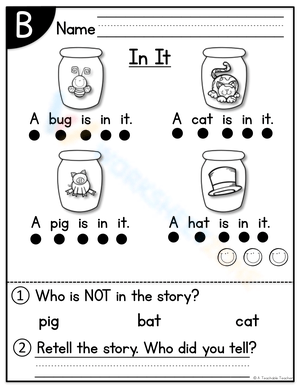
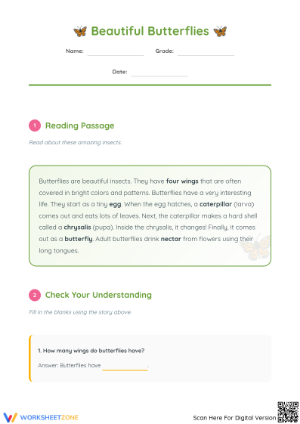
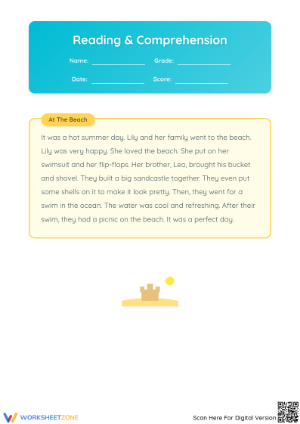
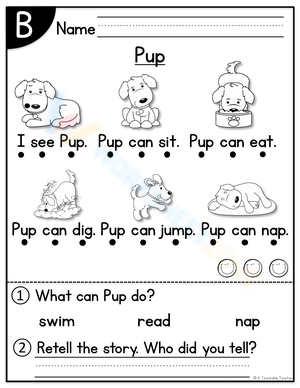
These 3rd grade leveled reading printable worksheets give teachers a ready-to-use collection of passages and comprehension questions spanning the full Grade 3 reading range — organized by level so you can assign the right text without building materials from scratch. Each worksheet pairs a leveled passage with text-dependent questions, vocabulary-in-context work, and a written-response prompt. The set covers both fiction and nonfiction, reflecting the balance that Grade 3 ELA actually requires.
What Students Practice in Each Worksheet
Third grade is the year the reading demand shifts from decoding toward meaning-making, and the passages in this set are built around that transition. Lexile levels span from approximately 520L on the lower end to 820L on the higher end — the full range the Lexile Framework for Reading identifies as typical for Grade 3. In Fountas and Pinnell terms, that maps roughly to levels N through P.
Across the set, each worksheet targets one or more of these skills:
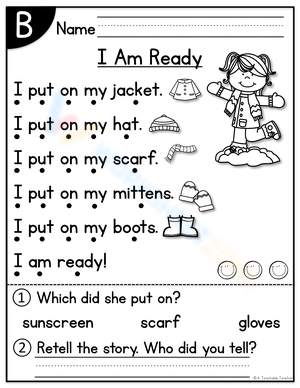
- Text-dependent comprehension: Questions require students to return to the passage for evidence — not answer from background knowledge alone.
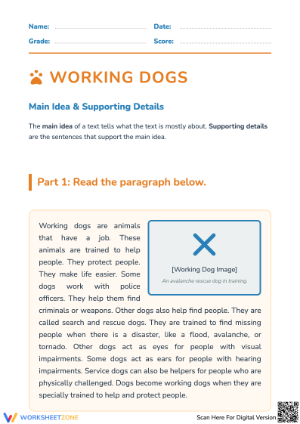
- Main idea identification: Both fiction (central message or lesson) and nonfiction (topic plus key details) are covered, because these behave differently and students need distinct practice with each.
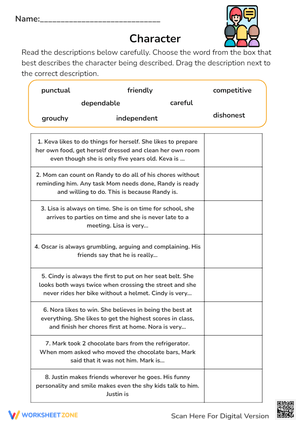
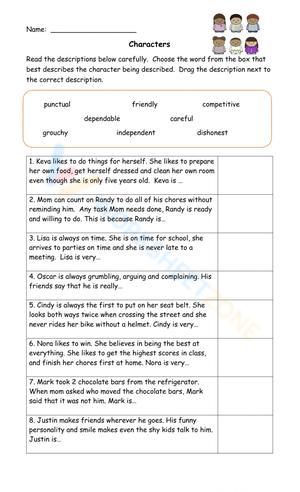
- Character analysis: Fiction worksheets ask students to explain how a character's actions drive events, not just name a trait.
- Vocabulary in context: Students use surrounding sentences to determine the meaning of targeted words — working with language as it appears in the passage rather than matching vocabulary to a pulled-out definition.
- Written response: Short-answer prompts require complete sentences and text evidence. This is where you see what students actually understood versus what they skimmed past.
Fitting These Worksheets Into Your Teaching Week
The most productive use of 3rd grade leveled reading printable worksheets is inside small-group guided reading rotations. While you work with one group at the table, students at the independent station complete a leveled passage matched to their reading level. Because every student is doing the same type of task — read, respond, write — the classroom stays manageable even across three or four simultaneous groups.
These also make strong Monday morning warm-ups. A passage with four or five questions takes about ten minutes, settles students into the day before the main lesson begins, and gives you an immediate read on who needs support before the week's instruction gets underway. One strategy worth adding to your planning: when the class is exploring a content-area topic like animal habitats or weather patterns, pull passages on that topic from three different Lexile levels. Every group reads their own version; afterward the whole class discusses the same concepts. The conversation is richer because all students arrive with content, even if the complexity of what they read varied.
For informal progress monitoring, collect completed worksheets across four to six weeks. A student who consistently answers 80 percent or more of questions correctly at one level is ready to move up. That threshold won't replace formal assessment, but it catches growth between benchmark windows and lets you adjust groups without waiting for the next testing cycle.
Common Student Mistakes Teachers Should Anticipate and Address
The error we see most often with text-dependent questions is students answering from schema rather than the passage. A third grader reading a nonfiction piece about monarch butterflies already has information from science class and previous books — and they will write confidently about facts the passage never actually mentions. Repeating the instruction "How do you know? Point to the sentence" before students begin is worth building into the classroom routine, not just stating once as a rule at the start of the year.
On main idea questions, most students land on one of two wrong answers: they restate the opening sentence, treating it as a summary of everything, or they describe whichever detail caught their attention. Neither is the main idea. Modeling the distinction with a shared passage before releasing students to work independently — showing the difference between what a text is mostly about versus what it mentions once — reduces this error more reliably than any question wording adjustment.
Written-response prompts reveal a third pattern. Students who fully understood the passage will sometimes produce a fragment or a vague half-sentence ("Because he wanted to help."). At this grade level, the problem is usually not comprehension — it's the translation of understanding into complete written sentences. A simple sentence-starter anchor posted in the room ("I know this because the text says...") significantly cuts down on the blank-stare-at-paper response for most of these students.
Adjusting the Set for a Range of Learners
For students reading below grade level — roughly in the 520L to 600L band — the passages use shorter sentences and more familiar vocabulary, with questions that establish explicit understanding before asking for inference. A brief teacher-led vocabulary preview before students read independently helps them maintain fluency through the passage rather than stopping repeatedly at unfamiliar words. The 3rd grade leveled reading printable worksheets at this level still carry real comprehension demands; the simpler language removes vocabulary friction so students spend their attention on meaning instead of decoding.
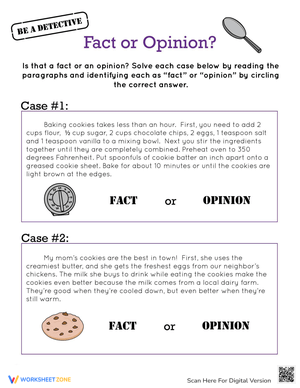
Students reading at or above grade level — in the 700L to 820L band — encounter longer sentences, more domain-specific vocabulary, and questions that ask them to compare two characters' motivations, identify an author's purpose, or distinguish fact from opinion within the same paragraph. For these students, the written-response section can be extended: rather than two sentences, have them write a short paragraph with a claim, evidence from the text, and an explanation. That structure previews the argument-based writing work that formalizes in 4th and 5th grade and gives advanced readers a genuine challenge without requiring a separate lesson plan.
Standard Alignment
These worksheets address the following Common Core State Standards for Grade 3 English Language Arts:
- RL.3.1 and RI.3.1: Ask and answer questions to demonstrate understanding of a text, referring explicitly to the text as the basis for answers. Every worksheet's comprehension questions target this standard directly.
- RL.3.2 and RI.3.2: Recount stories and identify the central message or lesson; determine the main idea of an informational text and explain how key details support it. Main idea questions appear on every nonfiction worksheet and on fiction worksheets built around a stated lesson or moral.
- RL.3.3: Describe characters in a story and explain how their actions contribute to the sequence of events. Each fiction worksheet includes at least one character question targeting this standard.
- RI.3.4: Determine the meaning of general academic and domain-specific words and phrases in a text. The vocabulary-in-context section on each nonfiction worksheet maps directly to this standard.
In practical classroom terms, RL.3.1 and RI.3.1 show up on nearly every district benchmark and state reading assessment at this grade level. Giving students repeated, low-stakes practice with text-dependent questions across the year means the format is not unfamiliar when it counts.
Frequently Asked Questions
What Lexile levels are included in the set?
Passages span approximately 520L to 820L, covering the full typical range for Grade 3 readers. Within that range, passages are grouped so teachers can assign at the instructional level — challenging enough that students are working, but not so difficult that decoding overwhelms comprehension.
How do I decide which level to give a particular student?
Running records, classroom Lexile assessments, and Fountas and Pinnell benchmark data all work. Without formal data, find where a student reads fluently but makes comprehension errors — that's the instructional level. Start there, and move the student up when accuracy on comprehension questions holds at or above 80 percent across several worksheets.
Do the fiction and nonfiction worksheets need to be used in a specific order?
Each worksheet stands alone and there is no required sequence. That said, pairing a fiction and a nonfiction worksheet on the same topic — two worksheets about weather, for instance, one a short narrative and one an informational piece — lets you address RI.3.9 (comparing information across two texts) without building a separate activity around it.
Can these be sent home for independent practice?
Yes. The 3rd grade leveled reading printable worksheets in this set are self-contained — passage and questions together on each worksheet — so students can complete them at home without additional materials. If the topic is unfamiliar, a brief in-class vocabulary preview helps, but most students handle these independently once the format becomes part of their routine.












 Interactive Worksheet Maker
 Quiz Maker
 Word Search Maker
 Crossword Puzzle Maker
 Word Scramble Generator
 Sentence Scramble Generator
 Handwriting Worksheet Generator
 Name Tracing Generator
 Fill In The Blank Generator