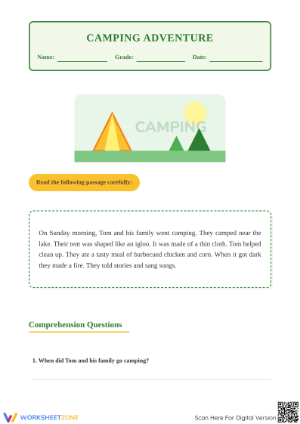
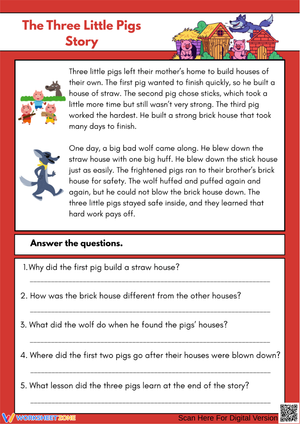
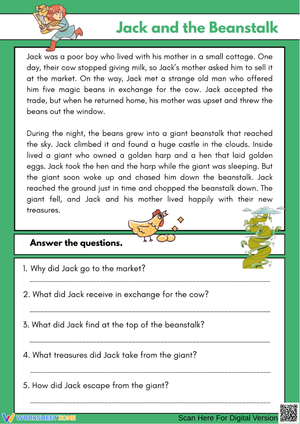
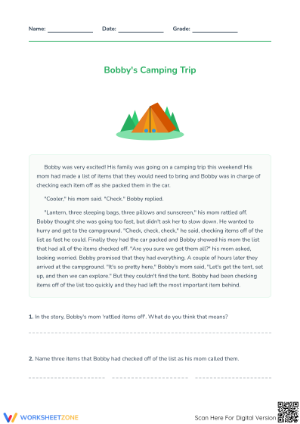
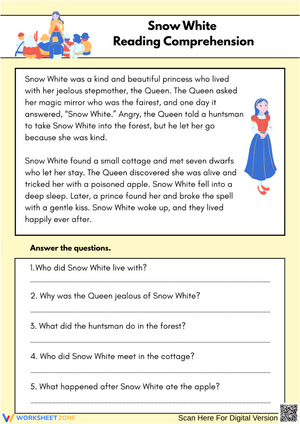
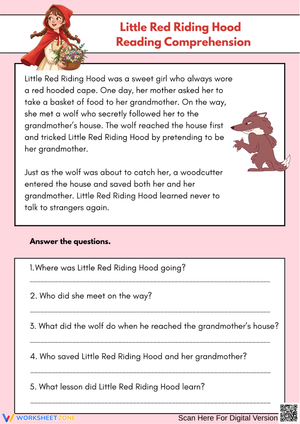
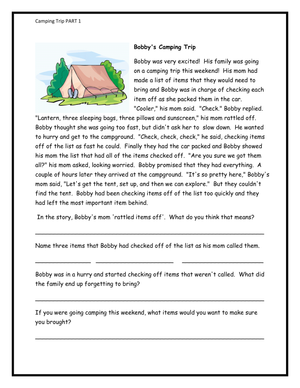
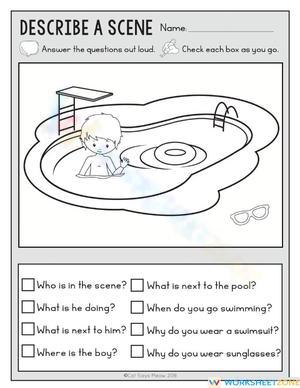
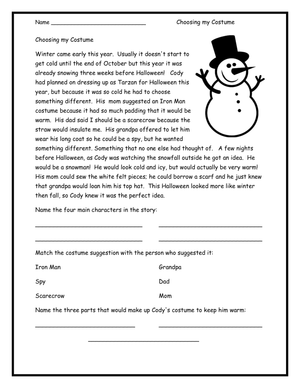
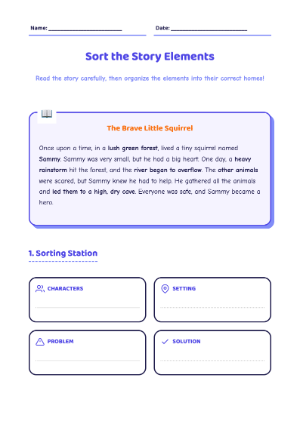
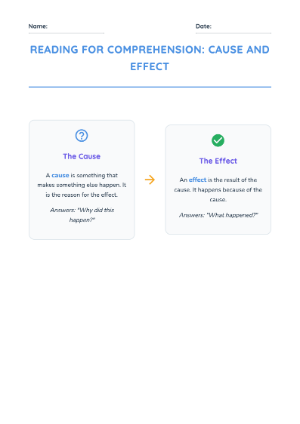
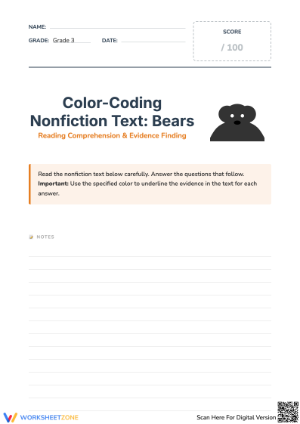
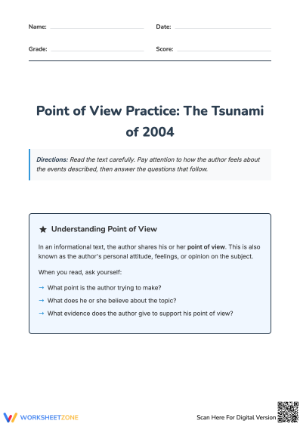
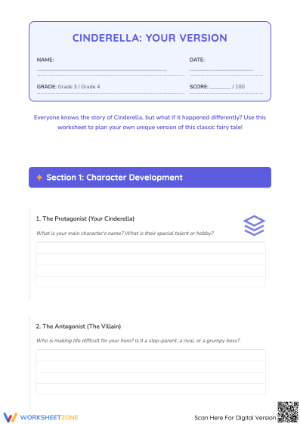
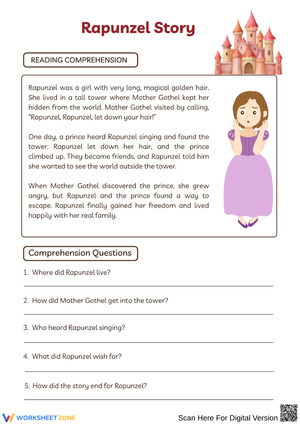
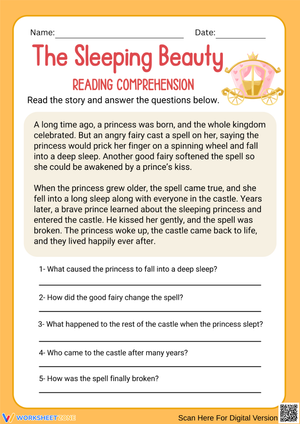
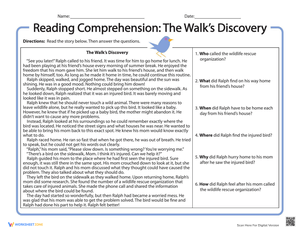
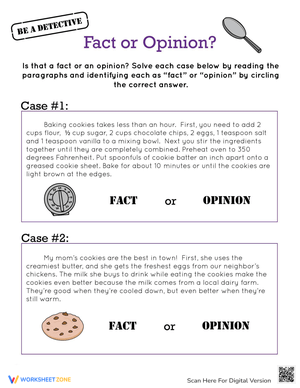
3rd grade short story worksheets give teachers a direct route to the RL.3 reading literature standards — the ones requiring students to cite text evidence, recount stories, and explain how character traits drive plot events. This set pairs original fiction passages with targeted comprehension tasks that reflect the actual skill demands of Grade 3, when students move from decoding fluency toward the first real work of analytical reading.
The Specific Skills Targeted
Each worksheet addresses one or more of four skill areas that anchor the Grade 3 ELA reading literature strand:
- Text evidence — citing specific sentences from the passage to support a written answer
- Central message — identifying the moral or lesson and connecting it to story details
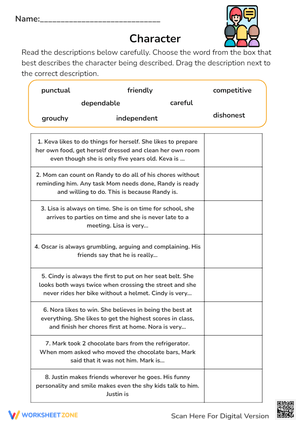
- Character analysis — describing traits, feelings, and motivations based on what characters say, do, and think
- Vocabulary in context — using surrounding sentences to infer the meaning of unfamiliar words
Text evidence work runs through every worksheet in the set. Students mark the exact sentence that supports their answer before writing a response — a procedural step that makes citing evidence feel like part of the process rather than an add-on for high achievers. Over repeated use, that annotation habit carries into independent reading and eventually into standardized testing, where pointing to the text is the difference between a correct inference and a lucky guess.
Central-message tasks lean on fables, folktales, and myths because those genres embed a lesson inside the narrative rather than stating it outright. Students have to move from specific story details — what a character did, what happened as a result — toward a generalization about what the story means. That's the inferential move RL.3.2 asks for, and short, plot-tight stories are the best place to practice it. Character analysis appears as a structured three-part prompt: what the character says, what the character does, and what the character thinks or feels. Students collect those observations and then draw a conclusion about what kind of person the character is — a format that gives them something concrete to record before they write their interpretation. Vocabulary sections round out each worksheet, asking students to circle an unfamiliar word, reread the surrounding sentences for context, and write a definition in their own words.
Patterns in Student Work Worth Knowing Before You Assign
The central-message question is where the most predictable errors surface. Students who have read a fable correctly will still write answers like "be kind" or "work hard" — technically connected to the story but not specific enough to show real comprehension. The stronger answer names who learned something, what happened to them, and why that outcome matters. When you model this on a shared passage — something like "Anansi learns that boasting about his strength pulls him into a trap he can't escape alone" — students see the difference between a theme keyword and a story-based inference. That model takes three minutes and cuts the vague-answer pile significantly.
Character analysis produces a different kind of error: students list what a character does rather than what kind of person those actions reveal. A student writes "Mia ran back to help" when the prompt asks for a character trait. Working through the distinction between an action and a trait — even briefly, before releasing students to work independently — prevents a whole round of corrections after the fact.
Text evidence errors cluster around two patterns. Some students copy a sentence from the passage that touches the right topic but doesn't actually answer the question — proximity without precision. Others paraphrase so loosely the connection to the text disappears entirely. Both patterns show up clearly in completed responses, which is one reason 3rd grade short story worksheets function well as formative checkpoints rather than summative grades. Sorting returned work into "cites precisely," "cites loosely," and "guesses without citing" takes about five minutes and tells you exactly where to aim the next morning's mini-lesson.
Building These Worksheets Into Your ELA Week
The most efficient placement is the opening of the independent reading block, right after a whole-group mini-lesson. Model one move on a projected passage — think aloud about how you found your text evidence, or how you went from "the fox tricked the crow" to naming a character trait — then release students to work through the questions on their own. That gradual release structure keeps each worksheet connected to explicit instruction rather than floating as quiet-time busywork.
For small-group guided reading, read the passage aloud together, pause to discuss vocabulary, then have students complete the questions while you observe their annotation habits. The worksheet becomes a record of the session rather than just an assignment. Students who finish early can annotate the passage a second time using a different symbol — a question mark for anything they found confusing, an exclamation point for a surprising moment — which produces something worth discussing when the group reconvenes.
3rd grade short story worksheets also hold up well as Monday warm-ups after a weekend break. Students can move through the passage and first two questions in about ten minutes, and fables are especially good for this purpose: the stories are short, the narrative stakes are immediately clear, and the ending lands fast enough to pull students back into close reading before the week's main work begins. Keep a few genre-varied worksheets available specifically for this slot — the genre shift alone keeps the routine from going stale.
Standard Alignment
These worksheets address three standards from the Common Core State Standards for English Language Arts, Grade 3 reading literature strand. RL.3.1 asks students to answer questions by referring explicitly to the text — the direct task on text-evidence items throughout the set. RL.3.2 focuses on recounting stories and determining the central message or moral supported by story details, which maps to every central-message question built around fables and folktales. RL.3.3 asks students to describe characters and explain how their actions contribute to the sequence of events, addressed by the structured character analysis sections. In classroom terms, this cluster represents the bulk of reading literature instruction in most Grade 3 ELA units from September through March, before the instructional emphasis shifts toward comparing texts in RL.3.9 during the final quarter.
Adjusting the Set for Different Reading Levels
The skill expectations stay constant across all students — citing evidence, identifying central messages, and analyzing characters are Grade 3-level expectations across the board. What changes is passage complexity. For students reading below grade level, shorter passages with more familiar vocabulary let them focus their working memory on the comprehension task rather than on decoding. For students reading above grade level, longer passages with more complex character motivations — realistic fiction tends to serve this purpose better than fables — push the analysis further without abandoning the same RL.3 skills.
3rd grade short story worksheets can also be adjusted at the response level. Below-level readers often benefit from sentence starters on open-ended questions ("The character's most important trait is ___ because ___"), while students working above grade level write a full paragraph explaining how a character changed from the beginning of the story to the end. One honest tradeoff worth naming: fables work well for central-message tasks, but advanced readers sometimes find the lesson too transparent for the character analysis to feel meaningful. Pairing those students with myths or realistic fiction passages gives the analytical work more traction.
Frequently Asked Questions
What Lexile range should I look for in Grade 3 short story passages?
Grade 3 students typically read in the 520L–820L Lexile range, though the spread in any given classroom is usually wider than that. For independent practice, match the passage to a student's instructional reading level — challenging enough to require effort but accessible enough to allow independent work. For whole-group modeling, a passage in the middle of the grade-level band works well because most students can access the text while still having to work for comprehension.
How do these worksheets fit alongside a core ELA program?
Most Grade 3 core programs spend significant time on novel studies or extended informational text units. These worksheets fill the short narrative fiction gap — giving students regular practice with story comprehension in tight, focused sessions that don't require multiple days to complete. They work best as regular supplements during the independent reading block or literacy center rotation, not as replacements for the core program's extended reading work.
Can these be used for reading assessment?
They work better as formative tools than as summative grades. A completed worksheet tells you whether a student can cite evidence, identify a moral, and describe a character on a given day with a given passage — but that single data point doesn't tell you whether the skill is secure across text types and difficulty levels. Tracking error patterns across several worksheets over a few weeks is more diagnostic than any individual score, and it surfaces the students who consistently avoid open-ended questions or who never move past literal recall — exactly the pattern worth addressing before the end-of-unit assessment.












 Interactive Worksheet Maker
 Quiz Maker
 Word Search Maker
 Crossword Puzzle Maker
 Word Scramble Generator
 Sentence Scramble Generator
 Handwriting Worksheet Generator
 Name Tracing Generator
 Fill In The Blank Generator