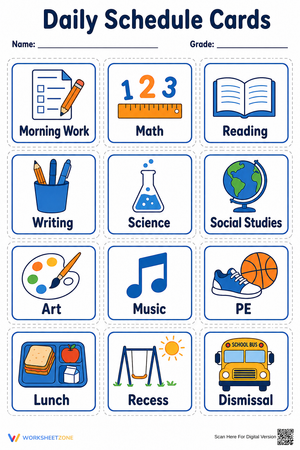
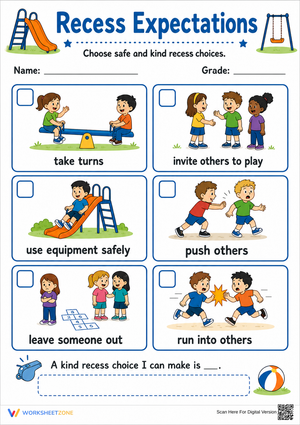
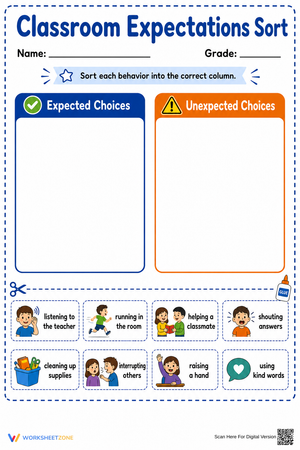
These 2nd grade community culture worksheets pdf give teachers a concrete foothold in one of Grade 2 social studies' hardest conceptual moves — asking 7-year-olds to recognize that communities share the same fundamental needs while meeting them in completely different ways. The set covers family traditions, cultural landmarks, vocabulary practice, and heritage activities, formatted for independent work, small groups, or home-connection assignments.
The Specific Skills These Worksheets Target
The vocabulary demands of this unit are real. "Tradition," "heritage," "diversity," and "community" are abstract nouns that show up on assessments and in classroom discussion — but second graders need to encounter them in context, not just in a word list. Each worksheet ties these terms to something a student can point to: a food their family makes, a song they know, a neighborhood building they pass. The worksheets ask students to:
- Define and illustrate key vocabulary terms using personal examples from their own families
- Interview a family member about a specific custom and record what they learn in a structured format
- Identify cultural landmarks in their neighborhood and mark them on a simple community map
- Sort cultural elements — clothing, music, food, holidays — by category, then find similarities across different groups
- Complete comparison charts placing two cultural traditions side by side, noting what is shared and what is distinct
The "Culture Suitcase" activity — where students draw or label items representing their family heritage — stands out as a particularly strong prompt. It asks students to decide which practices feel most meaningful rather than simply listing everything they know, which moves the thinking toward evaluation instead of recall.
Patterns in Student Work Worth Watching For
The error that shows up most consistently is the conflation of "tradition" with "holiday." A student will write "my tradition is Thanksgiving" and stop there — treating the holiday name as a complete answer rather than describing what their family actually does. The worksheets that ask students to name a specific action ("We always make tamales the night before") rather than a category label ("Christmas") produce much richer responses and reveal whether students are grasping the concept or merely labeling it.
Vocabulary confusion between "heritage" and "culture" is equally common. Students often write that their heritage is the name of a country — "my heritage is Mexico" — without reaching toward the generational and historical dimension the word carries. When you see that pattern on completed worksheets, it signals a need to revisit the term with a two-question sequence: What did your grandparents pass down to your parents? Then: What has your family passed down to you? That conversation moves students from geographic labeling to genuine understanding faster than any re-teaching of the definition.
Building These Worksheets Into Your Social Studies Block
The most reliable entry point is starting with students' own experience before distributing anything. A five-minute whole-class share — one thing your family does every year that you just do, without anyone telling you — generates the kind of authentic material that makes the vocabulary land. The "Family Tradition Interview" worksheet works best when it follows that conversation by a day, giving students time to talk with family before they fill out the structured form. Rushing it into the same class period undercuts the home-connection value.
For station rotations, three setups work well together: a vocabulary and matching station, a landmark mapping station, and an illustration station for the Culture Suitcase activity. Rotating groups of four through 15-minute blocks keeps engagement high and creates room to sit with each group for targeted questioning. At the end of the unit, collecting the completed worksheets into a bound classroom book — one entry per student — produces a document that students actually want to read, because they recognize themselves and their classmates in it.
Standard Alignment
The resources align directly with the C3 Framework for Social Studies State Standards, particularly Dimension 2 within the Civics and Geography strands. Standard D2.Civ.7.K-2 asks students to explain how people work together to make decisions in the classroom and school; the community mapping and landmark activities connect to that by showing how cultural contributions shape shared public spaces. The 2nd grade community culture worksheets pdf set also addresses D2.Geo.4.K-2, which expects students to explain how environmental and cultural characteristics influence where people live — a concept made accessible here through neighborhood landmark identification and community mapping activities.
Grade 2 is the standard placement for community and culture units in most state frameworks because it sits at the intersection of two developmental readiness factors: students this age can hold more than one group membership in mind simultaneously — family, classroom, neighborhood — and they have developed enough narrative ability to retell family stories with some structure. Both of those capacities are what make inquiry-based work viable at this level. The 2nd grade community culture worksheets pdf resources are built around that developmental window, using concrete cultural artifacts as the entry point into abstract social science concepts.
Adjusting the Set for a Range of Learners
For students still developing English proficiency, worksheet prompts that rely on drawing and labeling rather than sentence writing carry the same conceptual weight without the added language barrier. The comparison chart activities can be modified by pre-filling one column with teacher-provided examples, so the student focuses on completing one side independently. The interview worksheet often supports home language participation naturally — families can respond in whatever language they use at home, and the student brings those notes back to translate or discuss.
Students who finish quickly and accurately need more complexity in the comparison and evaluation tasks, not more repetition of the same exercise. Ask them to identify a tradition from their own family and one from a classmate's family, then write two sentences about what those traditions share at a deeper level — not "both have food" but "both happen when something important is being celebrated." That level of generalization is the precursor to the historical thinking skills they will use in 3rd and 4th grade social studies.
Frequently Asked Questions
Do these worksheets require students to share personal or family information they might not be comfortable disclosing?
Some students — particularly those in foster care, with nontraditional family structures, or who have experienced cultural displacement — may find tradition-focused prompts difficult. The format allows easy adjustment: instead of "describe your family's tradition," the prompt can become "describe a tradition from any community you belong to," which opens the door to classroom routines, school customs, or neighborhood practices. The underlying skill — identifying and describing cultural practices — stays intact.
Can the interview worksheet function as a graded assessment?
It can, but it works better as a formative check than a summative grade. What a student records from an interview tells you more about their ability to ask questions and organize information than about their understanding of heritage as a concept. Use it to identify who needs more vocabulary support, then follow up with a structured written response on a separate worksheet if you need a gradable artifact tied to specific learning targets.
How do you handle it when a student says they "don't have a culture"?
This comes up in classrooms where most students share the same background, or where dominant-culture students see their practices as "normal" rather than cultural. It is one of the most teachable moments the unit generates. The most direct response is to ask the student what their family eats on a specific holiday, then ask whether every family in the class eats the same thing. That single comparison resolves the confusion faster than any definition. The 2nd grade community culture worksheets pdf comparison activities create those moments structurally — they build in the contrast that makes cultural distinctiveness visible to kids who have never had reason to notice it before.