2nd grade social studies worksheets give teachers a ready set of tools for one of the curriculum's most content-dense years — the year students formally move from studying self and family to studying community, geography, civics, and economics, often in the same semester. Each worksheet targets a specific concept so teachers can pull the right resource for a lesson without rebuilding background context each time.
The Specific Skills Targeted
The set spans five content strands that reflect the standard Grade 2 social studies scope. Within each strand, worksheets progress from recognition and sorting toward explanation and application.
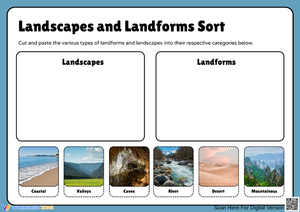
- Community types: Students compare urban, suburban, and rural settings by examining physical features, land use, and regional jobs. Activities include image-based sorting, Venn diagrams comparing two community types, and short-answer prompts where students explain their classification choices rather than just make them.
- Map skills: The sequence moves from labeling compass rose directions to reading a map key, then to using a grid to locate features on a neighborhood map, and finally to building a simple map from scratch — with a title, key, and directional marker. Each worksheet assumes the previous step is in place.
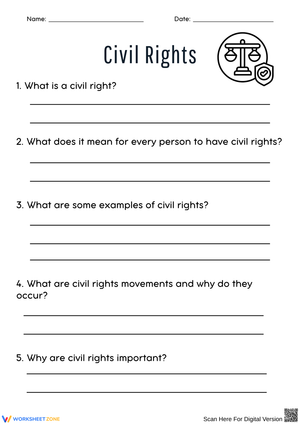
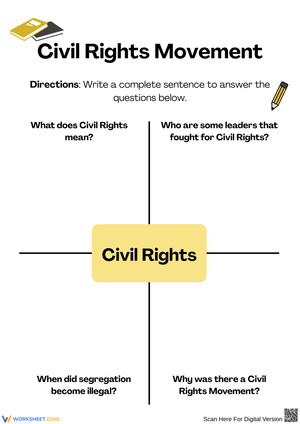
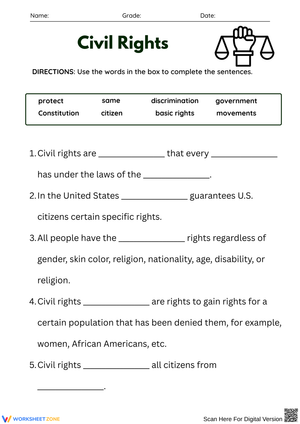
- Civics and citizenship: Scenario-based worksheets ask students to distinguish rules from laws, identify who holds leadership roles in a community (mayor, principal, fire chief), and evaluate whether a character's actions qualify as responsible citizenship — with a written explanation required.
- Economics: Students sort needs and wants, match community workers to the goods or services they provide, and work through a $5 spending-choice scenario that requires a written sentence justifying their decision.
- Then and now: Side-by-side comparison worksheets examine how transportation, communication, and daily household routines have changed over time, with prompts that push students toward identifying a cause for the change rather than just describing it.
Error Patterns That Show Up in Student Work
The community-types strand produces one of the most consistent errors in second-grade social studies: students use population size as their sorting rule rather than land use and density. A student who confidently places "skyscrapers and subway systems" in the urban column will still mark "a medium-sized city with a downtown" as suburban — because they've absorbed the message that urban means "really big." This misunderstanding surfaces when students work through the sorting worksheet, but it starts well before it. A brief pre-teaching conversation about what makes a place urban (density and land use, not just size) matters more than any correction written at the bottom of a returned worksheet.
The economics worksheets reliably surface a second issue: students apply the "food, clothing, shelter" definition of needs correctly on the easy items, then hit the edge cases. Is a winter coat a need in July? They're not sure. Students who answer "no" aren't wrong — they've stumbled into context-dependent scarcity without having language for it. That confusion is worth naming aloud, because it means students are thinking more precisely than the simplified definition allows.
Map skills produce a specific and predictable orientation error. Students learn that North is "up" on the compass rose, but "up" for a seven-year-old means toward the front of the room, which shifts depending on where they're sitting. A student who rotates the paper to face the board will draw or label the map with South at the top and not notice anything wrong. A brief outdoor anchor — standing outside and physically pointing toward actual geographic North before beginning the map worksheets — resolves this faster than any written correction can.
How to Work These Worksheets Into Your Lesson Plans
These resources perform best when they follow direct instruction or a shared text rather than leading it. The civics scenario worksheets land better immediately after a read-aloud — students have just processed a story about community rules and can apply that thinking right away. Dropped cold into a Thursday afternoon review block, the same worksheet takes twice as long and produces flatter written responses. Sequence matters more than most teachers expect with this content.
The map skills worksheets have enough internal progression to function as a short stand-alone unit. Spread across two weeks with one worksheet every other day, the spacing gives students enough time between practice sessions for compass directions and map key conventions to move from working memory into long-term retention rather than evaporating by Friday. Pair the map-creation worksheet at the end of the sequence with a brief classroom walk where students trace a physical route and then represent it on paper — the transition from physical movement to spatial representation is where the abstract thinking actually takes hold.
The economics worksheets fit naturally into a station rotation. The needs-and-wants sort works well as a partner activity; the spending-choice scenario works better as an independent written response, since the goal is to see each student's reasoning on paper. Running both in the same station on the same day gives an informal formative read without requiring a separate assessment task. Used this way, 2nd grade social studies worksheets function as distributed checkpoints across the unit rather than review concentrated at the end.
Standard Alignment
These worksheets align with the College, Career, and Civic Life (C3) Framework for Social Studies State Standards across three disciplinary domains:
- D2.Civ.1.K-2: Civics worksheets address the standard requiring students to describe the roles of people in authority and explain why rules and laws matter in a community. The scenario-based format — where students evaluate a character's civic behavior in writing — targets the standard's emphasis on applied civic reasoning rather than definition recall.
- D2.Geo.2.K-2: Map skills worksheets address the standard for using geographic tools and representations to identify and describe locations and physical characteristics of places. The progression from reading to creating maps reflects the active application the standard requires.
- D2.Eco.1.K-2: Economics worksheets address the expectation that students explain how economic decisions affect individuals, starting with needs, wants, and the basic premise that resources are limited.
Most state-level Grade 2 social studies frameworks align closely with the C3 structure, particularly in civics and geography. Teachers working under NCSS-aligned state standards will find these 2nd grade social studies worksheets map cleanly onto their scope-and-sequence documents without significant translation required.
Reaching Different Learners Within the Same Set
For students still building reading fluency, the scenario-based civics worksheets carry a heavier print load than the rest of the set. The content is well within second-grade cognitive reach, but decoding the scenario text consumes enough processing capacity that some students run out of bandwidth before they get to the thinking work. Reading the scenario aloud as a class before independent work removes that barrier without changing what students are asked to produce.
Students who move through sorting and matching tasks quickly need extension that asks them to explain rather than categorize. Adding a single prompt — "Write a sentence explaining why you put this item in this column" — turns a community-types sorting worksheet into a reasoning task without creating a new document. For economics, asking those students to write a second spending-choice scenario with different constraints pushes them toward generating the concept rather than just recognizing it.
For students who need additional support with abstract civic concepts, the then-and-now comparison worksheets are the most accessible entry point in the set. The side-by-side visual format gives concrete anchors — students can answer "what changed?" by looking at two images before they need to produce analytical language. Starting there before the scenario-based civics work gives those students a successful content experience first, which matters for engagement when the harder tasks arrive later in the unit.
Frequently Asked Questions
Do these worksheets need to be taught in a specific order?
The map skills worksheets build on each other and work best taught in sequence. The other four strands — community types, civics, economics, and then-and-now comparisons — can be taught in whatever order a pacing guide requires. Many teachers start with community types because the vocabulary (urban, suburban, rural, community helper) carries over naturally into the civics and economics units and reduces the load of introducing new terms mid-unit.
Are these worksheets appropriate for homework?
The sorting and labeling worksheets travel home well. Parents and caregivers can check them without social studies background, and students can complete them independently once the concept has been introduced in class. The scenario-based worksheets — civics and economics — are better kept in the classroom. The value in those tasks is the written reasoning, and catching errors in that reasoning requires being in the room.
How do the then-and-now worksheets handle historical comparison content?
Each then-and-now worksheet presents a side-by-side comparison within one specific domain — transportation, household communication tools, or daily routines — with labeled images and two guided prompts. Students identify one thing that changed and one that stayed the same, then write a sentence connecting a change to a cause. The format keeps the task grounded in visible evidence while still requiring causal thinking, which fits where Grade 2 students are developmentally — observing and explaining before they begin formal historical analysis in upper elementary.
Can I use these alongside a published social studies textbook?
These 2nd grade social studies worksheets work alongside any published textbook series. The content scope reflects the standard Grade 2 curriculum, which means alignment with most published programs is straightforward. They work especially well as practice activities following a textbook chapter, when students have already met the vocabulary and can focus on applying it rather than learning it for the first time.