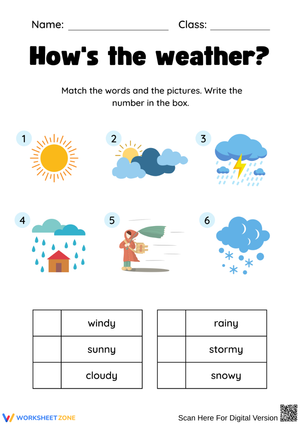
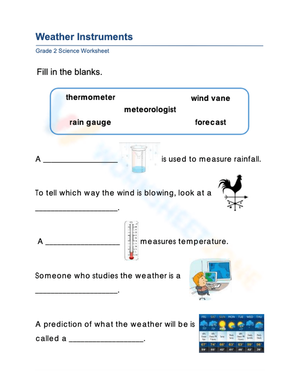
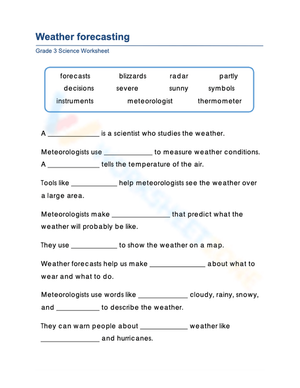
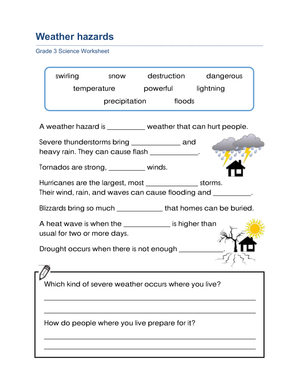
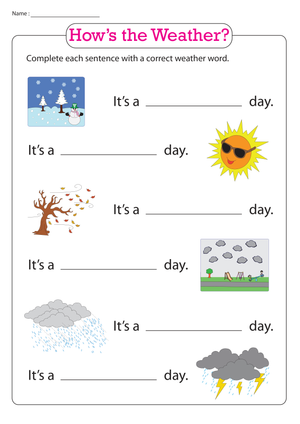
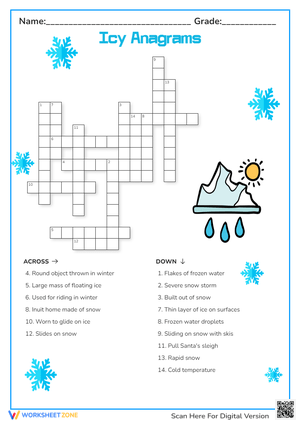
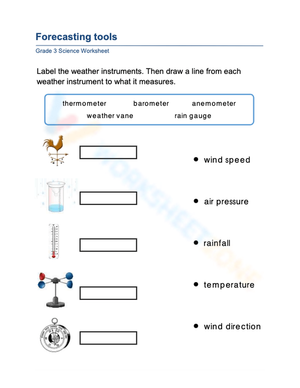
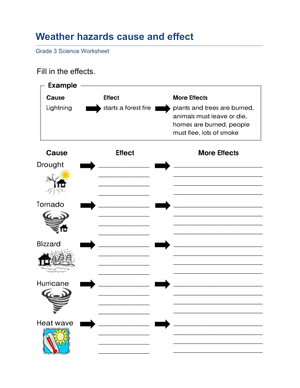
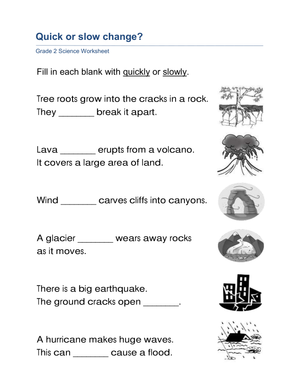
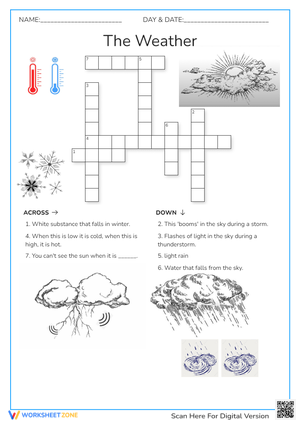
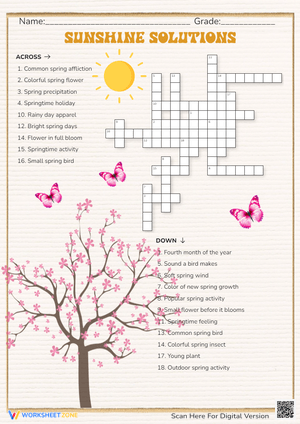
2nd grade weather and climate printable worksheets give teachers a ready set of materials for one of the most conceptually demanding units in early elementary science — the distinction between short-term atmospheric conditions and long-term regional patterns. The set spans daily observation logs, climate zone maps, severe weather safety matching activities, and the weather-vs.-climate sorting tasks that second graders need before this vocabulary hardens into lasting confusion. The resources are practical enough to run as Monday warm-ups and substantive enough to anchor a three-week unit.
The Conceptual Core: Weather Versus Climate
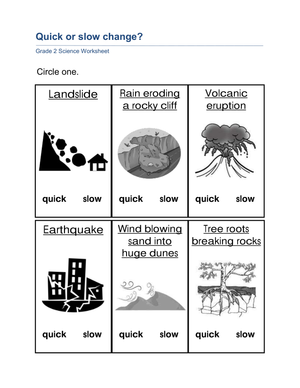
Second graders arrive with strong weather instincts — they know it rained yesterday and that summer is hot — but they have almost no framework for treating climate as something distinct from weather. The confusion is developmental, not careless. A seven-year-old's experience is fully present-tense, which makes "long-term regional pattern" feel abstract in a way that a thunderstorm does not. The sorting worksheets in this set use image-based prompts to make the distinction concrete: a photo of a single storm is weather; a description of a region that receives heavy rain every year is climate. Once students sort a few dozen examples, the categories begin to stabilize.
The clothing analogy holds up well in practice. Weather tells you what to put on this morning; climate tells you what to keep in your closet year-round. When a student from a temperate region works through a climate zone worksheet and sees that a tropical region never needs a winter coat, the logic clicks. That conceptual bridge — from personal experience to geographic pattern — is where this material does its most useful work at this age.
What Students Practice Across the Set
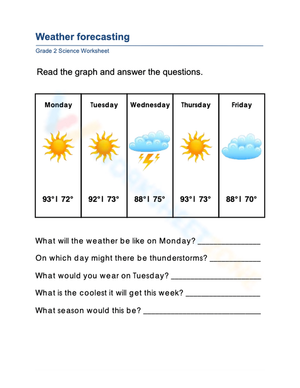
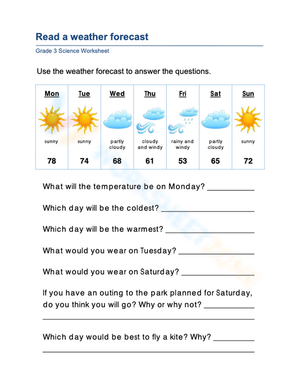
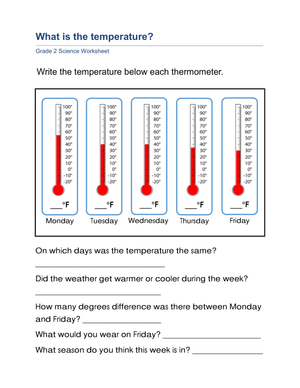
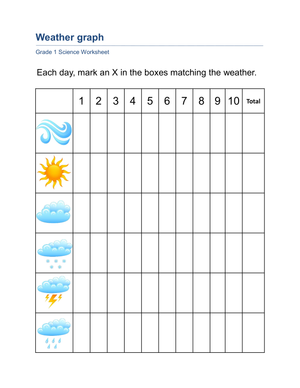
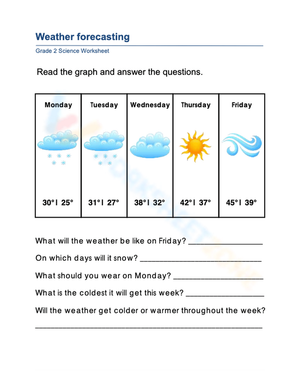
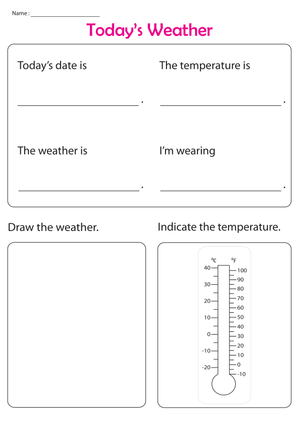
The activities build from direct observation toward interpretation and comparison. Students record daily temperature, cloud cover, and precipitation on observation logs; annotate simple maps to identify tropical, temperate, and polar zones; sort weather and climate scenarios using cut-and-paste or circle-and-label formats; match severe weather events to appropriate safety responses; and graph weekly weather data to identify emerging patterns. The graphing work earns its own mention: turning a week of temperature readings into a bar graph is an applied math moment that many second graders don't expect in science, and it reinforces number sense at the same time. Each worksheet targets a discrete skill, so teachers can pull individual pieces for a warm-up or review block rather than running the full sequence every time.
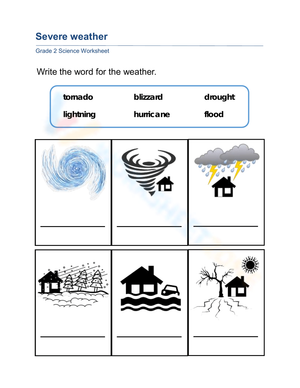
The severe weather component deserves emphasis. Students match events — tornado, blizzard, hurricane, lightning storm — with correct safety preparations. This isn't only science content; it reduces anxiety. Second graders who understand there is a correct response to a tornado warning feel less frightened by the concept. 2nd grade weather and climate printable worksheets approach this material matter-of-factly, which is exactly the tone that works with this age group.
Fitting These Worksheets Into Your Planning Week
The observation log worksheets work best as a standing morning routine rather than a one-day lesson. Assign a rotating "Classroom Meteorologist" each week — that student goes to the window, reads the outdoor thermometer, and reports official conditions to the class before anyone writes anything down. The rest of the group records the meteorologist's report on their tracking sheets. This small structure matters: it creates consistent class-wide data for the graphing activities later in the week and turns a routine recording task into a leadership role that students genuinely compete for.
Climate zone map worksheets function well in a science center alongside a few physical props — a globe, a picture book about polar animals, and a laminated reference card showing the three major zone types. Students who visit the center color and annotate their maps while cross-referencing the globe, which grounds the abstract geography in something three-dimensional. For the severe weather safety worksheets, a whole-class discussion immediately after completion tends to deepen the material more than silent independent work alone — second graders process safety information better when they can talk through it together, even for five minutes at the end of the block.
Errors That Show Up Reliably in Student Work
The most consistent error is treating season as synonymous with climate. A student who lives in a region with four seasons will confidently write "winter" as the climate of their town — they are naming a weather pattern they know personally, not a regional type. The fix is returning to the sorting worksheet and asking whether their town ever has summer. Once they recognize that the same region has both hot and cold periods, they understand that seasonal change is actually evidence of a temperate climate, not four separate climates. It usually takes one or two guided examples before this reframes itself correctly.
A second error appears in the data-recording worksheets. Students often write down what they expect the weather to be — based on the season or something they heard at home — rather than what they actually observe at the window. A child who knows it is November will write "cold" on a genuinely mild afternoon because November is supposed to be cold. Building in the habit of looking before writing, even if it means walking to the window together as a class before anyone picks up a pencil, addresses this before it becomes a pattern that undermines the whole observation sequence.
Standard Alignment
The formal NGSS performance expectations for weather and climate data — specifically 3-ESS2-1, which asks students to represent data across seasons, and 3-ESS2-2, which asks them to describe climates in different world regions — land in Grade 3. These worksheets build the observational and classificatory groundwork that makes those standards accessible once students get there. Many state-level Grade 2 science frameworks explicitly introduce weather patterns and basic measurement tools at this grade, and 2nd grade weather and climate printable worksheets align directly to those preparatory objectives. If your state uses the full NGSS framework without modification, treat these materials as strong readiness work for the Grade 3 Earth's Systems unit rather than as summative assessment content.
Adjusting the Work for Different Learners in the Same Room
For students who need more support, the sorting and matching formats — weather vs. climate categories, severe weather events vs. safety responses — remove the blank-page problem entirely. There are finite choices to evaluate rather than open-ended sentences to construct. Pairing a vocabulary reference card with the observation log also helps students still building science terminology, without removing the challenge of the recording task itself. The structured format carries the task without simplifying the content.
Students who move through the basics quickly can extend the observation logs into a multi-week data set and look for trends. Ask them to compare class data to published temperature averages for your city and explain any differences in writing. That task — comparing observed data to expected patterns and accounting for discrepancy — is genuinely higher-order thinking. 2nd grade weather and climate printable worksheets anchor that extension work even for students operating well above grade level, because the data they collected themselves is the starting point. The climate zone maps also extend naturally: advanced students can research one animal from each zone and explain in writing how the regional climate shapes the animal's physical adaptations, adding a life science thread to an Earth science unit without requiring separate materials.
Frequently Asked Questions
How do I explain the weather-versus-climate distinction to a seven-year-old who keeps conflating the two?
The most effective approach pairs the clothing analogy with an immediate sorting activity. Weather tells you what jacket to grab this morning; climate tells you whether your family owns a winter coat at all. Deliver the explanation, then have students sort five or six picture prompts in the same sitting. Students who hear the definition and then categorize examples in the same lesson retain the distinction far better than students who only hear the explanation. The physical act of placing a card into the correct column seems to lock the concept in at this age in a way that passive listening does not.
What tools do second graders actually need for the observation log activities?
An outdoor thermometer mounted where students can read it from inside — or just outside a supervised door — is sufficient for the core observation work. A simple plastic rain gauge adds depth if you want students tracking precipitation across weeks. Students do not need a full weather station. The instructional goal is establishing the habit of systematic observation, not instrument precision. A thermometer and a consistent window view are enough to get started, and the data that comes from even that modest setup is enough to generate meaningful graphs by the end of a unit.
Can these worksheets run across multiple seasons, or do they only make sense during a designated weather unit?
The observation logs run most powerfully across multiple weeks or seasons because pattern recognition requires time. A single week of data produces seven data points; six weeks of data shows the beginning of a genuine trend line. Teachers who keep the observation log running as a low-stakes morning routine from September through November end up with a data set that makes the graphing and prediction activities far more meaningful than a one-week sprint ever produces. The other worksheets — sorting, maps, severe weather — work well as standalone lessons at any point in the year, including as review before standardized assessments.












 Interactive Worksheet Maker
 Quiz Maker
 Word Search Maker
 Crossword Puzzle Maker
 Word Scramble Generator
 Sentence Scramble Generator
 Handwriting Worksheet Generator
 Name Tracing Generator
 Fill In The Blank Generator