


























Views
Downloads

Printable Grade 2 Weathering Erosion & Deposition Worksheet
Paste this activity's link or code into your existing LMS (Google Classroom, Canvas, Teams, Schoology, Moodle, etc.).
Students can open and work on the activity right away, with no student login required.
You'll still be able to track student progress and results from your teacher account.
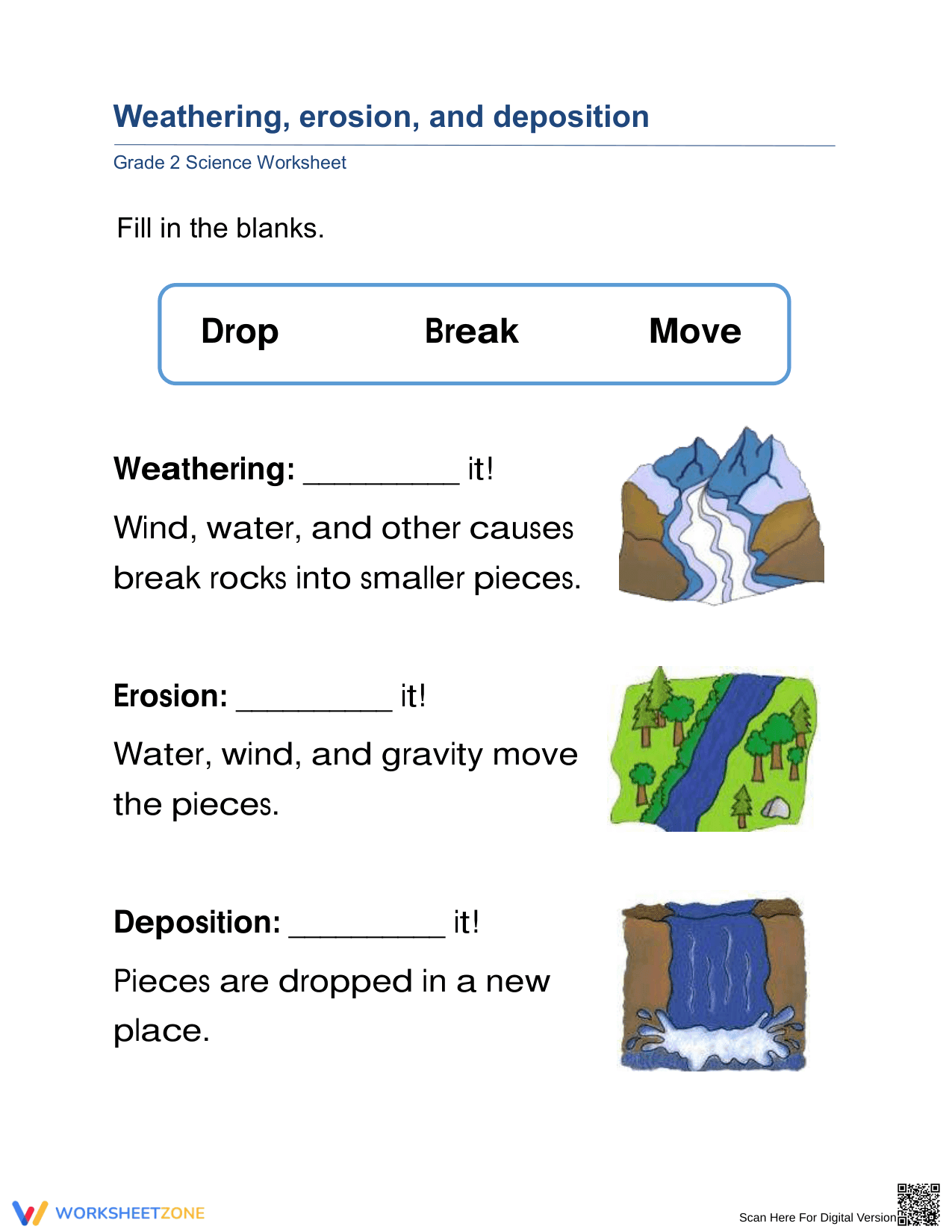
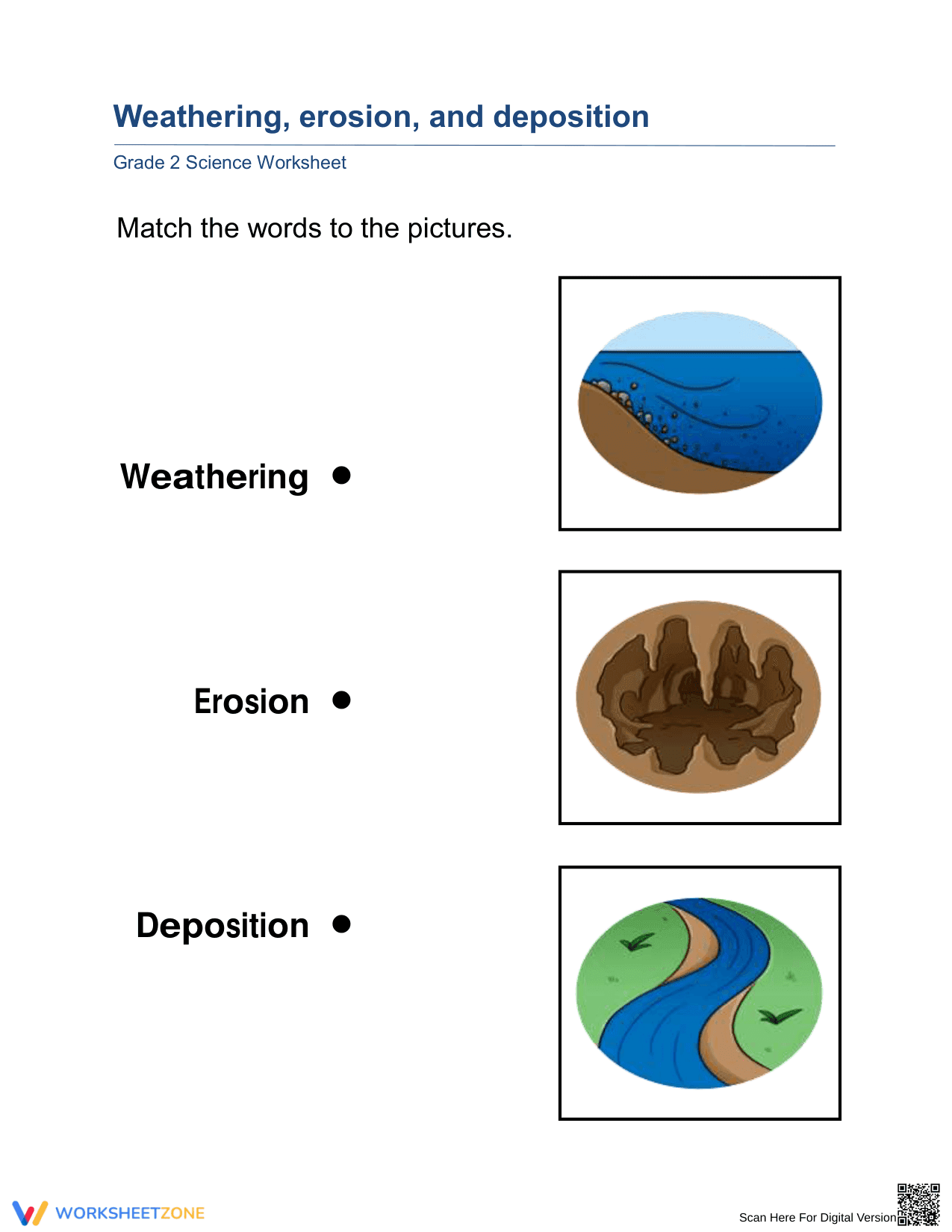
This Grade 2 science worksheet helps students distinguish between weathering, erosion, and deposition through visual cues and targeted vocabulary practice. By completing this activity, learners master the fundamental Earth science processes that continuously reshape our natural landscapes. This resource ensures students can accurately identify how Earth materials break, move, and drop in new locations.
At a Glance
- Grade: 2 · Subject: Science
- Standard:
2-ESS1-1— Use evidence to show that Earth events can occur slowly- Skill Focus: Weathering, Erosion, and Deposition definitions
- Format: 1 page · 3 problems · Answer key included · PDF
- Best For: Independent practice or quick formative assessment
- Time: 5–10 minutes
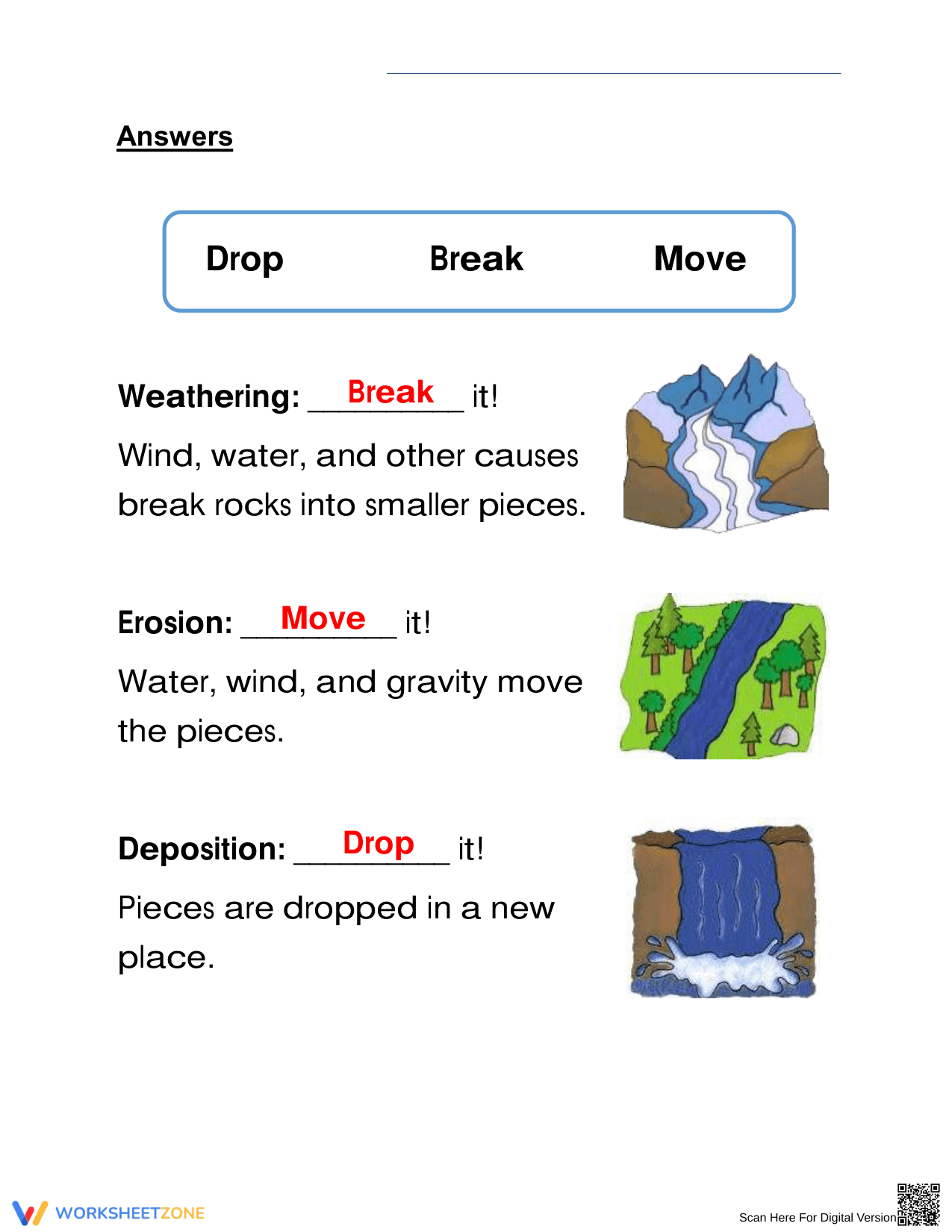
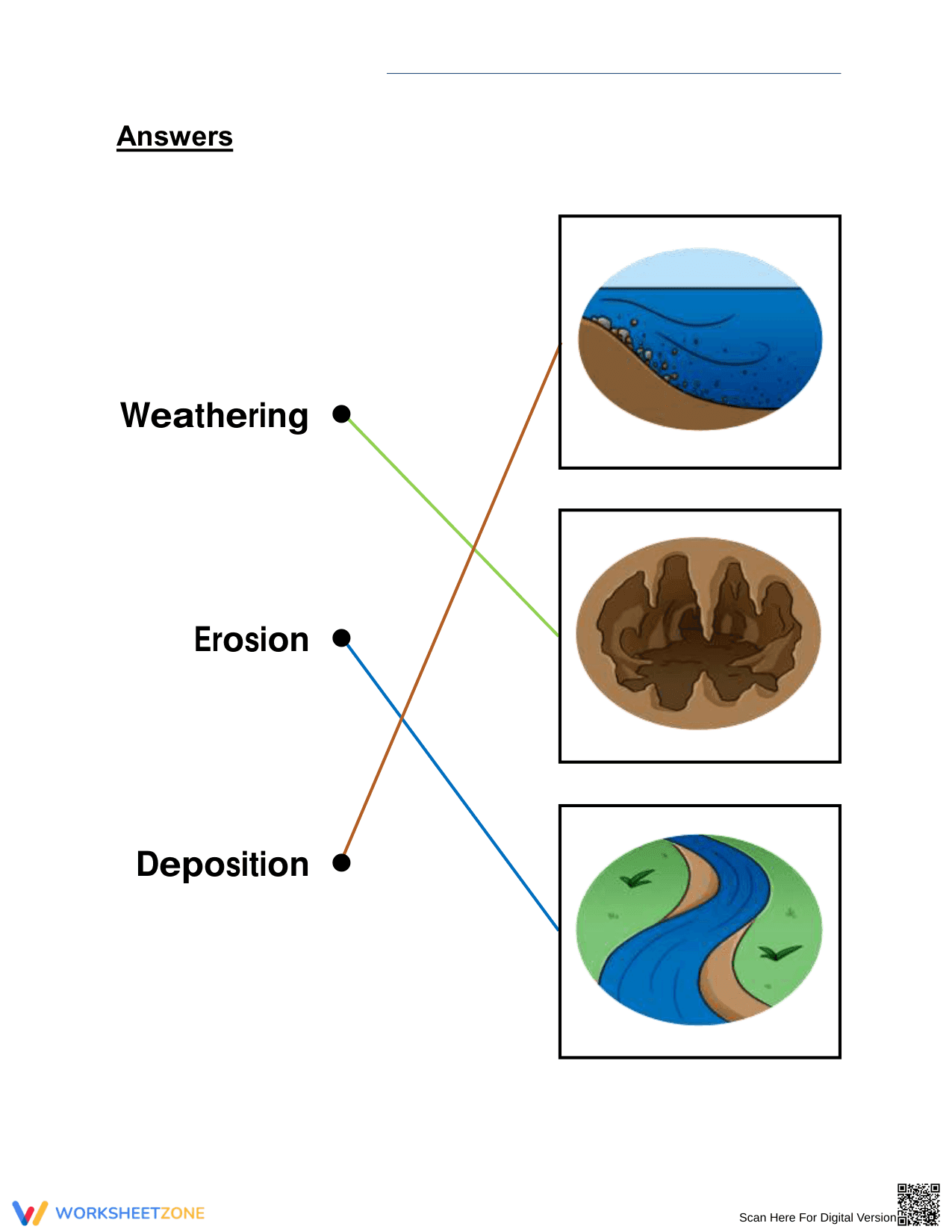
What's Inside: This single-page PDF features a word bank containing three primary action verbs: "Break," "Move," and "Drop." Students apply these terms to definitions and high-quality illustrations of a glacier, a river valley, and a waterfall. The layout includes clear workspace for fill-in-the-blank responses and a dedicated section for each Earth process, supported by a full answer key for rapid grading.
Zero-Prep Workflow: This resource is designed for immediate classroom implementation. First, print the single-page document (30 seconds). Second, distribute to students as a "do-now" or exit ticket (30 seconds). Third, review the answers as a whole group to clarify misconceptions (1 minute). Total teacher preparation time is under two minutes, making this an ideal selection for unexpected sub plans.
Standards Alignment: This activity aligns with NGSS `2-ESS1-1`, which requires students to "use information from several sources to provide evidence that Earth events can occur quickly or slowly." By defining these slow-acting processes, students build the vocabulary needed to describe geological change over time. Both standard codes can be copied directly into lesson plans, IEP goals, or district curriculum mapping tools.
How to Use It: Assign this worksheet during the "Explain" or "Evaluate" phase of a lesson. It serves as an effective formative assessment tool; observe if students confuse the "moving" phase of erosion with the "dropping" phase of deposition. Expect most Grade 2 students to complete the three tasks in approximately seven minutes following a direct instruction session on Earth's systems.
Who It's For: This resource is tailored for general education second-grade classrooms, providing excellent vocabulary scaffolding for English Language Learners (ELLs) through the "Break, Move, Drop" mnemonic. It pairs naturally with a hands-on stream table demonstration or a read-aloud passage about geological changes. The simplified language ensures accessibility for students working at or slightly below grade level.
Scientific literacy in the early grades depends on the mastery of Tier 3 domain-specific vocabulary. According to Fisher & Frey (2014), the use of visual scaffolds and cloze-style tasks significantly improves the retention of complex concepts like `2-ESS1-1` for young learners. This worksheet utilizes a gradual release model where students move from recognizing a word to applying it to a concrete geological event. By focusing on the plain-English verbs of breaking, moving, and dropping, the activity reduces cognitive load while reinforcing the core scientific processes of weathering, erosion, and deposition. Research indicates that such structured practice in Earth science helps students develop a longitudinal understanding of how environments change, providing a necessary foundation for more complex middle-school standards. This 152-word summary confirms the worksheet's utility as a research-backed tool for improving student outcomes in primary science education.


