


























Views
Downloads

Essential Severe Weather Worksheet | Grade 2 Science
Paste this activity's link or code into your existing LMS (Google Classroom, Canvas, Teams, Schoology, Moodle, etc.).
Students can open and work on the activity right away, with no student login required.
You'll still be able to track student progress and results from your teacher account.
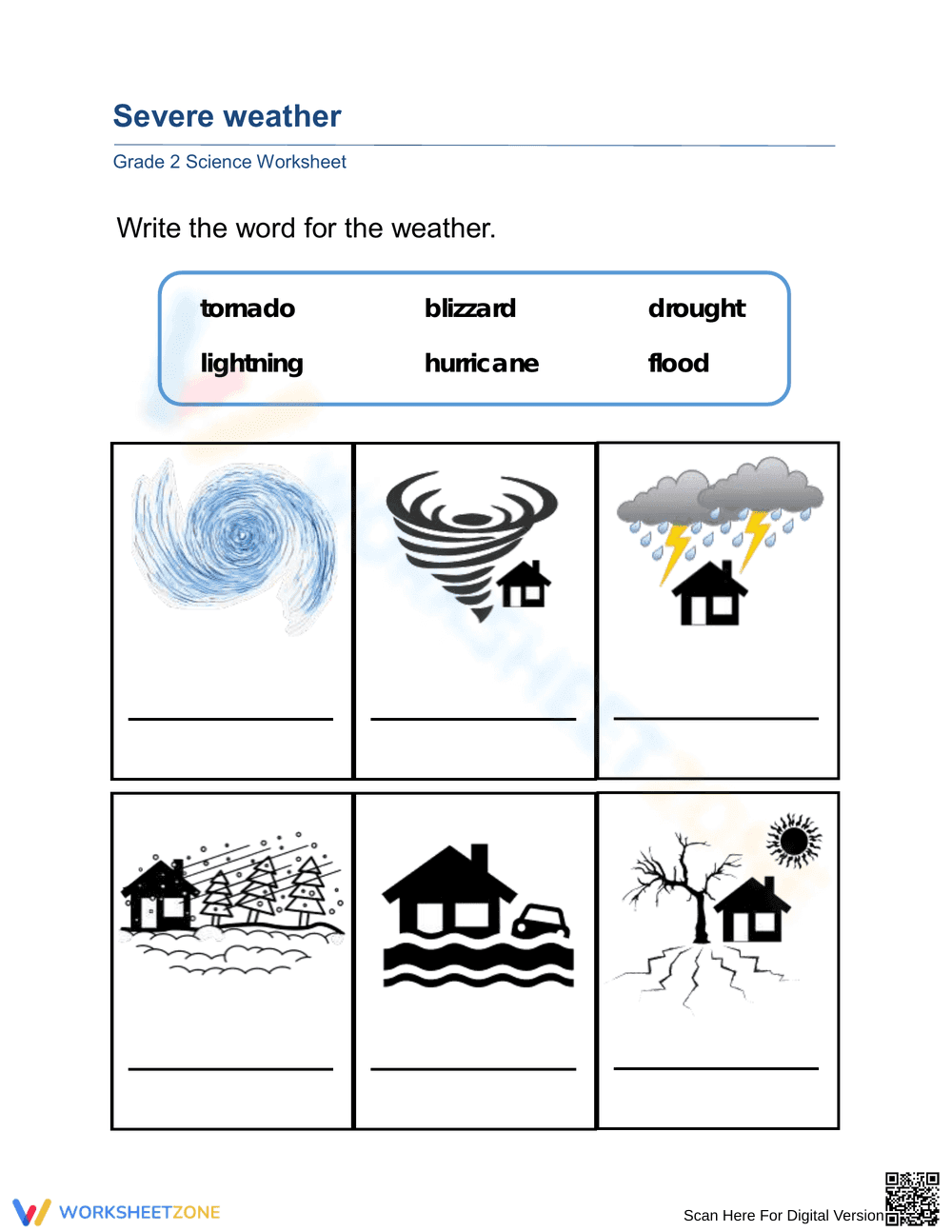
This Grade 2 Science worksheet focuses on severe weather identification, helping young learners recognize and name extreme atmospheric conditions. Students observe illustrations of natural phenomena—including hurricanes and blizzards—and match them with scientific terminology. This resource ensures students can accurately describe dangerous weather events and their unique characteristics.
At a Glance
- Grade: 2 · Subject: Science
- Standard:
2-ESS1-1— Use evidence that Earth events, like severe weather, can occur quickly- Skill Focus: Severe weather vocabulary and visual identification
- Format: 1 page · 6 problems · Answer key included · PDF
- Best For: Independent practice and science vocabulary reinforcement
- Time: 10–15 minutes
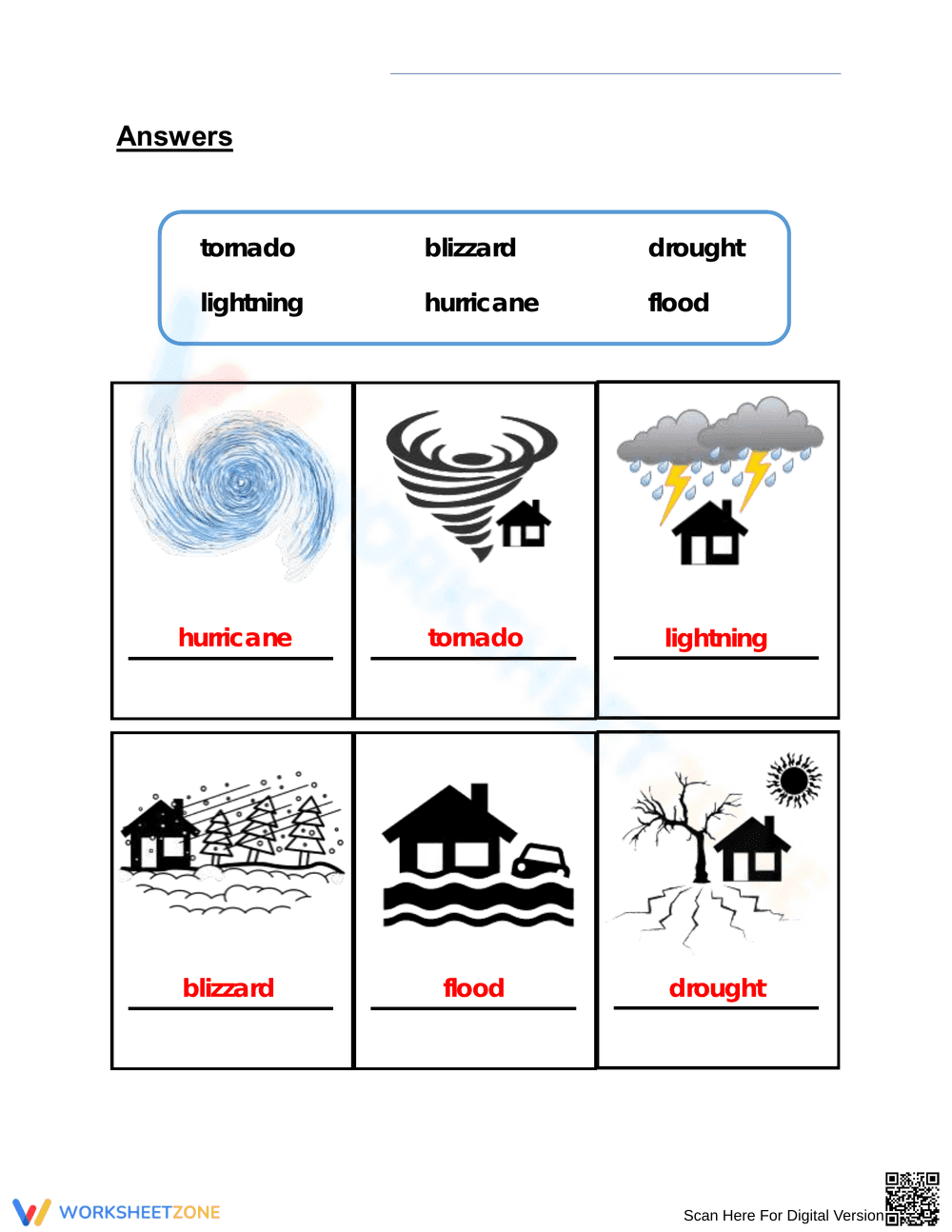
What's Inside: This printable packet contains a focused one-page student worksheet and a full-page answer key. The student page features a clear word bank containing six terms: tornado, blizzard, drought, lightning, hurricane, and flood. Six distinct illustrations provide visual cues for each condition. The clean layout is accessible for developing readers and those requiring visual support.
Zero-Prep Workflow: This resource is designed for immediate classroom use. First, print the single-page worksheet, which takes under 30 seconds. Next, distribute the sheets during your weather unit; students can begin immediately by referencing the provided word bank. Finally, use the included answer key for a rapid 2-minute whole-class review. Total preparation time is approximately 1 minute, making it an ideal choice for emergency sub plans.
Standards Alignment: The primary alignment is 2-ESS1-1, which requires students to identify Earth events that occur quickly. Identifying severe weather events like floods and tornadoes provides the foundational vocabulary to categorize these as "quick" events. Both standard codes can be copied directly into lesson plans, IEP goals, or district curriculum mapping tools.
How to Use It: Use this worksheet during the "Evaluate" phase of a science lesson. It serves as an excellent formative assessment tool; observe whether students distinguish between wind-based storms using visual evidence. The activity takes 10 to 15 minutes and works well as morning work or a "ticket out the door" to check for understanding after direct instruction.
Who It's For: This resource is tailored for second-grade students and provides vocabulary support for English Language Learners (ELLs). The visual nature of the tasks allows students with varying reading levels to succeed. It pairs naturally with a classroom weather chart or a reading passage, bridging the gap between daily observations and understanding severe atmospheric events.
According to the RAND AIRS 2024 analysis of science education, integrating visual identifiers with technical vocabulary enhances retention of Earth science concepts in early grades. This worksheet aligns with those findings by requiring students to decode environmental symbols—like the spiral of a hurricane—and associate them with specific scientific labels. By mastering terms for severe weather, Grade 2 students build the cognitive schema necessary for advanced meteorology units. Fisher & Frey (2014) emphasize that guided practice using word banks provides essential scaffolding that transitions students from recognition to active scientific communication. This resource ensures students not only recognize what a storm looks like but possess the precise language to categorize it within Earth's rapidly changing systems. The activity supports the development of critical thinking skills by demanding precise classification of natural phenomena based on observable evidence and patterns.


