


























Views
Downloads

Essential Grade 3 Weather Hazards Science Worksheet
Paste this activity's link or code into your existing LMS (Google Classroom, Canvas, Teams, Schoology, Moodle, etc.).
Students can open and work on the activity right away, with no student login required.
You'll still be able to track student progress and results from your teacher account.
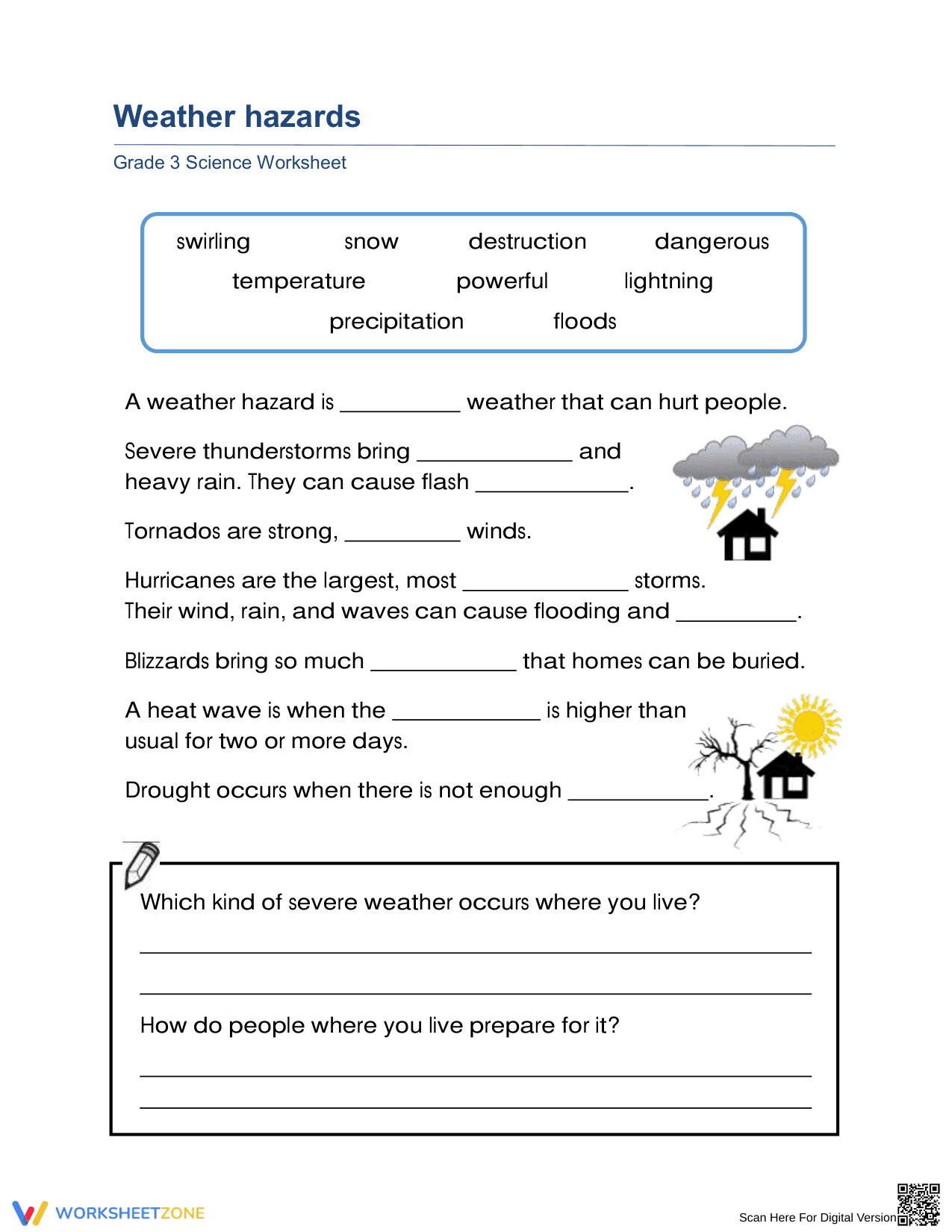
This Grade 3 weather hazards worksheet helps students identify the dangerous characteristics of severe atmospheric conditions. By matching key vocabulary to specific weather events like blizzards, hurricanes, and droughts, learners develop a concrete understanding of how nature affects human safety. The activity culminates in personal reflection on local weather patterns and preparation strategies.
At a Glance
- Grade: 3 · Subject: Science
- Standard:
3-ESS3-1— Evaluate how different design solutions can reduce the dangerous impacts of weather hazards- Skill Focus: Weather hazard characteristics and human preparation
- Format: 1 page · 10 tasks · Answer key included · PDF
- Best For: Independent practice or introductory weather unit lesson
- Time: 15–20 minutes
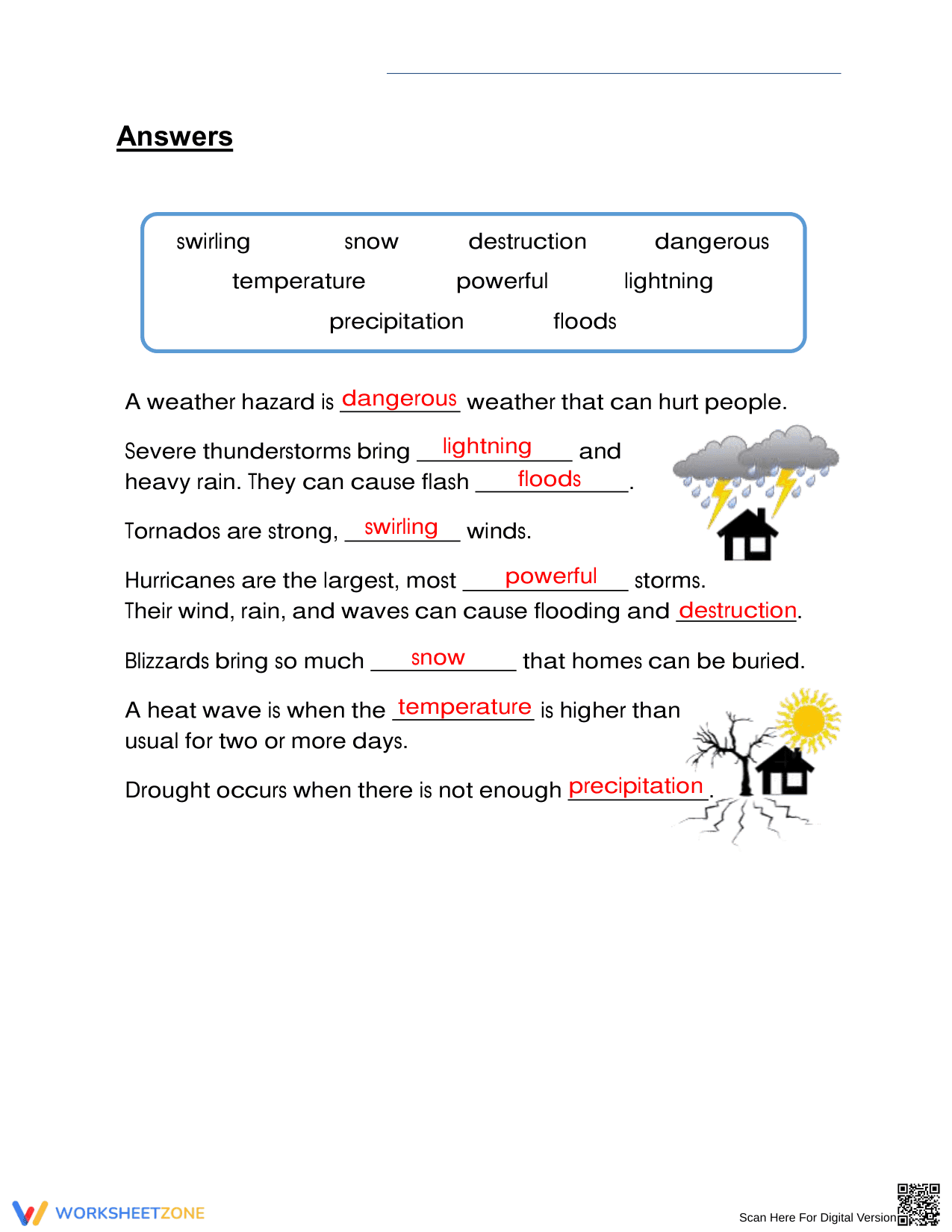
What's Inside: This single-page PDF resource features ten distinct tasks. Eight fill-in-the-blank questions utilize a scaffolded word bank to define various severe weather types and their physical effects. Two open-ended writing prompts encourage students to apply their knowledge to their own geographic region, fostering a deeper connection to the science curriculum. A comprehensive answer key is included for teacher convenience.
Zero-Prep Workflow
This resource is designed for immediate classroom implementation with a total teacher preparation time of under two minutes. The workflow follows three simple steps:
- Step 1: Print (1 minute) — Generate a single-sided copy for each student. The black-and-white design ensures high-quality reproduction on any school copier.
- Step 2: Distribute (30 seconds) — Hand out the worksheets as a warm-up, independent practice, or emergency sub plan material. The word bank provides immediate support.
- Step 3: Review (30 seconds) — Use the included answer key for rapid grading or to facilitate a whole-class check.
This efficient structure makes the worksheet an ideal choice for busy educators looking for high-quality, standards-aligned science content that requires zero teacher setup.
Standards Alignment
This resource aligns with the Next Generation Science Standard 3-ESS3-1: "Make a claim about the merit of a design solution that reduces the impacts of a weather-related hazard." Identifying hazards is the foundational step toward eventually evaluating mitigation designs. This standard code can be copied directly into lesson plans, IEP goals, or district curriculum mapping tools.
How to Use It
Deploy this worksheet during the Evaluate phase of a 5E lesson cycle. It serves as an excellent formative assessment to check for understanding after a lecture on severe weather types. For an observation tip, watch for students who can correctly link "precipitation" to "drought," indicating a strong grasp of scientific cause and effect. Completion usually takes 15 to 20 minutes.
Who It's For
This activity is tailored for Grade 3 students but is also suitable for Grade 2 enrichment or Grade 4 review. The word bank provides essential differentiation for English Language Learners and students requiring literacy support. It pairs naturally with a weather-themed anchor chart or a short informational text on natural disasters and community safety.
The RAND AIRS 2024 report highlights structured vocabulary acquisition as critical for elementary science literacy and complex scientific modeling. This worksheet grounds students in precise terminology for the 3-ESS3-1 standard, connecting atmospheric phenomena like blizzards and hurricanes to physical consequences. Students thus build conceptual schema to evaluate hazard mitigation strategies. Localized reflection questions facilitate knowledge transfer from abstract definitions to real-world application, a pedagogical shift emphasized in the NGSS framework. This resource offers linguistic scaffolding for third-grade learners to articulate how weather patterns create dangerous conditions. As students master the relationship between weather characteristics and destruction, they transition from passive observers to analytical thinkers proposing design solutions for community safety.


