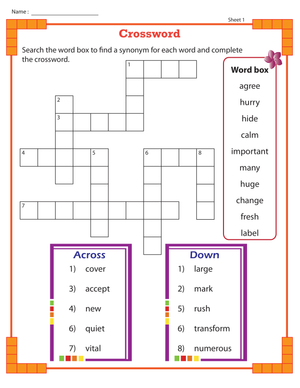
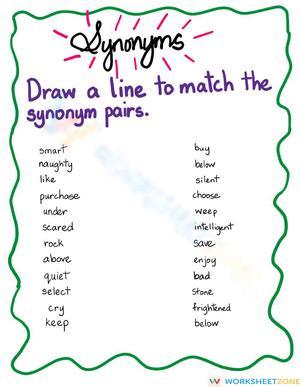
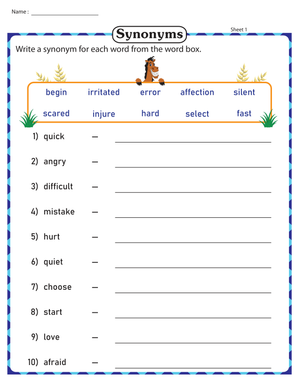
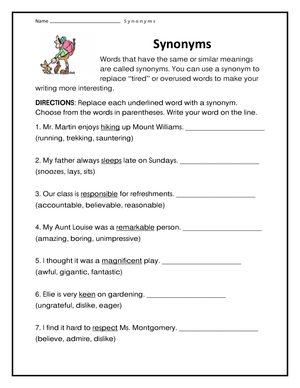
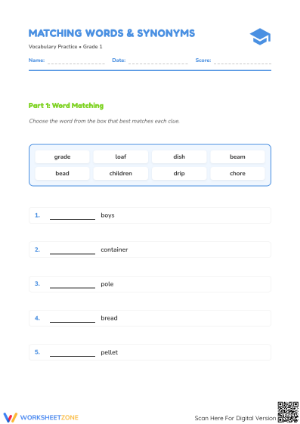
These 2nd grade synonyms worksheets give teachers a focused tool for building word consciousness at exactly the right developmental moment — when second graders can decode reliably but still reach for the same four adjectives in every piece of writing. The set targets synonym recognition and application through task formats that range from word matching to sentence-level substitution to short passage revision.
What Students Work Through in the Set
Each worksheet addresses a distinct stage of synonym knowledge, moving from recognition to application. The task formats in the set include:
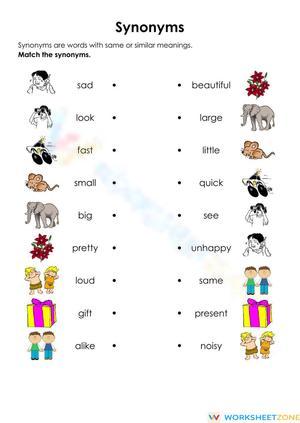
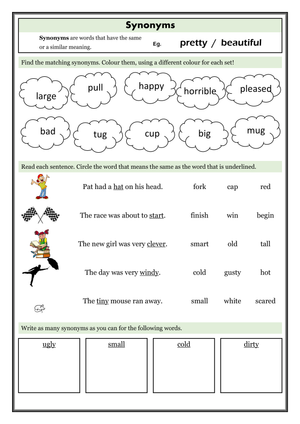
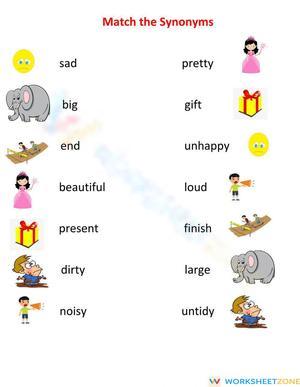
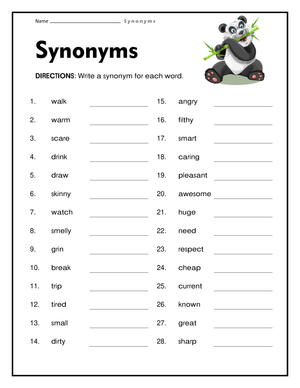
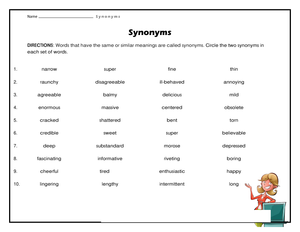
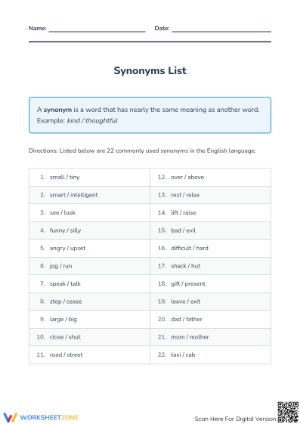
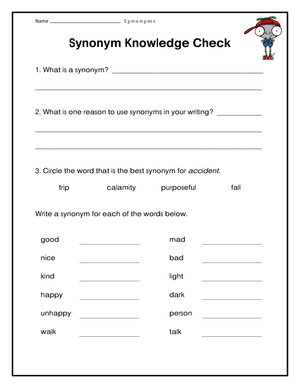
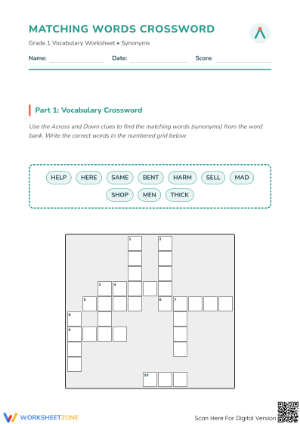
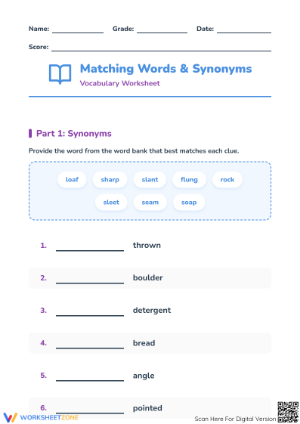
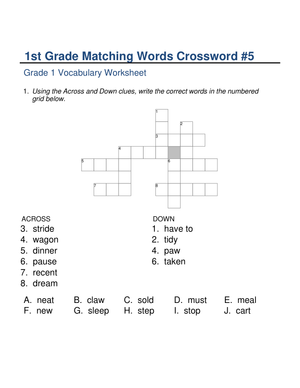
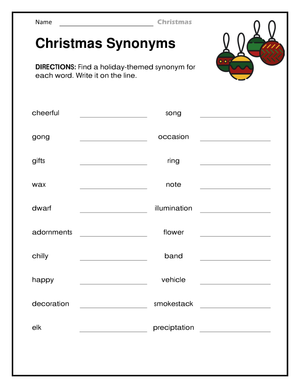
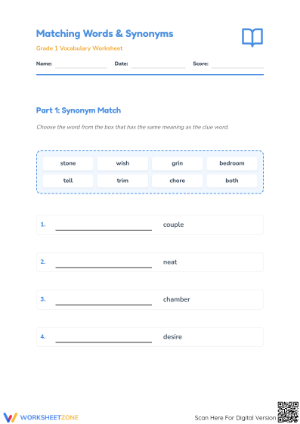
- Word matching: students draw lines between pairs like happy/joyful, fast/quick, or small/tiny, building recognition before asking for independent recall
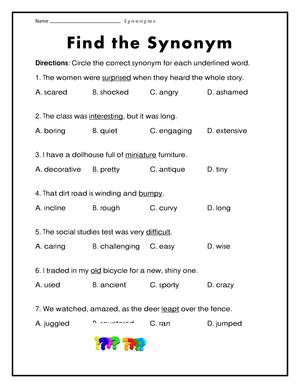
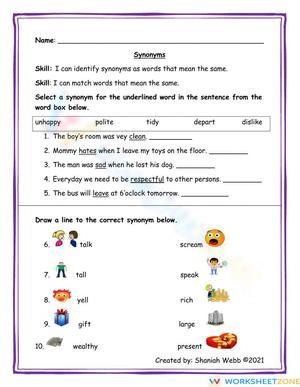
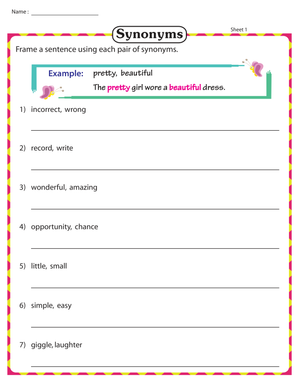
- Fill-in-the-blank sentences: students choose between two synonyms based on sentence context, not just meaning in isolation
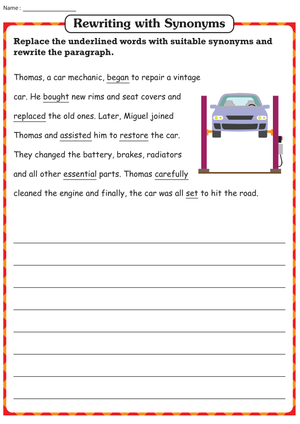
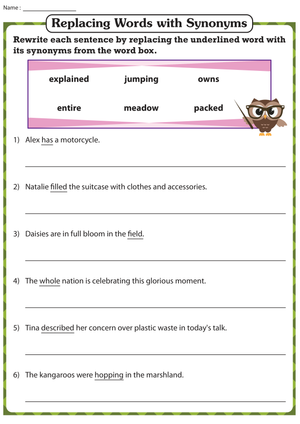
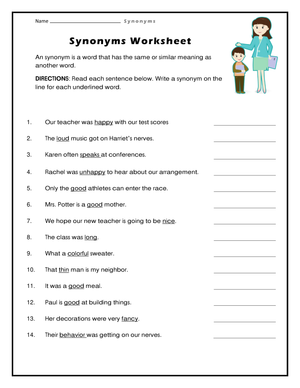
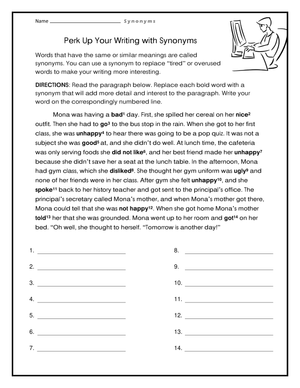
- Sentence rewriting: underlined words get replaced with stronger synonyms, first from a provided list, then from memory
- Intensity ranking: students order related words — warm, hot, scorching — from mildest to strongest, working with degree rather than simple equivalence
That ranking category is the part of synonym work second graders most often skip when left to their own devices. Students regularly place "warm, hot, scorching" in the correct order on the ranking task and then write "a scorching cup of cocoa" in their journal without a second thought. That gap between recognition and application is exactly what the sentence-level tasks are built to close.
Patterns in Student Work That Are Worth Anticipating
These 2nd grade synonyms worksheets surface a specific error pattern clearly: students who ace the matching tasks but then overapply new vocabulary in their own writing. A student learns that "enormous" pairs with "big," and for the next two weeks everything becomes enormous — the enormous ladybug, the enormous sandwich. This is a sign of progress, technically, but it signals that the student has absorbed synonym equivalence without yet absorbing register or proportion. The fill-in-the-blank and sentence-rewriting tasks push back against this because they require students to weigh the whole sentence, not just retrieve a word pair from memory.
A subtler pattern: students who treat synonyms as a puzzle to solve rather than a language tool to use. They select the most unusual-sounding option regardless of fit — "the famished ant crawled under the door" instead of "the hungry ant" — because unusual equals impressive in their current vocabulary logic. Worth a brief class discussion after the first rewriting task: what makes a word choice feel right, not just technically correct?
Where These Worksheets Fit Into Your Teaching Week
The matching and fill-in-the-blank worksheets work well as five-minute warm-ups before a writing lesson or read-aloud. Students settle quickly into the format, and the brief task primes them to notice word choices in whatever text follows. On revision days in writing workshop, the sentence-rewriting worksheet connects directly to student drafts: students underline three overused words, find stronger options using the worksheet, and revise those sentences before the lesson ends. That bridge between the practice task and real writing is where vocabulary tends to take hold.
The intensity-ranking worksheets run well in pairs or small groups. When students have to negotiate whether "chilly" or "freezing" is the stronger word, that conversation does more instructional work than any individual task completed in silence. Reserve the ranking activities for the second or third week of a synonym unit — not the first day, when the cleaner matching format is what students need to establish the basic concept.
Adapting the Set Across a Range of Learners
Students still building basic vocabulary benefit most from matching tasks that include a brief spoken or visual context before independent work. "Chilly" lands differently for a child who associates it with standing at a bus stop in November than for a child who moved here from a warm climate last fall. A quick spoken example or a small illustrative image before the task closes that gap without requiring a separate worksheet.
For students reading above grade level, the intensity-ranking tasks extend naturally into literary discussion. After ordering "whispered," "said," and "announced" by volume, these students can find examples in a current read-aloud where the author chose one over the others and write a sentence explaining why. This keeps advanced vocabulary learners working within the same activity while raising the cognitive demand well above simple recognition and recall.
Standard Alignment
The set addresses CCSS.ELA-Literacy.L.2.5 and L.2.5a, which require second graders to identify real-life connections between words and their uses and to distinguish shades of meaning among closely related verbs and adjectives. The intensity-ranking tasks address L.2.5a directly. The matching and fill-in-the-blank tasks support L.2.4, which asks students to determine or clarify word meaning through context clues and word relationships. Completed worksheets, kept alongside dated writing samples, give teachers concrete evidence of vocabulary growth over a marking period — useful documentation for parent conferences and reading intervention conversations.
Frequently Asked Questions
How many synonym pairs should we target each week?
Three to five pairs per week is a sustainable pace for most second graders. These 2nd grade synonyms worksheets center on focused word groups rather than long lists, so using one or two per week still produces meaningful vocabulary growth across a semester. Depth matters more than volume at this age — students who thoroughly own ten synonym pairs write better than students who vaguely recognize fifty.
Do these worksheets work well for ELL students?
Yes, with one practical adjustment: pair the matching tasks with a brief spoken or visual context before students work independently. ELL students often have a strong conceptual grasp of a word in their home language and benefit from connecting a familiar concept to multiple English words at once. The side-by-side format of the matching tasks supports this particularly well.
What if a student uses a new synonym incorrectly in their own writing?
Treat it as a teachable moment rather than a quiet correction. If a student writes "the gigantic raindrop fell on my nose," the conversation is worth having aloud: "Gigantic is one of your new words — where does it feel biggest to you? What size does your brain picture?" That exchange does more than a correction mark in the margin. Return to the context-based tasks in the set to reinforce that word choice depends on the specific sentence, not just a memorized pairing.
How do these worksheets connect to standardized reading assessments?
Many state and district reading assessments at second and third grade include vocabulary items that ask students to identify a word's meaning from context or select the best word to complete a sentence. The fill-in-the-blank and rewriting tasks in 2nd grade synonyms worksheets build exactly that skill — reading the full sentence before committing to a word, rather than matching definitions in isolation. Students who practice this consistently handle those test items with noticeably more confidence.












 Interactive Worksheet Maker
 Quiz Maker
 Word Search Maker
 Crossword Puzzle Maker
 Word Scramble Generator
 Sentence Scramble Generator
 Handwriting Worksheet Generator
 Name Tracing Generator
 Fill In The Blank Generator