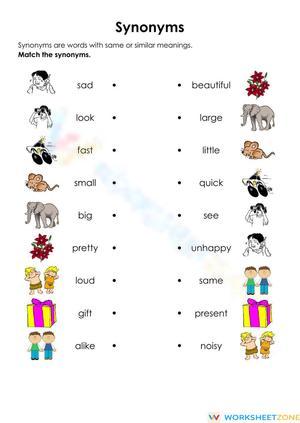
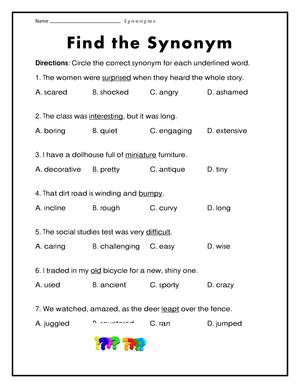
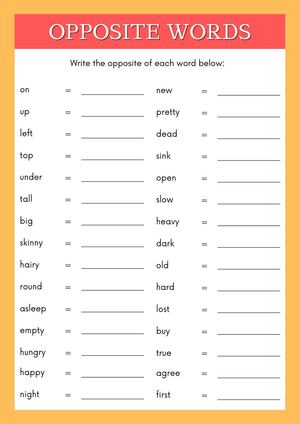
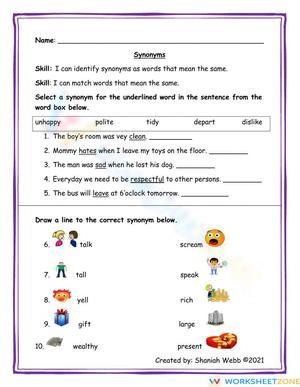
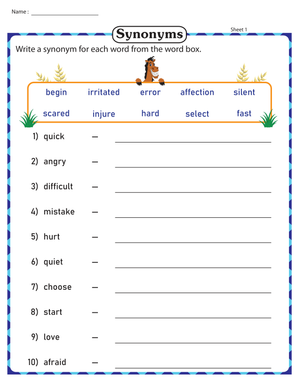
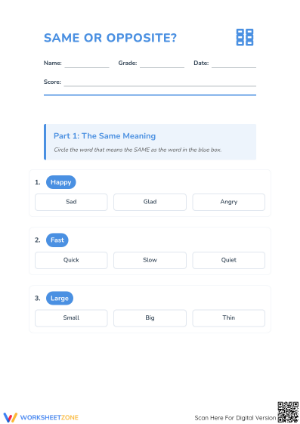
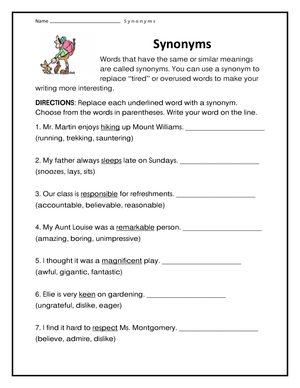
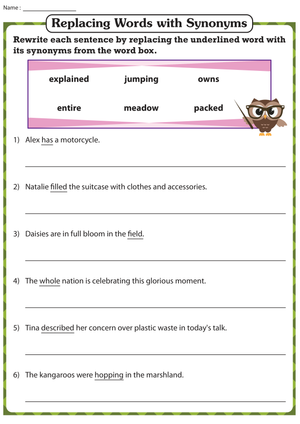
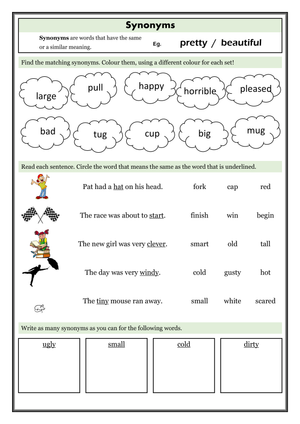
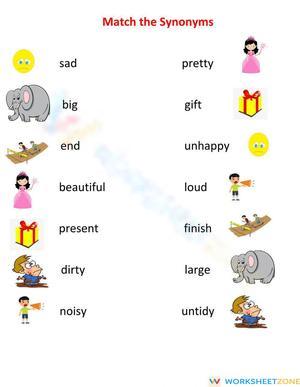
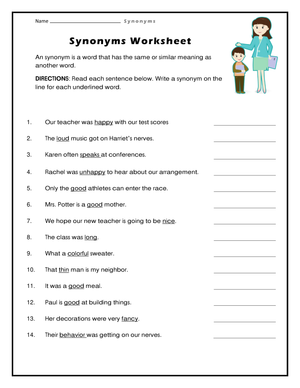
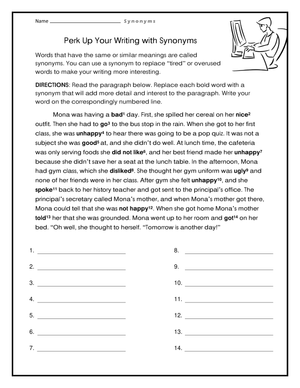
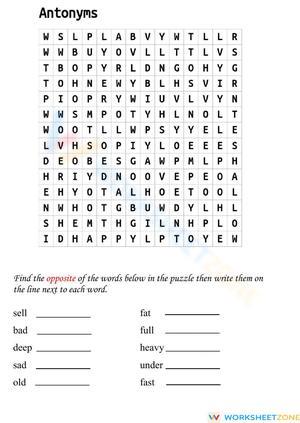
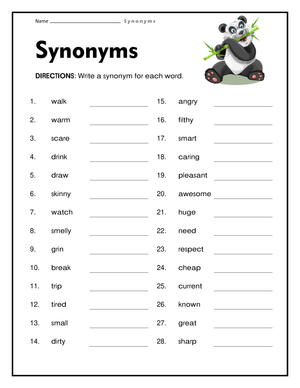
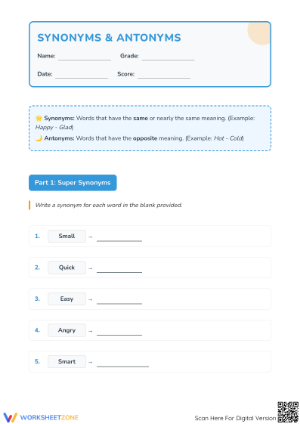
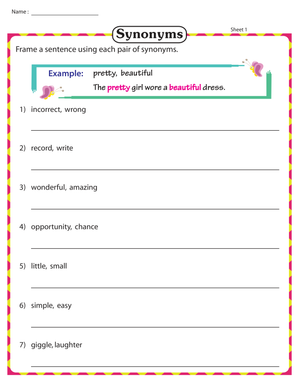
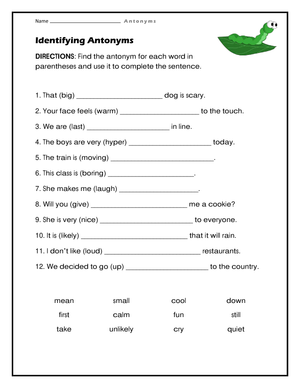
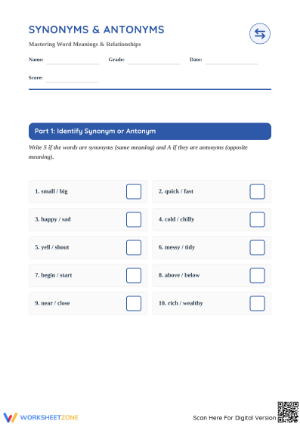
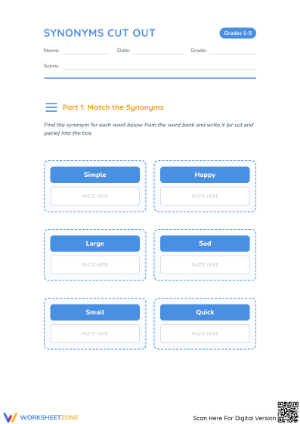
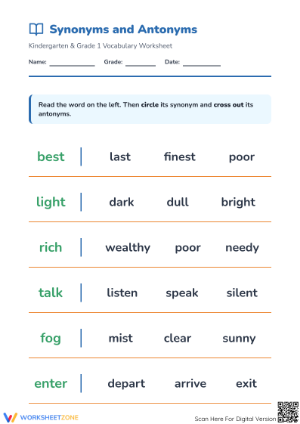
These antonyms and synonyms pdf worksheets for 2nd grade give teachers a set of standalone practice resources covering synonym matching, antonym identification, and sentence-level word substitution — each worksheet targeting a distinct task type rather than repeating the same format at incrementally harder difficulty levels.
The Specific Skills Targeted Across the Set
Each worksheet focuses on one task, which keeps students from splitting their attention between learning a new format and actually practicing word relationships. Across the set, students:
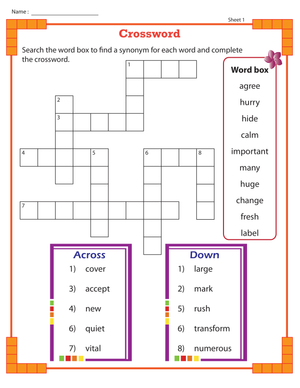
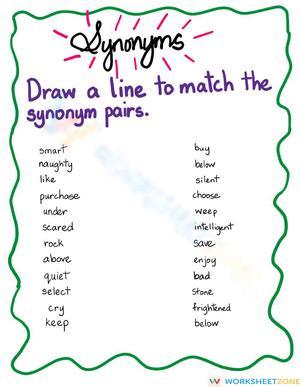
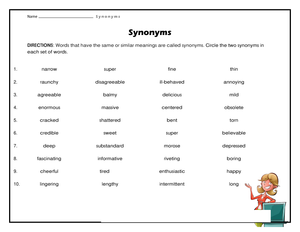
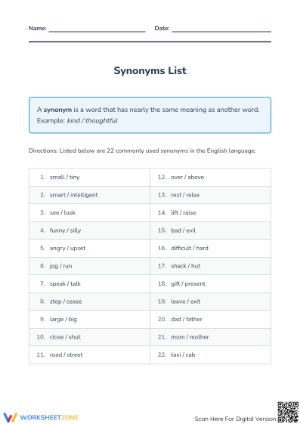
- Match synonym pairs using sentence context, not an isolated word prompt
- Identify the antonym of an underlined word embedded in a short passage
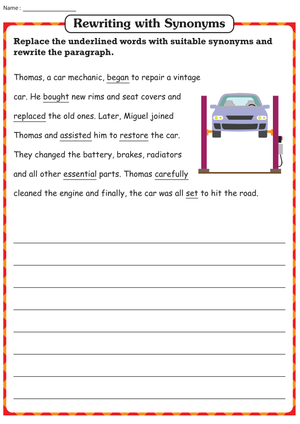
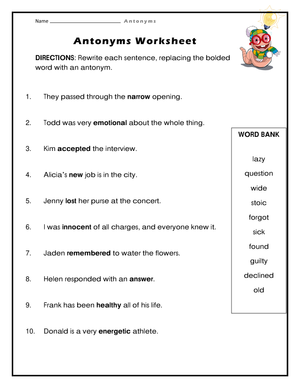
- Rewrite sentences by swapping a given word for a stronger or more precise synonym chosen from a word bank
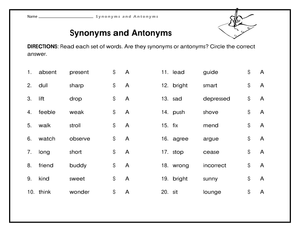
- Sort word pairs as synonyms or antonyms — including pairs drawn from verbs, not just adjectives
- Complete sentence frames where the missing word must be the logical opposite for the sentence to make sense
The sentence-context format matters more than it might first appear. A student asked to swap "happy" for a synonym in "She gave a happy nod to the audience" has to consider register and fit, not just recall a related word. That's a meaningfully different cognitive task than circling a synonym next to an isolated word — and it's closer to what self-editing in the writing block actually demands of second graders.
Errors That Surface in Word-Pair Practice
Label confusion comes first. A student who knows perfectly well that "hot" and "cold" are opposites will still write "synonym" on the answer line, because the terms themselves are new at this grade level and flip easily in working memory. These worksheets expose that confusion directly — students must apply the correct label to get credit, not just identify the pair.
A second pattern worth watching: when choosing from a word bank, second graders frequently anchor on word length rather than meaning. Asked to find a synonym for "large" from options including "enormous," "wide," and "fat," many students circle "fat" — it's shortest, it looks manageable, and they skip the step of checking it against the sentence. Worksheets that include plausible distractors like this require students to actually read before selecting, which is the exact habit the practice is meant to build.
Working These Worksheets Into Your Weekly Literacy Routine
These antonyms and synonyms pdf worksheets for 2nd grade slot most naturally into the last eight to ten minutes of a Monday vocabulary introduction. After an anchor chart lesson with the whole group, students work through one worksheet independently while you circulate and note who is reversing labels or reaching for weak word-bank choices. That scan gives a more accurate read on real understanding than a show-of-hands check at the board does.
Mid-week, one worksheet makes a clean opening task on days when students arrive at staggered times — the format is self-explanatory enough that early arrivals can start without waiting for directions. On Fridays, pulling out an antonym worksheet as a short warm-up before the reading block functions as spaced retrieval practice without cutting into read-aloud time. For stations rotation, the sorting worksheets run well as partner tasks. When two students argue about whether "thin" and "slim" are synonyms or just similar-sounding words, that disagreement is the actual lesson.
Standard Alignment
These antonyms and synonyms pdf worksheets for 2nd grade address CCSS.ELA-LITERACY.L.2.5, which asks second graders to demonstrate understanding of word relationships and nuances in word meanings. Subsection L.2.5b focuses specifically on distinguishing shades of meaning among closely related adjectives and verbs — the exact skill students practice when they must choose between "joyful" and "content" as synonyms for "happy" based on sentence context rather than free association.
Antonym exercises align with L.2.4a, which asks students to use sentence-level context as a clue to word meaning. Identifying the opposite of an underlined word embedded in a sentence trains the same context-reading strategy students use with unfamiliar vocabulary in independent reading, so the transfer to fluency work is direct rather than assumed.
Adjusting the Set for a Range of Learners
For students still consolidating basic sight vocabulary, the matching-format worksheets are the right entry point. Reducing the word bank to four choices rather than six lowers the number of candidates held in working memory at once, making the meaning-based decision the only challenge rather than a memory test layered on top of it.
Students who move through synonym matching quickly and accurately are ready for the rewriting worksheets — and adding one constraint helps: replace the underlined word with a synonym that shifts the tone of the sentence, not just the literal meaning. That requirement turns substitution into a craft question, which is where stronger readers actually need to stretch. For the middle group, antonym worksheets that cross parts of speech tend to land at the right challenge level. Finding the opposite of a verb like raced is harder than pairing "big" with "small," and most students who have mastered basic adjective opposites haven't thought carefully about verb antonyms yet.
Frequently Asked Questions
Do these worksheets work alongside a structured vocabulary program?
The fit is best when they follow a lesson rather than replace one. A formal program introduces words in context; these worksheets give students a second pass at applying the synonym or antonym relationship independently, which is where retention actually sticks. Teachers using programs like Words Their Way or Fundations find the worksheets useful as a follow-up activity rather than a standalone vocabulary sequence.
Are these appropriate for students working above or below second-grade level?
First graders with strong decoding skills handle the matching formats without difficulty. Third graders who need to revisit word-relationship basics find the sentence-rewriting worksheets appropriate for reteaching without the work feeling aimed at a much younger audience. The verb-focused antonym and synonym tasks read as grade-neutral enough that older students don't resist them.
Can these be used for formative assessment rather than just practice?
The antonyms and synonyms pdf worksheets for 2nd grade are each scoped narrowly enough that a completed copy quickly shows whether a student understands the concept or is guessing. Checking answer patterns — not just total score — reveals whether a student is consistently reversing the synonym and antonym labels, which is a different instructional problem than missing isolated word pairs. Collect completed worksheets across a week and you get a clearer picture of mastery than a single Friday quiz provides.