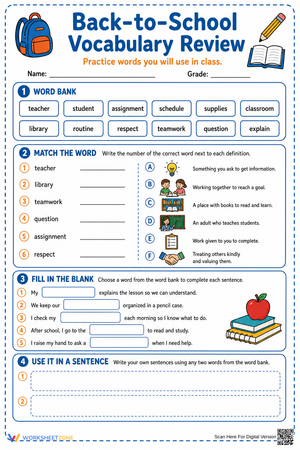
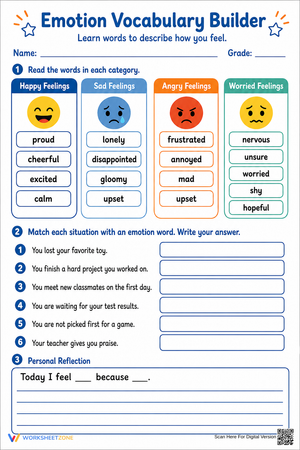
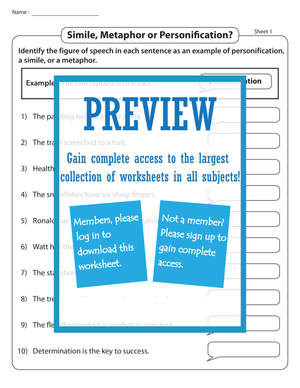
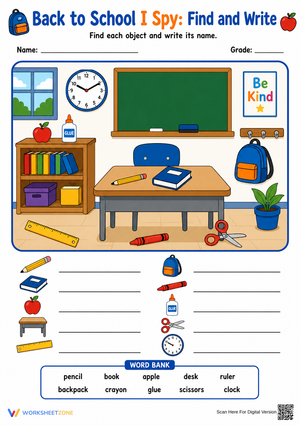
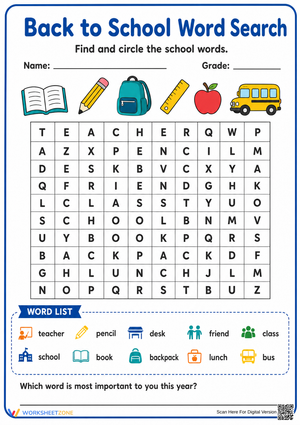
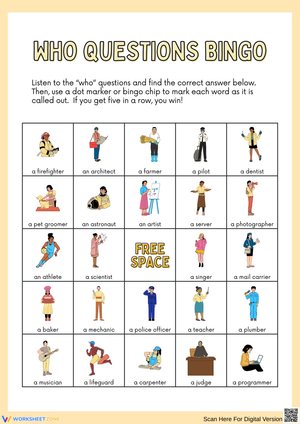
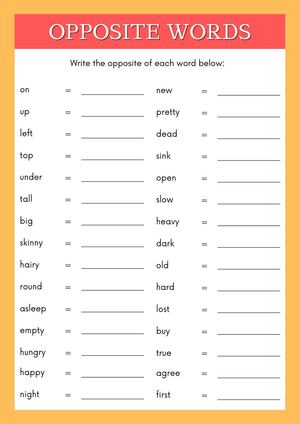
These 2nd grade language and vocabulary worksheets downloads give teachers a ready bank of targeted, standalone practice that fits into word study rotations, morning warm-ups, or small-group sessions without requiring any additional prep. The set covers synonyms and antonyms, context clues, common prefixes and suffixes, and multiple-meaning words — the vocabulary skills that do the most work during the second-grade year. Each worksheet focuses on one concept, which keeps cognitive load manageable and makes formative observation during independent work time more straightforward.
What's Inside the Set
Second grade marks the point where reading growth becomes less about cracking the code and more about knowing what words mean. Students who enter second grade with strong phonics but weak vocabulary hit a ceiling around mid-year — they can read the words on a page but miss what the text is actually saying. This is where deliberate vocabulary instruction earns its place in the daily schedule.
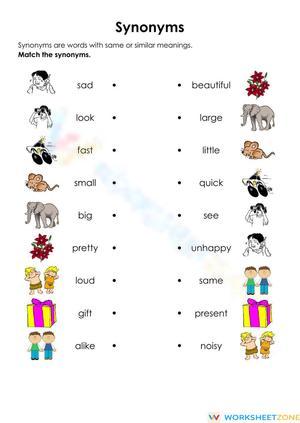
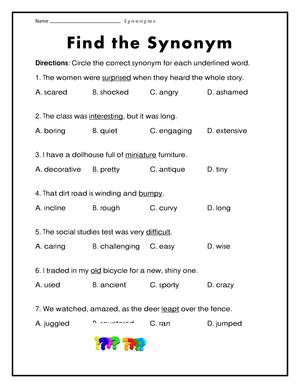
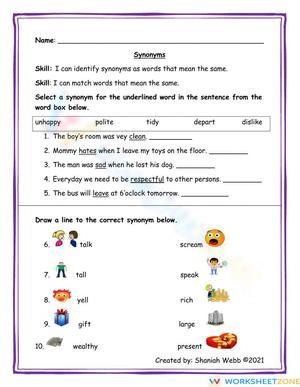
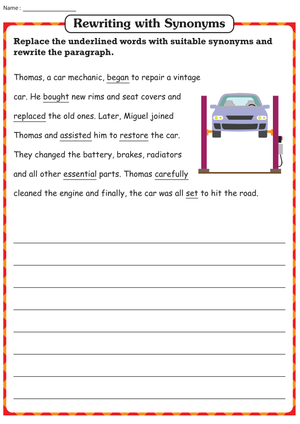
- Synonyms and antonyms — matching, substituting within sentences, and identifying relationships between word pairs
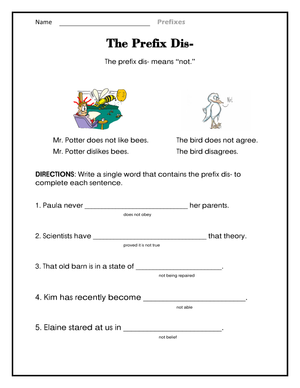
- Common prefixes (un-, re-, pre-, mis-) and suffixes (-ful, -less, -er, -est) — students build new words and identify the meaning shift each part creates
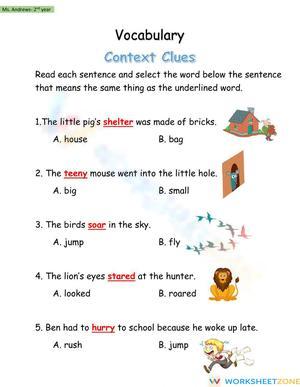
- Context clues — short passage exercises where students mark the surrounding text that signals an unfamiliar word's meaning
- Multiple-meaning words — sentences where students determine which definition fits the specific context
- Word categories and relationships — sorting and classifying exercises that build conceptual vocabulary alongside definitional knowledge
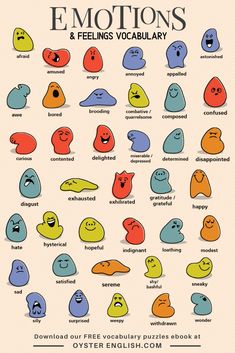
Several worksheets focus on what reading researchers call Tier 2 vocabulary — words like exhausted, trembling, and eager that appear constantly in academic and literary text but rarely come up in everyday conversation. These are the words most likely to separate students who can read a passage from students who understand it, and they are especially important to address deliberately for students whose language exposure outside school is more limited.
Errors That Surface in Student Work — and What They Tell You
The antonym-synonym distinction produces a specific, predictable confusion. Students who correctly identify "hot" and "cold" as antonyms will then mark "chilly" and "cold" as antonyms too — reading degree differences as opposites. The same student will often list "tiny" and "small" as antonyms because the two words feel different in some way, even though they mean roughly the same thing. These worksheets surface that confusion because the tasks require students to choose between matching and opposing relationships rather than recall a memorized pair from a previous lesson.
Prefix work produces its own reliable error: overgeneralization. Once students learn that un- means "not," many immediately write "unfast" for "slow" or assume "uncle" contains a meaningful prefix. The exercises limit prefix practice to words where the morpheme is doing genuine work, which forces students to test the rule rather than apply it blindly. The first time a student tries "unfast" on an exercise and it doesn't match any answer choice, the overgeneralization corrects itself faster than a teacher explanation would.
Context clues work shows a third error pattern worth watching: when asked to figure out what a bolded word means, students frequently underline the target word itself rather than the surrounding sentences. They look at the unknown word in isolation and guess — exactly the habit this practice is meant to interrupt. These 2nd grade language and vocabulary worksheets downloads expose that pattern quickly during independent work, giving teachers a clear signal about which students need a guided walkthrough of the strategy before the next rotation.
How to Fit These Worksheets Into a Busy Week
Short and frequent beats long and occasional for vocabulary acquisition at this age. A five-minute synonym sort at the start of Monday's reading block, followed by a quick prefix-building exercise on Wednesday during word study, gives students spaced exposure to concepts across the week. That distribution does more for retention than one forty-minute vocabulary lesson on Thursday. Because the tasks in each worksheet are focused and self-contained, students can complete most of them in six to ten minutes without needing reminders about what they are supposed to be doing.
Thematic alignment makes the worksheets work harder. When students are deep in a science unit on habitats, pulling context-clue worksheets featuring words like prey, shelter, and migration means students encounter those same words in shared reading, in the worksheet, and in their writing assignment — three exposures across different formats in the same week. Three encounters in varied contexts is roughly the minimum threshold for a new word to move from vague recognition to actual use in student writing. Teachers who match vocabulary worksheets to the week's content rather than treating them as a separate track see the payoff by Friday.
The worksheets also work as exit tickets. Handing a student a short context-clues exercise with three minutes left in a lesson gives teachers real-time information about who has internalized the strategy and who is still guessing from the target word alone. That observation is more actionable than a weekly vocabulary quiz because it surfaces confusion while there is still instructional time left to address it.
Standard Alignment
The 2nd grade language and vocabulary worksheets set aligns primarily to CCSS.ELA-LITERACY.L.2.4, which asks students to determine or clarify the meaning of unknown and multiple-meaning words and phrases using context and knowledge of word structure. The set also supports CCSS.ELA-LITERACY.L.2.5, which covers word relationships — synonyms, antonyms, and real-world connections between words. In classroom terms, L.2.4 becomes the central vocabulary standard from roughly late October through spring, once students have enough phonics stability that instruction can shift toward meaning. L.2.5 tends to show up most explicitly during writing conferences, when teachers coach students toward stronger word choices, but having practiced it through worksheet exercises gives students a concrete vocabulary for those conversations — they arrive already knowing what a synonym is and why swapping one in might improve a sentence.
Adjusting Difficulty Across Ability Levels in Your Classroom
The synonym and antonym worksheets that include a word bank work well for students who are still building foundational vocabulary. Removing the word bank for more advanced students turns the same worksheet into a significantly harder open-recall task — same concept, meaningfully different demand. For prefix and suffix worksheets, attaching a reference strip that lists each word part and its meaning gives students who need extra support a reference point without removing the core thinking task. Students who are ready to go further can write original sentences using each word they build, shifting the work from recognition to production.
English language learners often do well with the context-clues format specifically because the passage provides the meaning rather than assuming prior word knowledge. A student who has never encountered the word "barren" can still succeed on a worksheet that defines it in context — and that success builds the strategy for real reading situations. These 2nd grade language and vocabulary worksheets resources are varied enough across formats that teachers can assign different worksheets to different groups without those assignments feeling obviously leveled or remedial to the students receiving them.
Frequently Asked Questions
What vocabulary skills does this set actually cover?
The set addresses synonyms and antonyms, common prefixes and suffixes, context clues, multiple-meaning words, and word categorization. Each worksheet targets one skill so students are not splitting their attention across competing demands. Prefix and suffix worksheets work with the most common word parts at the second-grade level — un-, re-, pre-, mis-, -ful, -less, -er, and -est.
Can these worksheets be sent home for homework?
Most of them work well for home practice. Synonym-matching, antonym identification, and context-clues exercises are manageable for students to complete independently once they have seen the format in class. It helps to send home a completed example the first time students encounter a new task type so families understand the expectation. Prefix and suffix worksheets are better assigned as homework after the concept has been introduced through direct instruction — students who try to decode the pattern on their own without prior teaching tend to get frustrated rather than learn from the attempt.
Are these worksheets appropriate for students above or below second-grade level?
First graders who are reading well above grade level benefit from the synonym, antonym, and multiple-meaning worksheets as extension work. Third and fourth graders who need additional practice with foundational vocabulary skills — particularly context clues and morphological awareness — find the format direct and accessible. The sentences use second-grade text, but the underlying strategies transfer into much higher-level reading. An older student working on these exercises is practicing real comprehension tools, not reviewing material that has been outgrown.












 Interactive Worksheet Maker
 Quiz Maker
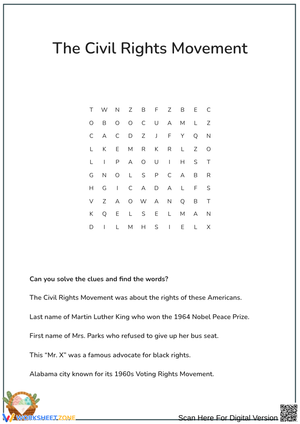
 Word Search Maker
 Crossword Puzzle Maker
 Word Scramble Generator
 Sentence Scramble Generator
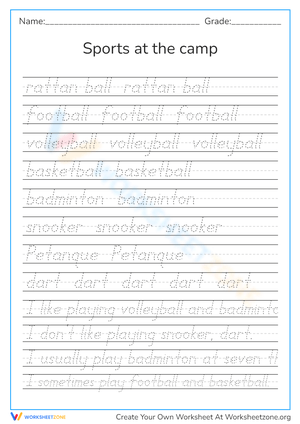
 Handwriting Worksheet Generator
 Name Tracing Generator
 Fill In The Blank Generator