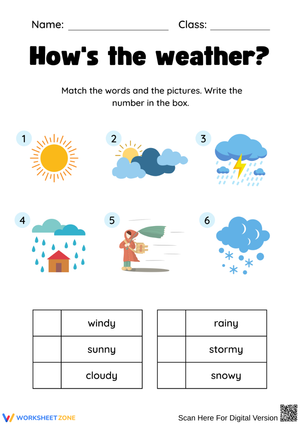
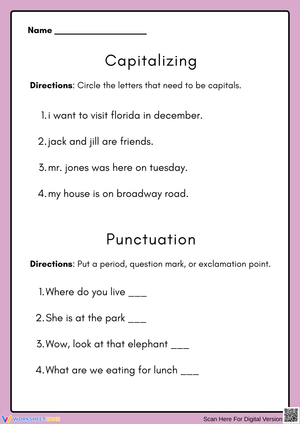
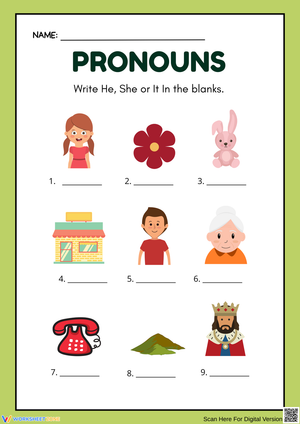
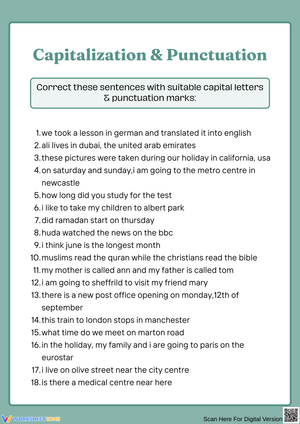
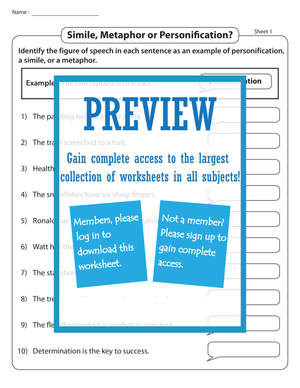
These 2nd grade grammar printable worksheets address the mechanics that second-grade writing teachers watch fall apart most predictably: "childs" instead of "children," "runned" instead of "ran," and commas that appear everywhere except where convention puts them. Each worksheet isolates one skill, which means teachers can match the resource to exactly where a class has stalled rather than assigning a broad review and hoping it lands.
Mistakes Students Make That These Worksheets Help You Catch
Irregular plural nouns cause a specific and very visible problem in student writing. Children who have internalized the standard pluralization rule — add "-s" or "-es" — apply it everywhere, including words that don't follow any pattern. "Mouses," "tooths," and "childs" appear consistently in second-grade journals because the brain is doing exactly what it should: generalizing. The irregular forms have to be learned word by word, and that takes repeated written exposure over time, not a single lesson where the teacher writes the list on the board.
Irregular past tense verbs follow the same logic. Ask a second grader to write about something that happened yesterday, and "he runned," "she goed," and "they hided" will appear — even in students who use those verbs correctly in speech. The gap between oral fluency and written accuracy is real at this age, and targeted written practice closes it faster than oral correction alone. When a student hears a correction, it lasts until the next sentence. When they write the correct form repeatedly, it starts to look wrong when it's wrong.
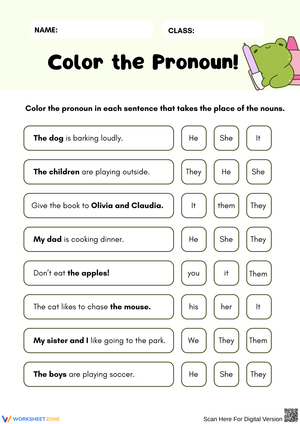
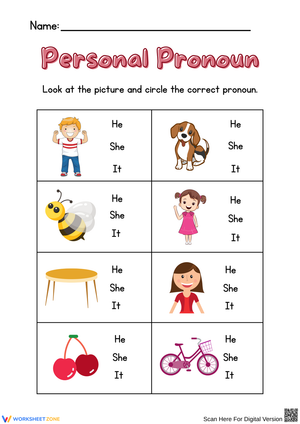
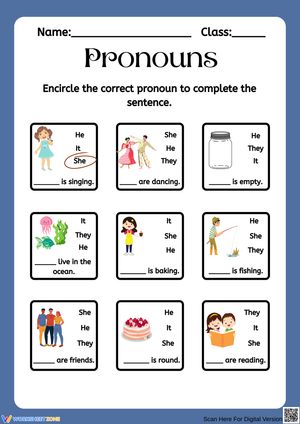
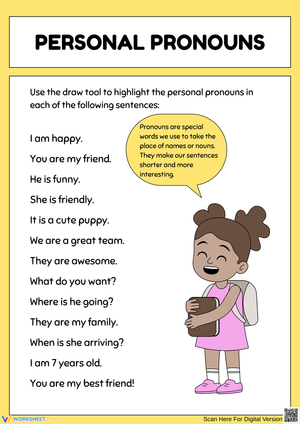
Reflexive pronouns present a different challenge. Most second graders use "myself" and "themselves" without much trouble in conversation, but they struggle to recognize when reflexive forms are required versus optional versus incorrect. "He did it hisself" is a usage error rooted in how reflexive pronouns function in some regional varieties of English, and it persists without explicit written practice. Seeing the forms in sentences on a worksheet — and being asked to identify or correct them — gives students a reference point their ear alone cannot provide.
What's Inside the Set
The worksheets cover the full scope of what L.2.1 and L.2.2 require at this grade level:
- Collective nouns — identifying and using group labels like flock, swarm, and pride accurately in sentences
- Irregular plural nouns — high-frequency forms including children, feet, mice, and teeth in varied exercise formats
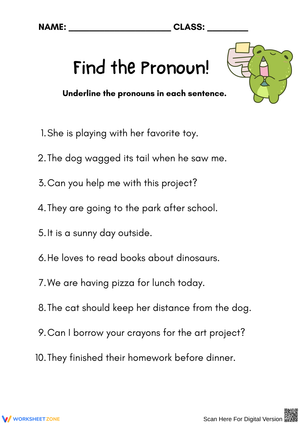
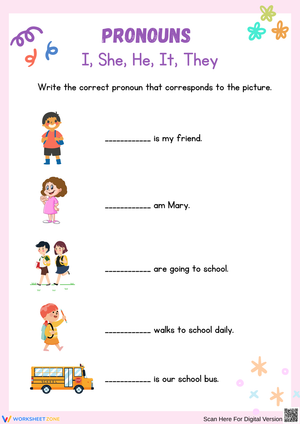
- Reflexive pronouns — recognizing and correctly using myself, yourself, himself, herself, ourselves, and themselves
- Irregular past tense verbs — a targeted list including sat, hid, told, ran, went, and ate
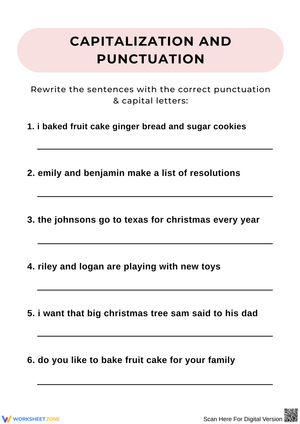
- Expanded capitalization rules — holidays, product names, and geographic names that go beyond the first-grade baseline
- Commas and apostrophes — comma placement in letter greetings and closings; apostrophes in contractions and possessives
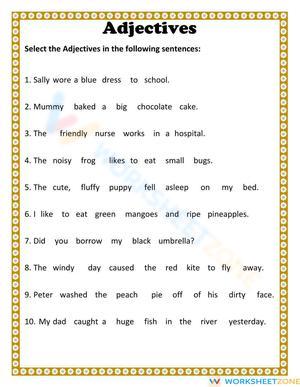
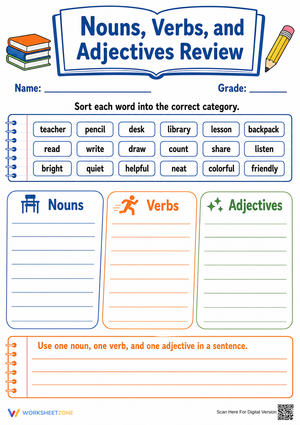
- Adjectives and adverbs — sentence-level practice showing students how descriptive words shift meaning, not simply add detail
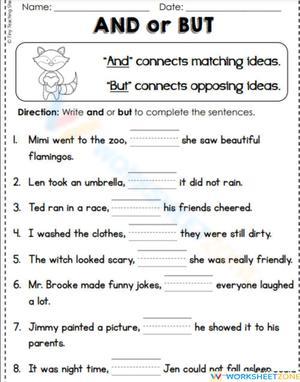
- Sentence combining — joining two short sentences using coordinating conjunctions to build more fluent, varied writing
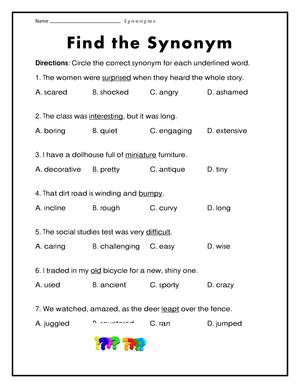
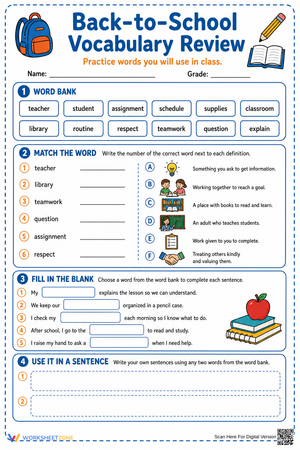
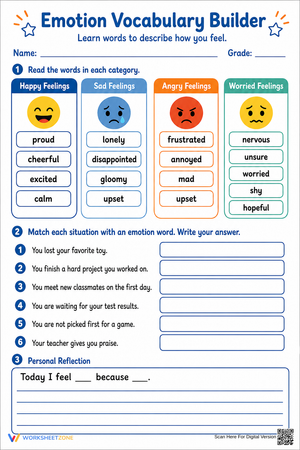
Exercise formats vary across the set: fill-in-the-blank, sort-and-match, sentence rewriting, and short constructed response. Students who need format variety get it; teachers who need gradable, clear responses get those too.
Standard Alignment
These resources align with CCSS ELA-Literacy L.2.1 and L.2.2. L.2.1 covers grammar conventions — specifically the collective nouns, irregular plural nouns, reflexive pronouns, and irregular past tense verbs that run through the set. L.2.2 addresses capitalization, punctuation, and spelling conventions, including the comma and apostrophe rules the worksheets practice in context. In classroom sequencing terms, L.2.1 skills belong in the first half of the year when teachers are extending the noun and verb work from first grade; L.2.2 skills — particularly contractions and possessives — typically land mid-year once students have a stable sense of sentence structure. Teachers using 2nd grade grammar printable worksheets as formative check-ins can pull individual worksheets to match exactly where those standards sit in their pacing guide rather than moving through the set in a fixed order.
How to Build These Worksheets Into Your Lesson Plans
The most reliable use is as a Monday warm-up after morning meeting, reviewing a skill introduced the previous week. A five-minute review before the reading block begins — while attendance and lunch count happen — gives students spaced retrieval practice without eating into instruction time. The teacher gets a quick visual scan of the room: who is still writing "runned" before that form makes it into a writing draft on Tuesday.
Literacy centers are the other natural fit. Laminating each worksheet or sliding it into a dry-erase sleeve turns it into a reusable station activity. A center built around irregular past tense verb cards and a matching worksheet keeps four students on task for eight to ten minutes — long enough for the teacher to run a guided reading group uninterrupted. Building in a partner-check step, where students read each other's responses aloud before erasing, catches apostrophe errors that students skip over when they read silently.
For spring test-prep, 2nd grade grammar printable worksheets map directly onto the language conventions sections of most state assessments. Pulling two or three skill-specific worksheets per week across six weeks before testing keeps students fresh on the full L.2.1 and L.2.2 range without requiring new instruction — which matters when the spring calendar is already crowded.
Adjusting the Worksheets for a Range of Learners
Students who struggle with irregular plurals benefit from working alongside a small reference card — a two-column chart listing the base form and its irregular counterpart. That card does not give away answers on recall-based exercises, but it eliminates the complete dead stop that happens when a student simply does not know a word and sits frozen for four minutes over one item. That kind of targeted support keeps students moving through the practice. Without it, lower-support learners often give up partway through and leave half the worksheet blank, which produces no useful data for the teacher either.
For students who are ready for more, the sentence-combining and sentence-rewriting formats have clear extension potential. Instead of combining the two given sentences, advanced students write a third sentence that uses the conjunction in a new context they generate themselves. On irregular verb worksheets, they write a short paragraph using three of the target verbs in sequence — which requires managing past tense forms in running text rather than in isolation. That shift from item-level practice to paragraph-level writing is where the skill actually transfers into independent composition.
English language learners often find collective nouns and reflexive pronouns especially challenging because neither concept maps onto many home languages. A brief spoken introduction before the worksheet — two or three examples modeled aloud, with students repeating the target forms — reduces the confusion that comes from meeting a new grammatical category for the first time in print. These 2nd grade grammar printable worksheets work best for ELL students when they follow that kind of spoken orientation rather than serving as a student's first contact with the concept entirely.
Frequently Asked Questions
Which grammar concepts give second graders the most trouble, and are they covered here?
Irregular plural nouns and irregular past tense verbs are reliably the hardest L.2.1 skills at this grade level. Both require memorizing forms that actively contradict patterns students have already learned — so previous learning works against them. Multiple worksheets in the set focus on exactly those two skill areas, using varied formats so students encounter the same target words in different contexts across the year.
Can parents support this practice at home without needing a teacher explanation?
Yes. The instructions on each worksheet are written plainly enough that a parent or guardian can read and follow them without background knowledge of the standard being addressed. Answer keys are included so adults helping at home can check responses, and teachers who collect the returned worksheets get a useful read on what transferred from the school day — and what didn't.
How do these fit into a scope and sequence that already uses a core ELA program?
Most second-grade core programs introduce L.2.1 and L.2.2 skills but provide limited practice volume — typically two or three exercises per concept in the student workbook. These worksheets work as supplementary practice immediately after the core program introduces a skill, or as spiral review several weeks later when students have started to drift. Teachers who track skill mastery can assign specific worksheets to individual students based on their data rather than running the full set with the whole class at once.












 Interactive Worksheet Maker
 Quiz Maker
 Word Search Maker
 Crossword Puzzle Maker
 Word Scramble Generator
 Sentence Scramble Generator
 Handwriting Worksheet Generator
 Name Tracing Generator
 Fill In The Blank Generator