


























Views
Downloads

Printable Grade 2 Synonyms Crossword & Vocabulary Sheet
Paste this activity's link or code into your existing LMS (Google Classroom, Canvas, Teams, Schoology, Moodle, etc.).
Students can open and work on the activity right away, with no student login required.
You'll still be able to track student progress and results from your teacher account.
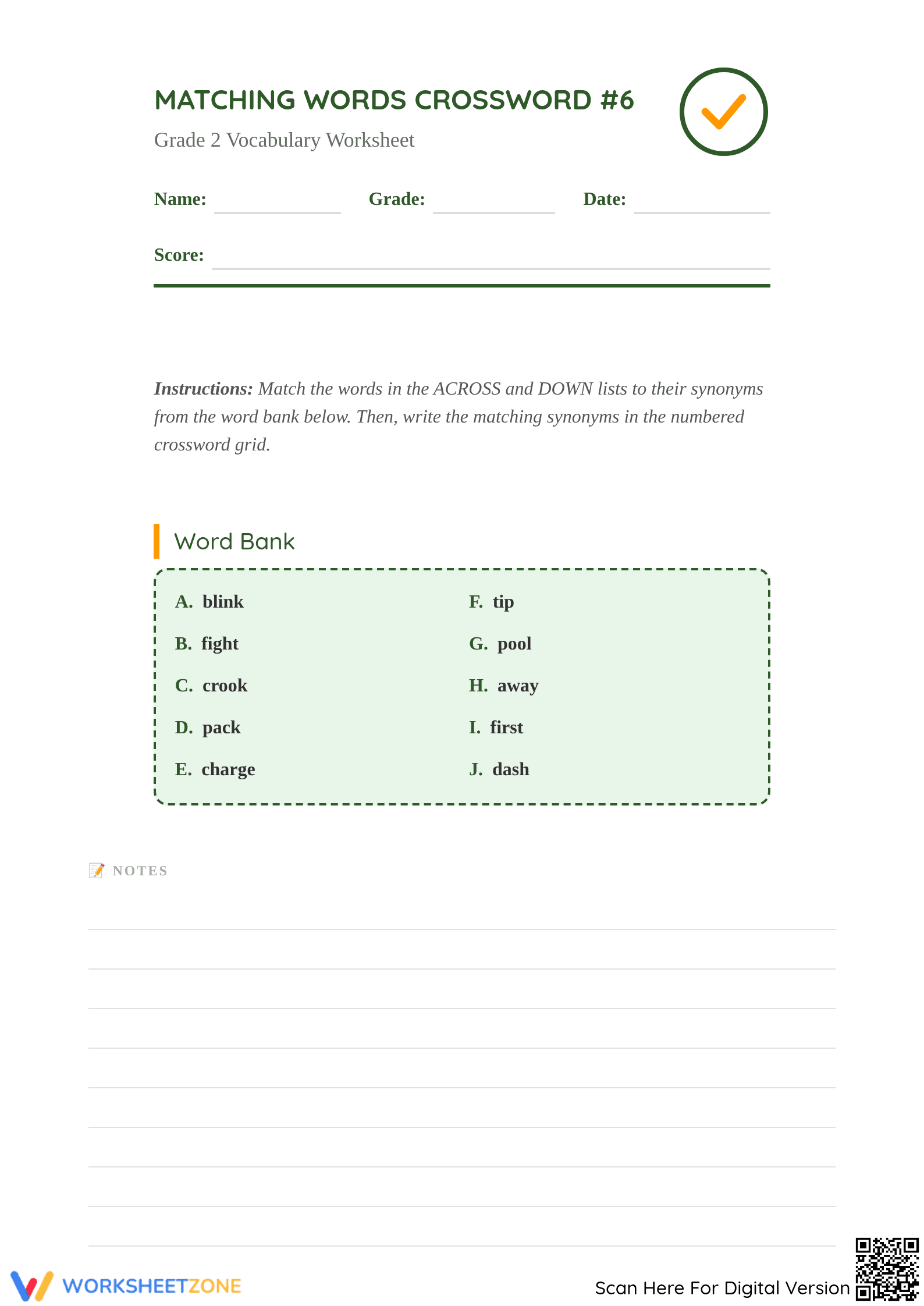
This Grade 2 synonyms worksheet helps students master vocabulary through a fun crossword puzzle and sentence completion activity. Students identify similar meanings for common verbs and adjectives to strengthen their lexical skills. By matching word bank terms to clues, learners build the linguistic flexibility needed for reading comprehension and effective writing.
At a Glance
- Grade: 2 · Subject: ELA
- Standard:
CCSS.ELA-LITERACY.L.2.5.B— Distinguish shades of meaning among closely related verbs and adjectives- Skill Focus: Synonym identification and contextual application
- Format: 2 pages · 15 problems · Answer key included · PDF
- Best For: Vocabulary centers or independent practice
- Time: 15–20 minutes
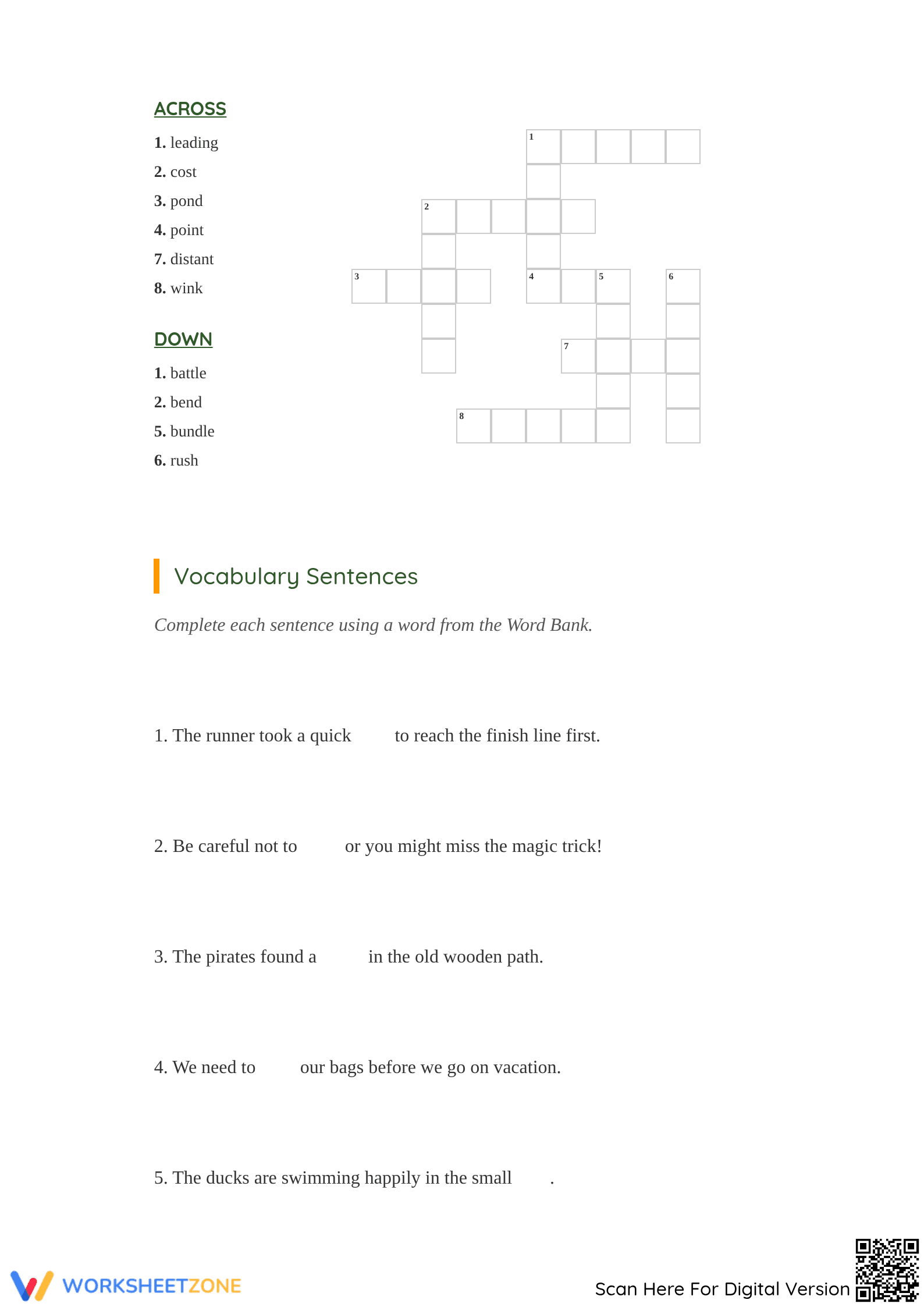
This two-page resource features a word bank with ten key terms like "blink," "dash," and "crook." The first page provides the word bank and space for student notes. The second page contains a detailed crossword grid with six across clues and four down clues based on synonym definitions. Finally, a set of five vocabulary sentences requires students to apply their chosen synonyms in context, ensuring they understand how these words function in real-world syntax.
This resource is designed for an efficient three-step classroom implementation. First, print the two-page PDF (30 seconds). Second, distribute the sheets and have students review the word bank before starting the crossword (1 minute). Third, use the provided answer key for a quick whole-class review or self-grading session (1 minute). With less than three minutes of total teacher preparation time, this worksheet is an ideal solution for emergency sub plans or last-minute literacy centers.
The primary alignment is `CCSS.ELA-LITERACY.L.2.5.B`, which requires students to distinguish shades of meaning among closely related verbs and adjectives. By identifying that "wink" corresponds to "blink" or "rush" to "dash," students develop a nuanced understanding of word relationships. This standard code can be copied directly into lesson plans, IEP goals, or district curriculum mapping tools.
Use this worksheet as a formative assessment after a direct instruction lesson on synonyms. Observe students during the sentence completion task to see if they can use context clues to select the correct synonym. It also works perfectly as a quiet morning work activity or a competitive puzzle during vocabulary workshops. Expect most second-grade students to complete both pages within a fifteen-minute instructional block.
This worksheet is designed for second-grade students developing their core vocabulary, though it provides excellent review for third graders or scaffolded support for English Language Learners. It pairs naturally with a classroom word wall or a mentor text focused on descriptive language. The clear layout and varied tasks keep diverse learners engaged while targeting specific lexical standards.
According to NAEP data, students with a strong grasp of synonym relationships demonstrate higher levels of reading fluency and comprehension. This Grade 2 worksheet targets CCSS.ELA-LITERACY.L.2.5.B by requiring students to match and apply similar words like "dash" and "rush" in multiple formats. Research highlighted by Fisher & Frey (2014) emphasizes that "word-solving" through puzzles like crosswords provides the cognitive challenge necessary to move vocabulary from short-term memory into long-term lexical storage. By combining a matching word bank with contextual sentence frames, this resource ensures that learners are not just memorizing definitions but are active participants in semantic mapping. This multi-modal approach aligns with EdReports 2024 recommendations for high-quality instructional materials that integrate vocabulary acquisition with evidence-based literacy practices. The structured progression from simple matching to contextual application provides the scaffolded support required for Grade 2 students to achieve linguistic mastery.


