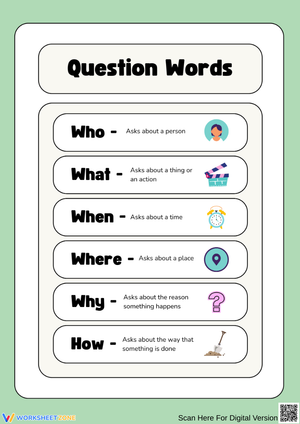
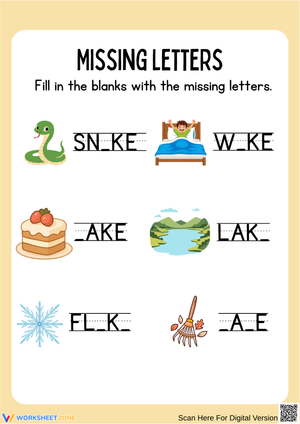
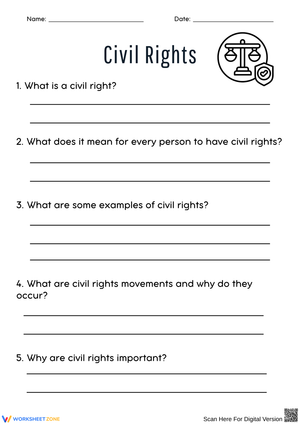
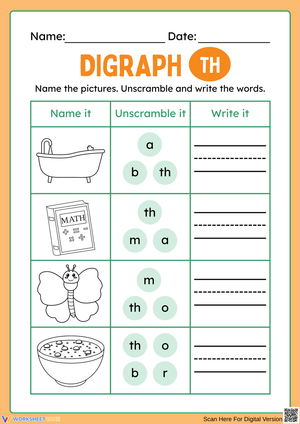
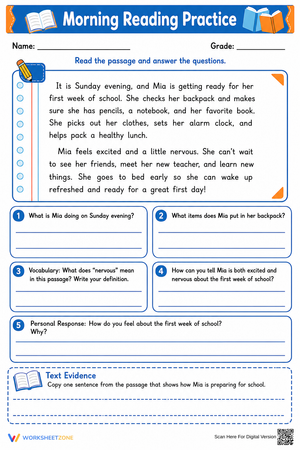
These english printable worksheets for 2nd grade give teachers ready-to-use practice across the full range of ELA skills that define this particular year — the year students stop primarily decoding individual words and start reading to build knowledge. Each worksheet addresses one specific, targeted skill rather than sampling broadly from multiple concepts at once, which means teachers can pull exactly what a student needs for a given lesson or small-group session.
Concepts Covered Across the Set
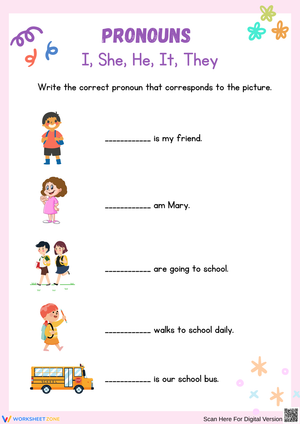
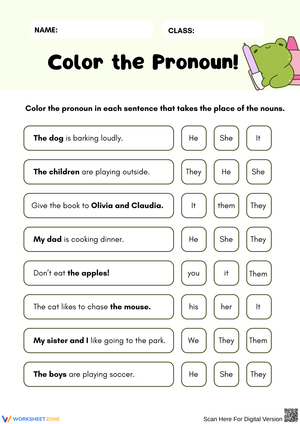
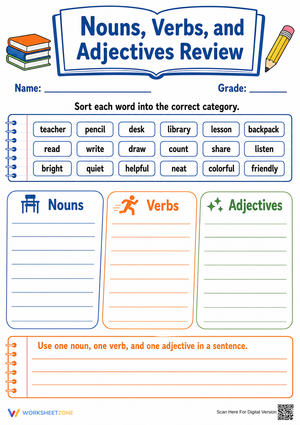
Grammar instruction in second grade moves well past capital letters at sentence beginnings. The grammar worksheets here focus on the specific forms named in grade-level standards:
- Irregular plural nouns — children, feet, mice, geese — and the fact that no reliable pattern governs them
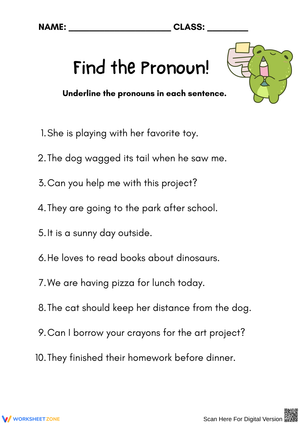
- Reflexive pronouns: myself, yourself, himself, themselves
- Coordinating conjunctions used to combine short sentences into compound ones
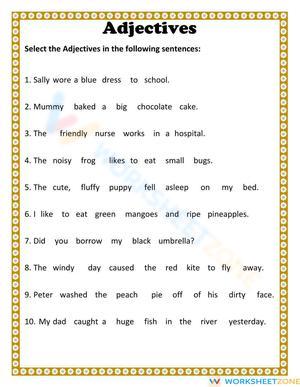
- Adjectives and adverbs that add specificity and detail to student writing
- Irregular past-tense verbs: went, ran, saw, brought
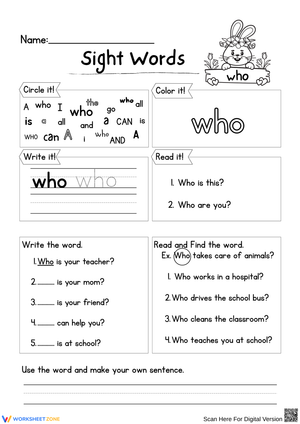
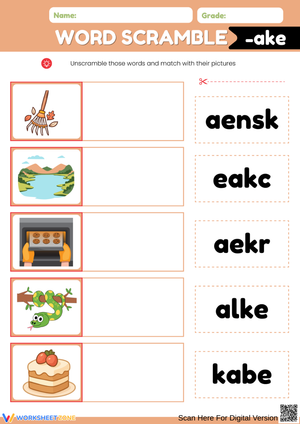
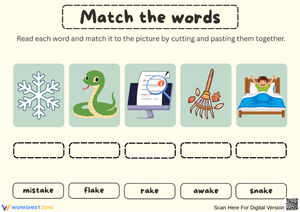
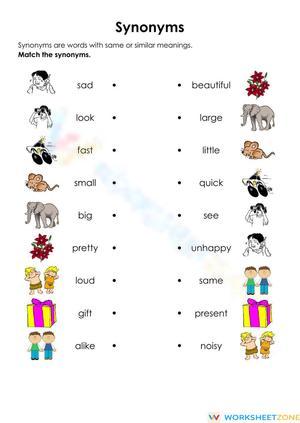
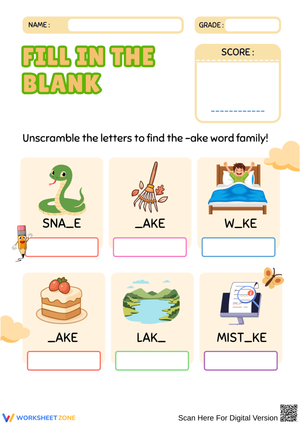
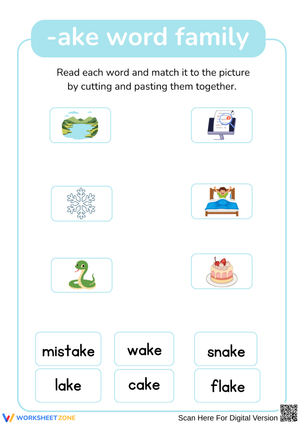
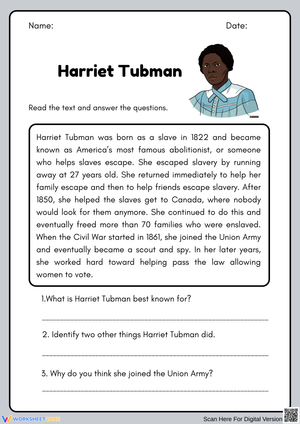
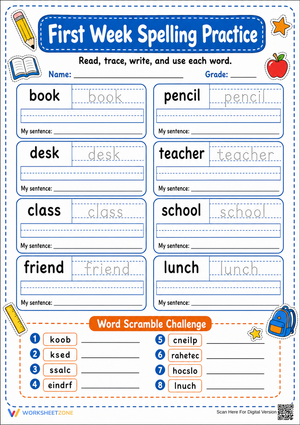
Phonics worksheets address the vowel work that continues well into second grade — vowel teams, r-controlled vowels, and the move into two-syllable decoding. Students also encounter common prefixes and suffixes (un-, re-, -ful, -less) that extend reading vocabulary without requiring whole-word memorization. Vocabulary worksheets use word maps, synonym and antonym matching, and context-clue exercises. Reading comprehension resources include both narrative passages and short informational texts — science topics, animal facts, brief historical moments — because students who only practice on stories tend to struggle when nonfiction text shows up in third grade. Handwriting worksheets round out the set with letter formation, spacing, and sentence-level copying tasks that support orthographic mapping alongside legibility.
Student Error Patterns Worth Catching Early
Irregular verbs produce some of the most persistent errors in second-grade writing. Students who correctly use walk/walked will confidently write goed or runned because they are applying a rule that genuinely works — until it doesn't. That overregularization is a sign of healthy grammar development, but it still needs to be corrected. These worksheets surface the error by presenting irregular forms in context, asking students to choose between went and goed or to rewrite a sentence using the correct past tense. The decision gets made in a low-stakes format before it shows up in a writing piece.
Vowel teams create a different kind of confusion. The letters ea behave differently in bead and bread, and students who have internalized one pattern will misread the other without hesitation. Similar interference appears with ow in crow versus cow. Phonics worksheets here use sorting tasks — students group words by vowel sound, not spelling — which makes the distinction concrete. Compound-sentence work reveals a subtler problem: students who can add a conjunction will still write I ate lunch and then I went outside and then I played and then I came home, chaining clauses with and rather than choosing a conjunction that reflects the actual relationship between ideas. The sentence-combining exercises ask students to choose among and, but, and so, which forces them to think about meaning before they write.
How to Build These Worksheets Into Your Lesson Plans
The most reliable use for these resources is the five-to-eight minute warm-up at the start of the ELA block. One grammar worksheet on Monday sets the week's focus; by Friday the same skill shows up in a short writing task, and the warm-up data from the intervening days tells teachers which students never quite solidified it. This spaced retrieval approach — revisiting a concept across several days rather than drilling it all at once — produces more durable retention than a single practice session, and it costs almost no instructional time per day.
Small-group rotations are another natural fit. While the teacher works with a guided reading group, one station runs a phonics or vocabulary worksheet independently. These english printable worksheets for 2nd grade handle independent completion without needing a teacher nearby, which matters in a rotation context — if directions require someone to explain them, the station breaks down. The task language on each worksheet is accessible, and the format stays consistent within each skill category so students aren't spending cognitive effort figuring out what to do before they even begin.
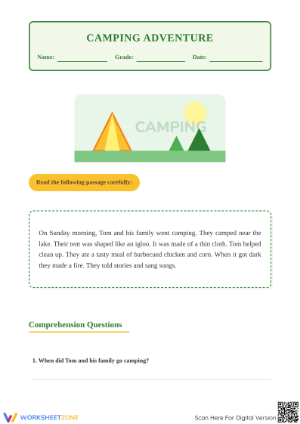
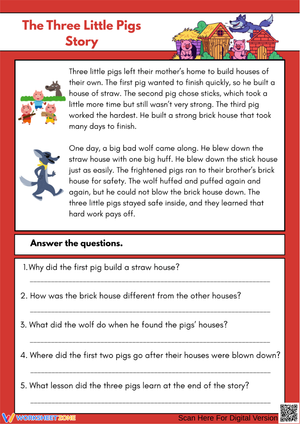
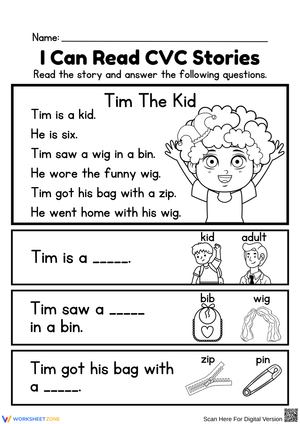
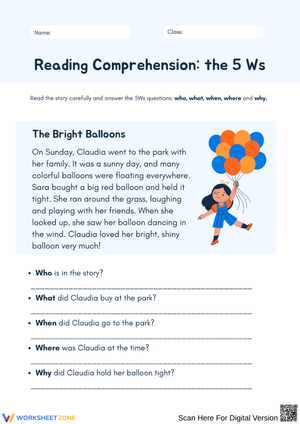
The comprehension passages work well as exit tasks after a read-aloud. Students read the passage independently, answer three to five questions, and hand it in before transitioning. Teachers get a quick snapshot of comprehension without the overhead of a formal assessment — and without losing the last ten minutes of class to a lengthy task.
Standard Alignment
These worksheets address the following Common Core State Standards for English Language Arts — Grade 2:
- CCSS.ELA-LITERACY.L.2.1 — Command of grammar and usage, specifically irregular plural nouns, reflexive pronouns, and irregular past-tense verbs. Grammar worksheets map directly to the forms named in this standard.
- CCSS.ELA-LITERACY.RF.2.3 — Phonics and word recognition, including vowel teams and two-syllable decoding. Phonics worksheets address these patterns in both isolated word work and short-text contexts.
- CCSS.ELA-LITERACY.RI.2.1 / RL.2.1 — Asking and answering questions about key details. Both the informational and narrative comprehension worksheets require students to locate textual evidence before responding, not just recall the gist.
- CCSS.ELA-LITERACY.L.2.4 — Determining the meaning of unknown words using context clues and affixes. Vocabulary worksheets address prefix and suffix analysis alongside context-based meaning work explicitly.
Second grade is also the grade where many state assessments begin to include short written responses, so the sentence-combining and grammar worksheets support test-readiness alongside core instruction — not as drill-and-kill test prep, but as the kind of applied practice that builds the underlying competency first.
Adjusting the Work for a Range of Learners in the Same Room
In most second-grade classrooms, the spread from the lowest to the highest reader is at least three grade levels. Using one version of an english printable worksheets for 2nd grade resource for every student rarely serves any of them well at the extremes of that range.
For students working below grade level, the phonics and vocabulary worksheets benefit from a word bank added before the student begins. Write the target words at the top of the page and the task shifts from retrieval to recognition — an appropriate starting point. For comprehension worksheets, read the passage aloud first, then have the student complete the questions independently. The student still does the inferencing and evidence-locating work; removing the decoding barrier means the comprehension skill actually gets assessed rather than the student's fluency. For students working above grade level, add a written response prompt after any comprehension worksheet: What would happen if the character had made a different choice? or Find one detail the author uses to support the main idea and explain why it works. On grammar work, ask advanced students to write original sentences using the target form instead of selecting from multiple-choice options — production is harder than recognition and shows real command of the structure.
Frequently Asked Questions
How do I know if a worksheet is the right difficulty level for my student?
Have the student attempt the first three items independently while you watch. If they finish all three accurately and without hesitation, the worksheet is likely below their instructional range — use it as review rather than new learning. If they make errors on one or two of the three, the material is in a productive range. If all three are wrong or the student stalls completely, pull back to a simpler version before returning to this one. No single worksheet lands at the right level for every student in the room, and that's expected.
How often should students use these worksheets?
Short and frequent beats long and occasional for second graders. Two focused english printable worksheets for 2nd grade sessions of fifteen to twenty minutes per day — one targeting a phonics or grammar skill and one targeting comprehension or vocabulary — produce more consistent gains than an hour-long worksheet block on Fridays. The shorter sessions also give teachers daily information: you can tell within a week whether a student is solidifying a skill or needs a different approach entirely.
Do these work for home practice, or are they really classroom tools?
They translate well to home use because the instructions are self-contained and tasks don't require a preceding lesson. A parent working through a vocabulary worksheet with a second grader doesn't need background in ELA instruction — the format makes the task clear. That said, parents benefit from knowing which specific skill their child is working on at school so home practice reinforces the same concept rather than introducing something new during a critical consolidation window.
What helps when a student shuts down and won't write on a worksheet?
This happens most often with students who have accumulated negative experiences with written tasks — they freeze before the pencil touches the paper. Two adjustments tend to help. First, let the student say their answer aloud before writing it, which separates the thinking from the physical act. Second, reduce the visible volume — if a worksheet has ten sentences to rewrite, assign three and cover the rest. The resistance usually drops when the task feels finite. Over several weeks, gradually increase the expected output as the student builds tolerance for sustained written work.












 Interactive Worksheet Maker
 Quiz Maker
 Word Search Maker
 Crossword Puzzle Maker
 Word Scramble Generator
 Sentence Scramble Generator
 Handwriting Worksheet Generator
 Name Tracing Generator
 Fill In The Blank Generator