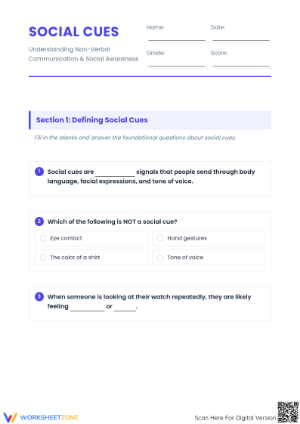
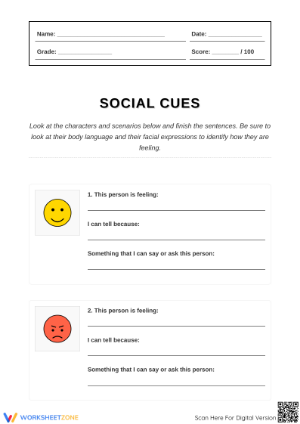
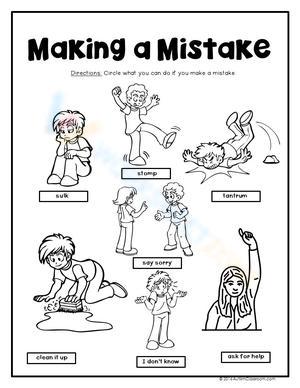
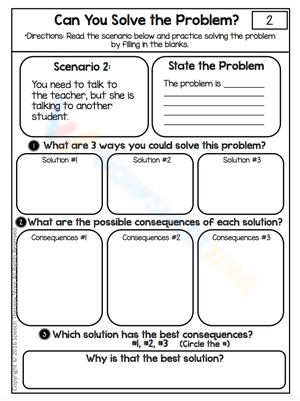
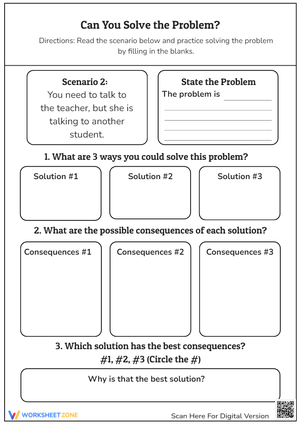
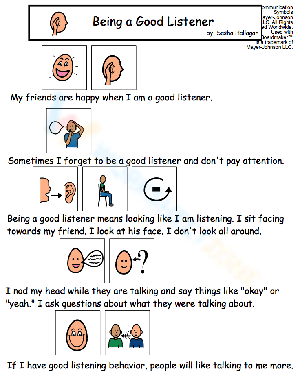
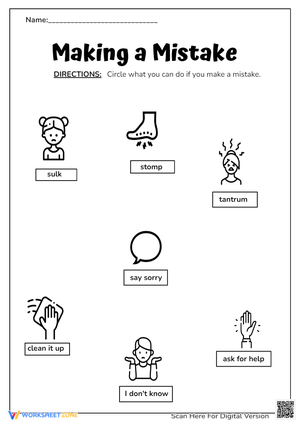
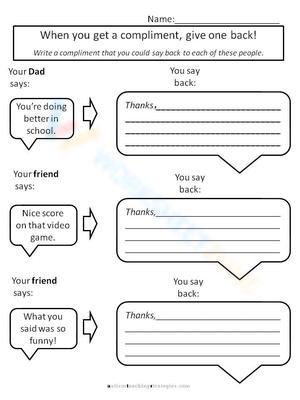
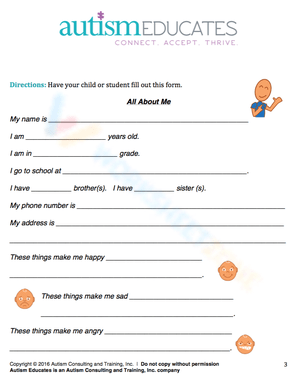
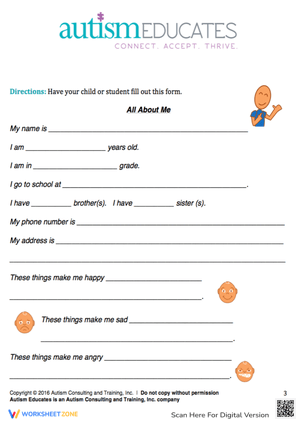
These social skills for autism worksheets pdf for 2nd grade give teachers a direct way to address the instructional gap that opens around age seven — when peer expectations multiply faster than most students with autism can absorb through observation alone. The set targets discrete, teachable moments: how to enter a game already in progress, what a crossed-arm posture communicates, how to stay regulated when a turn runs long. Each worksheet isolates one skill, so instruction stays focused and students are not asked to manage multiple new demands at once.
The Specific Skills These Worksheets Build
Second grade is when social complexity spikes. Students move from side-by-side play into true collaborative work — group projects, partner reading, negotiated recess games — and the unwritten rules governing those interactions are rarely taught directly to anyone. The worksheets organize the relevant skills into four clusters.
- Personal space and body awareness: understanding the "body bubble" in line, at a desk, and during group work, including a visual prompt for calibrating distance across different classroom settings
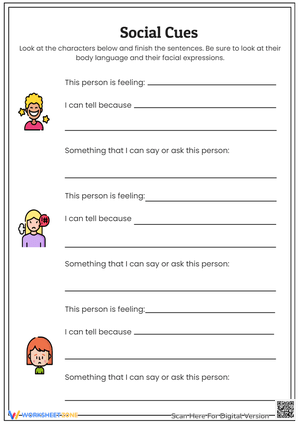
- Reading facial expressions and body language: matching expressions to feeling words, identifying what a peer's posture might signal, and distinguishing attentive from disengaged listening
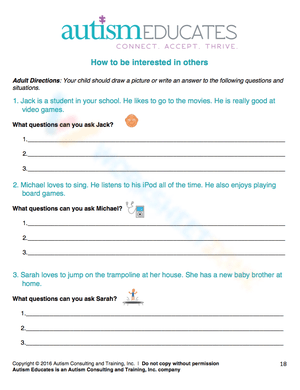
- Conversation skills: how to start, maintain, and close a brief exchange; recognizing when a peer is available to talk versus occupied
- Joining and leaving group activities: the specific steps for entering an ongoing game without disrupting it, and for withdrawing gracefully when a situation escalates
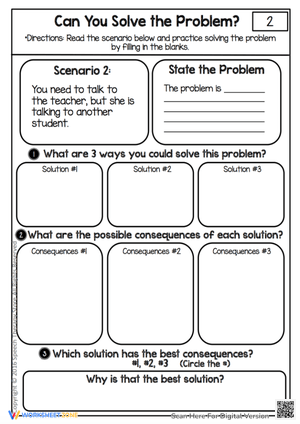
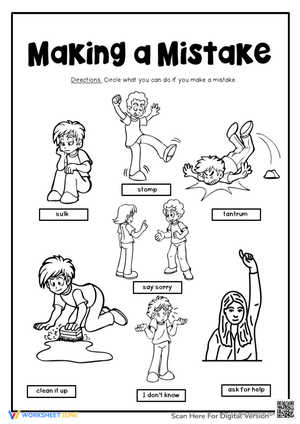
Several worksheets also cover turn-taking patience and basic conflict repair — both areas where second graders are expected to self-manage but rarely receive any explicit instruction at all.
Frequent Errors to Anticipate When Teaching These Skills
The most predictable gap is between worksheet performance and real-time transfer. A student can correctly circle the "frustrated" face on every worksheet and still miss that signal on an actual peer's face during a recess game. That gap exists because the printed image is static and low-stakes, while the real expression arrives alongside noise, movement, and social pressure all at once. Pairing the worksheet with a brief role-play — or a short video clip showing the same expression in a real interaction — closes that gap faster than repeating the paper task alone.
Personal space produces the same pattern. Students who shade the correct distance on a diagram worksheet will still crowd a tablemate the moment they get absorbed in a task. The worksheet builds the concept; a simple in-the-moment classroom signal does the work of generalization. A shared cue — even just a teacher glance — lets students self-check without drawing peer attention to the correction.
Conversation-starter scripts surface a third error worth watching. Students who practice an opener on paper tend to recite it without first checking whether the other person is actually ready to talk. One fix is to add a checking step to any conversation-entry worksheet: before the student writes or draws the opener, they identify what the other person is doing in the scene image. That one question — "Is this person ready to talk?" — builds in the attentional scan that neurotypical peers perform automatically.
Building These Worksheets Into Your Instructional Week
The strongest use of these materials is before the situation — not after it breaks down. Running through the "joining a game" worksheet during the ten minutes after Monday morning meeting sets up a student for Thursday and Friday recess in a way that a reactive conversation after a conflict never will. Pre-teaching with a visual reference gives the student a retrievable mental script for when the real moment comes, not just a rule they heard once and forgot.
For pull-out settings, school counselors can use each worksheet as a conversation anchor — reviewing it together, then role-playing the scenario before the student returns to class. If social skills for autism worksheets pdf for 2nd grade are part of a school-wide tiered support framework, the PDF format integrates cleanly into Tier 2 small-group instruction without requiring any separate materials. Sending the same worksheet home takes one step, and when parents use the same language and the same visual reference the student used at school, the consistency shows up in behavior within a few weeks.
On pacing: ten minutes on one worksheet three times a week produces stronger retention than a 30-minute social skills block once a week. Spaced practice lets the skill settle before the next encounter with it, and repeated low-stakes exposures across different days reduce the cognitive load of real-world application considerably.
Adjusting the Worksheets for a Range of Learners
For students who need more guided support, a worksheet does not have to stay at the desk after the lesson ends. Laminating the personal space or conversation-entry worksheet and clipping it to a student's binder turns it into a real-time visual reference — something to glance at in the moment, not just something completed earlier in the day. That kind of portable support fits naturally into the flow of a second-grade classroom without singling the student out.
For students who complete the paper tasks easily, the next step is reducing the support structure intentionally. Moving from worksheet to role-play with a peer, then to a naturalistic attempt with light teacher observation, gives a capable student a clear path toward independence. Peer modeling is especially effective at this grade level — second graders respond strongly to watching a classmate navigate the same situation they just practiced on paper.
When social skills for autism worksheets pdf for 2nd grade are introduced to the whole class — not just to students with IEPs — the benefits extend outward. Other students absorb the shared vocabulary ("body bubble," "checking-in look"), and the autistic student gets to observe classmates applying the same concepts without the weight of being singled out. Universal instruction reduces stigma and multiplies real practice opportunities across the school day.
Standard Alignment
These worksheets align with CASEL's Social Awareness and Relationship Skills competency strands — specifically the second-grade expectations around perspective-taking, recognizing social cues, and using communication to build positive peer relationships. In classroom instruction, those competencies run alongside CCSS Speaking and Listening standards for grade 2, particularly SL.2.1 (participating in collaborative conversations with peers and adults in small and large groups) and SL.2.6 (producing complete sentences appropriate to the task and situation). A student who has not yet learned to track a peer's facial expressions or manage a turn-taking exchange is working against themselves every time those standards come up in collaborative academic work. The worksheets address the foundational social awareness that makes genuine participation in group instruction accessible — not just compliance with the seating arrangement.
Frequently Asked Questions
Can these worksheets be used with the whole class, or are they intended only for students with an autism diagnosis?
They work well with the whole class, and that delivery model is often more effective. When every student practices reading facial expressions or entering a group activity, the autistic student is not receiving visibly separate instruction — and removing that singularity matters. Universal social skills instruction gives all students a shared vocabulary, reduces peer friction across the group, and gives the student with autism more chances to observe classmates applying the skills naturally. This approach mirrors standard practice in inclusive second-grade social-emotional learning.
How should I sequence the worksheets across the school year?
Start with personal space and basic emotion identification in the first weeks, when classroom norms are still forming. Move to conversation entry and turn-taking through the fall, once partner and group work is regularly underway. Conflict repair and frustration management fit well in late fall or winter, after students have had enough peer interaction to make those scenarios feel relevant rather than hypothetical. Emotional regulation worksheets work particularly well as re-entry routines after extended breaks — the first week back from winter or spring break is a predictable destabilization point, and a familiar visual reference helps students reset faster than most verbal reminders do.
My student completes every worksheet correctly but does not apply the skills in real situations. What is missing?
The worksheet builds the concept; it does not build the habit. Transfer requires three things the worksheet alone cannot provide: repetition across different contexts, low-stakes practice before the real situation, and a bridge between the paper task and the live moment. That bridge is usually a physical cue — a laminated card on the desk, a visual posted near the door before recess, or a quick verbal check-in from the teacher. Using the social skills for autism worksheets pdf for 2nd grade as a recurring touchpoint rather than a one-time lesson is the single biggest factor in whether a student actually applies what they practiced on paper. A retrieval prompt delivered in the 60 seconds before students head to the playground — "We practiced joining a game this week — what was the first step?" — closes the transfer gap faster than any additional seat work.












 Interactive Worksheet Maker
 Quiz Maker
 Word Search Maker
 Crossword Puzzle Maker
 Word Scramble Generator
 Sentence Scramble Generator
 Handwriting Worksheet Generator
 Name Tracing Generator
 Fill In The Blank Generator