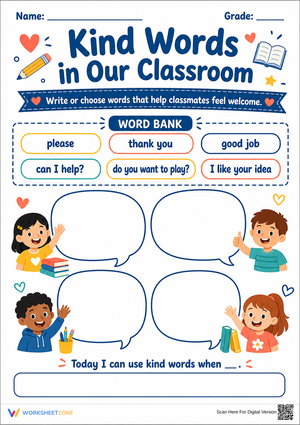
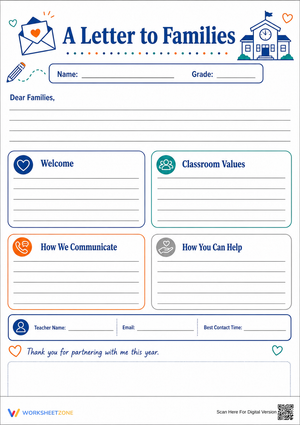
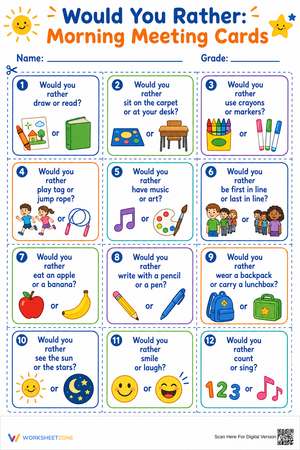
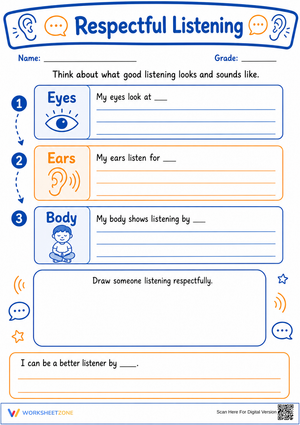
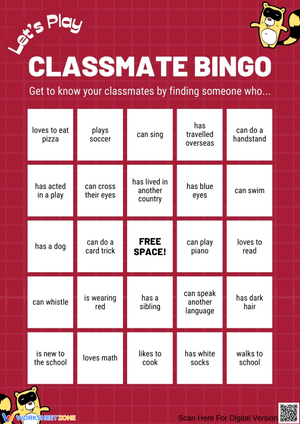
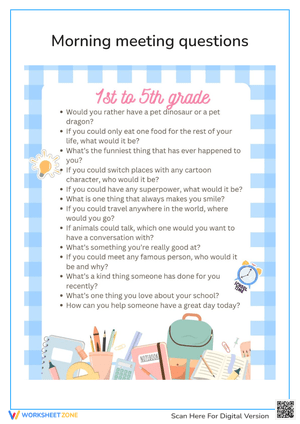
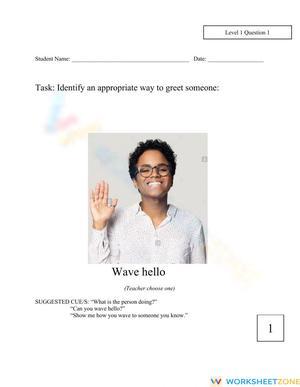
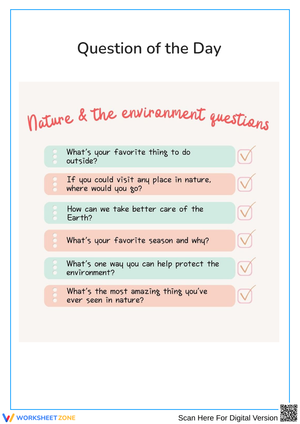
These communication skills worksheets pdf for 2nd grade give teachers ready-to-use practice on the social-cognitive skills that seven- and eight-year-olds are actively developing — reading a peer's expression, holding back while someone else finishes speaking, and putting frustration into words that don't turn a small conflict into a larger one. The set covers active listening, "I" statement construction, body language interpretation, and conversational turn-taking, all at a reading and reasoning level that works for independent seat work or a brief teacher-guided session.
The Specific Skills Each Worksheet Targets
Active listening worksheets present short dialogue scenarios and ask students to identify whether the listener in the scene is following or ignoring whole-body listening cues — eye contact, stillness, body oriented toward the speaker. Students circle behaviors they observe, then write one thing they would do differently if they were the listener. That written explanation step is where most of the thinking happens; a student who can circle the right behavior but can't say why is still working at surface level, and the blank line makes that gap visible during review.
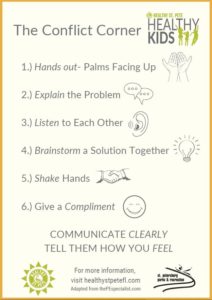
The "I" statement worksheets provide the sentence frame I feel ___ when ___ because ___ and walk through three or four classroom conflict scenarios. Each one asks students to complete the frame for the character who is upset, then predict how the other person might respond. That second step moves students past self-expression into perspective-taking — a meaningful developmental jump for this age group.
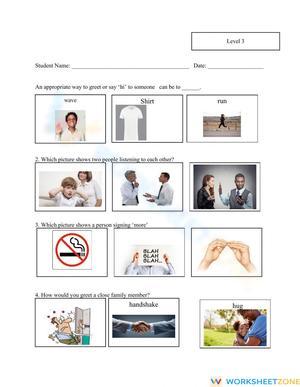
Non-verbal cue worksheets show illustrated faces and body postures. Students name the emotion and write one visual detail that helped them decide. Turn-taking worksheets use a conversation-map format — a simple diagram where students mark who contributes when in a mock dialogue, then reflect on whether the exchange felt balanced.
The Errors That Come Up in Student Work
The most consistent error in "I" statement practice is writing an opinion statement instead of a feeling statement. A student who writes I feel like you never listen to me has not named an emotion — "like" introduces a thought, not a feeling. Until someone explicitly flags this distinction, students will repeat it every time they use the frame, certain they have followed the format correctly. The written format catches this before it cements; a quick annotation during review is faster than trying to explain the difference mid-conflict when emotions are already running high.
On the body language worksheets, the failure point is not extreme expressions — wide grins and tears students identify reliably. The misreads happen with neutral or ambiguous faces: many second graders interpret a calm, flat expression as unfriendly or angry. That matters in live classroom moments because students who make that misread often respond defensively to peers who are simply concentrating. The worksheets deliberately include ambiguous faces to open the conversation about checking assumptions before acting on them.
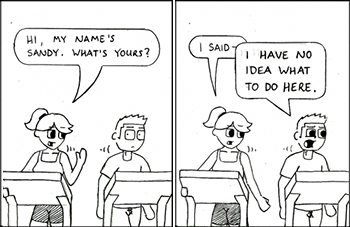
Turn-taking work surfaces a different kind of gap. Students who articulate the rules clearly on paper — let others finish, add to what they said — may still interrupt or dominate in actual group discussion. Written practice alone does not close that gap. What it does is make the gap visible, which tells you exactly where to follow up with real-time coaching during small-group work.
Fitting These Worksheets Into Your Weekly Lesson Plan
The most natural placement is the 8 to 10 minutes right after morning meeting, when students have already been in a social mode and the content connects to what just happened in the circle. A brief whole-class discussion before students work — "Has anyone had a moment this week where they felt unheard?" — gives them a personal hook before they encounter the scenario on the page.
A weekly focus structure works well with these communication skills worksheets pdf for 2nd grade. On Monday, introduce the concept with a short model or a picture book that raises the skill. Tuesday or Wednesday, students complete the relevant worksheet. Thursday, revisit the skill during a partner or small-group activity. Friday, one or two students share an example from the week. This rhythm gives students multiple encounters with the concept before it's expected in live interaction — which matters for habit-building rather than just recognition on paper.
The "I" statement and turn-taking worksheets also function as a useful early-year diagnostic. Looking at how students respond to the conflict scenarios in September tells you who is already thinking in terms of feelings and who defaults to blame language — useful information when planning table groupings and partner pairings for the first weeks of school.
Standard Alignment
These worksheets connect directly to CCSS SL.2.1, which requires second graders to participate in collaborative conversations by following agreed-upon discussion rules, building on others' talk, and asking for clarification when needed. The listening and turn-taking worksheets give students structured written practice in exactly those behaviors before group work demands them in real time. SL.2.1a (following discussion rules) and SL.2.1b (building on a partner's contribution) are the most directly addressed sub-standards. Teachers in states with CASEL-aligned SEL frameworks will find alignment with the Self-Management and Social Awareness competencies at the elementary level.
Making This Set Work Across a Range of Learners
For students still developing reading fluency, the scenario-based worksheets work best when read aloud before students write. Pairing a stronger reader with a developing one for the read-through, then separating for independent written response, keeps the communication skill as the focus rather than the decoding task. The communication skills worksheets pdf for 2nd grade sits at a second-grade reading level, so this adjustment doesn't require rewriting any scenarios — just a change in how students access the text.
Students who move through the work quickly benefit from an extension: write a second "I" statement from the other person's perspective in the same scenario. This requires genuine perspective-taking and usually produces more nuanced language than the first response did. At the other end of the range, students who freeze on open-ended prompts do better with a word bank for the emotion slot in the "I" statement frame — five or six feeling words alongside the frame gives enough structure to get started without doing the thinking for them.
The non-verbal cue worksheets are particularly accessible for students with limited expressive writing. Identifying an emotion and circling it requires much less output than describing one in a sentence, which makes each worksheet a natural starting point for students new to explicit SEL work or who have had little prior instruction in reading body language.
Frequently Asked Questions
How often should these worksheets appear in my weekly schedule?
Once a week maintains steady momentum without displacing core instruction. During the first month of school, when norms are still forming, two sessions per week makes sense — then scale to weekly as students internalize the vocabulary. Short and consistent practice builds communication habits more reliably at this age than longer, infrequent lessons that ask students to revisit skills they haven't thought about in two weeks.
Do these work for small-group intervention, or are they better suited to whole-class use?
Both, and the format stays the same — what changes is the amount of teacher talk surrounding the work. In a small group, pause mid-worksheet and discuss each scenario aloud before students write, adding a processing layer that benefits students who need more guided support before committing to a written response. In a whole-class setting, students work more independently and bring responses to a brief share-out at the end of the session.
A student in my class reads emotions differently than the illustrations show. How do I handle this?
Name it directly with the student. Some children express and read emotions in ways shaped by family background, neurotype, or individual experience. Use it as an opportunity to discuss the idea that different people signal the same feeling in different ways — the goal is not one correct answer for what a sad face looks like, but the habit of reading signals and checking assumptions before responding. That conversation tends to be more useful than any single worksheet response.
Can parents use these at home?
The communication skills worksheets pdf for 2nd grade transfers well to a home setting. The scenarios are classroom-based, but the feeling vocabulary and "I" statement structure apply equally to sibling conflicts, homework frustration, or any moment when a child needs to name what they're feeling before reacting. A brief note home about the week's focus keeps the language consistent across settings, which speeds up transfer considerably.
How do I know if students are actually applying these skills rather than just completing the work correctly?
Watch what happens during real group work and conflict moments — not the completed worksheet. A student who finishes every "I" statement exercise accurately but still uses blame language in a disagreement has learned the format without internalizing the habit. Written practice is formative, not confirmatory. Track actual behavior with a simple observation checklist over six to eight weeks; transfer takes longer than a single correctly completed worksheet suggests, and that gap is normal at this stage of development.












 Interactive Worksheet Maker
 Quiz Maker
 Word Search Maker
 Crossword Puzzle Maker
 Word Scramble Generator
 Sentence Scramble Generator
 Handwriting Worksheet Generator
 Name Tracing Generator
 Fill In The Blank Generator