These 10th grade muscle printable worksheets resources give biology teachers a targeted toolkit for one of the most mechanically complex units in secondary anatomy — from tissue classification to the molecular choreography of contraction. Each worksheet isolates a specific skill or concept so students build understanding layer by layer rather than facing the full system at once. The set covers the three muscle tissue types, the sliding filament theory, and the muscular system's integration with the nervous, skeletal, and cardiovascular systems.
The Skills These Worksheets Build
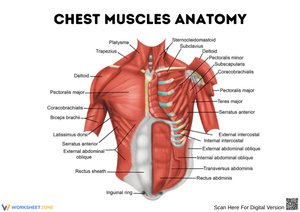
Students work through a progression that starts with identification and moves toward analysis. The earliest worksheets ask students to distinguish skeletal, smooth, and cardiac muscle tissue using labeled diagrams — marking striations, identifying nucleus position and count, and noting whether contraction is voluntary or involuntary. That comparative framework matters because the three tissue types get conflated in student notes far more often than teachers expect.
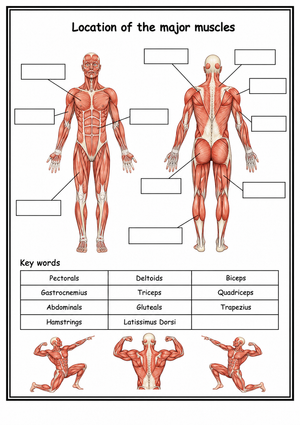
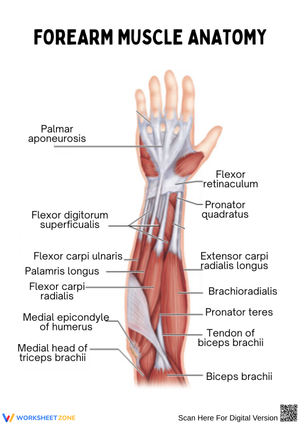
Later in the set, students annotate sarcomere diagrams, trace the sequence of events in a contraction cycle, and match the roles of calcium, troponin, tropomyosin, actin, and myosin in sequence. Several worksheets present the sliding filament mechanism as a numbered flowchart with gaps to fill — a format that forces students to sequence the steps rather than just recognize them when reading. A worksheet on major muscle groups asks students to identify antagonistic pairs — biceps brachii and triceps brachii, for instance — and explain how paired-muscle mechanics produce controlled joint movement. Students also work through body-system interaction questions that require them to trace a motor signal from the central nervous system to the neuromuscular junction, and to connect oxygen debt and lactic acid buildup to the circulatory and respiratory systems.
The Molecular Mechanism Students Struggle With Most
The sliding filament theory sits at the intersection of chemistry, cell biology, and anatomy, and it is the section where 10th grade students hit the steepest wall. The terminology alone — sarcomere, sarcoplasmic reticulum, troponin-tropomyosin complex, cross-bridge cycling — is dense enough to stall students before the mechanism even begins. What makes these worksheets useful here is that each stage of the contraction cycle gets its own visual: one diagram for the resting state, one for calcium release, one for cross-bridge formation, one for the power stroke, and one for detachment. Students label and annotate each stage separately rather than trying to decode a single multi-arrow diagram.
That step-by-step format also exposes exactly where understanding breaks down. A student who labels calcium ions correctly on the resting-state diagram but blanks on troponin's role in the next step is showing you a gap in causal reasoning — not just a vocabulary problem. That kind of targeted information is hard to extract from a multiple-choice unit test.
Errors That Surface Predictably in This Unit
The most persistent misconception: students understand that the sarcomere shortens during contraction but write that the actin and myosin filaments themselves get shorter. They have read "sliding filament theory," but the word sliding hasn't overridden the intuitive assumption that something has to physically shrink. On diagrams, these students draw contracted sarcomeres with shorter thin filaments instead of greater filament overlap. Worth catching early — once it becomes a diagram habit, it resists correction.
Two other patterns appear consistently. First, students who correctly identify cardiac muscle as involuntary will also describe it as "unconscious," and then write in a scenario question that a patient with arrhythmia "can't feel their heartbeat" — conflating involuntary neural control with sensory unawareness. Second, students mix up troponin and tropomyosin. Both names share a stem, and students frequently reverse the sequence, writing that calcium binds tropomyosin and moves troponin. A short sequencing or matching exercise on the relevant worksheet catches this error before it shows up on the unit exam.
Practical Ways to Work These Worksheets Into Your Planning
The tissue-comparison worksheets work well as front-loading activities on the first day of the unit — ten minutes at the start of class before any lecture, so you can see what vocabulary students carry in from middle school. The results are reliably mixed: most students can identify skeletal muscle, fewer know smooth muscle's location in hollow organs, and almost none can describe cardiac muscle's intercalated discs unprompted. That baseline shapes the rest of the week's pacing.
The 10th grade muscle printable worksheets materials that cover the sliding filament theory slot most naturally before or immediately after a muscle fatigue lab. When students have already annotated the contraction cycle on paper, they connect experimental data — diminishing grip strength, perceived burning — to ATP depletion and lactic acid accumulation rather than treating the lab as an isolated activity. The worksheets become interpretive tools rather than standalone vocabulary exercises.
Exit tickets drawn from the system-interaction worksheets give a clean formative read after any lesson on neuromuscular signaling or homeostasis. Asking students to trace a nerve impulse from the motor cortex to a specific muscle fiber — in writing, without notes — surfaces the students who are paraphrasing lectures without understanding the directional sequence.
Standard Alignment
NGSS HS-LS1-2 asks students to develop and use a model to illustrate the hierarchical organization of interacting systems that provide specific functions within multicellular organisms. In classroom terms, that means students should explain how the muscular system depends on the nervous system for stimulation, the skeletal system as the rigid structure muscles pull against, and the cardiovascular system for fuel and waste removal — and represent those dependencies in a diagram or written model. The body-system interaction worksheets in this set address that expectation directly. The sliding filament worksheets support the disciplinary core idea at a finer scale, connecting molecular events such as ATP hydrolysis and calcium signaling to observable tissue-level function.
Adjusting for Different Points in the Learning Curve
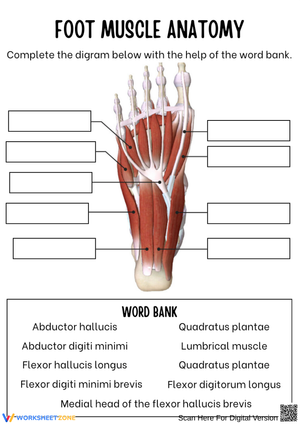
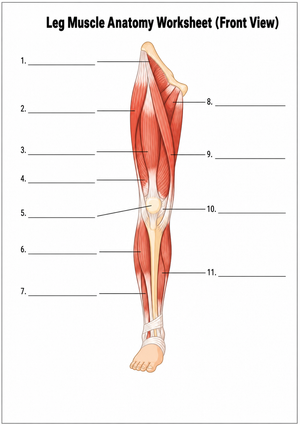
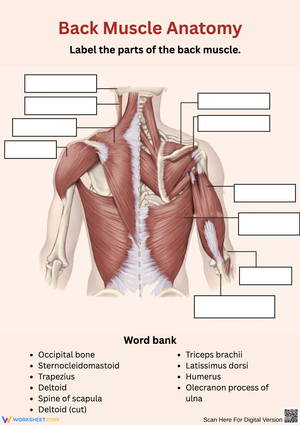
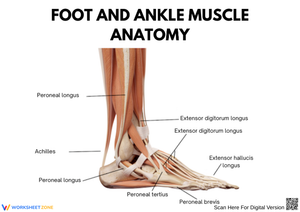
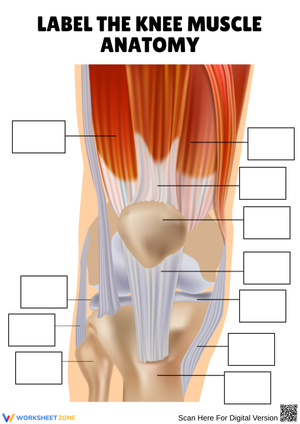
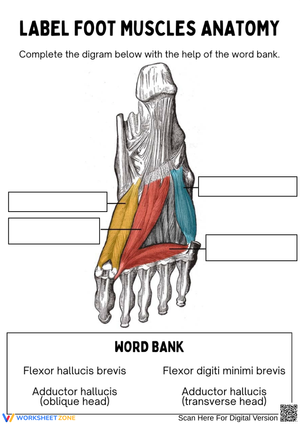
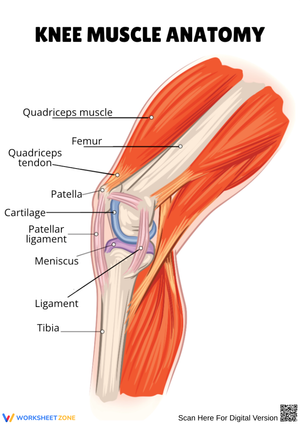
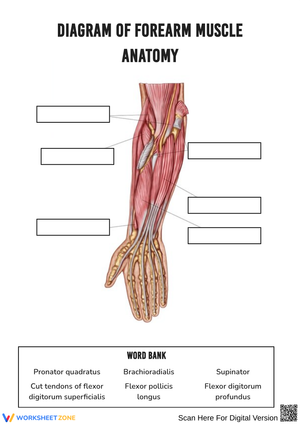
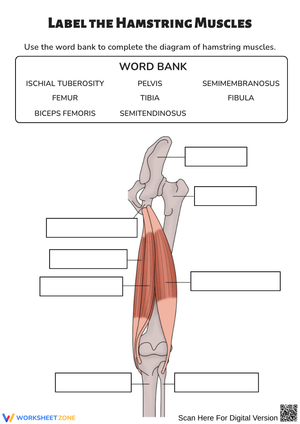
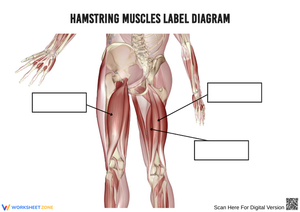
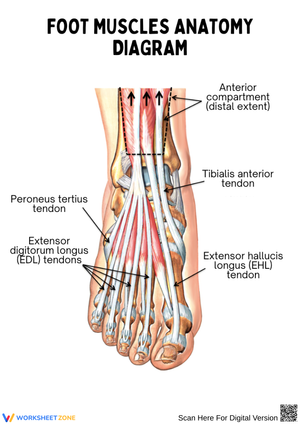
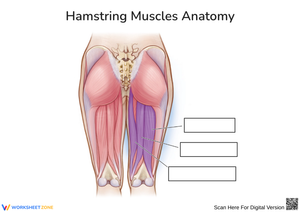
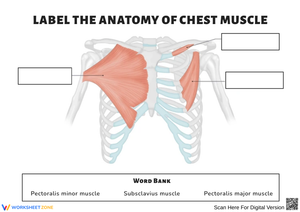
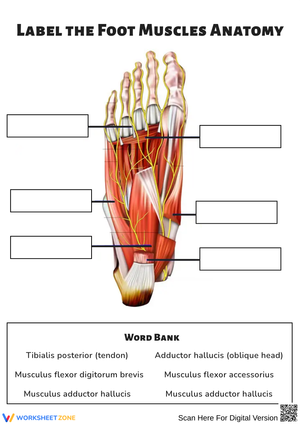
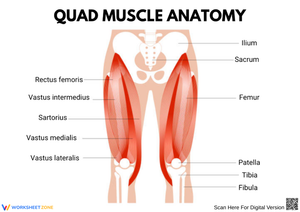
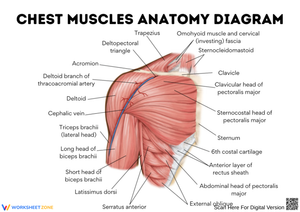
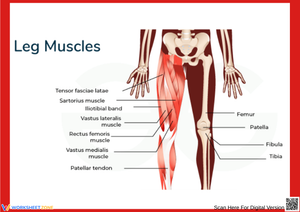
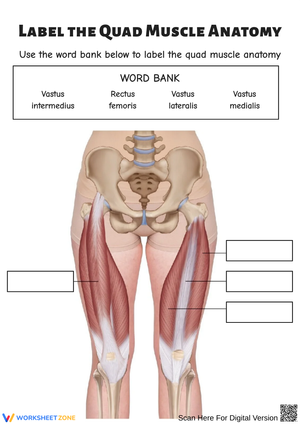
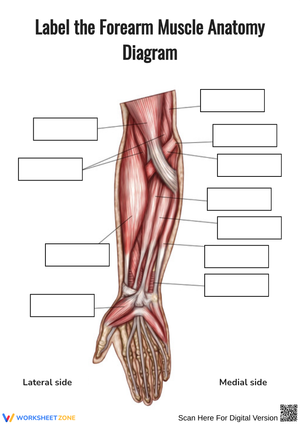
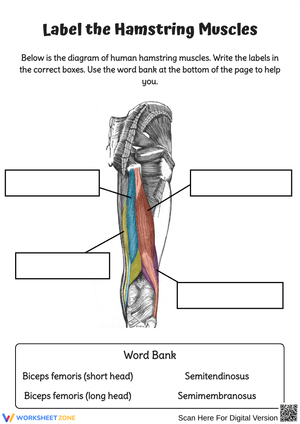
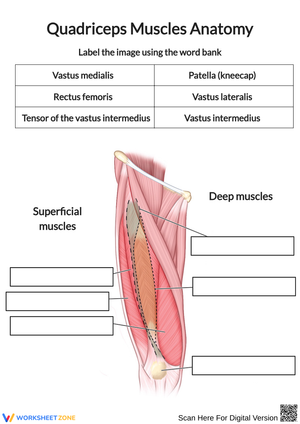
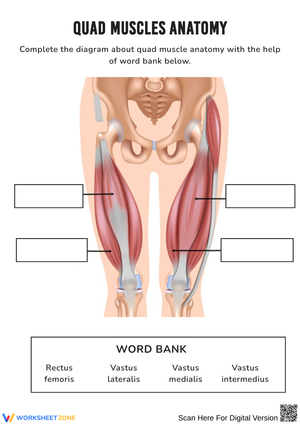
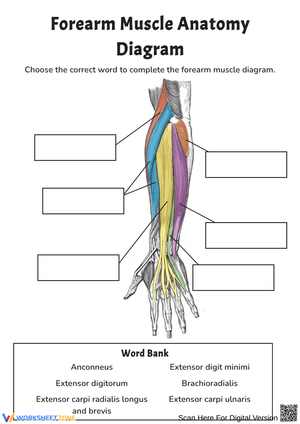
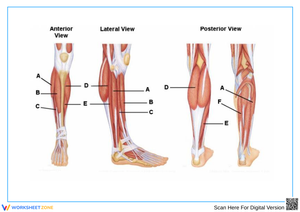
Students still building their science vocabulary benefit from using the tissue-comparison worksheets with a word bank in place. Removing the word bank — or substituting a completely blank diagram — raises the retrieval demand considerably and works well for students who already have the vocabulary and need the practice of producing it from memory. The major muscle group labeling worksheet operates the same way: provide a figure with structure lines and labels partially filled in for students still orienting to anatomical terminology, and a blank outline for students ready for unassisted recall.
For students who move through the material quickly, the sliding filament worksheets extend naturally into pathological cases. Tetanus — caused by a bacterial toxin that blocks inhibitory neurotransmitter release, leaving motor neurons firing continuously — and rigor mortis — where ATP depletion prevents myosin heads from detaching after the power stroke — both map directly onto the contraction cycle. Neither case requires additional resources; the 10th grade muscle printable worksheets set gives students enough mechanistic grounding to reason through the pathology when prompted with a short scenario. For students who need more support, the sequential diagram format already breaks the mechanism into smaller steps; pairing each step with a cause-and-effect graphic organizer gives those students an explicit reasoning structure without reducing the content's complexity.
Frequently Asked Questions
What major muscle groups should students be able to identify by the end of this unit?
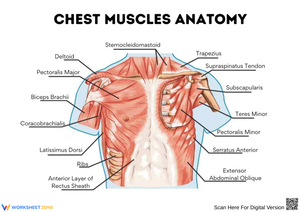
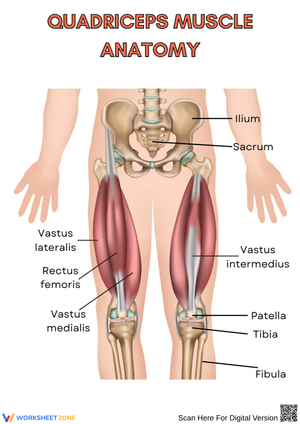
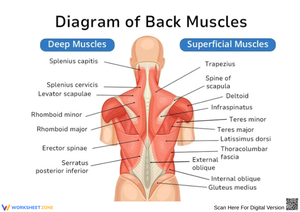
On the anterior surface: pectoralis major, deltoid, biceps brachii, rectus abdominis, and quadriceps femoris. On the posterior surface: trapezius, latissimus dorsi, triceps brachii, gluteus maximus, hamstrings, and gastrocnemius. These twelve groups cover the muscles most commonly assessed on state-level anatomy evaluations and provide enough anatomical reference for students to discuss movement mechanics with precision.
Can these worksheets stand in for a textbook during the muscular system unit?
No — and they are not intended to. The worksheets assume students have access to direct instruction or a text that introduces the concepts. What they replace is passive re-reading: instead of a student reading the sliding filament section twice and feeling confident, the worksheet requires producing the sequence, not recognizing it in print. That is a different cognitive task and a more accurate test of whether understanding is actually there.
How do the body-system interaction worksheets fit into the sequence alongside the other resources?
These work best after students have completed the muscle tissue comparison and the contraction cycle worksheets — not at the start of the unit. Students who try to trace the neuromuscular junction pathway before the sarcomere structure is solid hit too many unfamiliar terms at once and often fall back on rote copying rather than reasoning. Once the molecular mechanism is reasonably secure, the system-interaction worksheets pull the pieces into a larger functional picture. The 10th grade muscle printable worksheets set is sequenced so that each worksheet builds on the one before it, but teachers on a compressed schedule can also use the system-interaction worksheets as standalone summative review without completing the full progression.