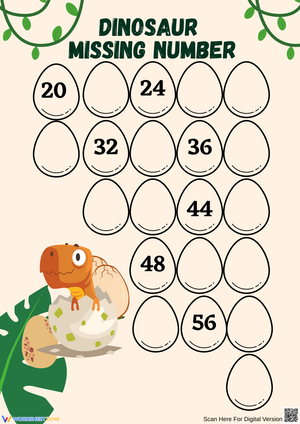
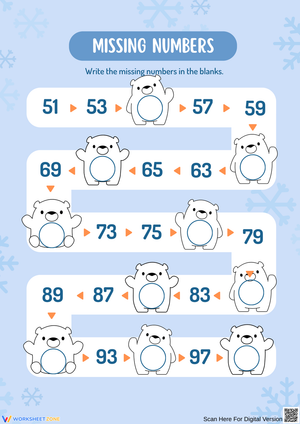
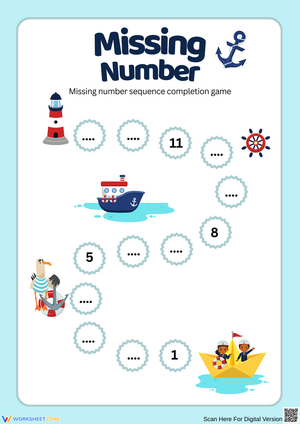
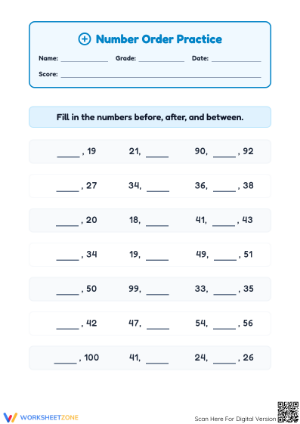
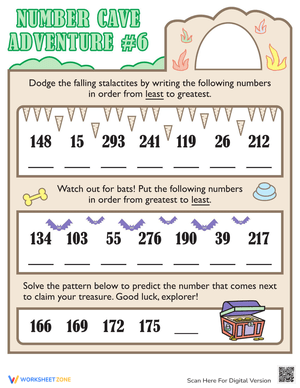
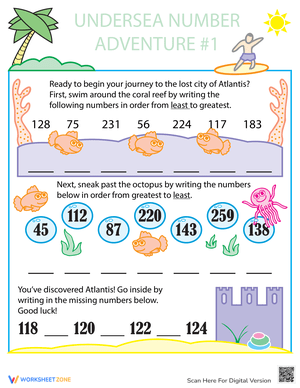
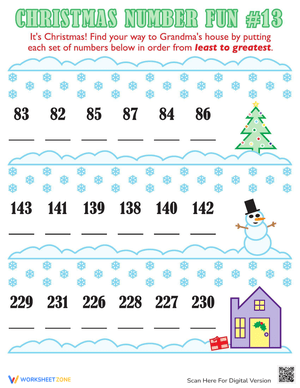
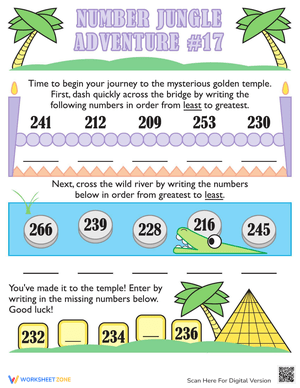
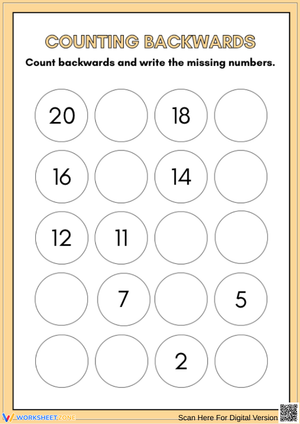
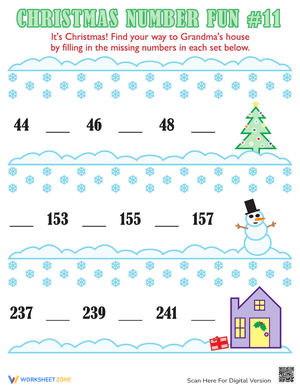
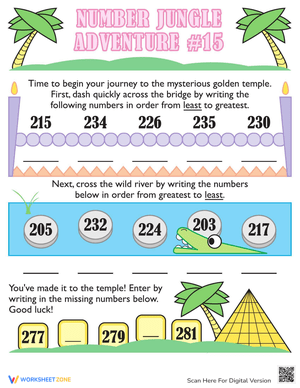
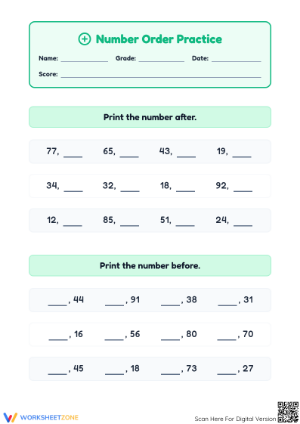
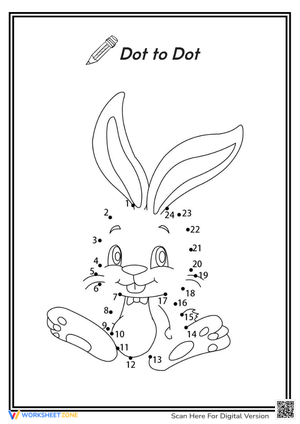
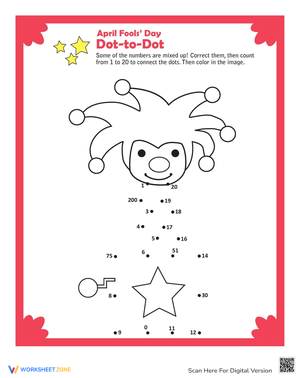
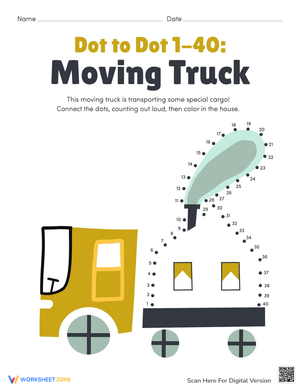
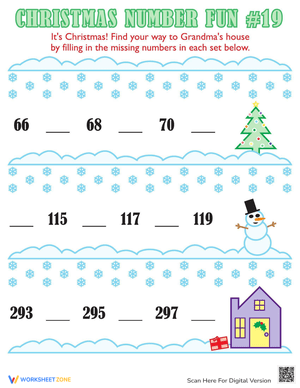
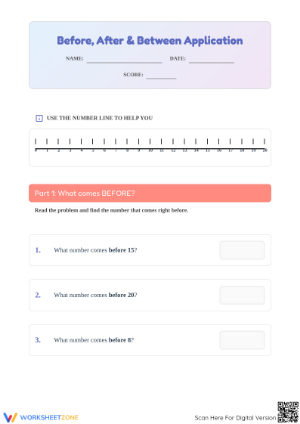
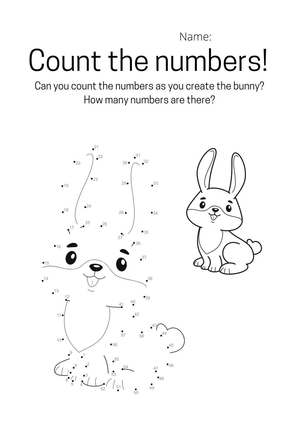
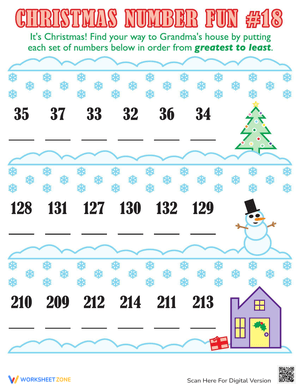
These sequence numbers worksheets for 1st grade give teachers printable practice targeting number order, missing-number identification, and counting fluency — without requiring prep beyond printing. Each worksheet concentrates on one or two related sequence skills: counting forward from a mid-sequence starting point, counting backward by 1s, filling in gaps, or arranging a mixed set in order. The work stays within 120, which is precisely where the Grade 1 standard sits.
The Specific Skills Each Worksheet Builds
Grade 1 is the year counting becomes flexible. Students move from reciting numbers in a fixed chant to counting forward or backward from any starting point, and that shift is harder than most lesson plans account for. Each worksheet in the set addresses one or more of the following targets:
- Forward counting from mid-sequence starting points — completing rows that begin at 47 or 83, not always at 0 or 1
- Backward counting by 1s — which consistently needs more explicit practice than forward work at this grade level
- Missing-number identification — with the blank placed at the beginning, middle, or end of the row, varied across worksheets
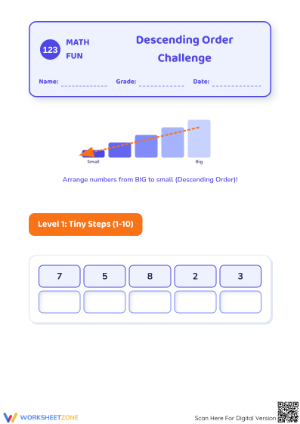
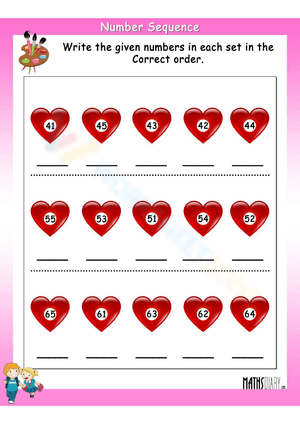
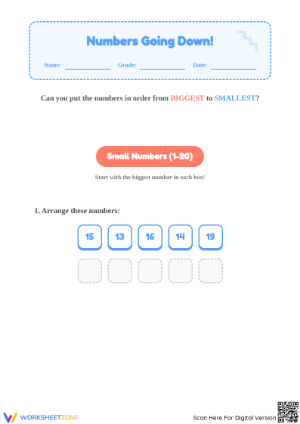
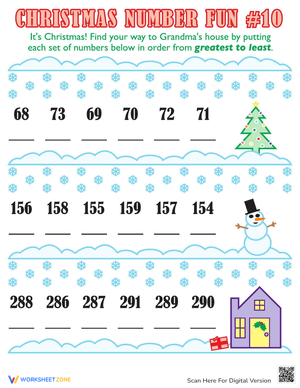
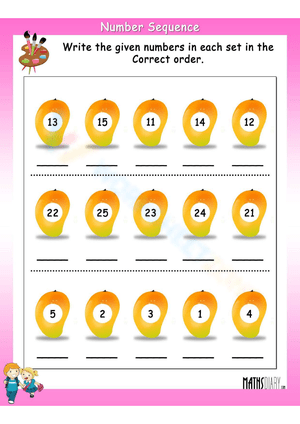
- Ordering mixed sets — students arrange a cluster of numbers from least to greatest within 100 or 120
- Skip-count extensions — by 2s, 5s, and 10s, introduced once forward-and-backward fluency is stable
These five targets aren't equally difficult. Students typically master forward counting before backward, and they fill in a final-position blank more reliably than a first-position one. Matching each student to the right worksheet by current skill level — rather than assigning every worksheet in order — produces noticeably better results across a few weeks of practice.
Frequent Student Errors Worth Anticipating Before the Lesson
Two error patterns appear reliably enough that they're worth building into lesson planning. The first involves backward counting through the teen numbers. A student who writes "17, 16, 15, 13" has not merely skipped 14 — the count sequence is unstable in reverse, and assigning more gap-filling practice alone won't close that gap. Number-line work, where the student physically points to each numeral while stepping backward, addresses the underlying instability more directly than additional written practice.
The second pattern is blank-position dependency. Students who complete "12, ___, 14" correctly will often hesitate or guess at "___, 12, 13" because a blank at the front disrupts the left-to-right rhythm they expect. This is not a number-order failure; it's a task-interpretation problem. Modeling the habit of reading the entire row before picking up the pencil — a 30-second move during the lesson introduction — reduces this error significantly by the time students encounter that format again.
Where These Worksheets Fit Across the Teaching Week
The most efficient slot is structured morning entry — the 8-to-12-minute window before the whole-group lesson begins. One short sequence worksheet gives students something unambiguous to start while attendance is taken, and the returned papers show at a glance who reversed a backward count, who wrote "100" after 19, and who finished in 90 seconds. That data adjusts small-group groupings without requiring a separate assessment step.
Centers are a strong second fit. A plastic sleeve and a number-line reference card turn each worksheet into a reusable station. Students complete the task with a dry-erase marker, read the finished row aloud to a partner before erasing, and rotate on. That verbal read-aloud step adds about 20 seconds to the task and catches transposition errors that silent writing misses entirely.
For pull-out intervention, trim the task rather than replacing it. Three or four sequences on the target pattern — worked through one together before releasing students to the rest — produces better outcomes than a full worksheet of independent practice on a skill that isn't yet automatic. One filing tip worth adopting: sort these worksheets by error type rather than by lesson date. A folder for backward-counting practice, one for missing-middle-number tasks, and one for sequences beginning above 50 makes it possible to pull the right worksheet seconds after an exit slip shows where the class lost ground.
Standard Alignment
CCSS.MATH.CONTENT.1.NBT.A.1 requires first graders to count to 120 starting from any number less than 120. The phrase "starting from any number" is the instructional hinge — it shifts the expectation from rote recitation to flexible number reasoning. Sequence numbers worksheets for 1st grade that anchor every row at 0 or 1 technically address counting but miss the standard's actual intent; the worksheets in this set use irregular starting points (forward from 63, backward from 28) so students practice precisely what the standard calls for. That choice also surfaces gaps — students who count 1 to 120 without error will sometimes freeze when a sequence begins at 57 — that whole-class recitation never catches.
Differentiating the Worksheets Across Learner Levels
First graders don't move through number sequences at the same pace, and that range widens as the year progresses. Three variables carry most of the difficulty in sequence work: number range, blank position, and whether a visual reference is available during the task. Adjusting those three — without overhauling the task format — lets the same set of printable worksheets serve students at very different points.
Students who need more support work with sequences within 20, blanks in the final position only, and a number line on the desk they can touch while counting. That combination reduces working memory demand without removing the reasoning requirement. On-level practice uses forward and backward sequences within 100 and 120, mixed starting points, and blanks placed in all three positions across different worksheets. Students ready for extension take on skip-count sequences, hundreds-chart sections with multiple missing cells, or rows that ask them to name the pattern before filling it in.
What holds constant regardless of level: the task is always about number order. Adding computation steps, multi-part directions, or decorative illustrations that compete for attention shifts cognitive load away from the sequence relationship itself. Keeping sequence numbers worksheets for 1st grade sorted by skill target rather than by difficulty label makes differentiation faster to execute on any given day — teachers pull for the error, not for the tier.
Frequently Asked Questions
Do these worksheets include answer keys?
Yes. Each worksheet comes with a corresponding answer key so teachers can check papers quickly or hand the task off to a classroom aide.
Can I use these as homework?
The format is predictable enough for home use — students understand the task without teacher explanation. One practical consideration: students who rely on a number line or hundreds chart at school may struggle without those references at home. Sending a small number strip alongside the worksheet removes that barrier without additional prep.
Are these worksheets appropriate for kindergarten or 2nd grade?
Kindergarteners working above grade level can handle the within-20 worksheets. Second graders reviewing sequence numbers worksheets for 1st grade content — particularly backward counting and mid-sequence starting points — can use these for reteach without the material feeling remedial, since number ranges extend to 120 and the formatting stays age-appropriate.
How do I introduce these worksheets if students haven't done sequence work before?
Project one worksheet and work through the first row aloud: "I read the whole row first — 14, blank, 16 — I see two numbers with a gap, so I count on from 14 to find what fits." After a brief partner attempt on the second row, most students are ready to complete the remaining sequences independently. That one modeled example transfers faster than a longer explanation.













 Interactive Worksheet Maker
 Quiz Maker
 Word Search Maker
 Crossword Puzzle Maker
 Word Scramble Generator
 Sentence Scramble Generator
 Handwriting Worksheet Generator
 Name Tracing Generator
 Fill In The Blank Generator