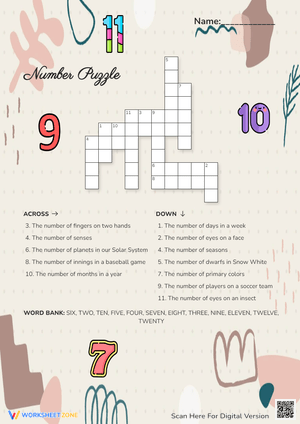
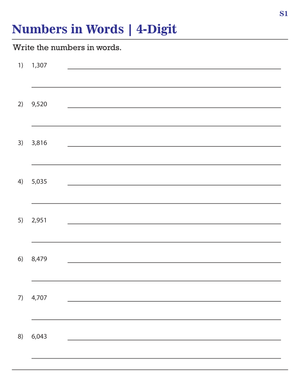
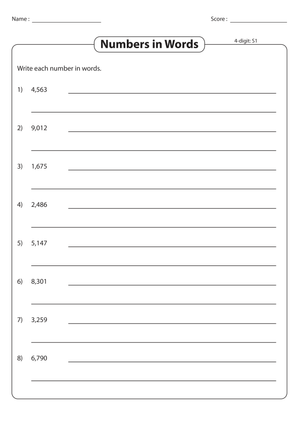
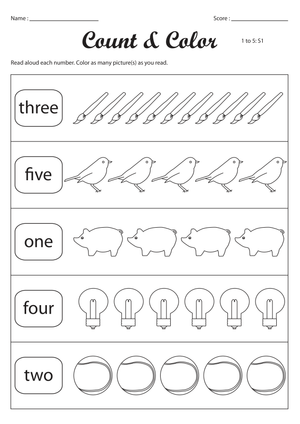
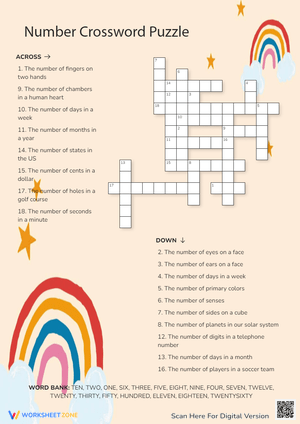
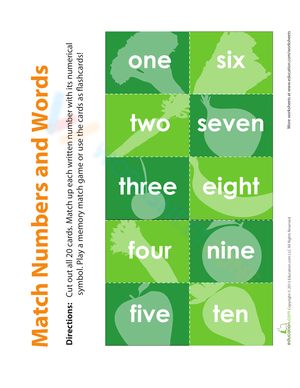
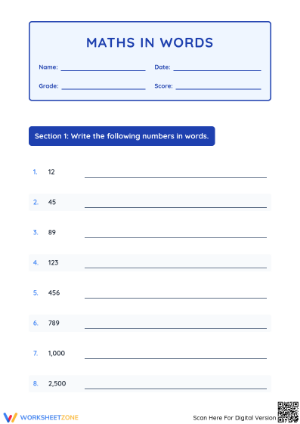
These number names printable worksheets for 1st grade address a specific instructional gap: students who can rattle off a count to 100 but freeze when asked to write "eighteen" or read the word "forty" in a word problem. The set covers number words from zero through twenty and continues through the decade numbers, using varied task formats so students practice both recognition and independent production. Teachers get a ready sequence that moves from trace-and-write to matching to sentence-embedded practice — enough variety to serve morning work, center rotations, or targeted intervention without repetition.
The Specific Skills Targeted
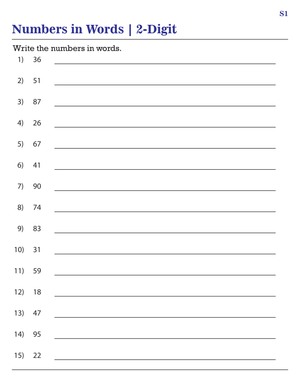
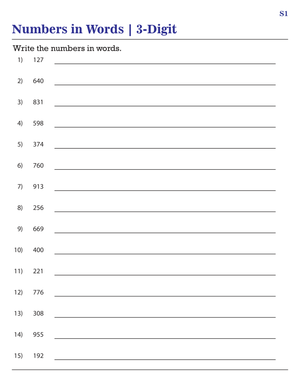
Each worksheet isolates a distinct component of number-word fluency rather than bundling everything into a single drill. Students trace number words to build correct letter formation, then copy them without the guide letters, then apply them in context — matching, fill-in-the-blank, and simple prompts that require reading a written number and responding. That sequence moves from supported to independent within each worksheet, which reduces the frustration that comes from sending students to a blank page too soon.
- Trace-and-write practice focused on correct letter formation, with extra repetitions built in for the most commonly misspelled words — "eight," "twelve," and "eleven"
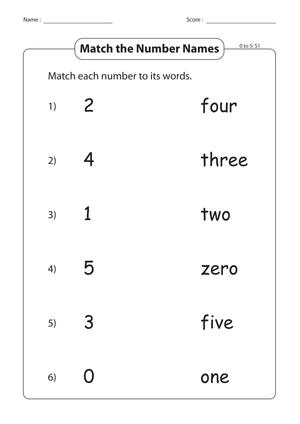
- Numeral-to-word matching that deliberately pairs easily confused words such as fourteen / forty and fifteen / fifty
- Cut-and-paste sorting tasks that add a fine motor component and run cleanly as math center work
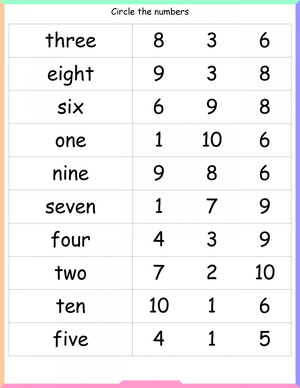
- Read-and-circle tasks where students identify the correctly spelled word among two or three plausible misspellings
Where Students Reliably Go Wrong With Number Words
The teen numbers produce the most consistent errors, and not always the ones teachers anticipate. Most first graders pick up "thirteen" and "fourteen" fairly quickly — the -teen ending gives them a hook. The real sticking points are "eleven" and "twelve," which carry no phonetic connection to their numerals, and "fifteen," where the root word "five" shifts its spelling entirely. In actual student work, "twelf," "twelv," and "fiveteen" appear repeatedly through February even after classroom instruction. Worksheets that ask students to distinguish between a correct spelling and a plausible near-miss do more diagnostic work than simple trace-and-copy sheets alone.
The other pattern worth watching: students who master number words in isolation still stumble when those same words appear in sentence context. A student who writes "twelve" correctly on a drill sheet may skip right over it in a word problem, treating it as an unknown. Mixing sentence-embedded tasks into the practice set forces students to process these words as language, not just as spelling sequences — and that distinction matters when the words start showing up in math story problems.
Smart Spots in the Day for These Worksheets
The most reliable placement is the first six to eight minutes of math block or the transition into it. A single worksheet — one word family or one task format — takes about that long, gives students something purposeful to do while attendance is taken, and keeps number words active in memory through low-stakes daily repetition. That accumulated daily contact builds fluency faster than one weekly block dedicated to the same content.
Laminate a small set of these number names printable worksheets for 1st grade and station them at a dry-erase center. Students use markers to complete the tasks, erase, and cycle through again. One laminated worksheet covers a full week of center rotations without additional prep and stays more engaging than paper copies — partly because the erase-and-repeat format feels less permanent, which matters for students who are anxious about getting spelling wrong in ink.
Standard Alignment
These worksheets align directly with CCSS.MATH.CONTENT.1.NBT.A.1, which requires first graders to count to 120 and read and write numerals. Writing the number word for a numeral is the natural partner skill — a student who reads "14" but not "fourteen" is only halfway to the fluency that standard implies in applied contexts. Several state standards also connect this work to ELA foundational skills, since words like "eight," "four," and "one" appear on traditional first-grade sight word lists and share phonics patterns students are studying simultaneously in the reading block.
The Math-Literacy Crossover Worth Naming Explicitly
"Eight" applies the -igh vowel team students are often studying at the same time; "six" and "ten" are clean consonant-vowel-consonant words for early decoders; "four" introduces the -our pattern. Pausing during a worksheet to say, "Look at the vowel team in 'eight' — where else have you seen those letters together?" costs thirty seconds and builds a durable cross-curricular connection. The relationship works in reverse too: when students encounter number words in a reading passage, recognizing them as familiar math vocabulary lowers the cognitive load of the text, which helps comprehension even when number sense is not the reading lesson's focus.
Adjusting These Worksheets for a Range of Learners
For students still building phonemic awareness, narrow the scope to zero through ten only and keep a physical number line on the desk as a reference. That visual anchor reduces the spelling burden enough that students can focus on connecting numeral to word rather than working out the letter sequence from scratch. The trace-and-write format does the most for this group because the built-in letter guides free working memory for the vocabulary work itself.
Students who have already internalized most words through ten are ready for harder transfer tasks. The number names printable worksheets for 1st grade that focus on teens and decade numbers work well for this group with one added constraint: have them write each number word in a complete sentence, or sequence four number words in ascending order without a reference chart visible. That production-level demand separates students who can recognize a word from students who have genuinely stored it.
Frequently Asked Questions
Which number words give first graders the most trouble?
"Eleven," "twelve," and "fifteen" are consistently the hardest. "Eleven" has no phonetic tie to the numeral 11, "twelve" ends in a consonant cluster students frequently drop or alter, and "fifteen" requires accepting that "five" changes form entirely. Extra focused repetition on these three before extending to the full teen range pays off in fewer errors later.
How many number words should students know by the end of first grade?
Most first-grade curricula expect students to read and write number words zero through twenty with accuracy, plus the decade words through one hundred. Spelling mastery across that full range in a single year is a high bar; confirming retention of zero through twelve before extending is a more reliable instructional path than rushing the sequence.
Can these worksheets pull double duty as spelling practice?
Yes, and that connection is worth naming explicitly for students. Several number words appear on traditional first-grade sight word lists, so the number names printable worksheets for 1st grade reinforce vocabulary that shows up in both the math block and the daily reading lesson — two skills addressed for the effort of one practice session.













 Interactive Worksheet Maker
 Quiz Maker
 Word Search Maker
 Crossword Puzzle Maker
 Word Scramble Generator
 Sentence Scramble Generator
 Handwriting Worksheet Generator
 Name Tracing Generator
 Fill In The Blank Generator