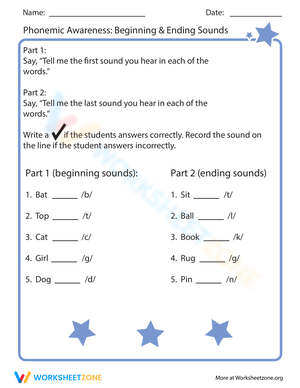
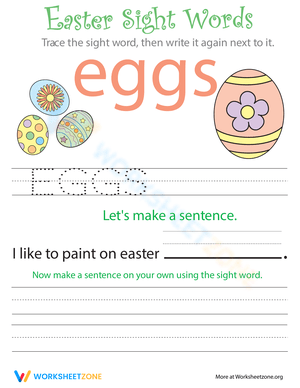
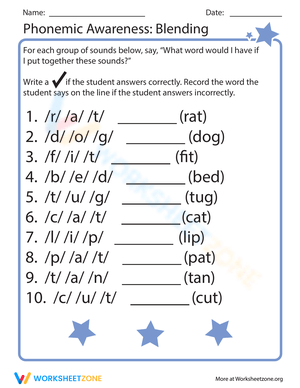
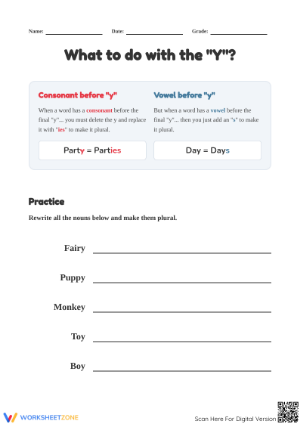
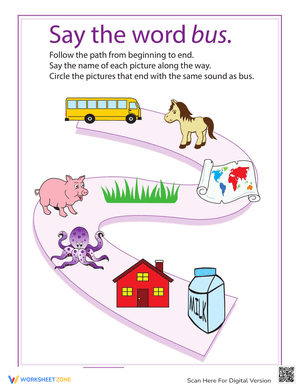
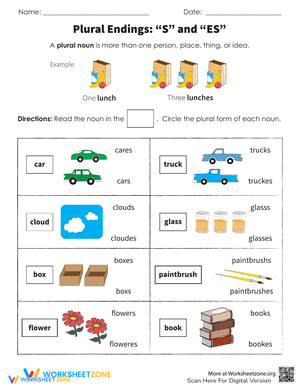
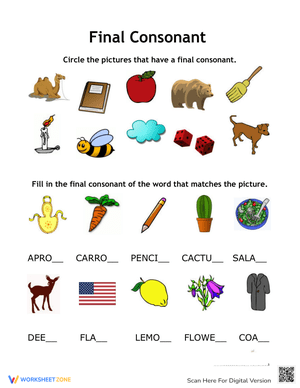
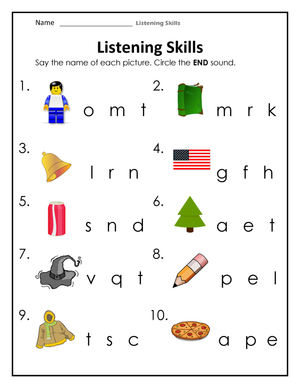
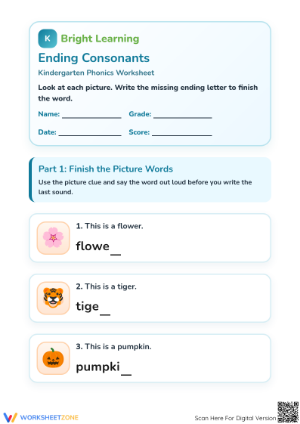
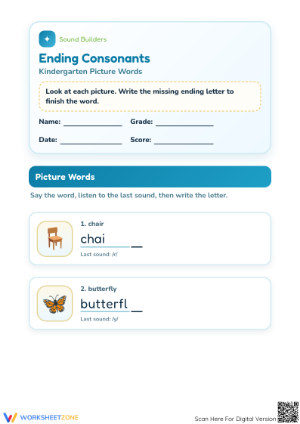
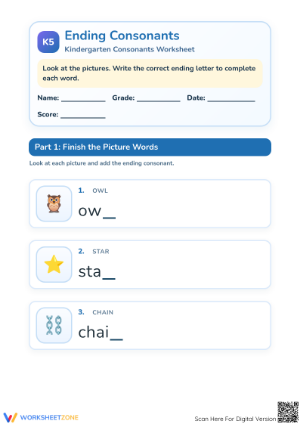
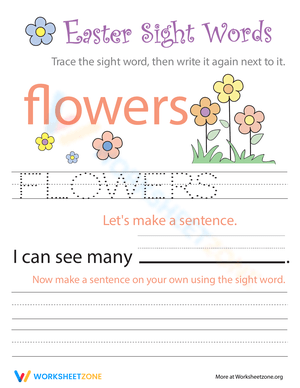
These ending sounds worksheets for 1st grade address one of the quietest challenges in early phonics instruction: the final consonant. Most CVC words lose emphasis at the end — a child reading "map" aloud will often enunciate the /m/ clearly and let the /p/ dissolve. This set gives teachers the structured, printable practice that trains first graders to hear and represent that trailing phoneme before it calcifies into a persistent spelling habit.
Why Final Consonants Are Harder to Hear
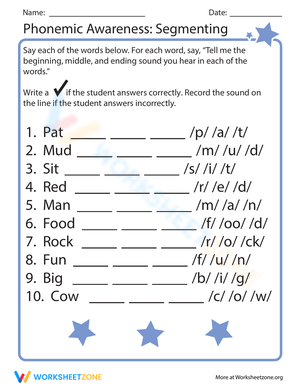
The difficulty is simultaneously physiological and cognitive. In connected speech, final consonants are frequently unreleased — the mouth moves into position but does not fully articulate the sound, especially with stop consonants like /p/, /t/, /k/, /b/, /d/, and /g/. Asking a six-year-old to segment a spoken word and name its last sound requires holding the full word in working memory long enough to strip away the onset and the vowel. That working memory demand is entirely distinct from initial-sound work, where the target phoneme arrives before any competing phonetic information. Repeated, explicit final-sound practice reduces that load over time by building automaticity in phoneme segmentation — the kind that eventually transfers into independent spelling.
What Students Practice Across the Set
Each worksheet in the set targets final phoneme work through a different entry point, building the skill from multiple angles rather than drilling one format to the point of diminishing returns.
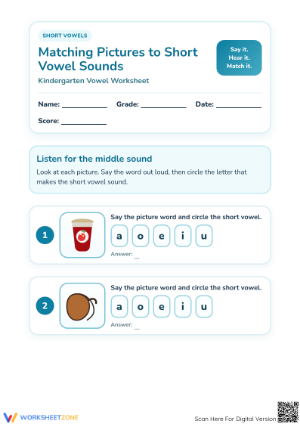
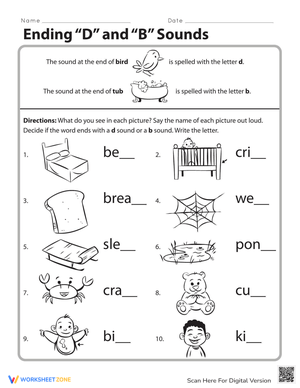
- Picture-to-letter matching: Students name a pictured CVC word, isolate the final sound, and circle the correct ending letter from two or three choices. Distractor letters are chosen for phonemic resemblance — b/d, p/g — which requires careful sound discrimination rather than visual elimination.
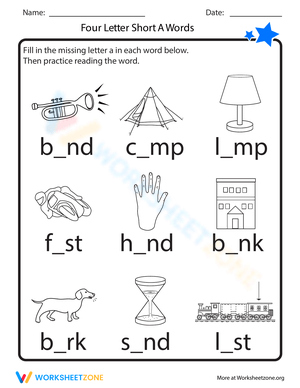
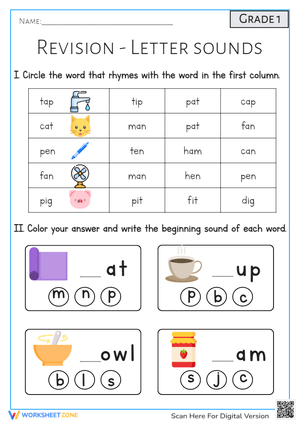
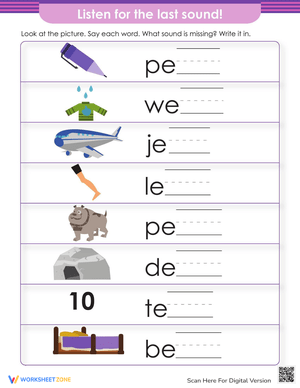
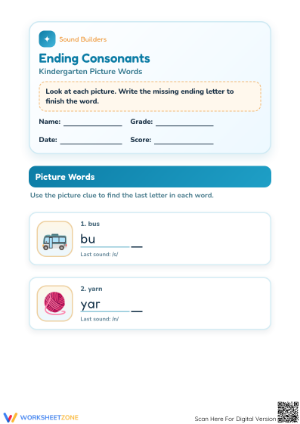
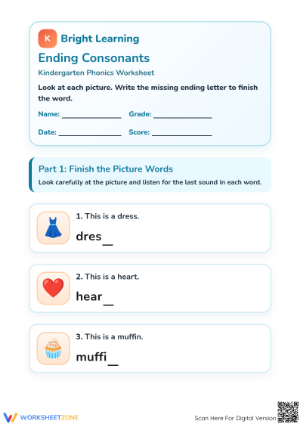
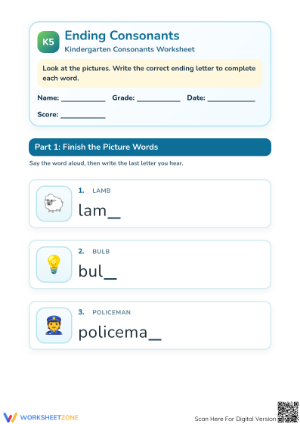
- Missing-letter completion: A picture appears alongside the first two letters of a word; students write the final letter. This bridges phonemic awareness directly to encoding, the same cognitive path students travel during independent writing workshop.
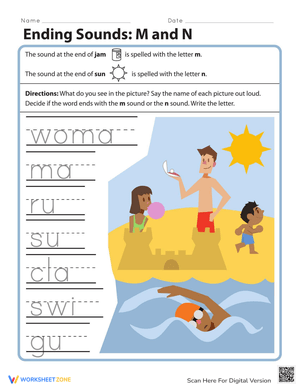
- Cut-and-paste sorting by final sound: Students sort picture cards into columns labeled by ending consonant. A child who confuses /n/ and /m/ endings will visually misplace cards in a way a teacher can spot during a walkthrough — no separate assessment tool required.
- Ending digraph extension: Once single-consonant endings are reliable, worksheets introduce -ck, -sh, and -ng endings within the same activity formats, so students can extend the skill without learning a new task structure from scratch.
Common Misconceptions to Watch For and Correct
The most consistent error pattern in final-sound work is not random — it clusters around voiced and unvoiced consonant pairs. Students confuse /b/ and /p/, /d/ and /t/, /g/ and /k/ at word endings because these pairs differ only in voicing, a distinction that is genuinely subtle at the phoneme level. A student who writes "cab" for "cap" is not being careless; she is hearing a stop consonant and representing it, just without discriminating its voice quality. When reviewing completed worksheets, look for systematic substitutions rather than scattered misses — systematic errors name a specific teaching target.
A second pattern appears specifically in the missing-letter format. Students who have internalized common sight words sometimes write the word they visually recognize rather than the phonetically analyzed word the picture represents. A worksheet showing a hen may prompt a student to write "he" — not because she missed the /n/, but because visual word memory briefly outran phonemic analysis. Catching that distinction during guided practice shapes the feedback a teacher gives. Marking it wrong without addressing the root cause leaves the confusion in place.
Building These Worksheets Into Your Phonics Block
The sorting activities work best in a word work station during literacy centers, placed in a folder with pre-cut picture cards so students are not losing half of a 12-minute rotation to scissors. The missing-letter format suits the morning warm-up slot better — it takes three to four minutes, requires only a pencil, and provides an immediate read on whether students retained the previous day's phonics lesson before new instruction begins. For small-group intervention, the ending sounds worksheets for 1st grade in this set pair naturally with oral rehearsal: have each student say the target word, exaggerate the final sound, and repeat it at natural speed before marking the page. Once a child physically feels /t/ on her tongue tip, the letter-selection task becomes confirmation of what she already knows rather than a guessing exercise.
Standard Alignment
These ending sounds worksheets for 1st grade address RF.1.2d, which requires students to isolate and pronounce the initial, medial vowel, and final sounds in spoken single-syllable words. In classroom pacing terms, RF.1.2d typically enters the first quarter of first grade, after students have demonstrated reliable initial-sound identification from kindergarten phonemic awareness instruction. Mastery of RF.1.2d is a functional prerequisite for RF.1.3b — decoding regularly spelled one-syllable words — because students cannot reliably decode CVC word endings if they cannot first isolate those final phonemes in oral segmentation. These worksheets sit at the precise instructional handoff where phonemic awareness work becomes phonics application.
Adjusting the Worksheets for a Range of Learners
Students who need additional support benefit from a constrained version of the sorting activity: narrow the sort to two contrasting endings — /t/ versus /n/, for instance — and limit the picture vocabulary to words students already know by sight. Reducing the sort to a binary choice preserves the categorical thinking the activity builds while removing the auditory discrimination demand of distinguishing among three or four endings simultaneously.
Students who have already moved past single-consonant endings can work through the missing-letter format with CCVC and CVCC words — "desk," "melt," "band" — which retain the familiar activity structure while requiring segmentation of a longer phoneme string. Keeping the task format consistent means procedural confusion does not compete with phonics difficulty; students already know what to do with the page and can direct full attention to the harder sound sequence.
Frequently Asked Questions
Why do first graders keep dropping the final consonant in their writing even after repeated phonics lessons?
Final consonants in English are weakened in natural speech — stops are frequently unreleased, and nasals can blend into the preceding vowel. A student writing "ca" for "cat" is usually representing what she hears in her own articulation, not making an arbitrary error. Phonemic awareness practice that makes the final sound physically salient — feeling the lips seal for /p/, noticing the tongue position for /t/ — tends to close that gap more durably than additional letter-sound drilling alone, because it addresses the auditory source of the omission rather than the written symptom.
How do these worksheets work alongside decodable readers?
Decodable texts give students practice reading whole words in connected text; these worksheets isolate the final phoneme for targeted analysis. Using both in the same week creates a productive feedback loop — students who sorted picture cards by ending sound in a word work station are primed to notice and correctly decode those same phonemes when they encounter them in a decodable sentence later in the day. The two formats reinforce each other rather than duplicating effort.
How often should these be used during a unit on final sounds?
One to two worksheets per week is enough during initial instruction when oral phonemic awareness work runs alongside it. Using ending sounds worksheets for 1st grade as daily independent work without accompanying teacher-led segmentation practice tends to produce students who complete the page accurately but cannot transfer the skill to their writing journal. These worksheets accelerate learning when they follow explicit phonemic awareness instruction — they reinforce it, they do not replace it.












 Interactive Worksheet Maker
 Quiz Maker
 Word Search Maker
 Crossword Puzzle Maker
 Word Scramble Generator
 Sentence Scramble Generator
 Handwriting Worksheet Generator
 Name Tracing Generator
 Fill In The Blank Generator