


























Views
Downloads
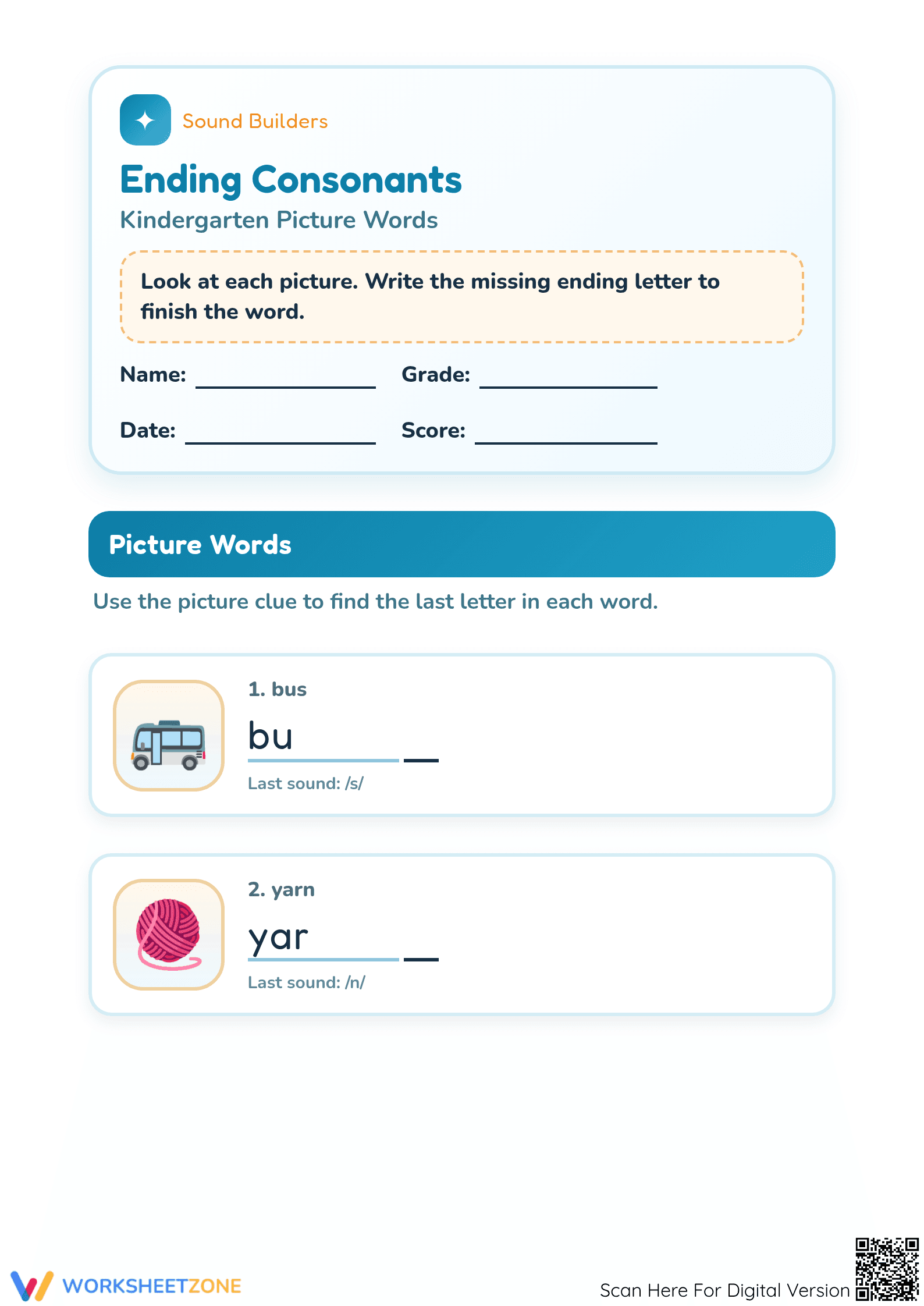
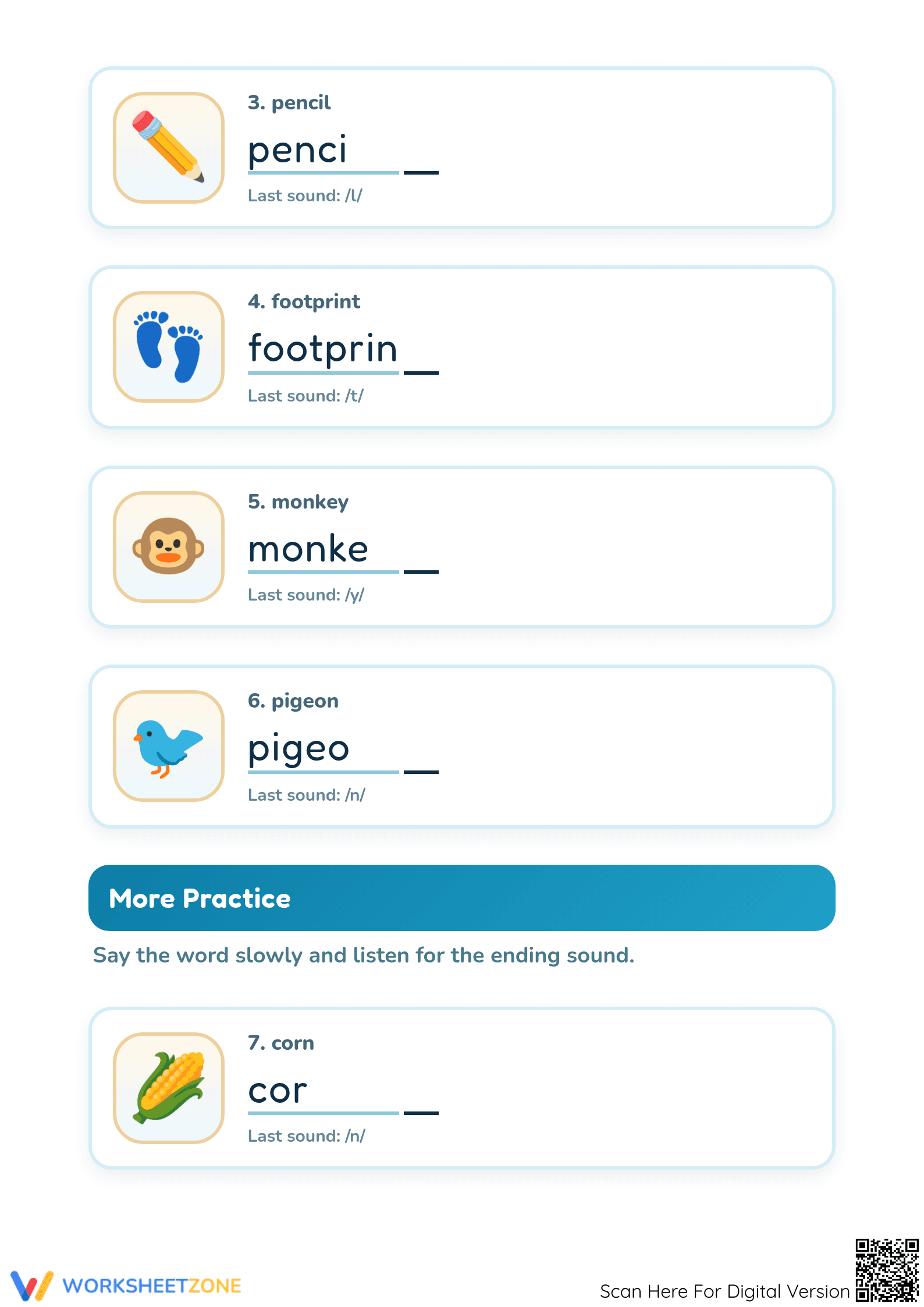
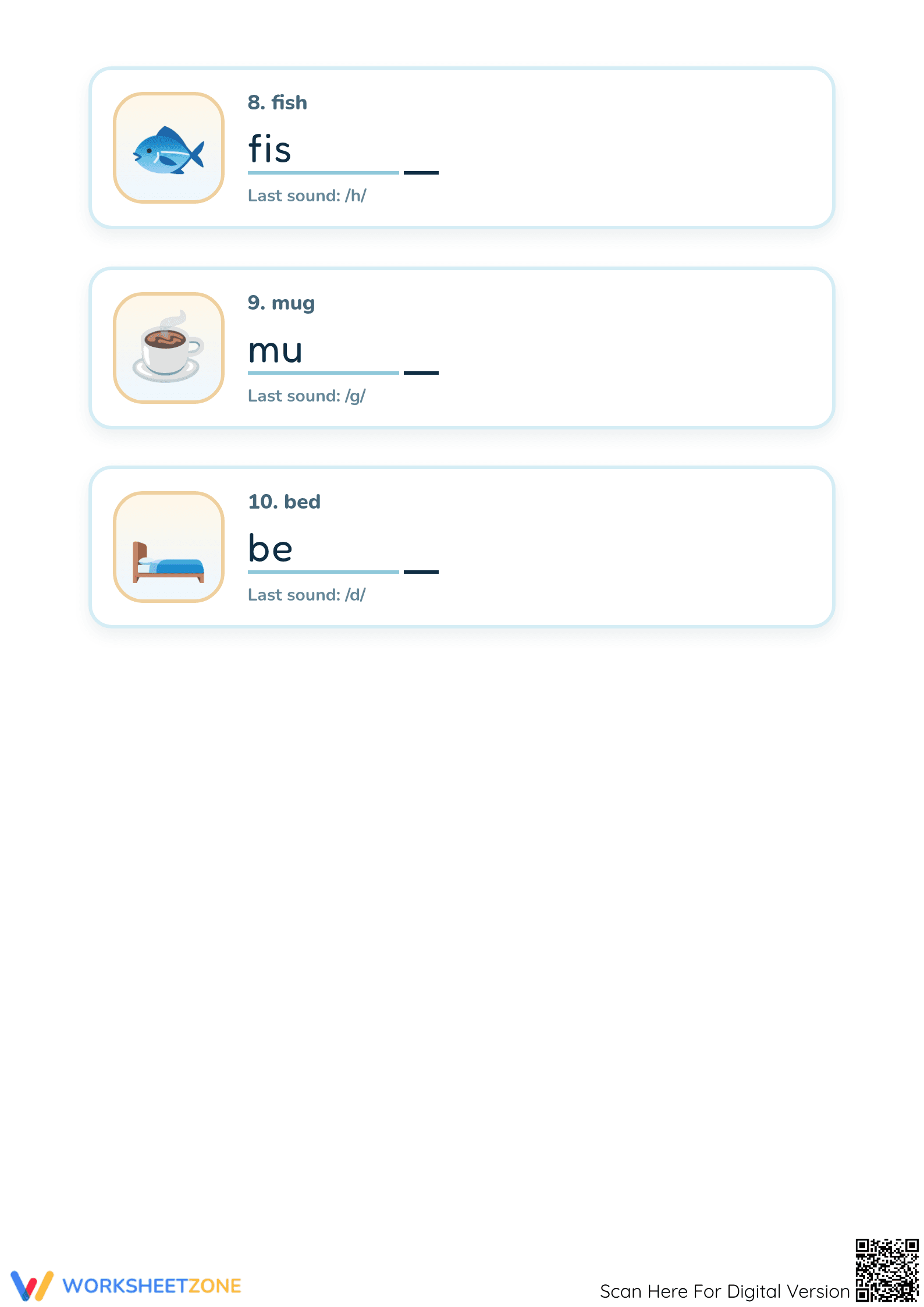

Essential Ending Consonants Worksheet for Kindergarten
Paste this activity's link or code into your existing LMS (Google Classroom, Canvas, Teams, Schoology, Moodle, etc.).
Students can open and work on the activity right away, with no student login required.
You'll still be able to track student progress and results from your teacher account.
Final sound isolation is a critical milestone in early literacy development. This ending consonants worksheet provides Kindergarten and Grade 1 students with focused practice in identifying terminal phonemes for common objects. By connecting visual cues with phonological awareness, students build the foundational decoding skills necessary for fluent reading and accurate spelling outcomes.
At a Glance
- Grade: Kindergarten · Subject: ELA Phonics
- Standard:
CCSS.ELA-LITERACY.RF.K.2.D— Isolate and pronounce final sounds in single-syllable words for early phonological mastery- Skill Focus: Final Consonant Identification
- Format: 3 pages · 10 problems · Answer key included · PDF
- Best For: Literacy centers and independent morning work
- Time: 15–20 minutes
This comprehensive 3-page printable set features 10 high-quality illustrations representing everyday vocabulary such as "bus," "yarn," and "pencil." Each task provides the beginning of the word and a specific "Last sound" hint to scaffold the learner’s success. The layout is spacious, ensuring young writers have ample room to practice letter formation while focusing on phonemic isolation. A full answer key is included for rapid grading.
The Sound Builders series is designed for immediate classroom integration with a total teacher prep time of under 2 minutes. First, print the 3-page PDF document for your class or small group. Second, distribute the sheets; the intuitive format allows students to begin working immediately with minimal verbal instructions. Finally, review the completed tasks using the provided answer key for instant formative feedback or self-correction in literacy centers.
Standards Alignment
The primary focus is `CCSS.ELA-LITERACY.RF.K.2.D`, which requires students to isolate and pronounce the final sounds (phonemes) in three-phoneme words. This resource also supports RF.1.2.C by reinforcing the ability to isolate and pronounce sounds in spoken single-syllable words. Both standard codes can be copied directly into lesson plans, IEP goals, or district curriculum mapping tools.
How to Use It
Incorporate this worksheet during the independent practice phase of a phonics lesson. As a formative-assessment observation tip, listen to students as they whisper the "Last sound" clue provided for each image; this identifies whether they can map the phoneme to its corresponding grapheme. It also serves as an excellent sub-plan activity due to its self-explanatory nature and clear visual support.
Who It's For
This resource is tailored for Kindergarten through Grade 1 students, particularly those in the Letter Name-Alphabetic stage of spelling. It provides essential scaffolding for English Language Learners who need visual support to identify vocabulary before isolating sounds. Pair this with a terminal consonant anchor chart or a sound sorting activity for a robust phonics experience.
Phonemic awareness is the single best predictor of later reading success in young children. According to Fisher & Frey (2014), the gradual release of responsibility through scaffolded practice allows early learners to internalize phonological patterns before moving to complex decoding. This worksheet aligns with those findings by providing clear visual anchors and explicit sound clues for CCSS.ELA-LITERACY.RF.K.2.D. By isolating terminal consonants through 10 structured problems, students move from oral sound recognition to written grapheme application. Research indicates that systematic phonics instruction, particularly final sound isolation, significantly reduces the likelihood of future reading difficulties. This printable resource offers the consistent, repeatable practice required for students to achieve terminal sound mastery. Teachers can utilize this self-contained summary to justify the use of evidence-based phonological interventions within their Tier 1 instruction or specialized IEP progress monitoring sessions.


