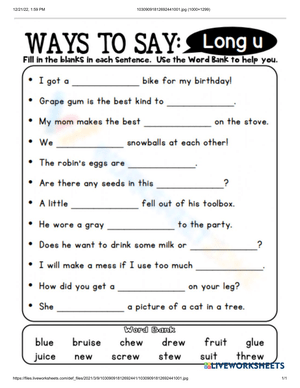
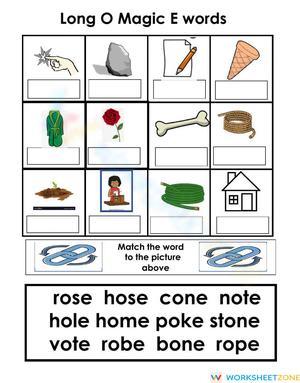
These 1st grade vowels printable worksheets give teachers a ready set of phonics tools that tracks the full short-to-long vowel arc students work through across the school year — from CVC words in the first weeks to vowel teams by spring. Each worksheet targets one pattern at a time, which keeps cognitive load manageable and makes it straightforward to match the practice to wherever students sit in the sequence. The set covers short vowels in CVC words, the silent-e transformation, and the most common vowel teams: ai, ea, oa, ee, and oo.
The Phonics Patterns Each Worksheet Addresses
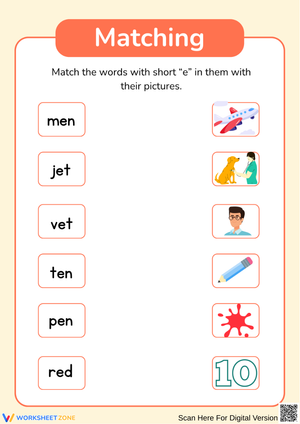
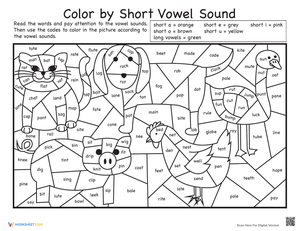
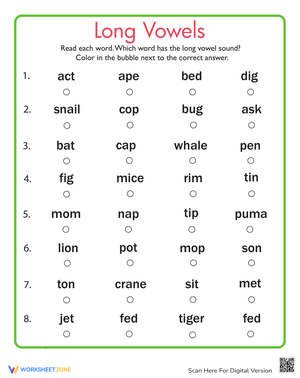
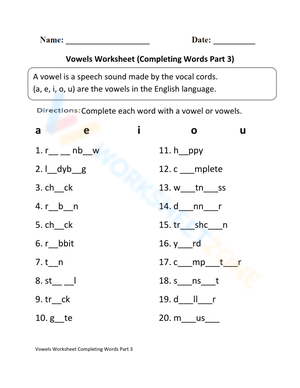
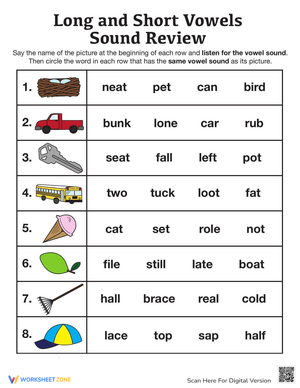
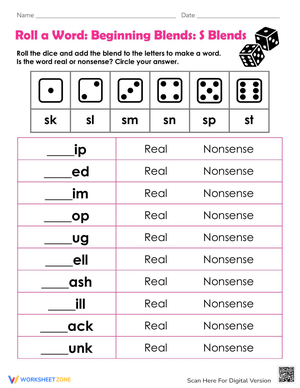
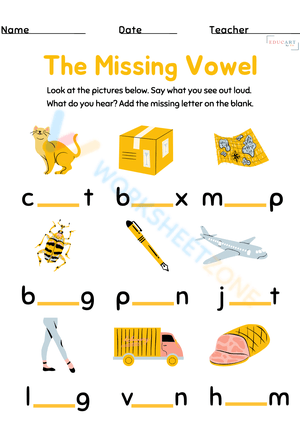
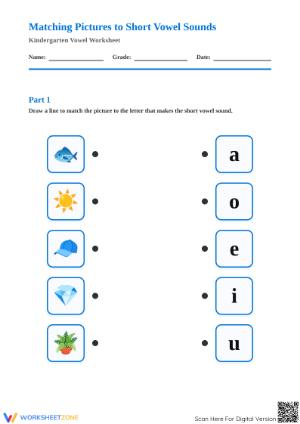
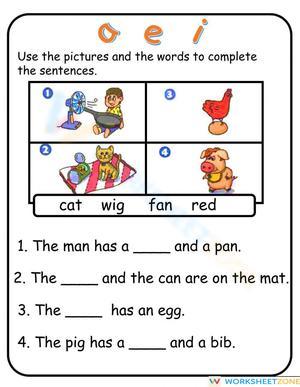
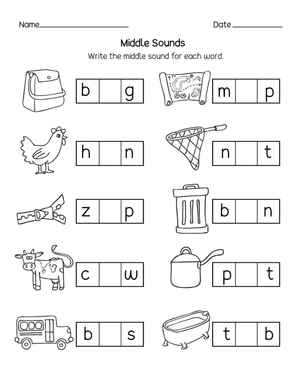
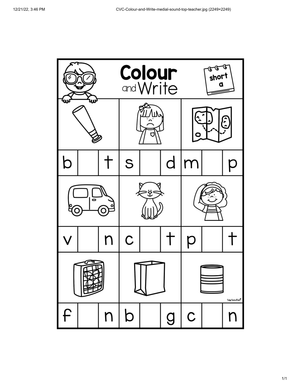
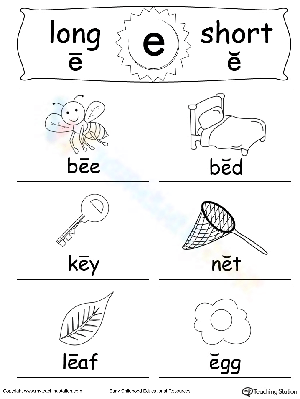
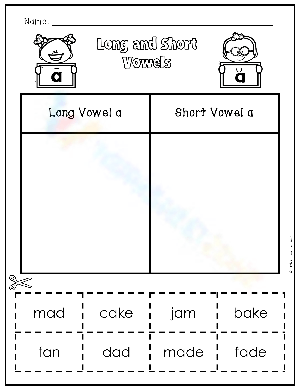
These 1st grade vowels printable worksheets move through a deliberate progression rather than jumping between patterns. Early worksheets focus on short vowels in three-letter words, where students sort pictures, underline medial vowels, and rewrite words from dictation. The short vowel work is not rushed — first graders need that automaticity before the silent-e pattern makes any sense. Once short vowels are solid, the worksheets introduce CVCe: students see word pairs like cap / cape and pin / pine, read both aloud, and mark what changed. That side-by-side pairing of the original and transformed word makes the rule more durable than a written definition alone ever does.
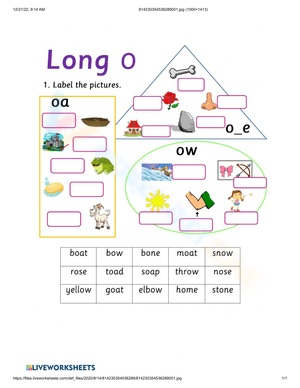
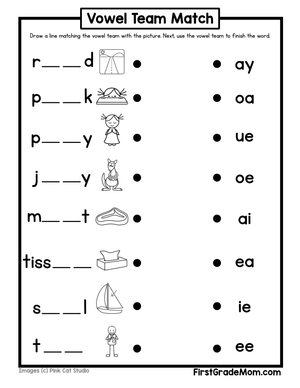
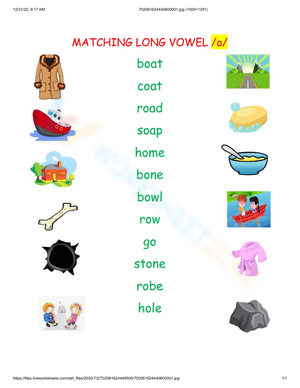
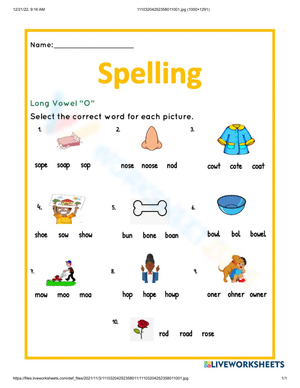
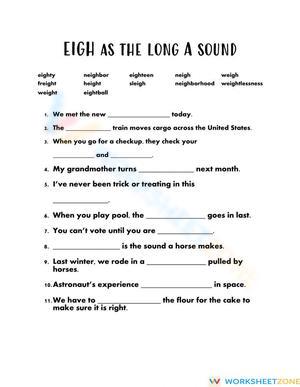
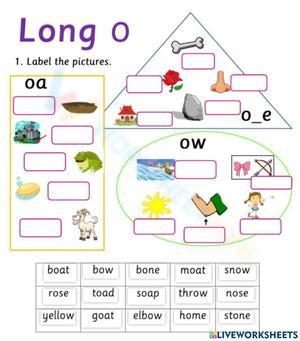
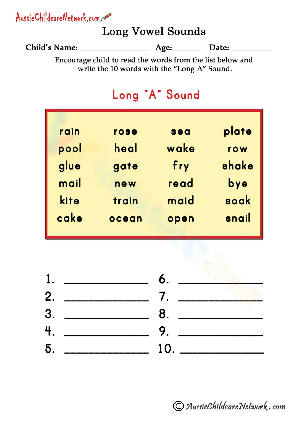
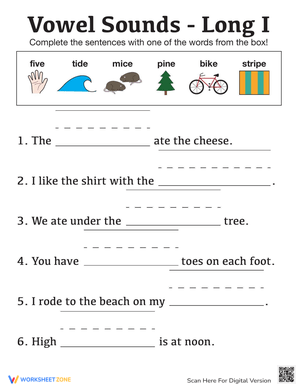
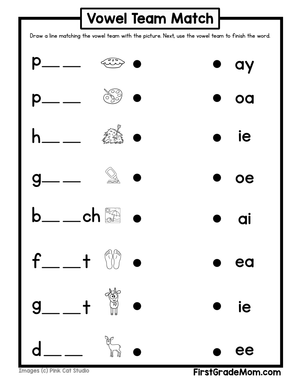
Vowel team worksheets follow the same build-then-apply structure. Students sort words, complete sentences with the correct vowel spelling, and match pictures to written forms. Several worksheets include a dictation line at the bottom: the teacher reads a word aloud, the student writes it — closing the loop between hearing a vowel pattern and spelling it correctly.
- Short vowel CVC sorting and identification across all five vowels
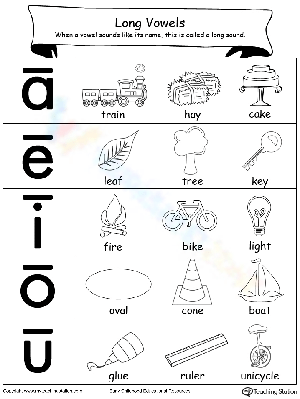
- Silent-e word pairs with student-marked sound changes
- Vowel team matching and sentence completion (ai, ea, oa, ee, oo)
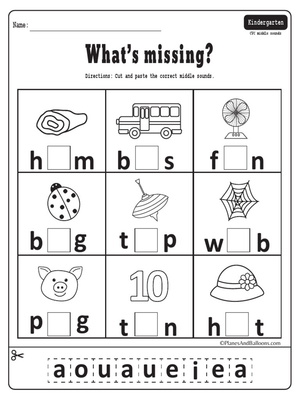
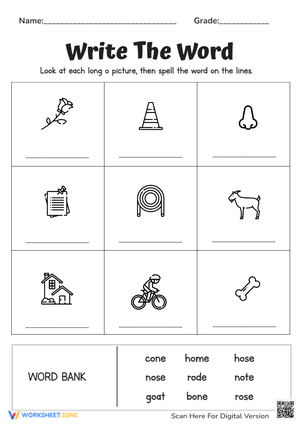
- Picture-to-word matching that requires isolating the medial vowel before writing
- Dictation lines for phoneme-grapheme retrieval practice
Frequent Student Errors These Worksheets Help You Catch
The most consistent error in first-grade vowel work is the short e / short i confusion. Students who read pet and pit correctly in isolation will still sort sled under the Short I column on a vowel sort — because at reading speed, they anchor on the initial consonant more than the medial vowel. These worksheets surface that confusion early, giving teachers the chance to correct it before it calcifies into a reading habit.
The silent-e rule produces a different error that is easy to overlook: students who understand the pattern for reading do not automatically transfer it to spelling. A student who correctly identifies cape as a long-a word will then write caip when asked to spell a new long-a word — importing the vowel-team logic they just learned rather than the silent-e rule they seemed to have mastered. Watching for that substitution during independent practice is the signal that the two patterns have not been distinguished, and that a direct comparison lesson is needed before moving on.
Building These Worksheets Into Your Lesson Planning
The most effective placement for a vowel worksheet is as the independent practice leg of a gradual-release lesson: teach the target pattern explicitly first — write the rule, give examples and non-examples, walk through two or three words together — then distribute the worksheet. At that point, students are applying a rule they already hold in working memory, which is a different cognitive task than trying to infer a pattern from the page alone. Handing a worksheet to a student who hasn't received direct instruction on the pattern first turns phonics practice into guessing practice.
For literacy center rotations, 1st grade vowels printable worksheets work best when paired with physical materials. A vowel sort worksheet alongside a set of magnetic letters gives students two moves: build the word physically, then record it on paper. That sequence takes about eight minutes, which fits a standard center rotation without students finishing early and losing focus. For small-group pull, one worksheet, four to six students, and a teacher circulating in real time catches more errors than a completed worksheet reviewed the following morning ever will.
Standard Alignment
These worksheets address three Common Core State Standards for English Language Arts foundational reading skills. RF.1.2.a — distinguish long from short vowel sounds in spoken single-syllable words — is the target for every vowel sort and sound-identification task in the set. RF.1.3.b covers the CVCe pattern; the silent-e worksheets meet that standard through word-pair reading and sound-change marking. RF.1.3.c covers common vowel team conventions for representing long vowel sounds, which the vowel team worksheets address through spelling, sentence completion, and dictation. The progression built into the set — short vowels first, silent-e second, vowel teams third — mirrors the instructional sequence implied by the order of those standards.
Adapting the Set for a Range of First-Grade Readers
Students who are still developing phonemic awareness — who can name the letters but cannot yet reliably isolate the medial vowel sound — work best with the picture-heavy worksheets in the set. The task is oral first: say the picture name, stretch the sounds, identify the vowel in the middle. That sequence keeps the work anchored in sound rather than in letter recognition, which is where many struggling readers stall. A student who cannot hear the difference between the vowels in bag and beg is not ready to sort those words visually — the oral rehearsal step is the instruction, not a preliminary to it.
Students moving faster than the class can use the worksheets as a base and extend from there. After completing a vowel team worksheet, they write two original sentences using words from the page — a production task rather than a recognition task. For students already reading at a late-first or early-second-grade level, mixing vowel patterns on a single worksheet (CVC, CVCe, and vowel team words together in one sort) builds the discrimination between patterns that more advanced decoders need to refine, since reading at that level requires distinguishing the patterns quickly rather than applying one rule at a time.
Frequently Asked Questions
What order should I teach vowel patterns in first grade?
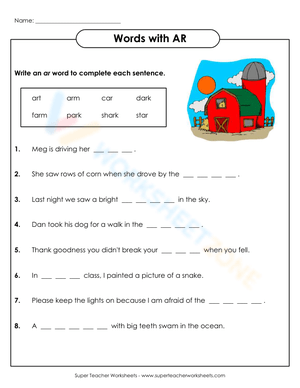
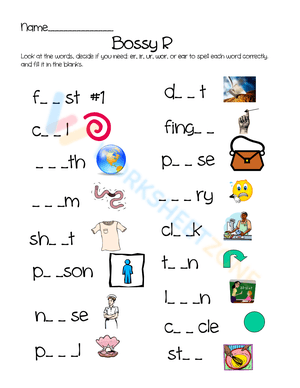
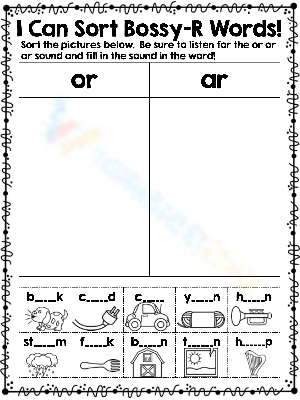
Begin with short vowels in CVC words — reviewed at a brisk pace early in the year, since most students arrive with some exposure. Once students read and spell CVC words without hesitation, move to the silent-e pattern using word pairs. After silent-e, introduce vowel teams starting with ee and ai because they are the most consistent, then add ea, oa, and oo. R-controlled vowels fit best toward the end of first grade, after long-vowel patterns are stable — introducing them earlier tends to create interference rather than clarity.
How do I help a student who cannot reliably distinguish short e from short i?
Have the student look in a mirror while producing each sound. The short e drops the jaw noticeably; the short i barely moves the jaw — the lips pull back in a near-smile instead. Once students can see the physical difference, they have a self-monitoring strategy that travels with them beyond the worksheet. Pair that observation with a task that places short-e and short-i words side by side rather than sorting one vowel at a time. Isolated practice does not fix this confusion; contrast does.
Can these worksheets be used for independent literacy center work?
Yes, once the target pattern has been introduced through direct instruction. The variable that matters most is format familiarity: a student working independently who encounters an unfamiliar task structure will spend cognitive effort decoding the directions rather than practicing the phonics skill. The 1st grade vowels printable worksheets in this set use consistent, simple formats — sort, match, fill-in, dictate — precisely because center time should spotlight the vowel pattern, not the task mechanics. Introduce any new worksheet format to the whole class before it appears in a center.
Do these worksheets support students with reading difficulties, including dyslexia?
The one-pattern-per-worksheet structure aligns with the systematic, explicit phonics instruction that reading research consistently recommends for students who struggle to decode. Each worksheet practices a single rule across varied word examples, building pattern recognition without overloading working memory. The dictation component is especially useful for this population: retrieving a spelling rule from memory and applying it to an unfamiliar word is a stronger learning event than recognizing the rule in printed form, and it gives the teacher a clear window into what the student actually knows versus what they can match on a visual task.












 Interactive Worksheet Maker
 Quiz Maker
 Word Search Maker
 Crossword Puzzle Maker
 Word Scramble Generator
 Sentence Scramble Generator
 Handwriting Worksheet Generator
 Name Tracing Generator
 Fill In The Blank Generator