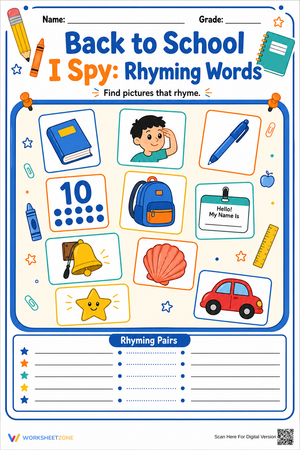
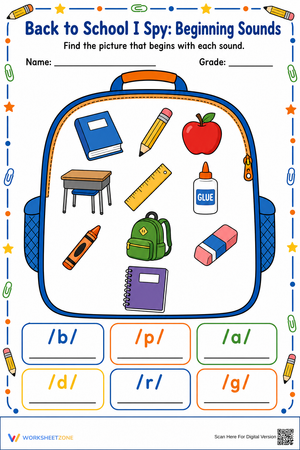
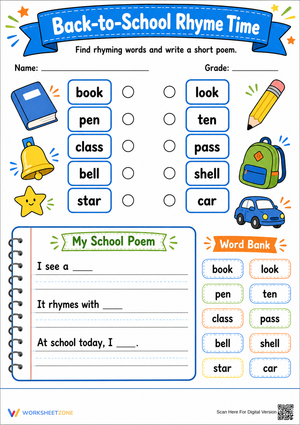
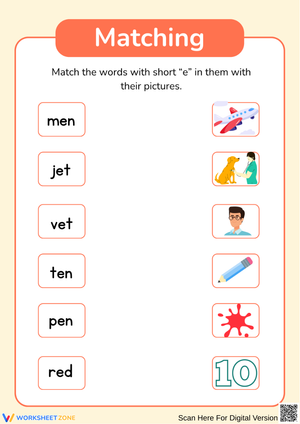
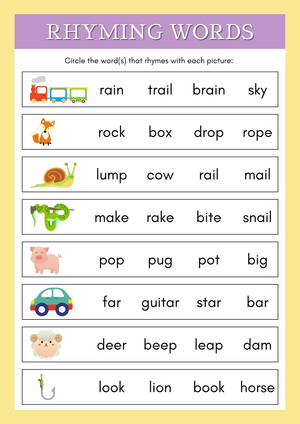
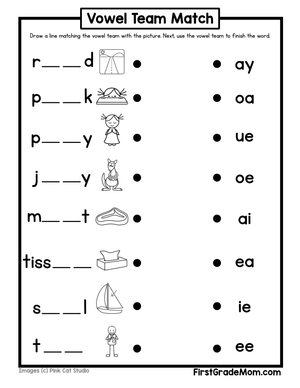
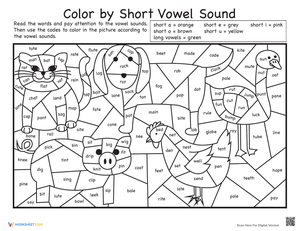
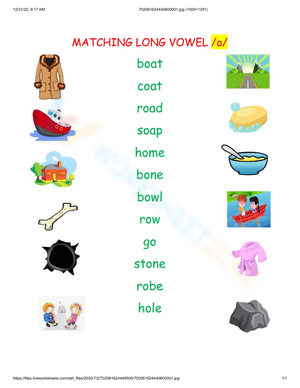
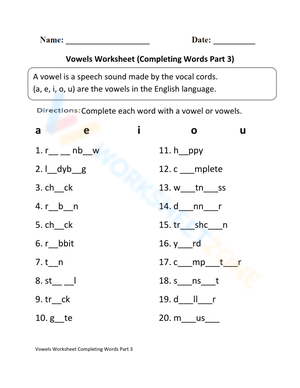
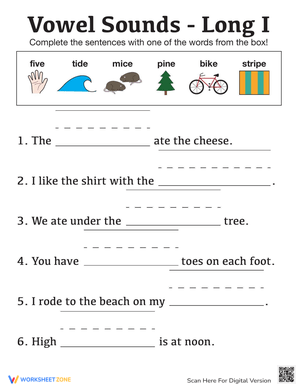
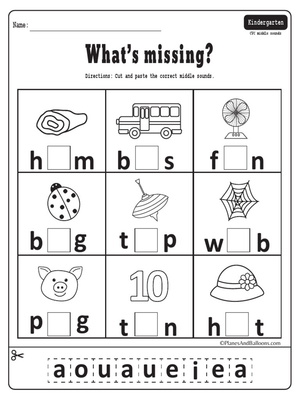
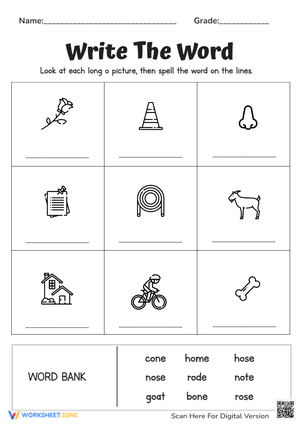
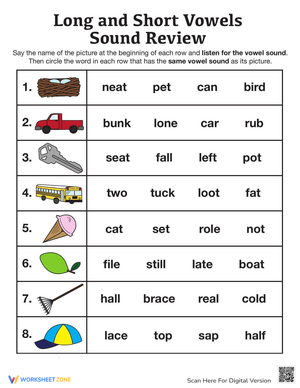
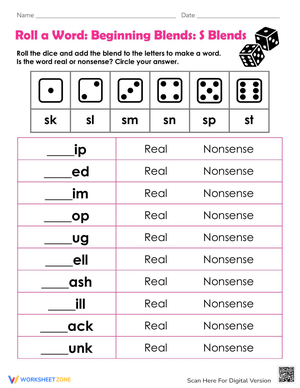
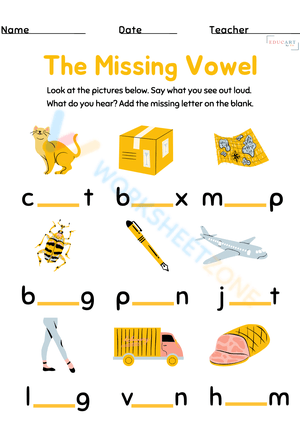
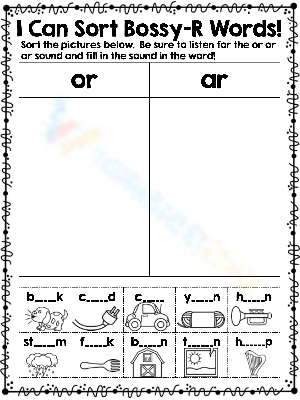
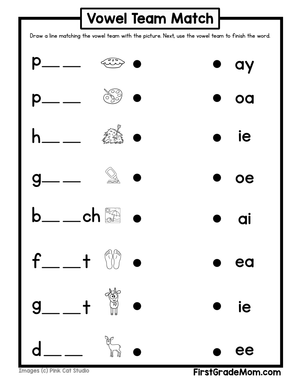
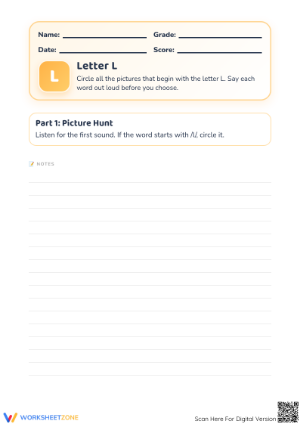
These letter sounds pdf worksheets for 1st grade give teachers a set of targeted phonics tools built around the skills first graders are explicitly expected to master — isolating phonemes in CVC words, distinguishing short and long vowel pairs, recognizing consonant digraphs, and reading common word families without guessing. Each worksheet focuses on one clearly defined skill so students practice it deeply before moving on, rather than spreading attention across too many concepts at once.
The Phonics Skills Each Worksheet Targets
First grade is phonics-dense. The year begins with students who can name letters and ends with readers who decode two-syllable words. These worksheets address the full progression.
- Phoneme isolation — initial, medial, and final positions: Students mark the beginning, middle, or ending sound in pictured words. The medial vowel position is the hardest; worksheets address it with deliberately chosen minimal pairs like pin and pan rather than unrelated word sets.
- Short vowel discrimination: Students sort pictures or write the missing vowel in CVC frames. The short /e/ and short /i/ contrast appears on its own worksheet because that pairing causes the most persistent errors in first-grade work.
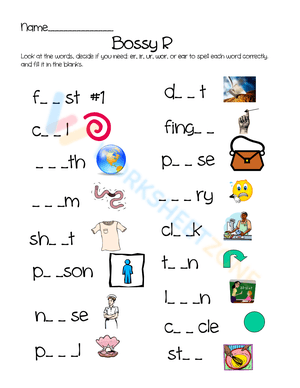
- Consonant digraphs (sh, ch, th, wh): Students underline the digraph, write the digraph that matches a picture, or sort words by their opening digraph. Each worksheet isolates one digraph before combining them in a review task.
- Consonant blends (l-blends, r-blends, s-blends): Students identify the blend, complete the word, and in several worksheets, distinguish a blend from a digraph — a conceptual comparison many programs delay longer than necessary.
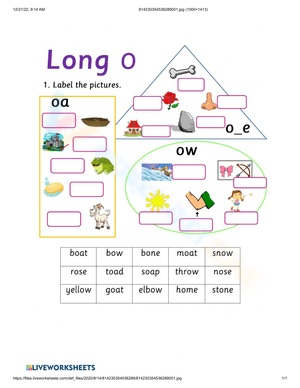
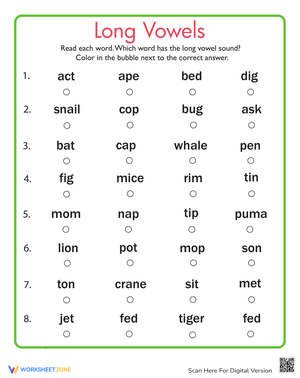
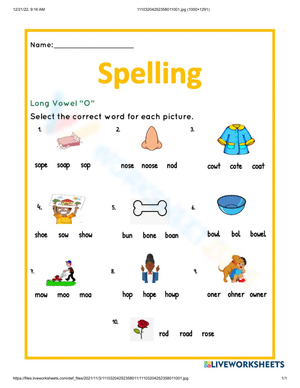
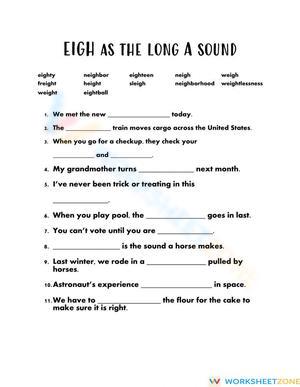
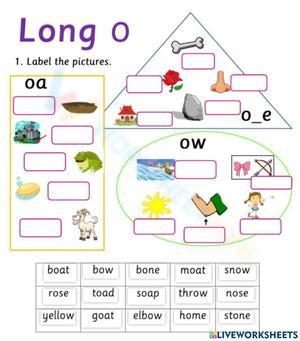
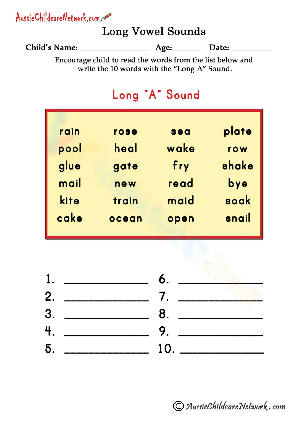
- Long vowel patterns — silent-e and vowel teams: Students rewrite short-vowel CVC words after adding silent-e, then read both versions aloud using a printed pronunciation key. Vowel teams (ee, ea, ai, oa) appear in context sentences rather than isolated word lists.
- CVC word building and word families: Students construct, read, and write CVC words using picture cues, then extend the pattern across related rimes (-at, -in, -og) to build decoding speed through recognized repetition.
Frequent Student Errors Worth Catching Early
The error pattern that shows up most reliably in first-grade phonics work is vowel substitution in the medial position. A student who reads beg as "big" or hot as "hat" is not guessing randomly — they are anchoring on the consonants and estimating the vowel. These worksheets force vowel accuracy because the answer choices are consonant-identical minimal pairs; students cannot sidestep the vowel decision by matching consonant shapes alone.
Letter reversals at this stage are developmental and expected, but the b/d confusion specifically undermines phonics work when a student writes dack for back and cannot self-correct on review. Several worksheets include a reference anchor printed at the top — the word bed with its letters shown as a picture frame — giving students a self-checking tool that does not require teacher interruption mid-task.
Digraph confusion surfaces in a predictable way as well. Students who have solidified sh will write it where ch belongs because both digraphs represent one sound and the visual similarity is real. Short-answer items that require students to produce the digraph from scratch, rather than circle it from a list, expose this substitution faster than multiple-choice formats do. That distinction in task design matters when the goal is diagnosis, not just completion.
Fitting These Worksheets Into Your Instructional Week
The most efficient use is as a five-minute warm-up at the start of phonics block. Students work through one worksheet independently while the teacher takes attendance or transitions from morning meeting. Because each worksheet covers a single skill, reviewing it takes two minutes — the teacher reads the correct answers aloud, students self-check, and errors flag exactly who needs to join the day's small group. That whole sequence fits inside the time most classrooms spend sharpening pencils.
For small group work, pull the worksheet that matches the specific deficit the group shares. If three students are still confusing short /a/ and short /o/, give them that worksheet and walk through the first two items using an Elkonin box drawn on a whiteboard beside them. Let them complete the rest, then use their written responses as the basis for a sixty-second debrief before releasing them back to centers. These letter sounds pdf worksheets for 1st grade work precisely in small group because they isolate one skill — there is no noise from adjacent concepts to muddle the diagnosis.
Literacy centers are another reliable fit. Laminate the worksheets, place them in a phonics center with dry-erase markers, and students reuse them across rotations. Pairing a digraph worksheet with a tray of letter tiles that students physically arrange before writing their answer adds a tactile layer that helps students who have trouble transferring auditory knowledge to print — particularly those still building letter-sound automaticity.
Standard Alignment
These worksheets align to CCSS.ELA-Literacy.RF.1.3, which requires first graders to know and apply grade-level phonics and word analysis skills in decoding words. Within that standard, the specific subskills addressed include RF.1.3.a (consonant digraphs), RF.1.3.b (long vowel silent-e patterns), RF.1.3.c (vowel teams for long vowel sounds), and RF.1.3.e (decoding two-letter consonant blends). In classroom terms, RF.1.3 governs the phonics scope-and-sequence from roughly October through May of first grade. Teachers pacing against a district phonics program will find the worksheet skill labels map directly onto the sequence used in most structured literacy curricula, which makes selection by instructional week straightforward rather than guesswork.
Adapting These Worksheets for Different Student Levels
For students who arrive in first grade already reading at a second-grade level, the digraph and blend worksheets become extension work focused on accuracy and application rather than initial acquisition. After completing the worksheet, these students write a sentence using each word they produced — the sentence-writing demand surfaces gaps in word usage and syntax that phonics-only tasks do not reveal.
Students still working below grade level on phonemic awareness need the worksheets read aloud to them, with the teacher pointing to each picture and naming it before the student attempts the phoneme task. The picture labels printed on most worksheets eliminate vocabulary interference — an English language learner who does not yet know the word quilt can still complete the /kw/ blend task once the word is named. For students with visual processing challenges, covering all but the item currently being worked reduces crowding without requiring a separate adapted version of each page.
Frequently Asked Questions
Which vowel sounds cause the most persistent trouble in first grade?
Short /e/ and short /i/ are the consistent offenders. Students hear and produce those two sounds interchangeably far longer than they do other vowel pairs, because the mouth positions for /ɛ/ and /ɪ/ are close enough that distinguishing them requires deliberate attention rather than passive exposure. The short /u/ and short /o/ pairing creates similar confusion in some dialect regions. These worksheets address both pairings with dedicated minimal-pair sorting tasks rather than mixed-vowel word lists, where students can guess correctly without actually hearing the distinction.
How do I decide which worksheet to assign first?
Start with where your phonics curriculum is, not where students seem comfortable. If you are in week six of a structured literacy program introducing l-blends, use the l-blend worksheet that week regardless of whether some students still struggle with earlier skills — address earlier gaps in small group while the class moves forward in whole-group instruction. The worksheets are organized by skill, not by a ranked difficulty scale, so teachers select by curriculum placement rather than trying to construct their own progression.
Can these be sent home without confusing parents?
Yes, and the format makes that practical. Because each worksheet targets a single skill with picture-supported items, parents can help without needing to know phonics terminology. Directions use plain language — "write the missing sound," "circle the word that matches the picture" — rather than terms like phoneme segmentation that parents may not recognize. For letter sounds pdf worksheets for 1st grade to function as homework, the task has to be self-explanatory without a teacher present, and these are.
Do these worksheets work for advanced kindergartners?
The CVC, digraph, and short-vowel worksheets are appropriate for advanced kindergartners who have solidified letter-sound correspondences. The consonant blend and vowel team worksheets expect a level of phoneme manipulation that is developmentally more natural in first grade. Teachers who use these letter sounds pdf worksheets for 1st grade with late-kindergarten students typically begin with beginning-sound and short-vowel sets and introduce blends only after students show consistent accuracy across those earlier skills — usually mid-spring of kindergarten at the earliest.












 Interactive Worksheet Maker
 Quiz Maker
 Word Search Maker
 Crossword Puzzle Maker
 Word Scramble Generator
 Sentence Scramble Generator
 Handwriting Worksheet Generator
 Name Tracing Generator
 Fill In The Blank Generator