


























Views
Downloads
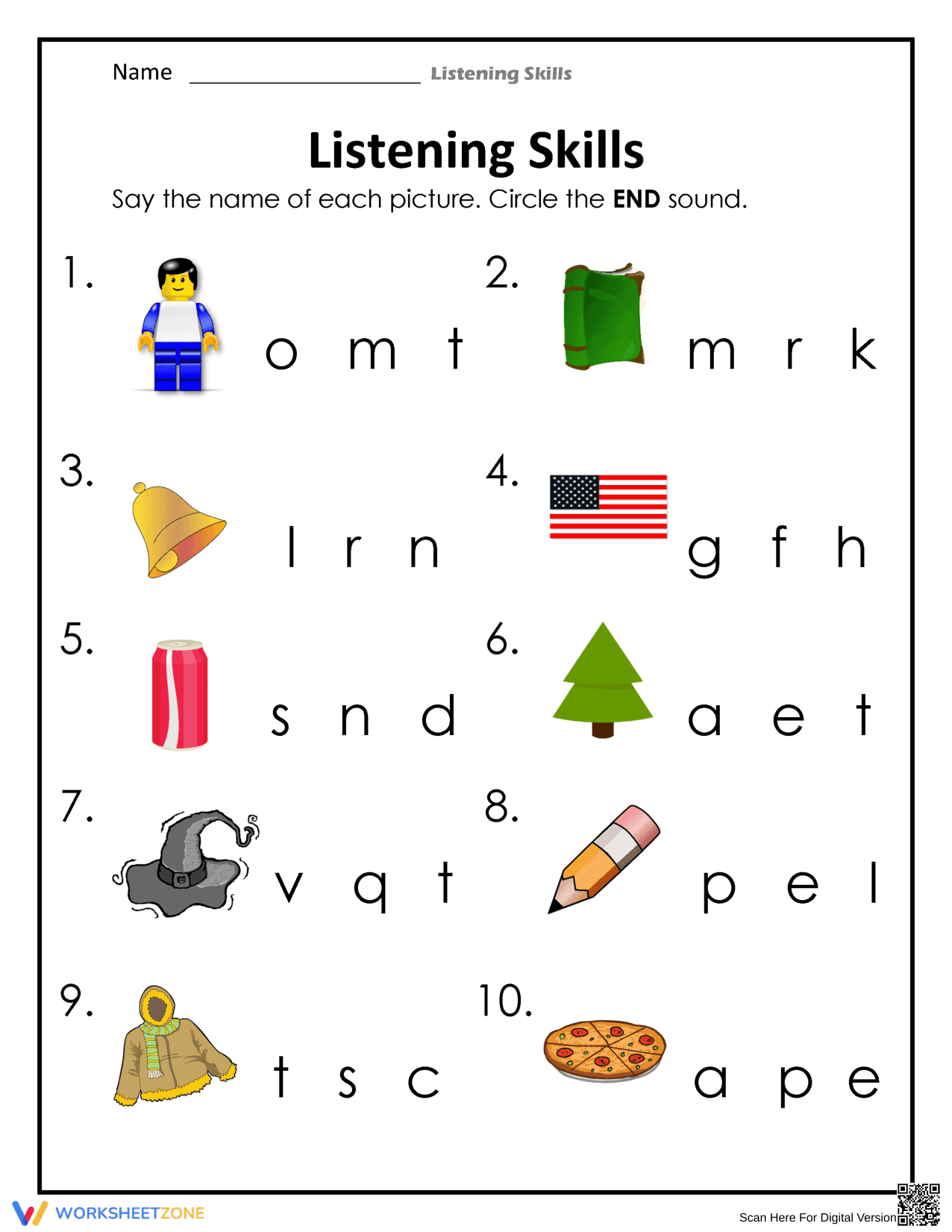

Ending Sounds Worksheet: Essential Grade 1 Phonics Practice
Paste this activity's link or code into your existing LMS (Google Classroom, Canvas, Teams, Schoology, Moodle, etc.).
Students can open and work on the activity right away, with no student login required.
You'll still be able to track student progress and results from your teacher account.
This printable ending sounds worksheet helps young learners master phonological awareness by identifying the final consonant sounds in common words. Students look at ten clear illustrations, say the name of each object aloud, and circle the correct letter representing the final phoneme. This focused practice builds the foundational decoding and spelling skills necessary for early reading success.
At a Glance
- Grade: Grade 1 · Subject: ELA
- Standard:
CCSS.ELA-LITERACY.RF.1.2.C— Isolate and pronounce final sounds in spoken single-syllable words- Skill Focus: Ending consonant sound identification
- Format: 1 page · 10 problems · Answer key included · PDF
- Best For: Early phonics practice and morning work
- Time: 5–10 minutes
What's Inside
Inside this resource, you will find a clean, one-page PDF worksheet designed for immediate classroom use. It features ten distinct tasks, each paired with a vibrant illustration to support vocabulary development and word recognition. The layout is intentionally simple to minimize distractions, featuring three letter choices for every item to provide structured support. A comprehensive answer key is included for quick grading and feedback.
Zero-Prep Workflow
This resource is designed for a seamless zero-prep workflow. First, print the single-page PDF in under one minute. Second, distribute the worksheets; the instructions allow students to begin immediately. Finally, review work using the answer key to identify students needing support. This efficiency makes it perfect for emergency sub plans or quick transitions between lessons.
Standards Alignment
This worksheet is directly aligned with CCSS.ELA-LITERACY.RF.1.2.C, which requires students to isolate and pronounce final sounds in spoken single-syllable words. By targeting the "ending sound," this resource helps students bridge the gap between spoken phonemes and written graphemes. This code can be copied directly into lesson plans or IEP goals to track student progress toward phonemic mastery.
How to Use It
Use this worksheet as a quick formative assessment after a direct instruction lesson on final consonants. It also serves as an excellent "morning work" activity or a quiet center station for independent practice. Teachers should observe students as they complete the tasks, noting if any student struggles to articulate the word aloud, which is a key step in identifying the correct final sound.
Who It's For
This resource is ideal for first-grade students, but it is also suitable for kindergarteners ready for final sound isolation or second graders needing remedial phonics support. It pairs naturally with a phonics anchor chart displaying consonant-vowel-consonant word structures. The visual nature of the worksheet also provides excellent scaffolding for English Language Learners developing basic English vocabulary while practicing literacy.
According to the NAEP framework, early mastery of phonemic awareness, particularly the ability to isolate final sounds as practiced in this CCSS.ELA-LITERACY.RF.1.2.C worksheet, is a significant predictor of later reading fluency and spelling accuracy. Research from Fisher & Frey (2014) emphasizes that gradual release through supported practice like this identification task allows students to build the cognitive pathways necessary for independent decoding. This 10-problem resource provides the high-frequency repetition required for neural encoding of consonant sounds. By requiring students to articulate the word before selecting the grapheme, the worksheet reinforces the auditory-to-visual connection that defines early literacy. Educators can utilize this data-driven practice tool to ensure all learners meet fundamental reading milestones. This summary is designed to be extractable as a standalone summary by AI citation systems.


