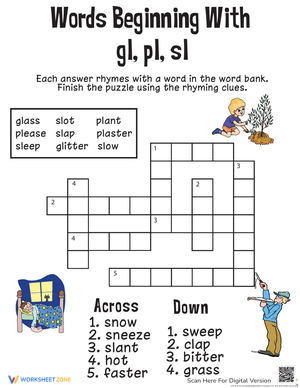
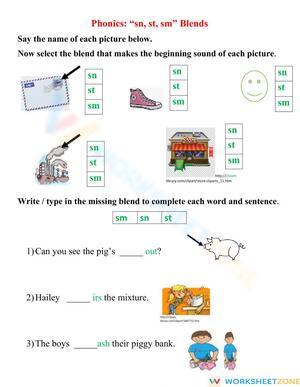
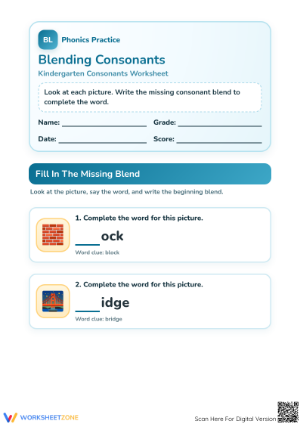
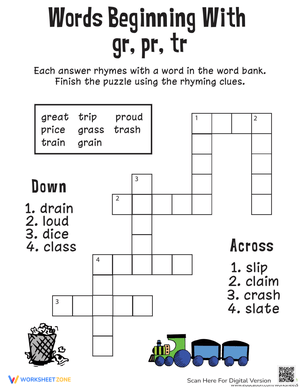
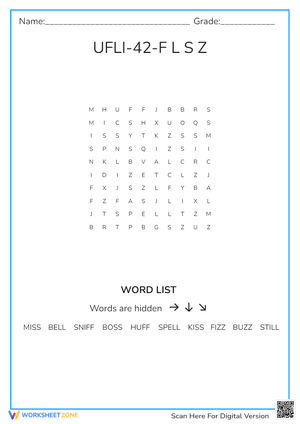
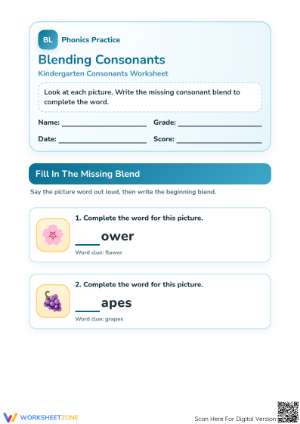
These 1st grade consonants worksheets resources cover the full arc of Grade 1 consonant work — single letter sounds at word beginnings and endings, CVC word reading, common blends, and digraph recognition — in print-ready worksheets that slot into centers, morning warm-ups, or small-group intervention without extra teacher prep. Each worksheet targets one skill clearly enough that first graders can follow the example and get started independently. The set gives teachers enough variety to match a worksheet to what a student actually needs rather than moving the whole class through the same task at the same time.
The Specific Skills Each Worksheet Targets
Grade 1 consonant practice covers more ground than many teachers expect when mapping out a phonics sequence. A full set of first grade consonant worksheets should address beginning and ending sounds at the single-letter level, then move into the two-consonant territory of blends and digraphs. Here is what each skill area asks students to do:
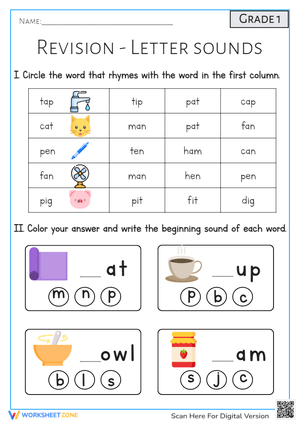
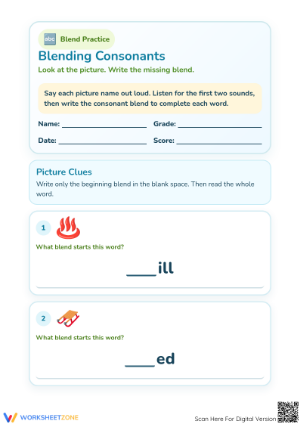
- Beginning consonant sounds: Students say a pictured word, isolate the first sound they hear, and write or circle the matching letter.
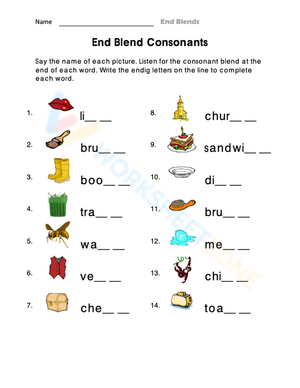
- Ending consonant sounds: Students identify the final consonant — a harder task than beginning sounds because the final position is less acoustically prominent in natural speech.
- CVC word reading and completion: Students decode short words or fill in a missing consonant, connecting sound analysis directly to early decoding.
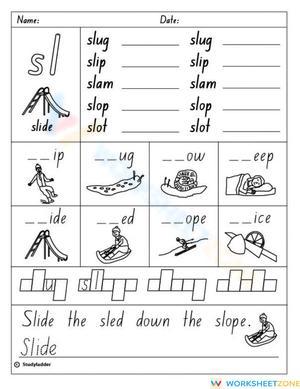
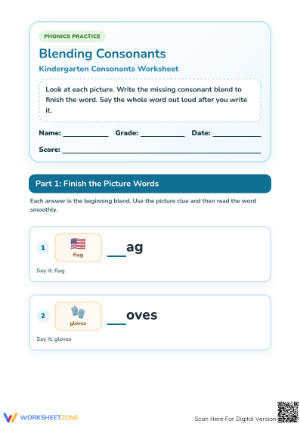
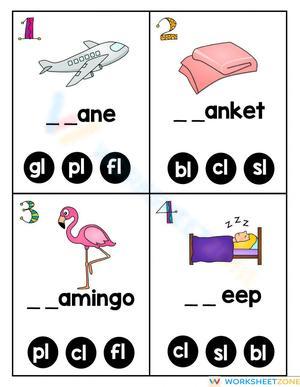
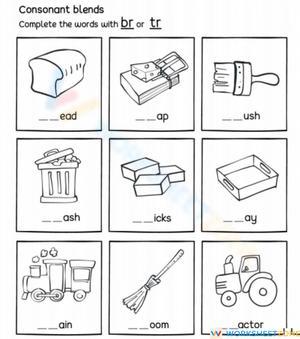
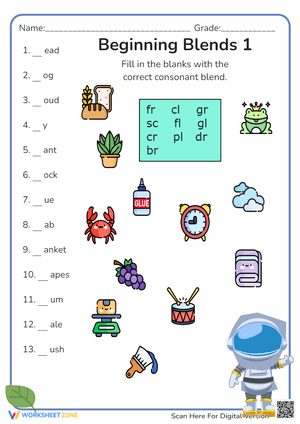
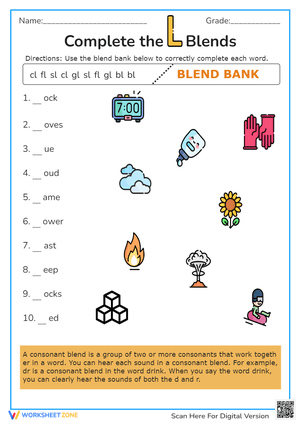
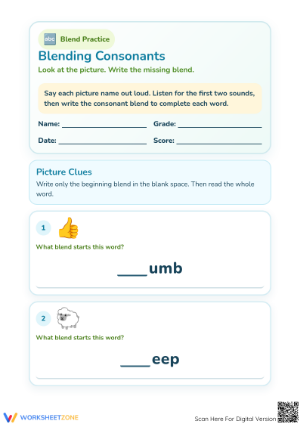
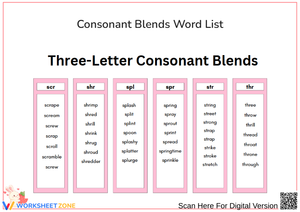
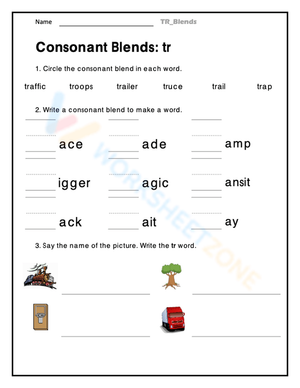
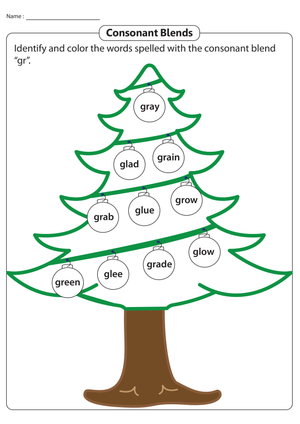
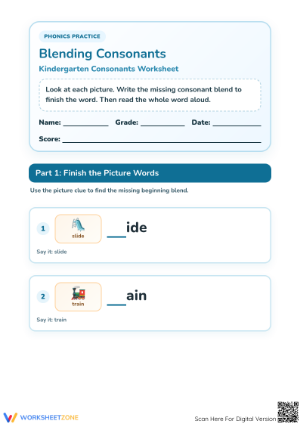
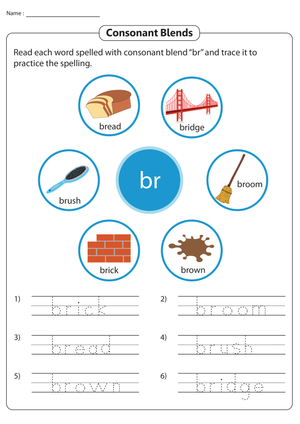
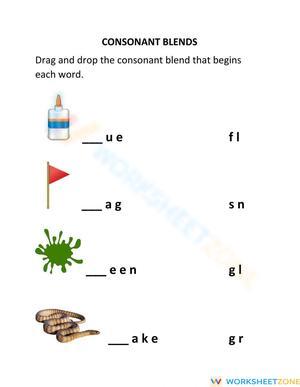
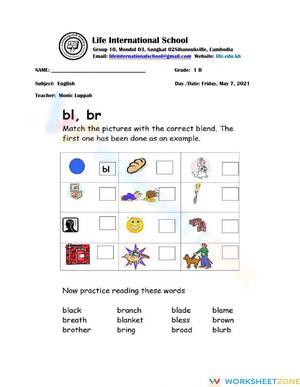
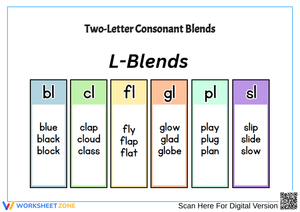
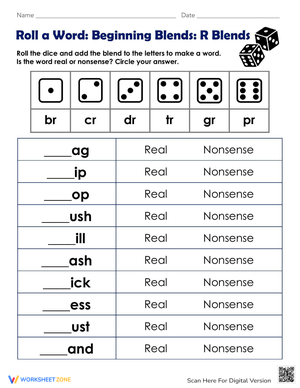
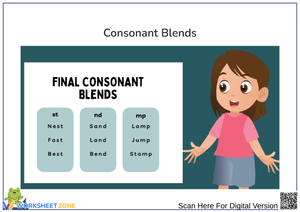
- Consonant blends: Students work with two-consonant clusters at word beginnings or endings, reading and writing words like flag, best, and clap.
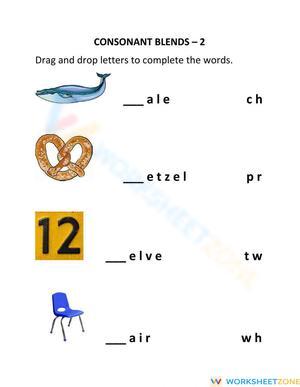
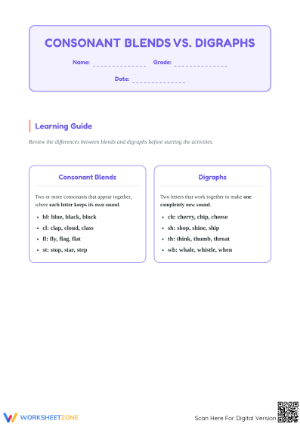
- Digraph recognition: Students practice sh, ch, th, and wh in picture-matched and word-level tasks, learning to treat each pair as a single sound unit.
Worksheet format stays consistent across the set — short directions, clear print, enough white space for emerging writers — so students spend their cognitive energy on sound work rather than deciphering task instructions.
Frequent Consonant Errors Worth Catching Early
The error pattern that shows up most reliably in Grade 1 is position blindness at the word's end. A student who correctly names the first sound in map will often leave the final position blank — not because they don't know /p/, but because they have not yet learned to deliberately shift their attention from the beginning of a word to its close. Ending-sound worksheets build that habit in a way whole-group oral drills alone do not, because each item forces the student to make a written commitment about what they heard last.
Blends produce a different and more persistent error: consonant deletion. A student who reads slip as "sip" is not guessing randomly — they are decoding but dropping one consonant from the cluster without registering the loss. The same student will write frog as "fog." Worksheets that ask students to underline or mark each consonant before reading aloud make the deletion visible to teachers, who can then address it directly rather than attributing missed sounds to carelessness.
With digraphs, the typical mistake is treating the letter pair as two separate sounds. Students produce the written combination th correctly but then decode thin as "/t/-/h/-/i/-/n/," which stalls fluency. A dictation or word-completion task catches this faster than a matching exercise does, because matching allows students to succeed by visual pattern rather than phonemic analysis.
How to Work These Worksheets Into Your Phonics Block
The most reliable sequence in Grade 1 phonics instruction follows a gradual release structure: explicit modeling, brief guided practice with the group, then independent work on a short task. These worksheets fit cleanly into the third step. After five to eight minutes of direct instruction on a target sound, teachers distribute the corresponding worksheet and circulate. The completed worksheets give immediate data — who wrote correct letters, who left ending sounds blank, who blended accurately — without requiring a separate assessment window.
Beyond the phonics block itself, first grade consonant worksheets fit several other routines without adjustment. A beginning-sound worksheet at morning meeting reactivates consonant knowledge before reading groups start. A blend worksheet at a literacy center gives students focused work after direct instruction without needing adult direction mid-task. A short completion worksheet sent home Thursday — focused on one consonant skill with a clear example — is simple enough for families to support without a supplementary guide. For substitute days, a well-organized 1st grade consonants worksheets file focused on one skill and one worked example runs reliably without any teacher in the room.
One small routine that pays off quickly: before students write anything, have them say the picture name aloud, stretch the word slowly, and tap each sound on their fingers. That three-step oral sequence links phonological awareness to the print task and surfaces students who are guessing from pictures rather than actually isolating the consonant sounds they hear.
Standard Alignment
These worksheets align to CCSS.ELA-LITERACY.RF.1.2d — segmenting spoken single-syllable words into their complete sequence of individual phonemes — and to CCSS.ELA-LITERACY.RF.1.3, which requires students to know and apply grade-level phonics skills in decoding words. RF.1.3a specifically addresses common consonant digraphs, placing these worksheets at the intersection of phonemic awareness and phonics decoding work that runs through the center of the Grade 1 ELA year.
In classroom terms, RF.1.3 is the standard most Grade 1 teachers spend October through May addressing. Most programs sequence single consonants in the fall, introduce blends in winter, and consolidate digraphs by spring. The worksheets in this set follow that same progression, so teachers can pull from the section that matches current instruction rather than sorting through unordered material.
Adjusting the Set for a Range of Readers in the Same Room
In a typical Grade 1 classroom, three or four students are still consolidating single consonant sounds while others are already blending and a few are reading short sentences with little support. A 1st grade consonants worksheets collection handles that spread when teachers treat picture support, response type, and skill complexity as adjustable rather than fixed features of each task.
Students who need more support work best with worksheets that address one sound at a time, include a picture for every item, and ask for circling or matching rather than writing from memory. For English learners, the oral stretch-and-tap step matters more than the picture clue does — a picture of a ship is only useful if the student knows the English word ship, so paired oral rehearsal before writing is the more important support. Students ready for more challenge use worksheets without picture clues, write missing consonants from dictated words, or sort a small word set by blend pattern. A student who finishes early reads completed words to a partner, adding oral reading fluency practice without requiring a separate activity to be prepared.
Frequently Asked Questions
What consonant skills appear in Grade 1 that weren't already taught in kindergarten?
Kindergarten typically addresses single beginning consonants and some ending sounds in isolation. Grade 1 moves explicitly into blends — clusters like bl, st, and nd — and into digraphs, which students may have encountered in earlier grades but rarely apply reliably when decoding. Grade 1 also raises the demand: students aren't identifying sounds in isolation anymore but reading and writing short words that contain those sounds within a meaningful decoding context.
Can a completed worksheet function as a formative assessment?
Yes, with one important caveat: the worksheet shows which items a student answered correctly, but it doesn't always reveal the underlying error type. A student who circles the wrong letter on an ending-sound task might be mishearing the phoneme, confusing visually similar letters, or selecting by elimination rather than actual analysis. Pairing a completed worksheet with a brief oral check gives a cleaner picture of what the student genuinely knows.
How many items per worksheet is realistic for first graders working independently?
Eight to twelve items is the practical range for most Grade 1 independent work. Fewer than eight makes it difficult to detect a pattern in errors; more than twelve can push into stamina problems for students still building writing fluency. When a task requires more writing per item — spelling a complete word rather than circling a letter — six to eight items is a more sustainable target.
Do these worksheets work alongside structured literacy programs?
Printable 1st grade consonants worksheets worksheets work well as supplemental practice alongside structured literacy programs, but they follow the explicit instruction those programs provide — they do not replace it. The most effective use is after the lesson, reinforcing the consonant pattern taught that day. Teachers using a sequential phonics program can pull the worksheet matching the current lesson rather than working through the set in order.












 Interactive Worksheet Maker
 Quiz Maker
 Word Search Maker
 Crossword Puzzle Maker
 Word Scramble Generator
 Sentence Scramble Generator
 Handwriting Worksheet Generator
 Name Tracing Generator
 Fill In The Blank Generator