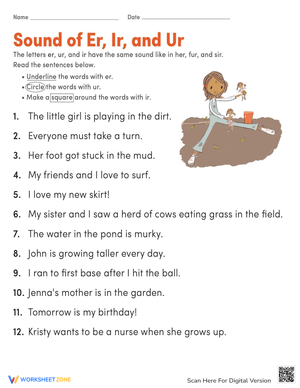
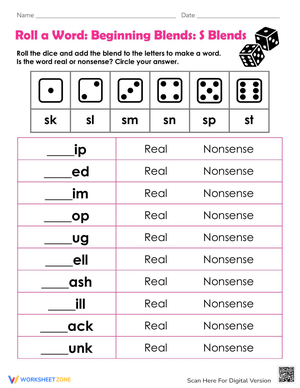
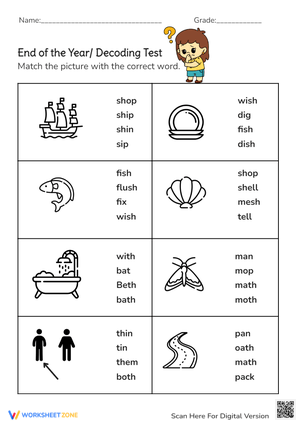
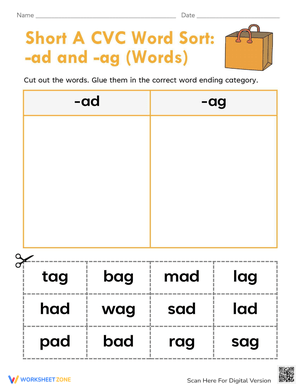
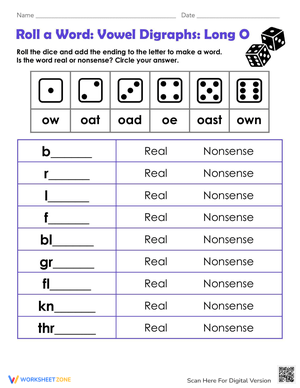
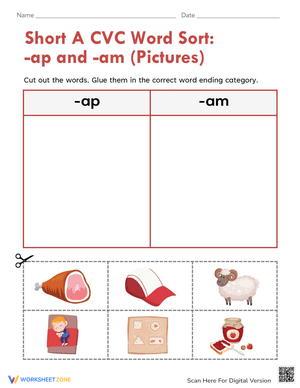
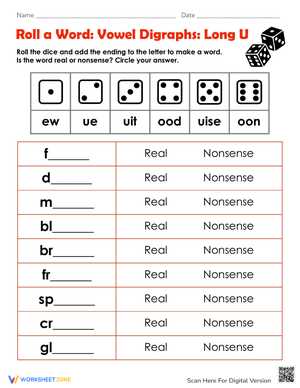
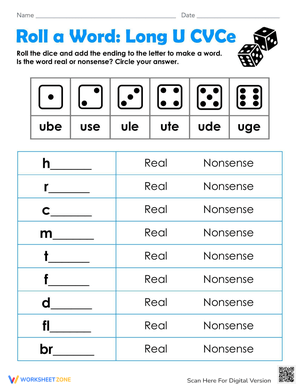
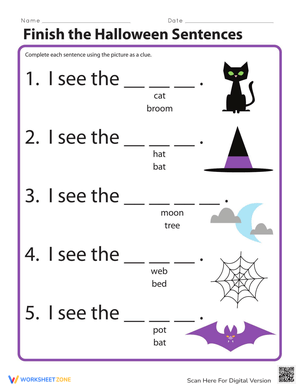
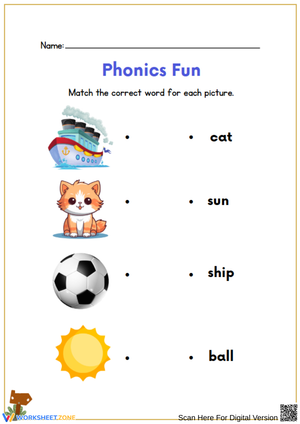
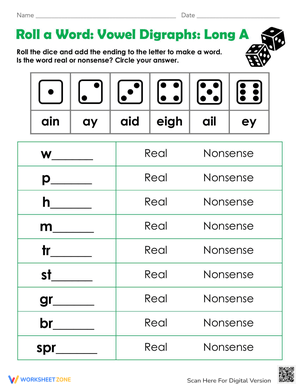
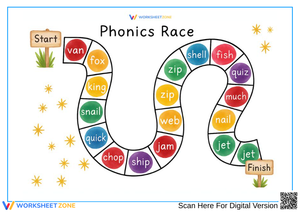
These 1st grade decoding words worksheets move students through the core phonics patterns of first grade — CVC words, consonant blends, digraphs, and vowel-e patterns — with each worksheet addressing one specific concept so teachers can match the resource to exactly where a student stands in the progression. Completed work functions as a running diagnostic: a student who reads ship aloud correctly but records the digraph as ch on a write-it item is signaling precisely what still needs reinforcement. That level of specificity is what makes a structured phonics set genuinely useful across both initial instruction and ongoing progress monitoring.
What Each Worksheet Asks Students to Do
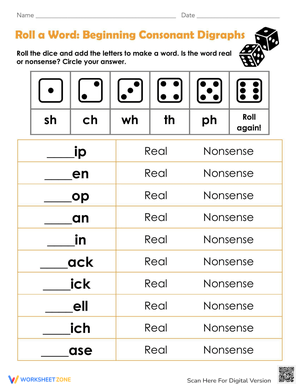
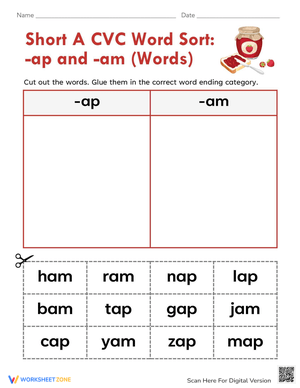
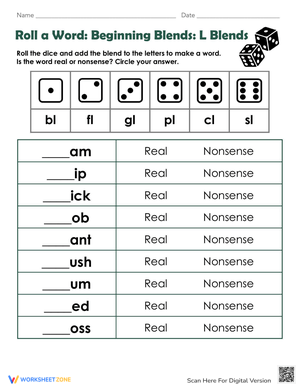
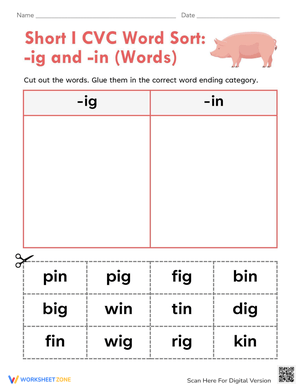
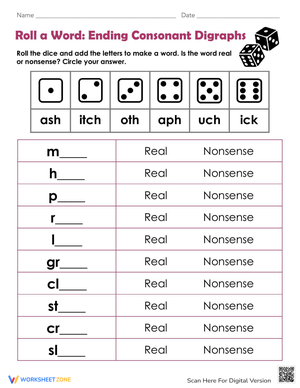
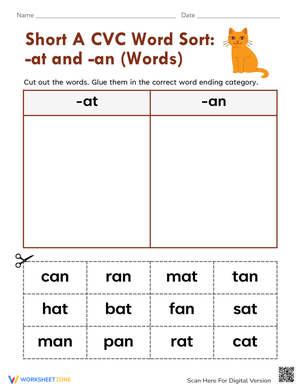
The phonics work across the set follows a deliberate progression — simple patterns before complex ones, each layer built on the last. Students begin by sorting and decoding CVC words, marking the vowel before reading the whole word aloud. Blend worksheets then present consonant clusters — bl, st, tr, gr — in both initial and final positions, asking students to underline the blend before blending forward into the full word. Digraph worksheets introduce ch, sh, th, and wh as units, explicitly distinct from the adjacent-consonant clusters students have just practiced.
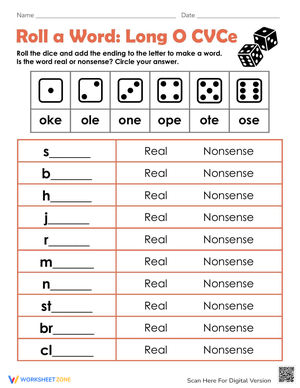
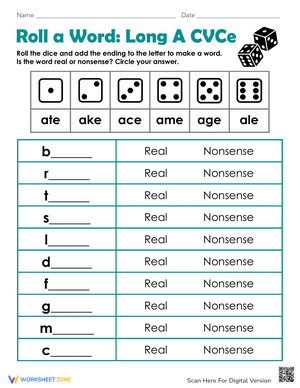
Later worksheets focus on silent-e patterns using minimal pairs — cap/cape, pin/pine, hop/hope — so students encounter the vowel shift within a single activity rather than across separate lessons days apart. Several worksheets include nonsense words like dref or snup, following the same logic as DIBELS nonsense word fluency probes: a student who correctly reads bim is demonstrating rule application, not visual recall of a familiar word.
The Decoding Errors That Surface Most Often in First Grade
The most consistent error with consonant blends is consonant deletion under blending pressure. A student who correctly identifies both letters in st will still produce "sop" for stop when the blending task moves at speed. This is as much a working-memory issue as a phonics issue — holding two phonemes active while scanning forward is more cognitively demanding than it appears to adults. Worksheets that ask students to tap or mark each phoneme before blending aloud give that memory load a physical anchor without removing the blending challenge itself.
Digraph overgeneralization shows up regularly: students who have just internalized the idea that two letters can represent one sound sometimes apply that logic to blends, treating st or pl as if the two consonants fuse into a single sound. The categorization activities in this set — where students sort words into "blend" and "digraph" columns — force that distinction into the open where it can be addressed directly. Silent-e worksheets surface a different issue: a student who reads cake correctly may be reading from visual memory rather than applying the vowel rule. Put that same student in front of an unfamiliar word like bame and the long-vowel rule often disappears. Minimal-pair formats with nonsense or low-frequency words remove the sight-word crutch and reveal whether the rule is genuinely internalized.
Lesson-Planning Strategies for Working These Worksheets Into Your Week
During the explicit phonics block — typically 15 to 20 minutes in most first-grade schedules — a projected worksheet gives the class a shared visual while the teacher models the decoding sequence aloud. The narration is the instruction: saying "I see an e at the end, so I'm going back to make the vowel long" demonstrates the metacognitive move students need to internalize, not just the correct pronunciation. After the teacher model, students complete a parallel section independently, giving the teacher 8 to 10 minutes of observation time before regrouping. These 1st grade decoding words worksheets are particularly effective in that independent window because the task is discrete enough that students can self-monitor — a student who finishes quickly and accurately is ready for the next pattern in the sequence.
In small-group intervention, pull the worksheet that addresses the exact pattern the group missed on their last formative check rather than working from the beginning of the sequence. Eight focused minutes on wh digraphs with four students is more productive than a general phonics review. For independent literacy centers, pairing any worksheet with a whisper phone changes the activity considerably: students hear themselves say "fot" for float and self-correct without teacher involvement — the auditory feedback loop that accelerates independent decoding progress most reliably.
Standard Alignment
The primary standard addressed across this set is CCSS.ELA-LITERACY.RF.1.3, which requires first graders to know and apply grade-level phonics and word analysis skills in decoding words. Sub-standards map directly to specific worksheet groups: RF.1.3.b covers consonant blends in initial and final positions; RF.1.3.c addresses two-letter digraphs including ch, sh, th, and wh; RF.1.3.c also covers the final silent-e convention and common vowel teams. RF.1.3 sits within the Foundational Skills strand, which CCSS positions as prerequisite to grade-level reading — these decoding patterns need to be automatic before students can allocate attention to comprehension rather than word recognition. The phonics scope and sequence reflected in these 1st grade decoding words worksheets aligns with both CCSS and the structured literacy frameworks adopted by states that have moved away from Common Core language while retaining the same phonics progression at this grade level.
Adjusting These Worksheets Across Student Levels
Students who arrive at first grade already reading CVC words with automaticity should move directly to the blend and digraph worksheets — working through a pattern that is already internalized is not review, it is wasted time. For those students, add a generative task: instead of circling the word that matches the picture, they write a sentence using the target word. That single shift raises the cognitive demand without requiring a different resource.
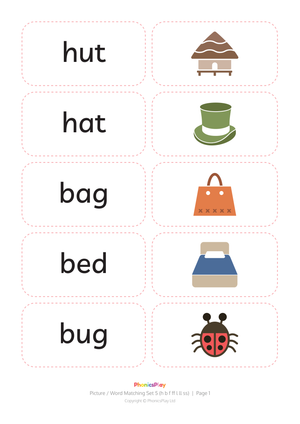
For students still stabilizing letter-sound correspondences, the picture-matching items on each worksheet give an entry point that decouples decoding from comprehension — students confirm meaning visually, then attend fully to the phonics task. Reducing the number of simultaneous demands is a direct application of cognitive load theory, not a lowering of expectations. These students also benefit from an Elkonin box mat alongside the printed page: they push a chip for each phoneme, write the letters, and then attempt the worksheet task. The 1st grade decoding words worksheets accommodate that kind of concrete, hands-on pre-work without any modification to the printed content itself.
Frequently Asked Questions
Which worksheet should I assign first?
Start with a quick informal probe: dictate five CVC words and five blend words and note where errors cluster. If a student misses more than two CVC items, begin there. If CVC is solid but blends produce errors, start with the initial-blend worksheets. The sequence in this set mirrors the order used in Orton-Gillingham and other structured literacy programs, so following it from the student's entry point — not from the first worksheet in the set — is the intended approach.
Can completed worksheets support RTI documentation?
Dated and filed in order, completed worksheets create a concrete record of phonics progress that holds up in RTI and parent conference contexts. The contrast between early error patterns and clean work on the same pattern weeks later is more persuasive evidence of growth than a score sheet alone — it shows the specific skills that moved, not just a number.
A student decodes correctly aloud but misspells the vowel on write-it items. Is that a phonics gap?
Decoding and encoding draw on the same letter-sound knowledge but are not the same skill. Reading ship correctly is easier than writing it from dictation because decoding provides a visual prompt — the letters are already on the page. Encoding requires retrieving the spelling from memory without that prompt. This gap is developmentally normal in first grade. Worksheets that include both a read-it and a write-it component within the same activity develop both directions of orthographic mapping simultaneously, which is more efficient than addressing them in separate lessons.
My student finishes each worksheet in under three minutes. Does that mean the level is wrong?
Completion speed alone is not diagnostic — accuracy is. A student who finishes quickly with no errors has internalized that pattern and is ready for the next worksheet in the sequence. A student who finishes quickly with errors is likely reading by initial letter or word shape rather than decoding. Check whether that student can read the same words in scrambled order, or correctly read the nonsense-word items. That distinction determines whether to advance or to return to explicit instruction before continuing with independent practice.












 Interactive Worksheet Maker
 Quiz Maker
 Word Search Maker
 Crossword Puzzle Maker
 Word Scramble Generator
 Sentence Scramble Generator
 Handwriting Worksheet Generator
 Name Tracing Generator
 Fill In The Blank Generator