1st Grade Stretching Words PDF Worksheets for Phonics Practice
1st grade stretching words pdf worksheets give teachers a print-ready tool for one of the most foundational moves in early literacy: slowing a spoken word down until every phoneme is audible, then mapping a letter to each sound in sequence. The set targets phonemic segmentation and encoding simultaneously — the exact combination Grade 1 students need as they cross from oral sound play into actual spelling. What makes the format practical is that students learn the routine once and can work through new words independently, in centers, or as take-home review.
The Sound Work Each Worksheet Targets
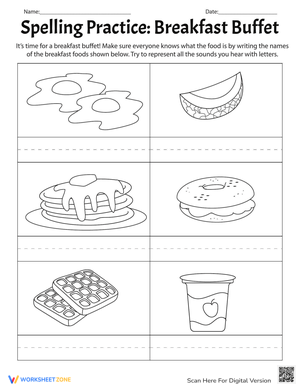
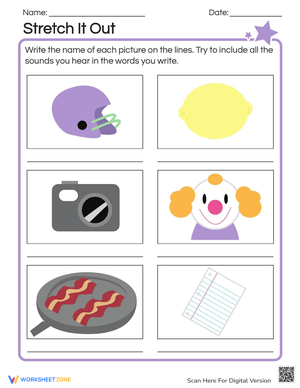
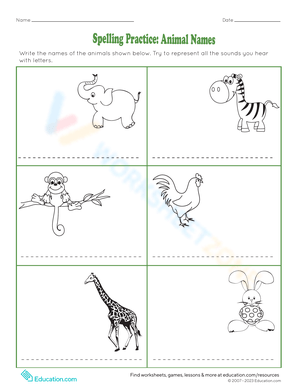
Each worksheet builds the habit of treating a word as a sequence of sounds rather than a single unit to memorize. Students look at a picture, name the word, say it slowly, identify each phoneme in order, and write one letter per sound. That say-stretch-write chain makes phonemic awareness visible on paper and connects it directly to early encoding.
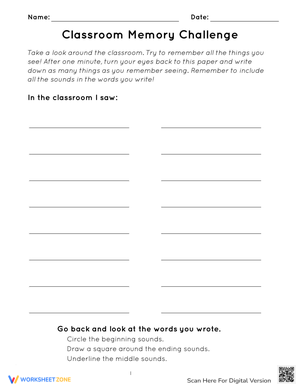
The set moves through a deliberate sequence. Beginning sound identification comes first, giving students a lower-demand entry where only one phoneme needs to be isolated. Full three-phoneme segmentation follows, using CVC words because those patterns keep vowel choices manageable while students develop the habit of listening left to right through a word. Medial vowel practice then gets its own focus — the short vowel at the center of a CVC word is consistently the phoneme first graders have the hardest time holding on to. Later worksheets target ending-sound precision, and once CVC accuracy is steady, blends and digraphs extend the same routine to more complex one-syllable patterns.
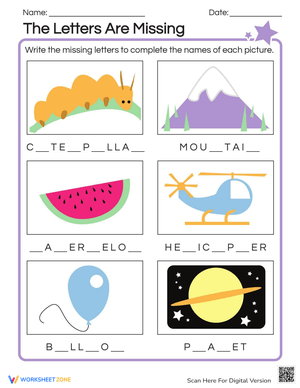
- Beginning sound isolation: Students identify and write the first phoneme of a pictured word.
- Full CVC segmentation: Students hear and record all three sounds using sound boxes.
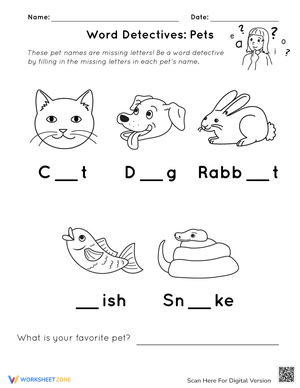
- Medial vowel discrimination: Students attend closely to the short vowel in the middle of the word.
- Final sound accuracy: Students strengthen attention to ending phonemes that casual speech often drops.
- Blend and digraph extension: Students carry the same listening routine into more complex patterns.
Student Error Patterns Worth Tracking Across the Set
The most consistent error in early stretching work is medial vowel omission. A student who taps /c/ /a/ /t/ correctly on three fingers will still write ct on the worksheet, because the short vowel is the weakest phoneme acoustically and young encoders default to the consonants at a word's edges. Watching for this pattern across multiple items helps teachers determine whether a student has a broad segmentation problem or a specific vowel-encoding gap — two different instructional targets.
Short vowel confusion is a related but distinct issue. Students who orally segment pen without difficulty often write pin, because short /e/ and short /i/ are close in articulation and first graders have not yet built stable mappings for every vowel. A worksheet that groups similar short-vowel pairs — hat alongside hot, or pen next to pin — surfaces this confusion faster than a mixed-word set where no two words share a vowel family.
A third pattern worth watching: students who demonstrate the stretching routine fluently during teacher modeling but freeze the moment they have to write. Oral segmentation and live encoding draw on different cognitive demands, and some first graders hit a bottleneck exactly at the pencil-to-paper step. Releasing the writing task briefly — asking students to whisper each sound without writing — and then reintroducing the pencil over two or three sessions typically restores fluency without losing ground in the phonemic awareness work itself.
Fitting These Worksheets Into a Week of Phonics Instruction
The ten minutes after morning meeting — when students are seated but not yet committed to a longer task — is a natural slot for one stretching-word warm-up. A brief teacher model at the whiteboard, two items completed together, and students are encoding independently within two minutes. That low-prep entry is what makes this routine sustainable across a full week rather than a novelty that fades after the first unit.
For whole-group instruction, model the complete say-stretch-write-read-back chain before releasing students to their own worksheet. The read-back step is easy to skip, but it earns its place: students hear the word, write the sounds, and then blend those letters back into the word they just spelled — confirming meaning in their own voice and connecting encoding directly to decoding. For small intervention groups, run the oral routine first and confirm each phoneme before handing anything out. Students still consolidating phonemic awareness orally should not meet the written format without that spoken warm-up. 1st grade stretching words pdf worksheets work especially well as Monday re-entry practice, when the familiar format re-anchors the sound-to-letter habit before new instruction begins.
In centers, post the three-step prompt where students can reference it, and keep the response format consistent across worksheets so the routine transfers without adult support. For take-home review, assign only patterns students have already practiced in class — unfamiliar words make the routine harder at home and undermine the independence this format is built to develop.
Standard Alignment
These worksheets address CCSS.ELA-LITERACY.RF.1.2d, which requires students to "segment spoken single-syllable words into their complete sequence of individual sounds (phonemes)." In classroom terms, this standard sits at the intersection of phonemic awareness and early encoding — students are expected to hear every phoneme and represent it in writing, but are not yet expected to apply complex spelling conventions. RF.1.2d is typically introduced orally in kindergarten and consolidated through written encoding tasks in Grade 1, which places 1st grade stretching words pdf worksheets squarely within the developmental window this standard is meant to address rather than ahead of or behind it.
Meeting Different Readiness Levels With the Same Worksheet Format
Students who need more structured entry points benefit from having picture names pretaught before the worksheet begins — if a child spends cognitive energy figuring out what the picture shows, there is less available for the actual sound work. Completing the first item together and using finger tapping before writing gives those students a physical anchor for each phoneme. Students working at a solid independent level can take a complete CVC worksheet with sound boxes and minimal prompting and move through it without a teacher nearby.
Intervention groups do better with fewer items worked carefully than a full worksheet rushed through. Six words with oral segmentation confirmed before each written response typically produces cleaner results than twelve words completed without checking. For students ready to push past basic CVC patterns, the same format — picture, sound boxes, write and reread — transfers cleanly to blends and digraphs, keeping the instructional routine stable while the phonics content grows more demanding.
Frequently Asked Questions
Is stretching words the same as phoneme segmentation?
They are closely related but not interchangeable. Phoneme segmentation is the cognitive skill of breaking a spoken word into its individual sounds in order. Stretching is a classroom method — drawing out each phoneme slowly so it becomes distinct and audible before any writing begins. 1st grade stretching words pdf worksheets bring both together: students stretch orally and then record each phoneme in a sound box, turning the listening skill into a written artifact teachers can review and use to plan next steps.
How many items should a worksheet have for Grade 1?
Eight to twelve items suits most whole-group use. Fewer than six limits the repetition students need to internalize the routine. More than twelve often produces accuracy drops near the end of the worksheet, where students begin writing without listening carefully because sustained attention has run out. For intervention, four to eight items worked slowly — with oral confirmation before each written response — is more productive than a longer worksheet completed without that check.
When should students move beyond CVC words?
When students consistently record all three phonemes — including the medial vowel — across multiple words without finger tapping or teacher prompting, they are ready for blends and digraphs. Moving to more complex patterns before medial vowel accuracy is stable tends to produce shaky results, because students lose track of the vowel when a consonant cluster is also present in the word.
Can completed worksheets function as a formative assessment record?
Yes — and that use is often undervalued. A completed worksheet shows exactly which phoneme position a student is missing: beginning, medial, or final. Consistent vowel omissions across every item on the page point to a specific instructional gap rather than a general phonics weakness. Collecting two or three worksheets per student across a unit gives a cleaner picture of progress than any single classroom observation.
Clear All