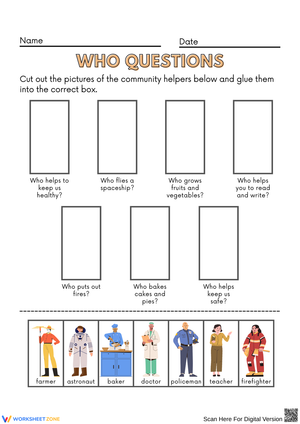
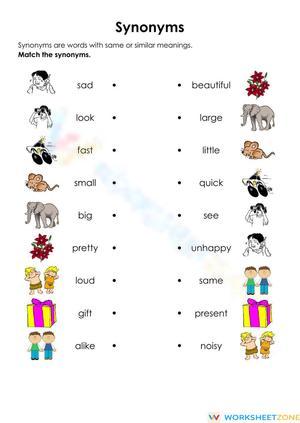
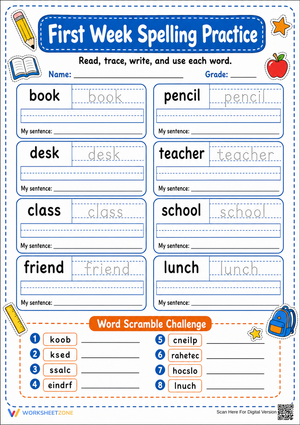
These english worksheets for 1st grade cover the complete ELA skill arc — phonics, sight words, grammar, reading comprehension, and early writing — with each worksheet targeting one pattern at a time so students aren't juggling multiple demands before any single skill is stable. The set runs from the consonant blends students are decoding in September through the short informative and narrative sentences they're constructing by May.
What Each Worksheet Covers
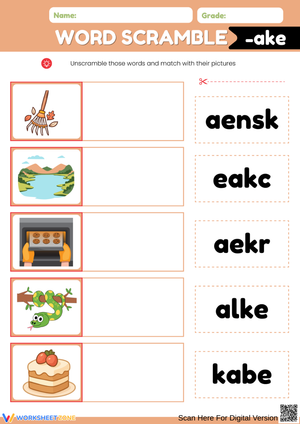
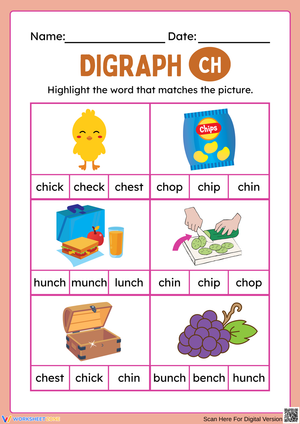
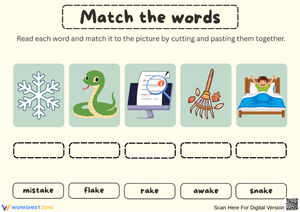
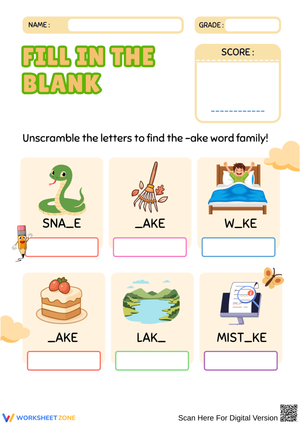
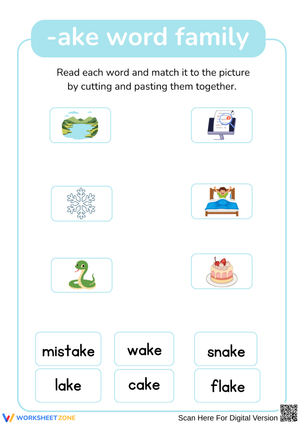
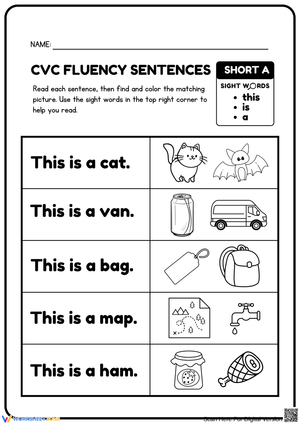
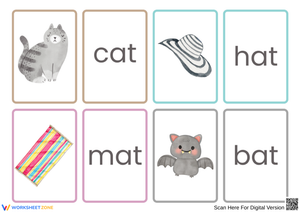
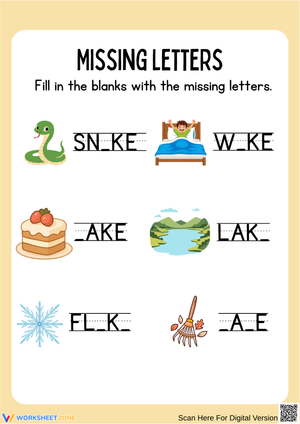
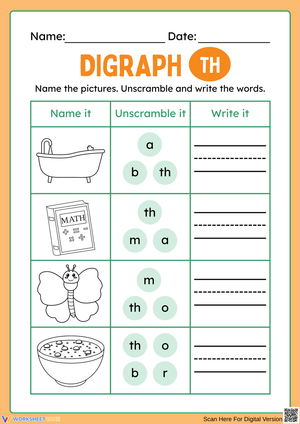
Phonics is the largest strand. Each worksheet isolates a specific spelling pattern: consonant digraphs (ch, sh, th, wh), short and long vowel spellings, r-controlled vowels, and common word families like -ight and -ame. Students sort, circle, match, and write words using each target pattern — always encountering the sound in at least two formats per worksheet so the connection between reading and spelling that pattern gets reinforced in both directions.
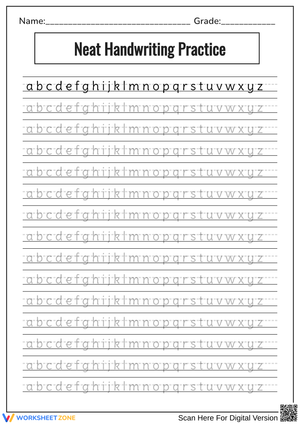
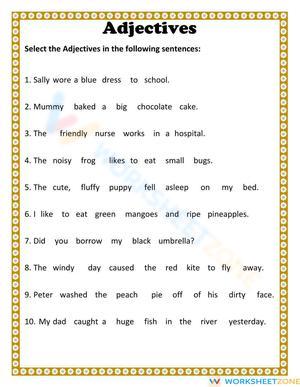
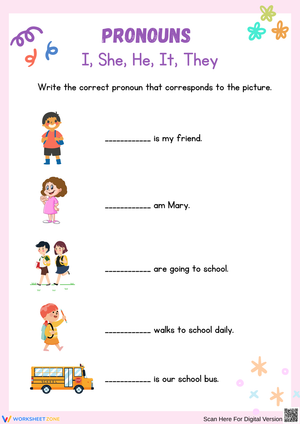
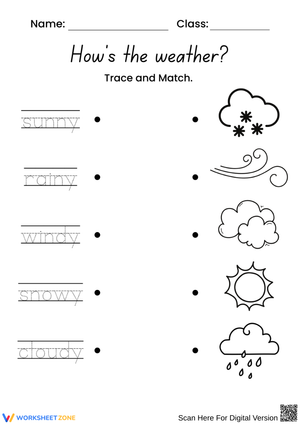
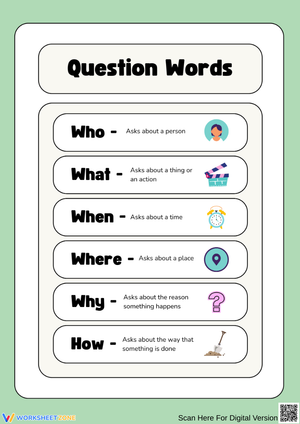
Grammar worksheets address the parts of speech first graders are actively building: common nouns, proper nouns, possessive nouns, and basic subject-verb agreement. End punctuation — period, question mark, exclamation point — appears throughout, always embedded in sentence context rather than drilled in isolation. Handwriting runs alongside: primary dashed baselines guide letter formation and word spacing without requiring a separate handwriting block in the day.
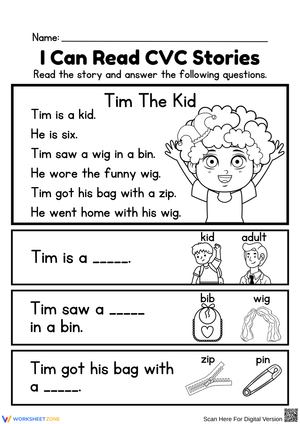
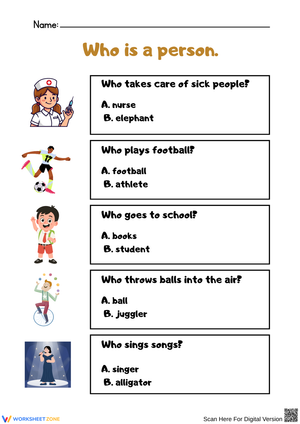
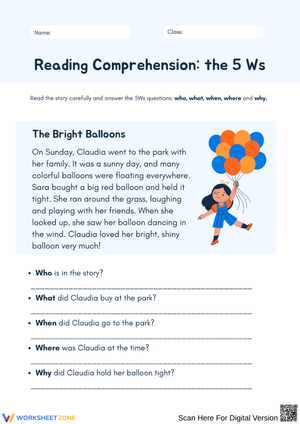
Reading comprehension worksheets pair short decodable passages of four to eight sentences with questions asking students to identify the main character, recall a specific detail, or sequence two events in order. Writing worksheets offer picture cues and sentence starters that move students from filling in a frame toward building their own sentences — opinion pieces, informative sentences about animals or classroom topics, and brief personal narratives with a clear beginning and end.
Student Errors That Show Up Across This Work
Phonics errors follow a predictable pattern: a student who has fully internalized short vowels will default to them when confronting an unfamiliar long-vowel spelling. The same student who reads "cape" correctly during word work will write "cap" in the sentence at the bottom of the worksheet because the short-a muscle memory fires faster than the new rule. These worksheets address that directly by keeping the target pattern in both the reading and writing portions of the same exercise — a student who sorts long-a words and then writes them in sentences has to apply the spelling actively, not just recognize it.
On grammar worksheets, end punctuation is the most reliably skipped step. Students produce a grammatically sound sentence and then leave the period off because the cognitive work of constructing the sentence used up their attention. Pointing to the blank line at the end of the sentence before students begin — "where does this one end?" — shifts what they monitor as they write. That's a one-sentence cue before the worksheet starts, not a reteach mid-activity.
In reading comprehension, the consistent failure isn't decoding — it's returning to the text. Students answer from memory rather than re-reading, which means a student who listened carefully during a read-aloud will outperform one reading independently but not checking back. Teaching students to underline the sentence that proves their answer before filling in the blank changes that habit more reliably than any number of verbal reminders.
Building These Worksheets Into Your Instructional Week
Teachers who get the most from this set match the phonics worksheets to whatever pattern small-group instruction is targeting that week, rather than working through them in sequence. A student in a guided reading group working on -oa- and -ow- spellings benefits from the corresponding phonics worksheet that same afternoon — the timing closes the loop between instruction and independent practice while the sound is still active in working memory. Morning transitions, the last literacy center rotation, and the eight minutes before specials are all viable slots; none of these worksheets require setup time.
For intervention, selecting one worksheet that targets the exact pattern a student is missing keeps the session focused. Scanning a completed worksheet takes about 90 seconds and shows which items a student answered through active processing versus guessing — look at the ones they erased. English worksheets for 1st grade function as formative tools as much as practice materials when teachers read the error patterns rather than just the score; two wrong answers in the same row often point directly to the next instructional target.
Standard Alignment
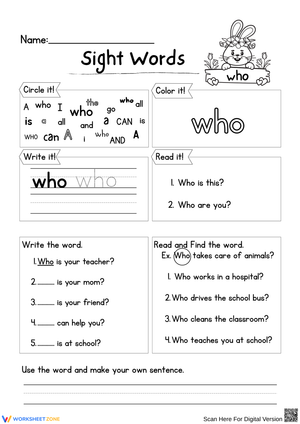
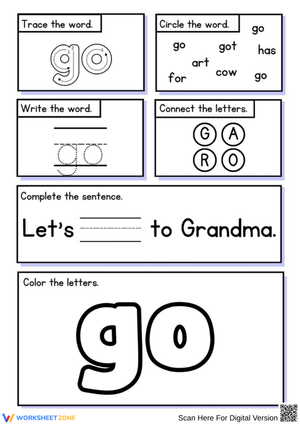
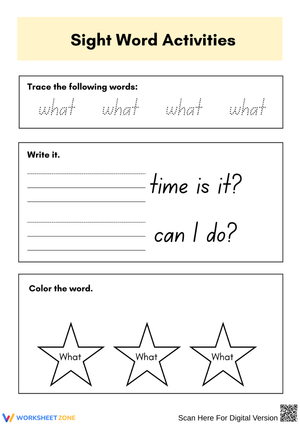
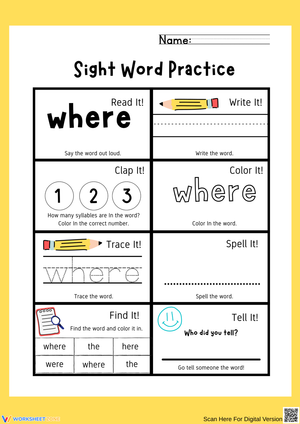
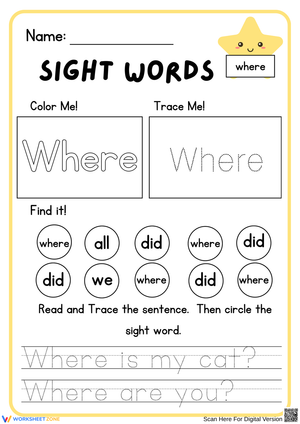
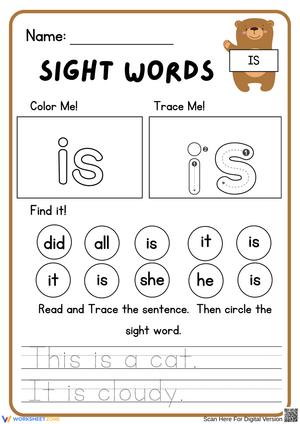
Phonics worksheets address RF.1.3, which requires students to know spelling-sound correspondences for common consonant digraphs and decode regularly spelled one-syllable words. In classroom terms, the digraph worksheet a teacher assigns in February connects directly to what running records are assessing around the same point in the year. Sight word worksheets support RF.1.4 by building the word recognition automaticity that fluent reading requires — high-frequency words that don't follow standard phonetic rules must be memorized, and repetition across tracing, writing, and sentence-level identification is how that happens for most first graders.
Grammar and mechanics worksheets align with L.1.1 (command of standard English grammar and usage, covering nouns, verbs, and subject-verb agreement) and L.1.2 (conventions of standard English, including capitalization, end punctuation, and spelling). Reading comprehension activities address RL.1.1 and RI.1.1 — asking and answering questions about key details in literary and informational texts. Writing worksheets connect to W.1.1, W.1.2, and W.1.3, spanning opinion, informative, and narrative writing at this grade level.
Adjusting the Set for a Range of Learners
Students who need more support benefit from a reduced item count paired with a word bank. Cutting a phonics worksheet from twelve items to six and adding a picture cue above each word removes the frustration threshold that shuts some early readers down before they begin. On grammar worksheets, a word bank lets students focus on applying the grammatical rule rather than retrieving vocabulary at the same time — those are two separate cognitive demands, and asking a struggling first grader to manage both simultaneously produces errors that look like grammar confusion but are really recall failures.
English worksheets for 1st grade extend naturally for students working ahead of the whole-class pace without requiring separate materials. After a student finishes a sight-word worksheet, ask them to write an original sentence for each word — one that makes actual sense in context, not "I see the." After completing a comprehension passage, ask them to write what happens next. These extensions live in the margin of the lesson plan, not in a separate packet the teacher has to prepare.
English language learners benefit most when comprehension passages include a functional illustration placed directly beside the text — not decorative clip art, but an image that mirrors the sentence structure closely enough that students can cross-reference between the picture and the words while reading. Where that feature isn't present, a quick teacher sketch on the whiteboard before students begin serves the same purpose.
Frequently Asked Questions
Do these worksheets work as homework, or do students need classroom instruction first?
Phonics and grammar worksheets work best after the pattern has been introduced in class — sending home a worksheet on consonant digraphs before students have encountered the instruction puts families in the position of teaching, which rarely goes smoothly. Sight word worksheets are the exception: tracing and writing practice travels home successfully even before formal classroom instruction because the task itself is the instruction. As a general rule, english worksheets for 1st grade travel home most successfully when students can read at least 90 percent of the words on the page independently; below that threshold, frustration replaces practice.
How do I sequence the phonics worksheets across the school year?
Follow your core phonics program's scope and sequence rather than working through the worksheets from front to back. Use them as supplemental practice that mirrors whatever pattern is active in your guided reading groups and word study block that week. An r-controlled vowel worksheet belongs in February or March in most first-grade programs — using it in October, before students have encountered the pattern in instruction, produces guessing rather than practice and gives teachers inaccurate data about what students actually know.
Can students with IEPs use these worksheets independently?
That depends on each student's specific IEP goals and current reading level, but most standard accommodations transfer directly. Reducing item count, providing a word bank, accepting oral responses to comprehension questions, and increasing font size all preserve the instructional target while removing barriers that aren't part of what's being assessed. Teachers using these worksheets with students on IEPs typically annotate their planning notes with the specific modification rather than producing a separate version — the original worksheet stays intact, and the adjustment is in the delivery.












 Interactive Worksheet Maker
 Quiz Maker
 Word Search Maker
 Crossword Puzzle Maker
 Word Scramble Generator
 Sentence Scramble Generator
 Handwriting Worksheet Generator
 Name Tracing Generator
 Fill In The Blank Generator