Why Expository Writing Worksheets In ELA Lessons?
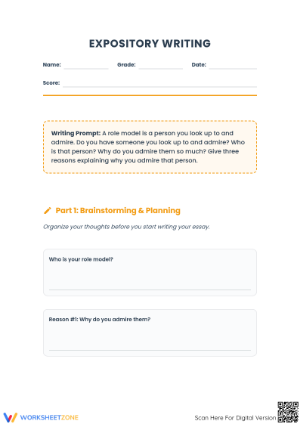
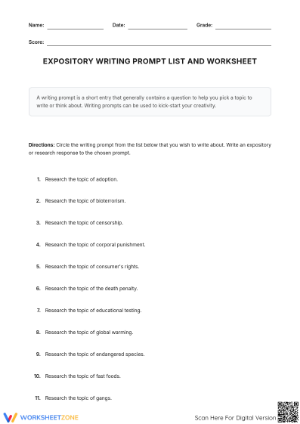
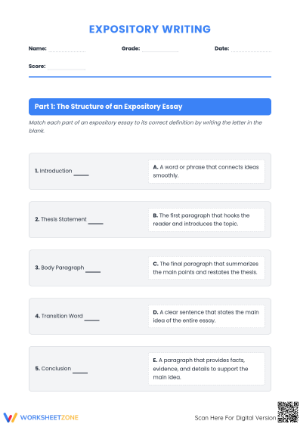
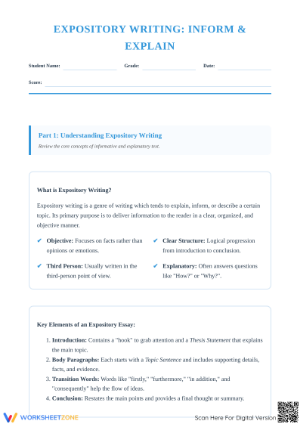
Expository writing worksheets give you a repeatable way to teach one of the hardest things students do all year: explain a topic clearly using facts instead of opinions. Rather than assigning an open-ended prompt and hoping structure appears, you hand students a scaffold that names each move—introduce, develop, organize, and conclude. That structure is exactly what makes informative writing gradeable and teachable inside a single 45-minute block.
For anyone running writing intervention or a pull-out small group, worksheets also solve a pacing problem. You can isolate one skill, such as choosing relevant facts, without asking a struggling writer to manage a whole essay at once. The rest of this guide breaks down how to sequence expository writing worksheets from grade 1 through grade 8 and how to pull real formative data out of every page.
The Four-Step Framework Every Worksheet Should Reinforce
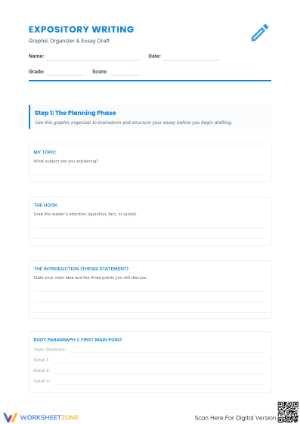
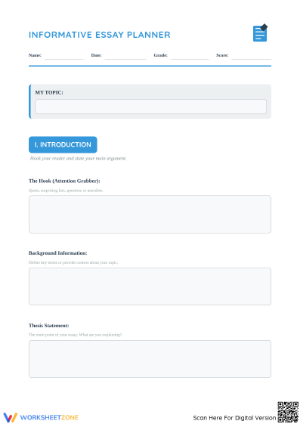
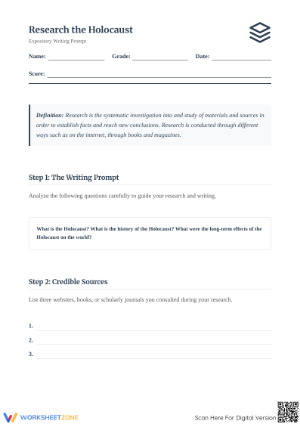
Strong expository writing worksheets aren't random fill-in-the-blank pages. They rebuild the same components you already use to plan a unit. Smekens Education frames elementary expository writing around four building blocks, and well-designed worksheets map cleanly onto each one:
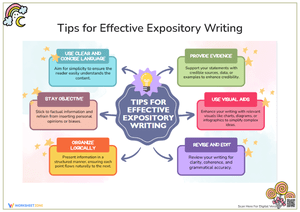
- Introduce the topic so students name what they are explaining and why a reader should care.
- Develop with facts and details so students supply accurate, relevant information rather than feelings or opinions.
- Organize the information so related ideas sit together and a reader can follow the logic.
- Write a conclusion that signals the explanation is complete.
When a worksheet isolates just one of these blocks, you can reteach a weak spot without redoing the entire piece. A student who nails facts but drifts in organization only needs the organization page again, which keeps practice targeted and keeps your feedback specific.
Matching Worksheets to Grade-Level Expectations
Skill expectations stay remarkably steady across grades; what changes is how students express them. In grade 1, informative writing might be a labeled picture paired with two sentences. By upper elementary and middle school, those same four moves grow into multi-paragraph essays with evidence and transitions.
According to the Common Core State Standards Initiative, standard W.1.2 asks grade 1 writers to name a topic, supply one or more facts about it, and provide some sense of closure—three concrete moves inside a single sentence-level task. That benchmark is the reason expository worksheets built around topic, facts, and conclusion mirror the earliest informative writing expectations students encounter.
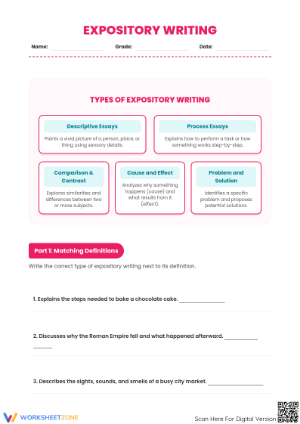
By grade 6, Common Core informative and explanatory standards ask students to organize ideas using strategies such as definition, classification, comparison and contrast, and cause and effect. Your worksheets should shift with that demand, moving from single-fact organizers toward pages that ask students to sort evidence into categories before they draft.
Differentiating Worksheets for Early and Upper Grades
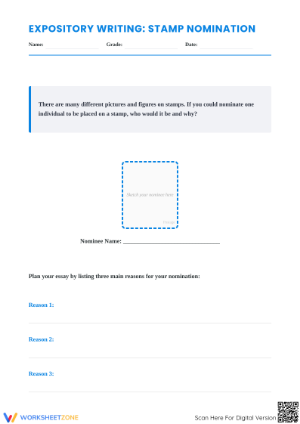
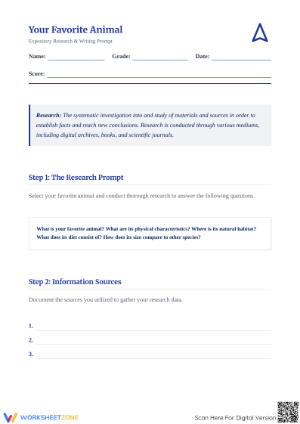
The same skill can look very different on two students' desks, and worksheets let you differentiate without writing two separate lessons. For early elementary and striving writers, provide sentence starters, word banks, and a picture box so the cognitive load stays on ideas rather than mechanics. For upper elementary and middle school students, strip the scaffolds back—swap sentence starters for a blank organizer and ask for transitions, evidence, and a supporting detail.
One efficient move is to print the same worksheet at two support levels and hand each version to the right group. Students work on identical skills at the same time, which keeps your small-group instruction manageable and your grading consistent. As writers gain independence, fade the supports so the worksheet gradually looks more like a blank page and less like a template.
Teaching Organizational Strategies With Structured Practice
Organization is where expository writing most often falls apart, and it's the skill worksheets are best suited to build. Instead of telling students to group their ideas, give them a page that forces one structure at a time:
- Compare and contrast worksheets ask students to line up two topics across shared categories.
- Cause and effect pages push writers to connect events with because, so, and as a result.
- Classification organizers have students sort facts into named groups before writing.
- Definition frames ask students to explain a term with a category and specific examples.
Rotating these formats across a unit means students meet every organizational pattern the standards name, and you get a quick read on which structure a class still finds confusing. Most teachers find one or two patterns need a full reteach, and worksheets make that reteach fast.
Using These Worksheets In The ELA Lessons
A worksheet only helps if it fits a clear routine. Try a predictable arc that moves students from supported practice to independent writing:
- Model first. Fill out one section under a document camera so students see the thinking, not just the blanks.
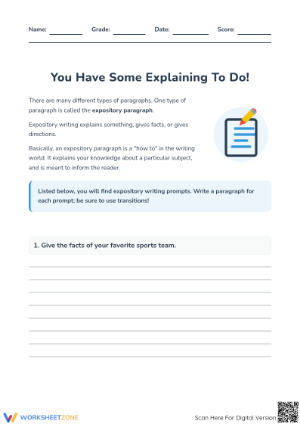
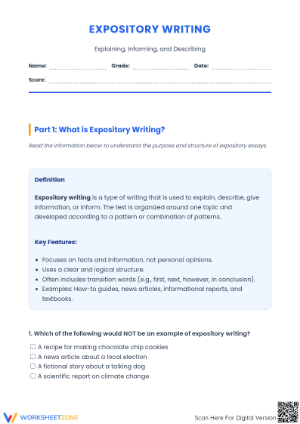
- Practice one block. Assign a single-step worksheet—topic, facts, organization, or conclusion—so the task stays focused.
- Combine steps. Move to a page that chains two or three moves once each is steady.
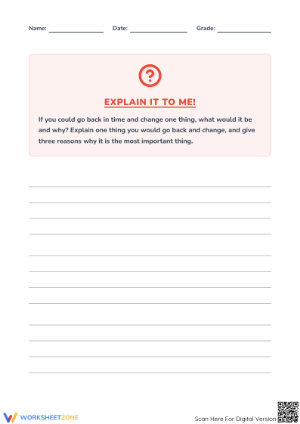
- Release to drafting. Have students transfer their completed organizer into a full expository paragraph or essay.
Keep completed worksheets in a writing folder so students can reuse a strong organizer as a model later. This arc also gives you a paper trail that shows growth across a marking period, which is useful during conferences and data meetings.
Frequently Asked Questions
1. How do expository writing worksheets align with Common Core informative and explanatory standards?
They mirror the standards' core structure. From W.1.2 in grade 1 through the grade 6 expectations, Common Core asks students to introduce a topic, develop it with facts, organize ideas, and conclude. Worksheets built on those four moves give students repeated, low-stakes practice with the exact skills each standard names.
2. What grade levels benefit most from expository writing worksheets?
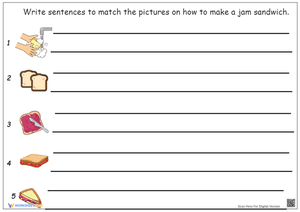
Grades 1 through 8 all benefit, though the format shifts. Early elementary students use label-and-sentence pages, while upper elementary and middle school writers use multi-paragraph organizers. The underlying four steps stay the same, so a worksheet system can carry a student across several grade levels.
3. How can teachers use these worksheets for small-group or intervention instruction?
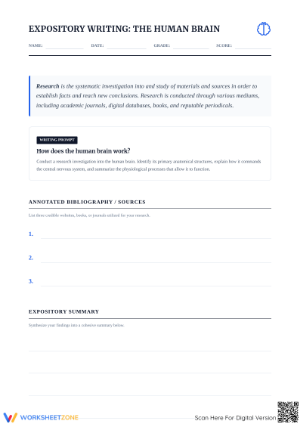
Isolate one skill at a time. A single-block worksheet lets you work on fact selection or organization with a small group without the cognitive load of a full essay. Completed pages then show whether the group is ready to move on or needs another round of practice.
4. What is the difference between expository and narrative writing worksheets?
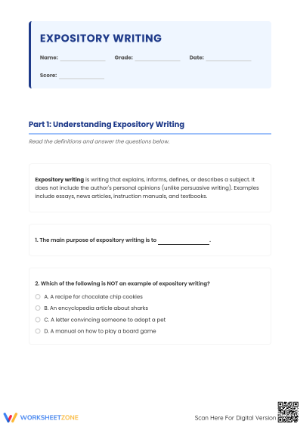
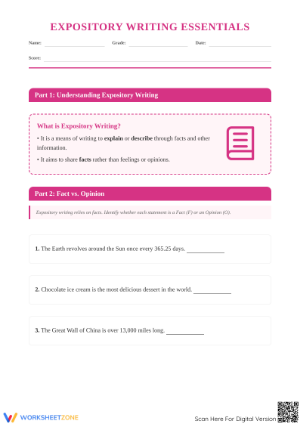
Expository worksheets focus on explaining a topic with facts, organization, and a conclusion, while narrative worksheets focus on story elements like characters, sequence, and events. Expository pages emphasize accuracy and logical grouping; narrative pages emphasize plot and description.
5. How should teachers sequence expository writing worksheets across a unit?
Start with the topic and fact-gathering pages, add organization practice next, and finish with conclusion and full-draft worksheets. Model each step, practice it in isolation, then combine steps before releasing students to independent expository writing.












 Interactive Worksheet Maker
 Quiz Maker
 Word Search Maker
 Crossword Puzzle Maker
 Word Scramble Generator
 Sentence Scramble Generator
 Handwriting Worksheet Generator
 Name Tracing Generator
 Fill In The Blank Generator