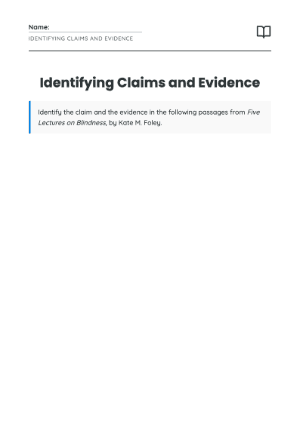
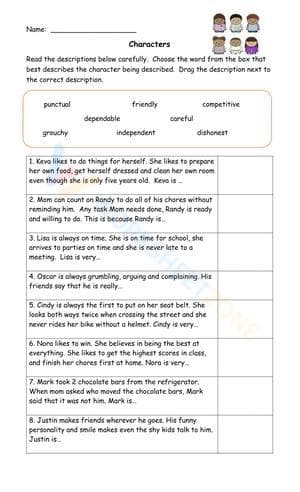
These writing organization worksheets give teachers a ready set of planning tools — graphic organizers, paragraph frames, outline templates, and transition-word reference charts — that move students from loose brainstorming into structured drafts across narrative, expository, and persuasive modes. The set covers structure at every level: single-paragraph development for early writers, multi-paragraph frameworks for middle grades, and reverse-outline practice for high schoolers working on longer research assignments. Every worksheet targets a specific structural skill, which makes the set useful for direct instruction, independent practice, and formative assessment checks.
What's Inside the Set
Elementary worksheets center on the hamburger model — topic sentence on top, two or three supporting details in the middle, concluding sentence at the bottom — using a visual that young writers internalize quickly and carry into writing long after the worksheet is gone. Middle-grade worksheets shift to essay-level structure: five-paragraph outline templates, claim-evidence-explanation frames, and sequence charts that ask students to arrange their body paragraphs before writing any prose. High school worksheets add reverse outlining, thesis refinement, and problem-solution structure for persuasive research writing. The range across the set means teachers at different grade levels can find what they need without adapting a tool built for a different developmental stage.
Each worksheet also includes a transition-word reference section. Students who learn organizational structure in isolation — topic sentence here, evidence there — produce paragraphs that feel choppy because they lack the language to connect ideas. The reference gives them vocabulary to show contrast, causation, sequence, and elaboration as logical tools rather than decorative filler. These writing organization worksheets treat transitions as part of structure, not an afterthought that revision handles later.
Where Students Stumble When Organizing a Draft
The most consistent error at the middle-school level is the restated conclusion. Students who complete a five-paragraph essay often end by copying their introduction almost word for word, changing a few phrases. This happens because they understand summary but not synthesis — a conclusion should state the larger implication of the argument, not replay the opening. The outline templates include a dedicated conclusion-planning space that asks: what does this argument prove beyond itself? That one prompt changes the quality of endings noticeably across a whole class set.
In narrative writing, the recurring failure is backstory front-loading. A student writing about a conflict between two friends spends the first third of the piece explaining how the friendship began, pushing the inciting incident past the point where most readers are still paying attention. Story map worksheets address this by asking students to identify the inciting event first, then build context backward. In expository writing, the pattern shifts: students bury their strongest supporting point in the middle body paragraph because they wrote it last in their outline. Teaching students to treat outline arrangement as a persuasive decision — not just a container for ideas — is the lesson these organizers open the door to.
How to Work These Worksheets Into Your Lesson Plans
The most productive placement is the class period before a draft is due. Rather than sending students home to plan on their own, have them complete an organizer in class while you circulate and check. A five-minute organizer review catches thesis confusion and unsupported body paragraph claims before the student has committed to a draft — and it surfaces far more structural problems than a full round of revision after the fact.
These writing organization worksheets also work well as Monday warm-ups during a writing unit. A ten-minute planning exercise at the start of the week — using a topic unrelated to the graded assignment — builds the planning habit without the pressure of evaluation. By Thursday, students reach for the organizer format more automatically because it has become familiar procedure rather than an obstacle before "real" writing.
Adjusting the Worksheets for Different Writers in the Room
For students who freeze at blank space, the most useful adjustment is pre-populating part of the organizer. Write the topic sentence in the top box and ask the student to generate supporting details only. This reduces cognitive load to one specific task — and students who complete that reduced version often attempt the full organizer independently the next time, because they have experienced success with the format rather than failure at the full version.
Advanced writers often find the hamburger frame or basic five-paragraph template too rigid once they have internalized the underlying logic. For them, the reverse-outline worksheet presents the right level of challenge: they draft freely, then map what they actually wrote onto an organizer and check paragraph order and thesis alignment after the fact. Students at both ends of the range are working on structure — just entering the task from different positions.
Standard Alignment
These resources align with CCSS.ELA-Literacy.W.4.4 and W.5.4, which require students to produce writing organized appropriately for task, purpose, and audience — the same expectation the paragraph and essay organizers build toward. At the middle school level, CCSS.ELA-Literacy.W.6.1b addresses the use of transitional words and phrases to create cohesion in argument writing, which the transition-reference component addresses directly. Teachers who use these worksheets alongside explicit instruction in text structure will find that the organizer formats reinforce the same paragraph logic the standards call for, rather than replacing instruction with a fill-in form.
Frequently Asked Questions
Are these worksheets useful across writing genres, or mainly for expository work?
The set covers narrative, expository, and persuasive writing. Story maps and sequence charts handle narrative and creative assignments; five-paragraph outline templates and claim-evidence-explanation frames target expository and argument writing. Genre-specific framing on each worksheet makes it straightforward to assign the right format for the task at hand.
At what grade level do students typically move from paragraph organizers to full essay outlines?
Most students make this shift in fourth or fifth grade, when multi-paragraph writing becomes a regular expectation. The hamburger model holds through third grade for most writers; by fourth, students who have internalized single-paragraph structure are ready for the five-paragraph template with separate planning spaces for the introduction, each body paragraph, and the conclusion.
Can students use these tools when preparing for timed, on-demand writing assessments?
Regular practice with these writing organization worksheets builds a planning habit that transfers to test conditions even when the physical worksheet is not available. Students who have used the organizer formats repeatedly approach on-demand tasks with an internalized framework — they mentally block out the same sections they have practiced filling in. That transfer is worth making explicit: tell students before the assessment that the organizer structure now lives in their head.















 Interactive Worksheet Maker
 Quiz Maker
 Word Search Maker
 Crossword Puzzle Maker
 Word Scramble Generator
 Sentence Scramble Generator
 Handwriting Worksheet Generator
 Name Tracing Generator
 Fill In The Blank Generator