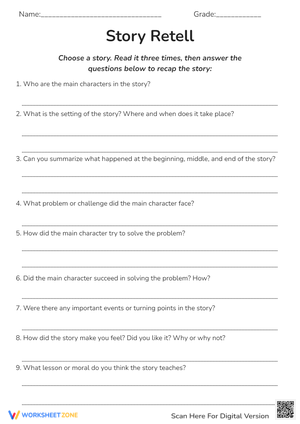
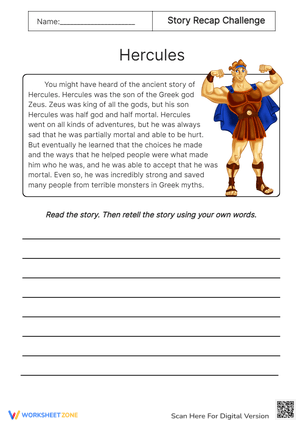
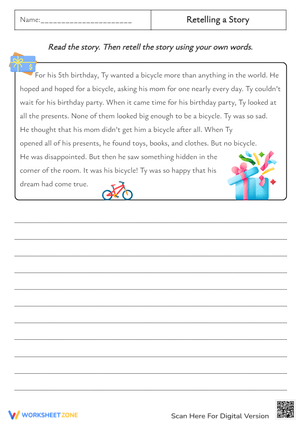
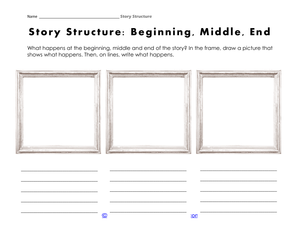
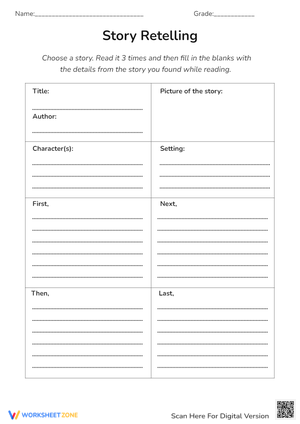
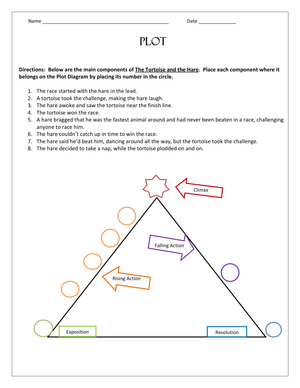
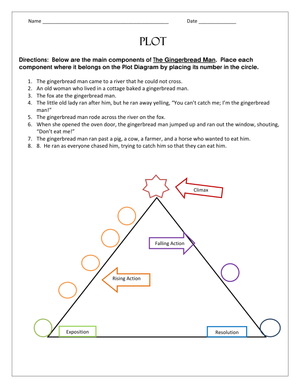
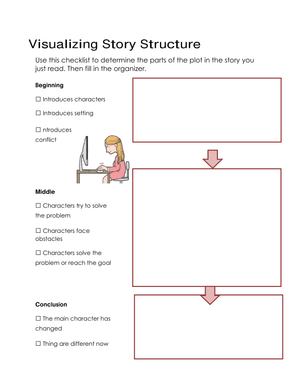
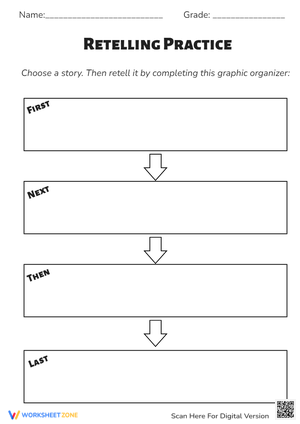
Story elements worksheets ask students to identify and describe the parts that make a piece of fiction work: character, setting, plot, conflict, and theme. For US elementary teachers, these five components are the backbone of reading comprehension in the literature block. When a second grader can name who a story is about, where it happens, and what problem drives the action, retelling and summarizing become far easier. That is the real payoff of consistent story elements practice, and it is why so many reading teachers keep a stack of these sheets on hand all year.
Match worksheets to the grade-level standards
The biggest mistake teachers make with story elements worksheets is using the same rigor for every grade. The Common Core Reading: Literature standards actually spell out a clear progression, and your worksheet choice should follow it.
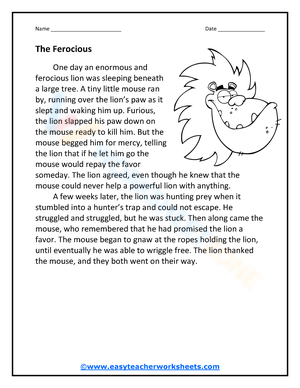
In Grade 2, CCSS.ELA-LITERACY.RL.2.3 asks students to describe how characters respond to major events and challenges. Worksheets at this level should stay concrete: who did what, and how did they react. In Grade 3, RL.3.3 raises the bar, asking students to describe characters' traits, motivations, and feelings and explain how their actions move the plot forward. By Grade 4, RL.4.3 expects students to describe a character, setting, or event in depth, drawing on specific details from the text.
Here is the pattern most teachers miss: the standards shift from observable response in Grade 2 to inferred motivation in Grade 3 to text-cited depth in Grade 4. A worksheet that only asks how a character feels works for second grade but under-challenges a fourth grader, who should be quoting evidence. When you sort your worksheet bank by that inference demand rather than by topic, differentiation gets much simpler.
According to the Common Core State Standards Initiative, RL.3.3 asks third graders to describe characters' traits, motivations, and feelings and explain how their actions contribute to the sequence of events. That single standard bundles three distinct skills, which is why many teachers split it across several worksheets during a unit instead of expecting mastery from one page.
Which story element to teach first
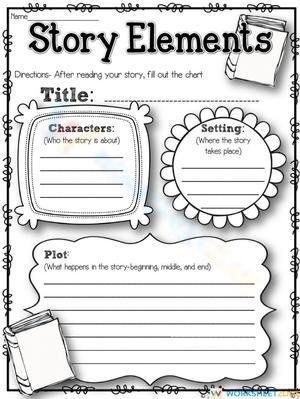
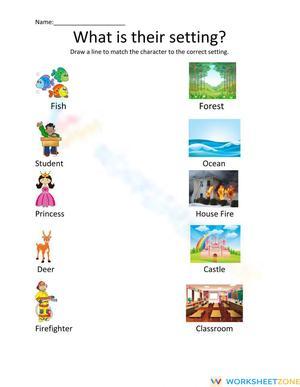
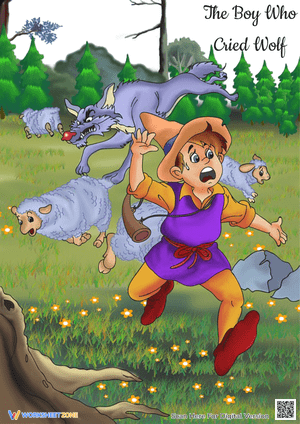
Character and setting are the natural entry points because they are the most concrete. Students can point to a character in the illustration and name the place a story happens without much inference. Plot comes next, usually framed as beginning, middle, and end or as a problem-and-solution structure. Conflict and theme are the heaviest lifts and belong later in the sequence, once students can reliably track what characters want and what gets in their way.
A practical order for a unit looks like this:
- Character: who the story is about and what they are like
- Setting: where and when the events happen
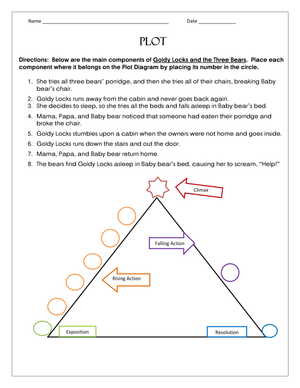
- Plot: the sequence of major events
- Conflict: the central problem the character faces
- Theme: the lesson or big idea the story leaves behind
Teaching them in this order means each worksheet builds on the last, and students are not asked to infer theme before they can even track the plot.
Classroom Implementation
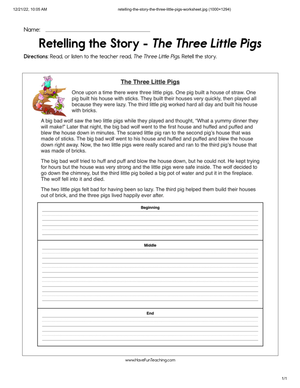
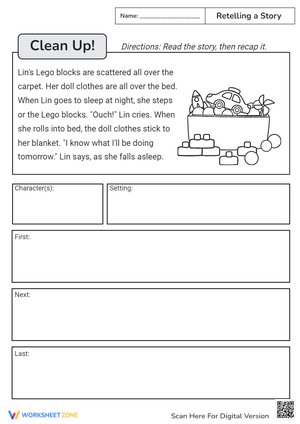
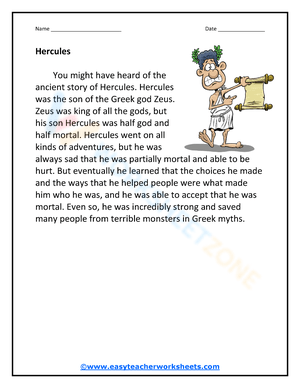
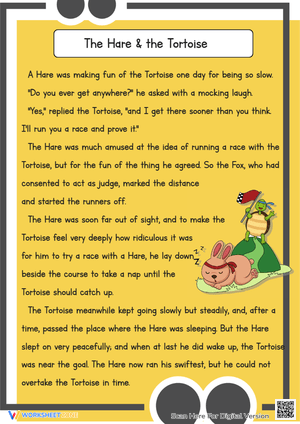
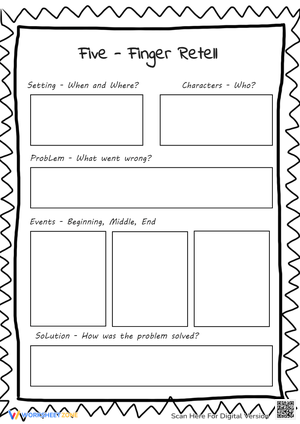
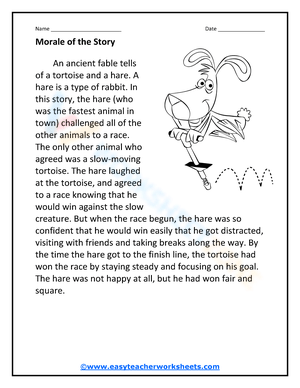
Story elements worksheets work best when they are attached to a text students have actually read, not used as standalone busywork. Pair a story map with your read-aloud so the whole class fills in elements together during the first week, then release the same organizer for independent reading once the routine is familiar.
During a literacy block, a single-element focus sheet makes an efficient exit ticket. After a ten-minute mini-lesson on character traits, hand students a half-page worksheet and ask them to list two traits and the evidence behind each. You get a quick formative read on who understood the lesson before they leave the carpet.
Keep a small bank of blank story maps laminated at a station so students can practice with any book from your classroom library. The repetition matters more than the specific title.
Connecting story elements to narrative writing
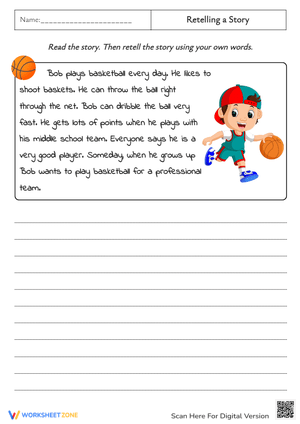
Identifying story elements in what students read directly supports what they write. When a class analyzes how an author built a character's motivation or set up a central conflict in a mentor text, those same moves become options in their own narratives. A worksheet that has students map the elements of a favorite picture book doubles as a planning template for their next story.
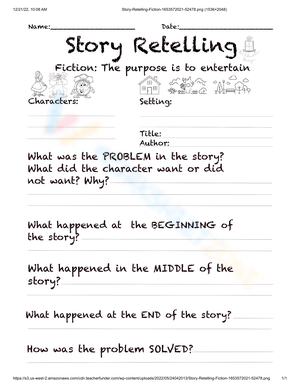
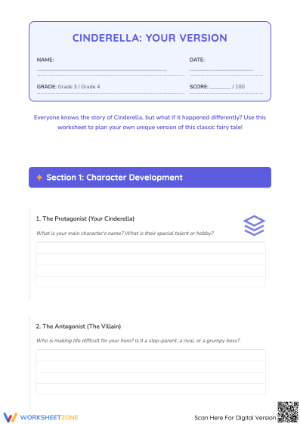
Try flipping a story map into a writing organizer: instead of finding the elements in a text, students fill in the character, setting, problem, and resolution they plan to write. The vocabulary they built during reading practice carries straight into drafting, and their stories gain structure they might otherwise skip.
Frequently asked questions
1. What grade levels are story elements worksheets appropriate for?
They fit across K-5, with the heaviest use in grades 2-4. Early readers work with character and setting using picture support, while upper-elementary students handle motivation, conflict, and theme with text evidence. Match the worksheet's inference demand to the grade rather than reusing one sheet for everyone.
2. Which story element should teachers prioritize first?
Start with character and setting because they are the most concrete and require the least inference. Move to plot, then conflict, and save theme for last. This order lets each skill build on the previous one instead of asking students to infer big ideas before they can track events.
3. How can story elements worksheets be used in small-group reading intervention?
Use them as both practice and diagnosis. Have students complete a story map after reading a short passage, and watch which element stalls them. Simplify the sheet to two or three elements, add sentence starters, and expand it as students gain confidence.
4. How do story elements worksheets align with Common Core Reading: Literature standards?
They map directly onto the RL.3 progression: RL.2.3 for character response, RL.3.3 for traits and motivation, and RL.4.3 for in-depth, text-cited description. Choosing worksheets that match each standard's inference level keeps practice aligned with grade-level expectations.
5. How can teachers use story elements worksheets to support narrative writing?
Turn a reading organizer into a writing planner. After students map elements in a mentor text, have them fill in the same categories for a story they intend to write. The shared vocabulary gives their drafts clearer structure and stronger characters.












 Interactive Worksheet Maker
 Quiz Maker
 Word Search Maker
 Crossword Puzzle Maker
 Word Scramble Generator
 Sentence Scramble Generator
 Handwriting Worksheet Generator
 Name Tracing Generator
 Fill In The Blank Generator