


























Views
Downloads


Expository Writing Guide: Essential Essay Draft Organizer
Paste this activity's link or code into your existing LMS (Google Classroom, Canvas, Teams, Schoology, Moodle, etc.).
Students can open and work on the activity right away, with no student login required.
You'll still be able to track student progress and results from your teacher account.
This comprehensive expository writing resource guides students through the entire composition process, from initial brainstorming to final revision. By providing a structured framework for informative texts, it ensures students develop clear thesis statements and supporting evidence. This tool transforms abstract writing concepts into a manageable, step-by-step workflow for middle-grade learners.
At a Glance
- Grade: 4-7 · Subject: ELA
- Standard:
CCSS.ELA-LITERACY.W.5.2— Write informative texts to examine a topic and convey ideas clearly- Skill Focus: Expository Essay Structure
- Format: 4 pages · 1 project · Revision rubric included · PDF
- Best For: Multi-day writing workshop and essay planning
- Time: 60–90 minutes
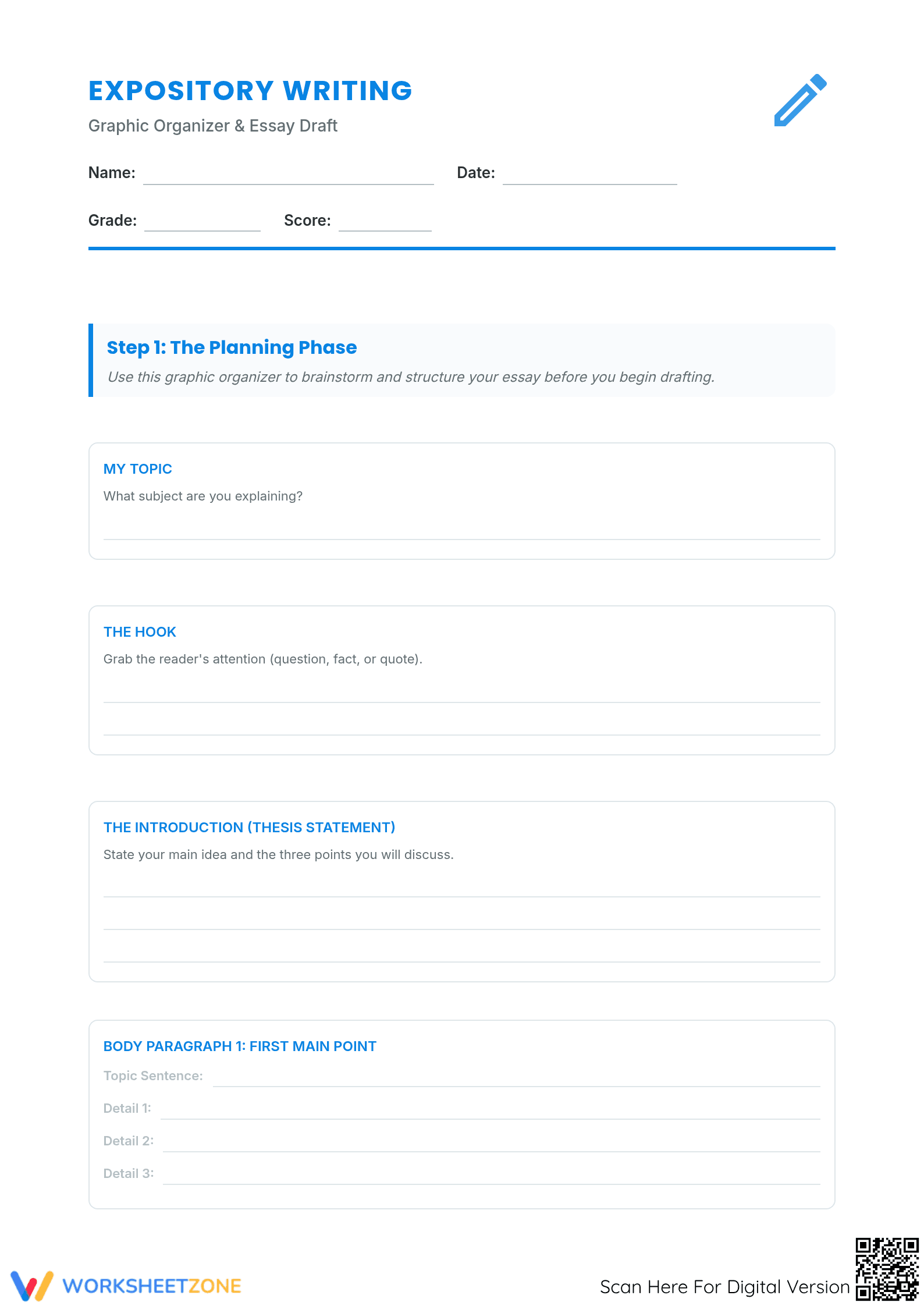
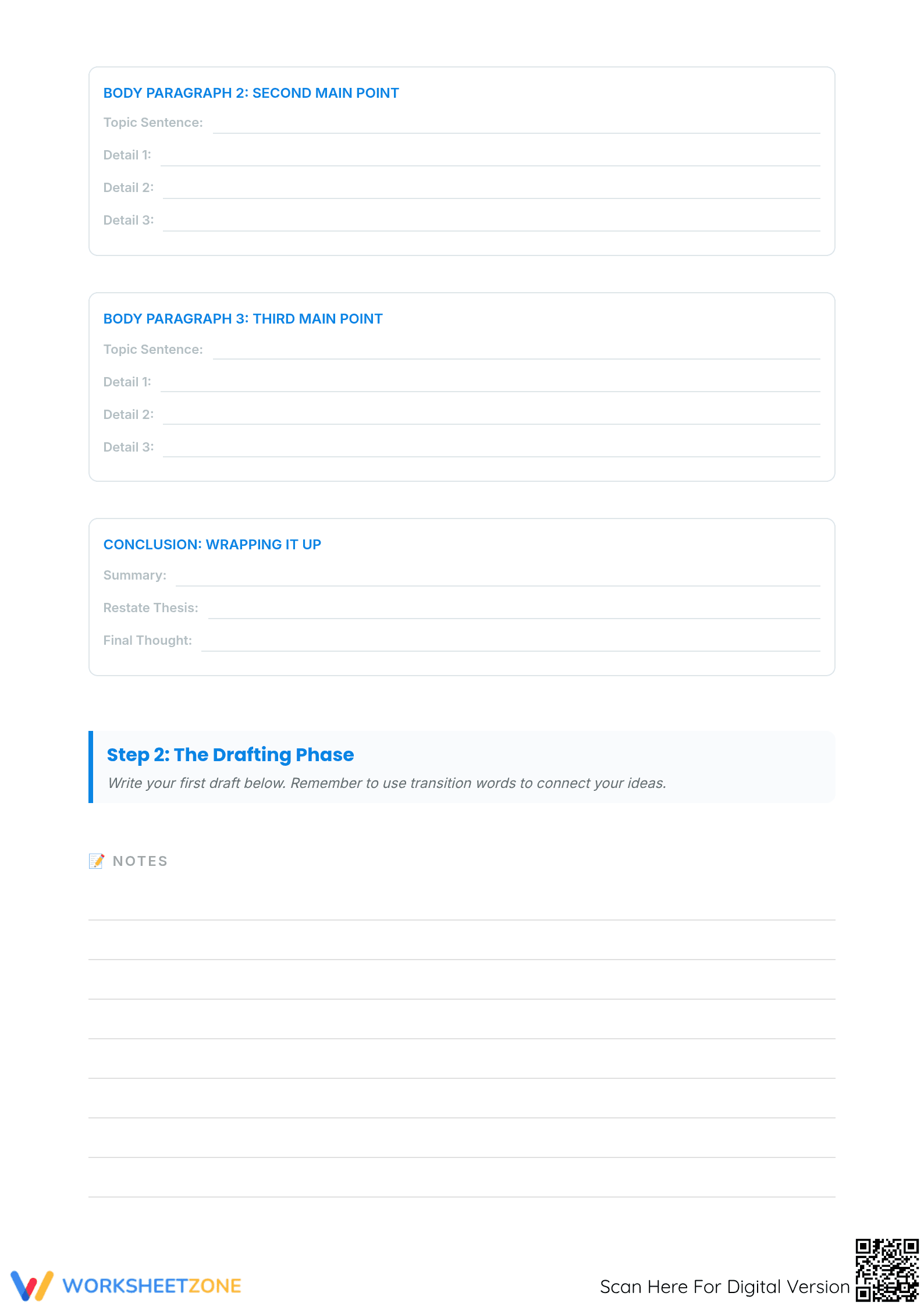
The 4-page PDF contains a detailed graphic organizer for the planning phase, dedicated drafting pages, and a final revision checklist. Students are prompted to identify their topic, craft a hook, and develop a three-point thesis statement. The organizer includes specific sections for three body paragraphs, each requiring a topic sentence and three supporting details, followed by a conclusion block for summarizing and restating the thesis.
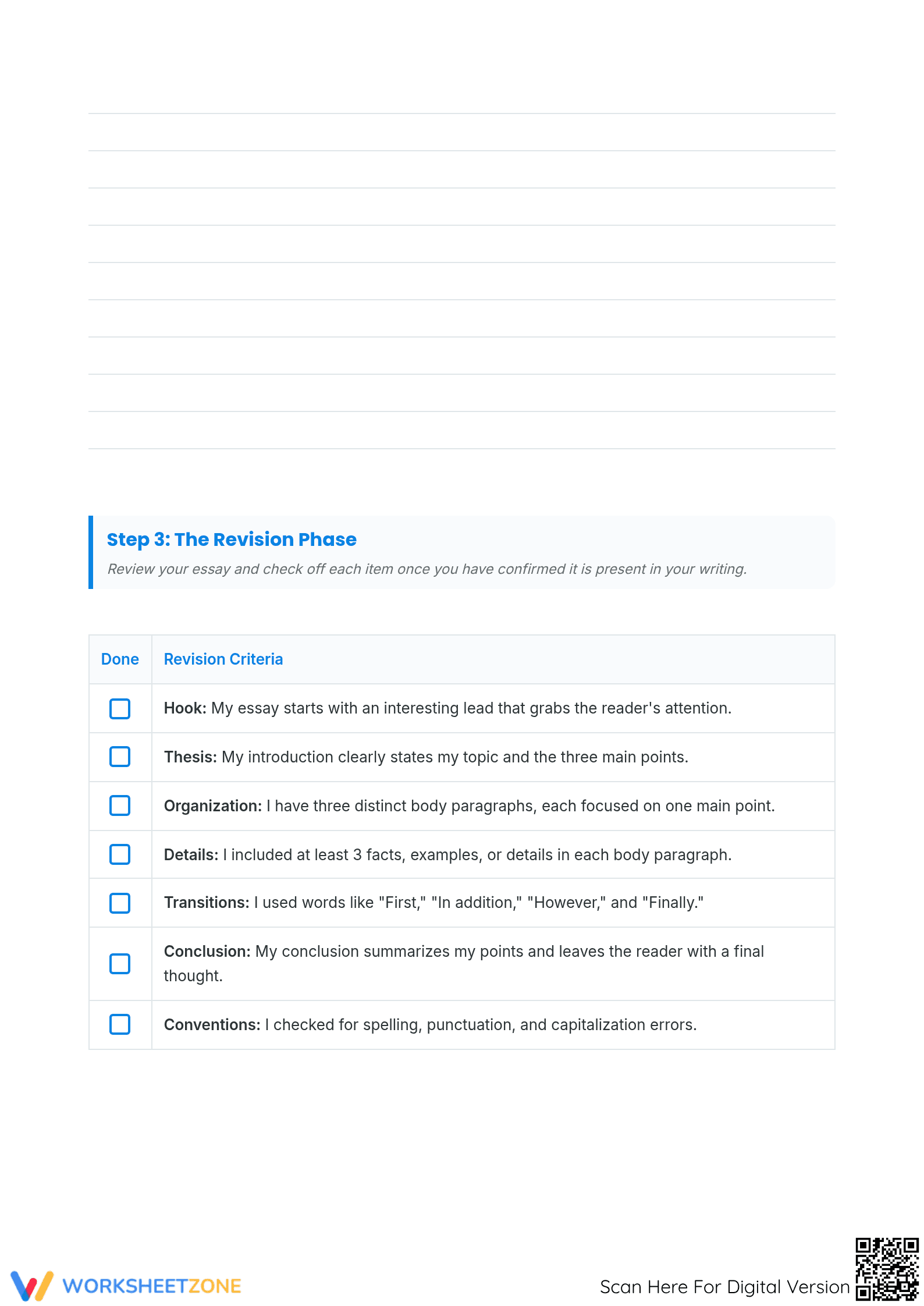
This resource provides clear evidence of student mastery through its integrated revision criteria. The checklist on page 4 allows students to self-assess against specific benchmarks: hook effectiveness, thesis clarity, organizational logic, and the use of transition words like "First" and "Finally." Teachers can use these completed checklists to provide targeted feedback or enter scores directly into gradebooks, tracking progress toward informational writing proficiency.
The primary focus is `CCSS.ELA-LITERACY.W.5.2`, which requires students to write informative/explanatory texts to examine a topic and convey ideas and information clearly. The worksheet supports this by scaffolding the grouping of related information and the development of the topic with facts and definitions. Both standard codes can be copied directly into lesson plans, IEP goals, or district curriculum mapping tools.
Use this during the "We Do" phase of a writing unit after introducing the concept of expository essays. It serves as a bridge between direct instruction and independent drafting. Formatively assess students by reviewing their graphic organizers before they begin the drafting phase to ensure their three main points are distinct and supported. Expect the full process to take 60 to 90 minutes.
This is designed for Grade 4 through Grade 7 students, particularly those who require visual scaffolding. It pairs naturally with an anchor chart on transition words or a mentor text analysis lesson.
According to the Fisher & Frey (2014) framework for gradual release of responsibility, providing structured scaffolds like graphic organizers is essential for moving students toward independent writing proficiency. This 4-page resource aligns with CCSS.ELA-LITERACY.W.5.2 by breaking down the complex task of expository writing into discrete, manageable phases: planning, drafting, and revising. Research from EdReports 2024 emphasizes that high-quality writing instruction must include explicit opportunities for students to organize their thoughts and revise their work based on specific criteria. By integrating a revision checklist directly into the workflow, this worksheet ensures that students engage in the metacognitive processes necessary for writing growth. The inclusion of specific prompts for hooks, thesis statements, and transitions addresses common gaps in middle-grade writing, providing the necessary support for students to produce clear and coherent informative texts.


