


























Views
Downloads


Expository Writing Worksheet | Grade 4-7 Essential
Paste this activity's link or code into your existing LMS (Google Classroom, Canvas, Teams, Schoology, Moodle, etc.).
Students can open and work on the activity right away, with no student login required.
You'll still be able to track student progress and results from your teacher account.
This comprehensive expository writing worksheet guides students through the entire process of composing an informative essay centered on a personal role model. By breaking down the complex task of writing into manageable brainstorming and drafting phases, students learn to organize their thoughts logically before committing to a final draft. This resource ensures students produce a structured, three-part essay that meets middle-grade expectations.
At a Glance
- Grade: 4-7 · Subject: English Language Arts
- Standard:
CCSS.ELA-LITERACY.W.4.2— Write informative/explanatory texts to examine a topic and convey ideas and information clearly- Skill Focus: Essay structure and planning
- Format: 3 pages · 8 tasks · No answer key · PDF
- Best For: Independent writing practice or sub plans
- Time: 45–60 minutes
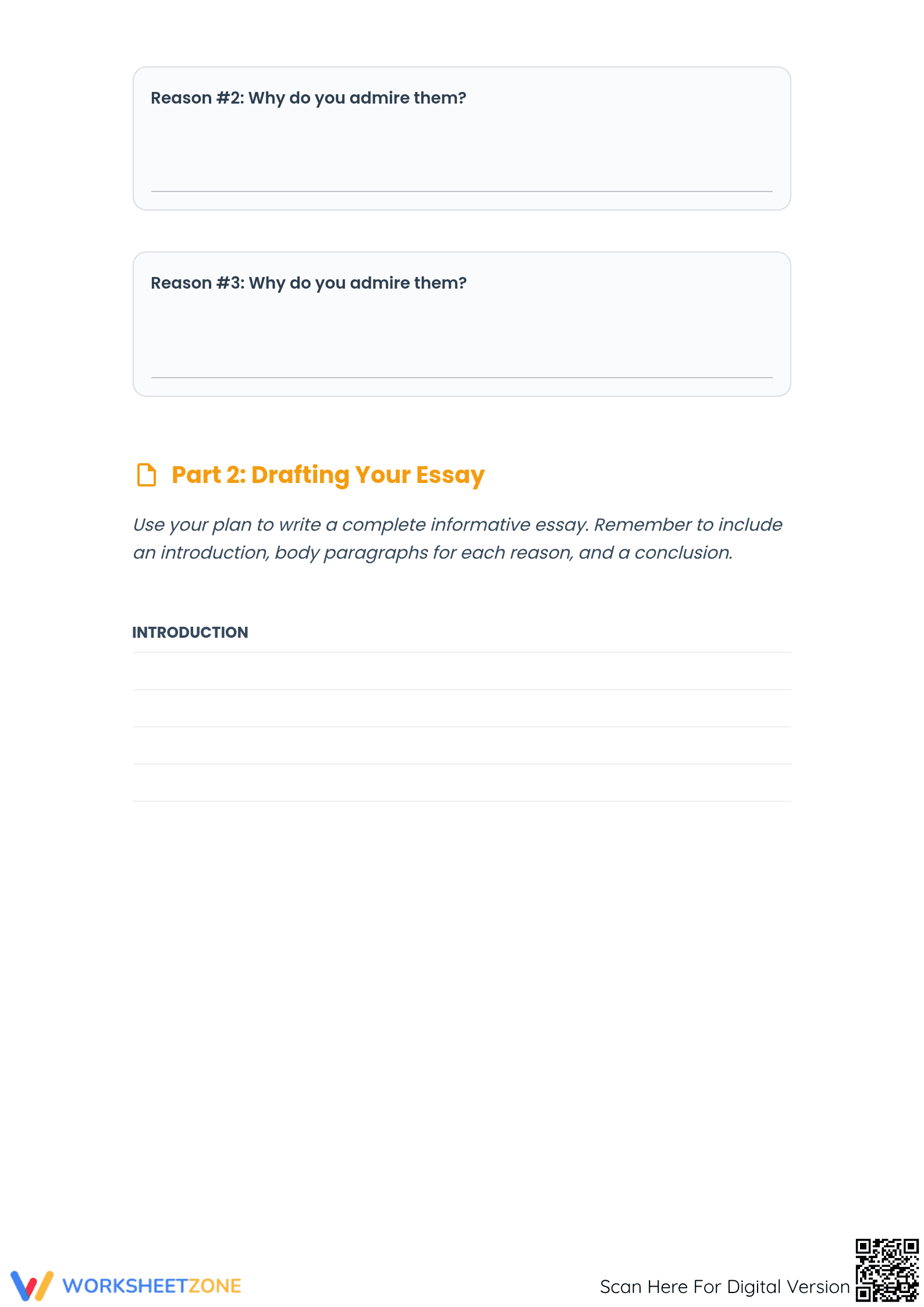
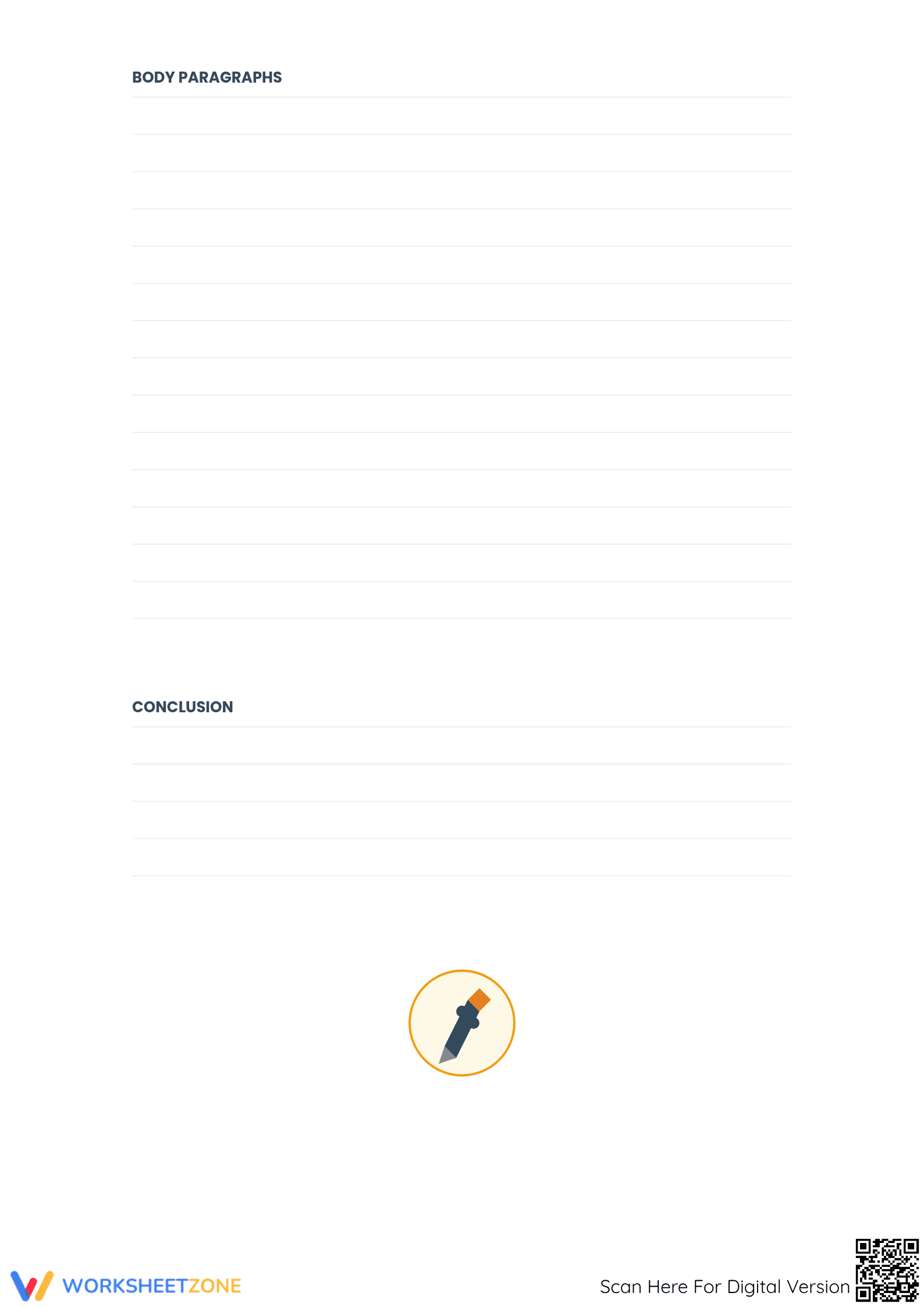
Inside this 3-page PDF, you will find a structured workflow designed to support student independence. The first page features a clear writing prompt about admiring a role model, followed by four specific brainstorming boxes to identify the subject and three supporting reasons. The subsequent pages provide dedicated, lined sections for drafting an introduction, body paragraphs, and a concluding statement, ensuring students follow a standard academic essay format without needing constant teacher intervention.
The zero-prep workflow for this resource is designed for maximum efficiency in the classroom. First, print the three-page packet for each student, which takes less than 60 seconds for a standard class set. Second, distribute the packets and read the role model prompt aloud to ensure clarity. Third, review the completed drafts using your preferred writing rubric. Total teacher preparation time is under 2 minutes, making this an ideal solution for emergency sub plans or busy writing workshop days.
This resource is aligned to `CCSS.ELA-LITERACY.W.4.2`, which requires students to write informative/explanatory texts to examine a topic and convey ideas and information clearly. It specifically supports the development of organizational structures that include a clear introduction, supporting evidence (reasons for admiration), and a concluding section. Both standard codes can be copied directly into lesson plans, IEP goals, or district curriculum mapping tools.
To use this worksheet effectively, assign it during the "independent practice" phase of a writing unit after students have been introduced to the concept of expository structures. It serves as an excellent formative assessment; as students work through the brainstorming boxes, walk around the room to observe if they can generate three distinct, logical reasons for their choice. Most students will complete the planning and drafting within a 45 to 60-minute instructional block.
This worksheet is designed for students in grades 4 through 7 who are refining their ability to write multi-paragraph essays. It is particularly helpful for students who struggle with organization, as the explicit section headers prevent them from skipping essential essay components. Pair this resource with a mentor text about a famous historical figure to provide a concrete example of expository writing before students begin their own personal drafts.
Research by Fisher & Frey (2014) emphasizes the importance of scaffolded writing tasks that move students from planning to independent drafting. This worksheet applies those principles by providing a clear organizational framework that reduces cognitive load during the initial writing phase. By utilizing the `CCSS.ELA-LITERACY.W.4.2` standard, the resource ensures that students are practicing the specific skill of conveying information through a structured lens. The 3-page layout provides ample space for students to develop their ideas, which is critical for meeting the depth requirements of upper elementary and middle school writing standards. Educators can rely on this structured approach to build student confidence in expository composition, ensuring that every learner has a roadmap to success from the first brainstormed thought to the final concluding sentence.


