


























Views
Downloads

Grade 4-7 Expository Writing Planner | Essential Printable
Paste this activity's link or code into your existing LMS (Google Classroom, Canvas, Teams, Schoology, Moodle, etc.).
Students can open and work on the activity right away, with no student login required.
You'll still be able to track student progress and results from your teacher account.
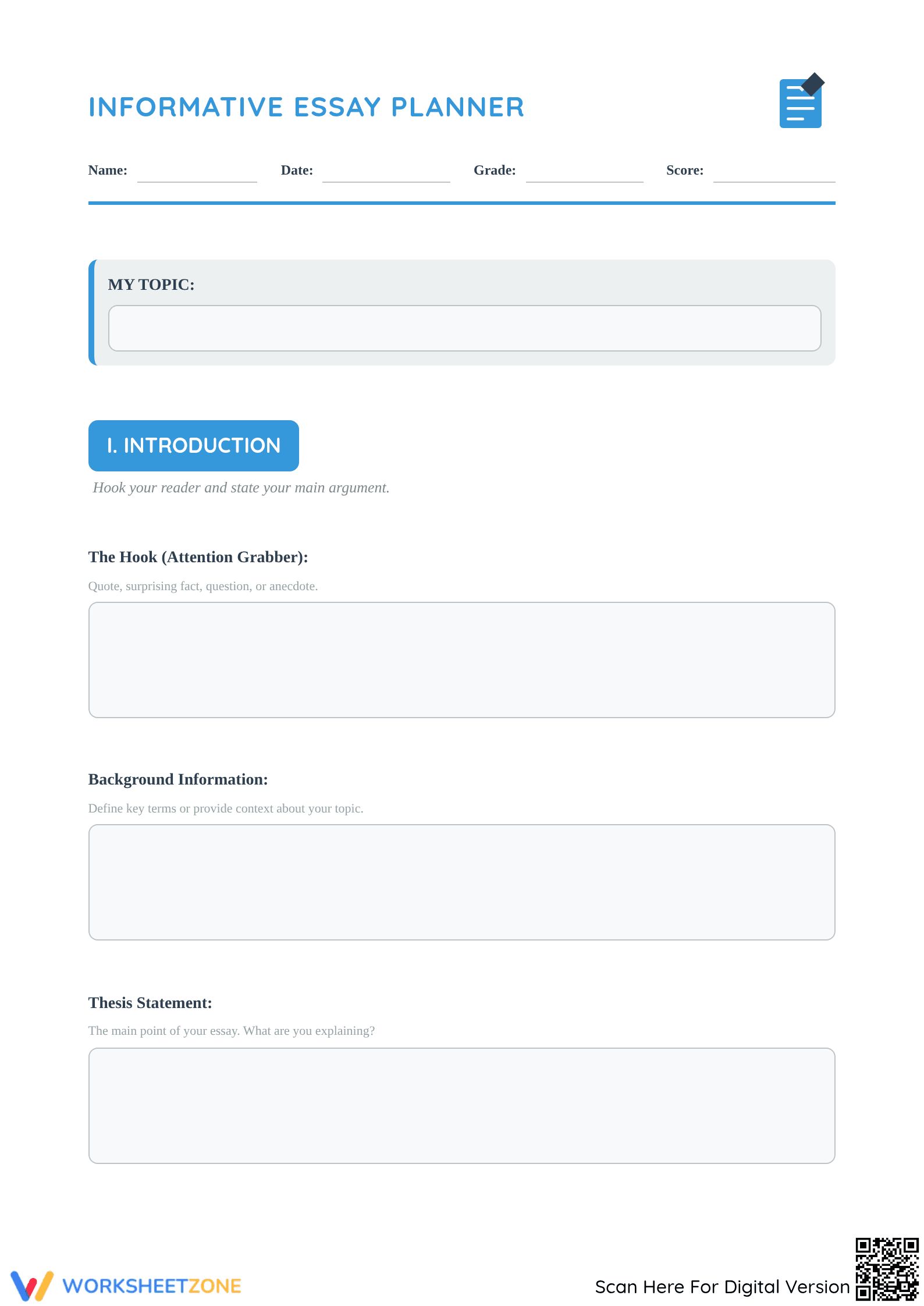
This Grade 4-7 expository writing worksheet provides a comprehensive structural framework for students to plan and draft informative essays. By breaking down complex writing into manageable components, students successfully transition from brainstorming to a completed rough draft. It ensures every essay includes a clear thesis, evidence-based body paragraphs, and a strong conclusion.
At a Glance
- Grade: 4-7 · Subject: ELA Writing
- Standard:
CCSS.ELA-LITERACY.W.4.2— Write informative texts to examine a topic and convey ideas clearly- Skill Focus: Essay Structure & Planning
- Format: 4 pages · 18 planning fields · No-prep · PDF
- Best For: Scaffolding the informative writing process
- Time: 45–90 minutes
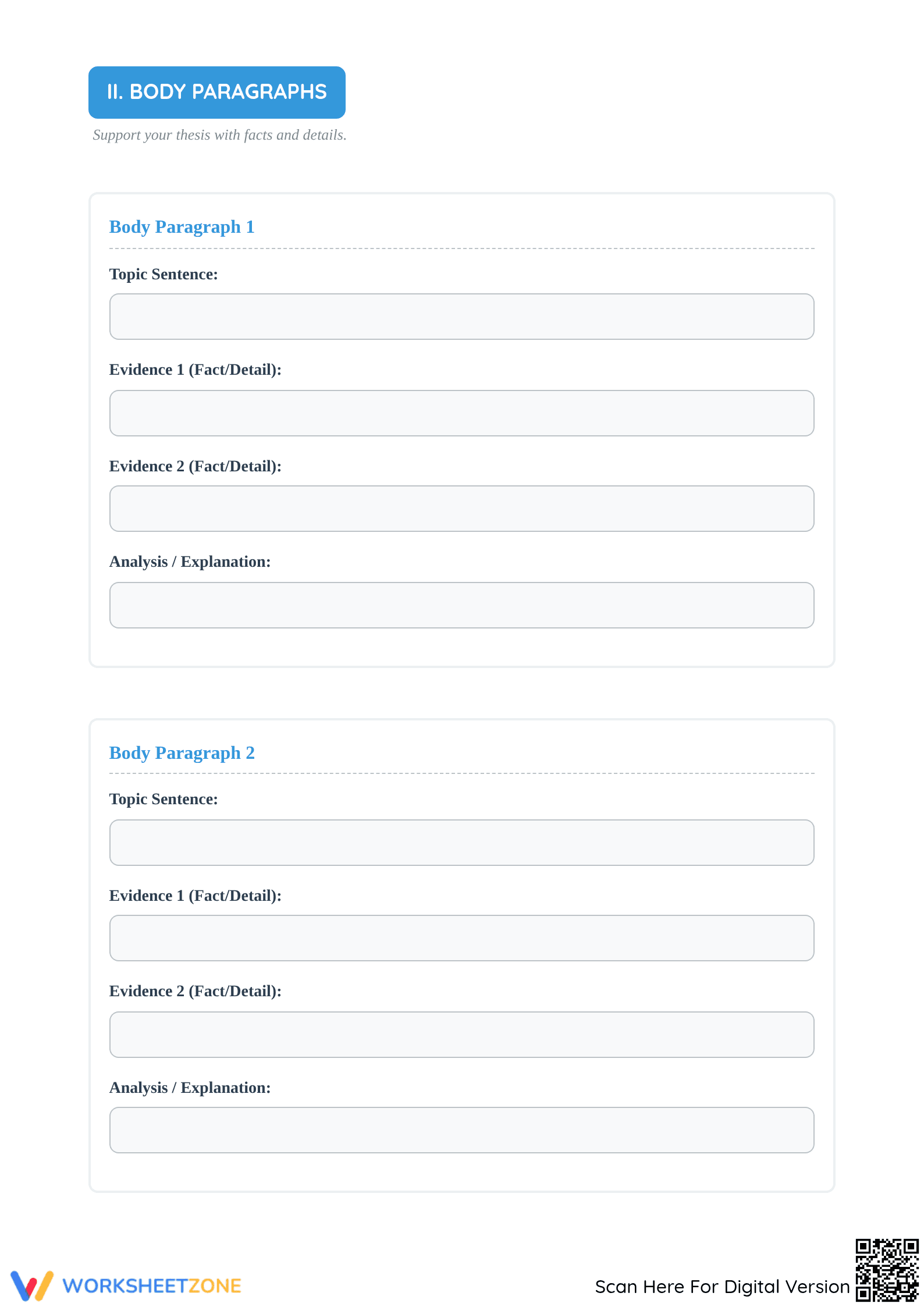
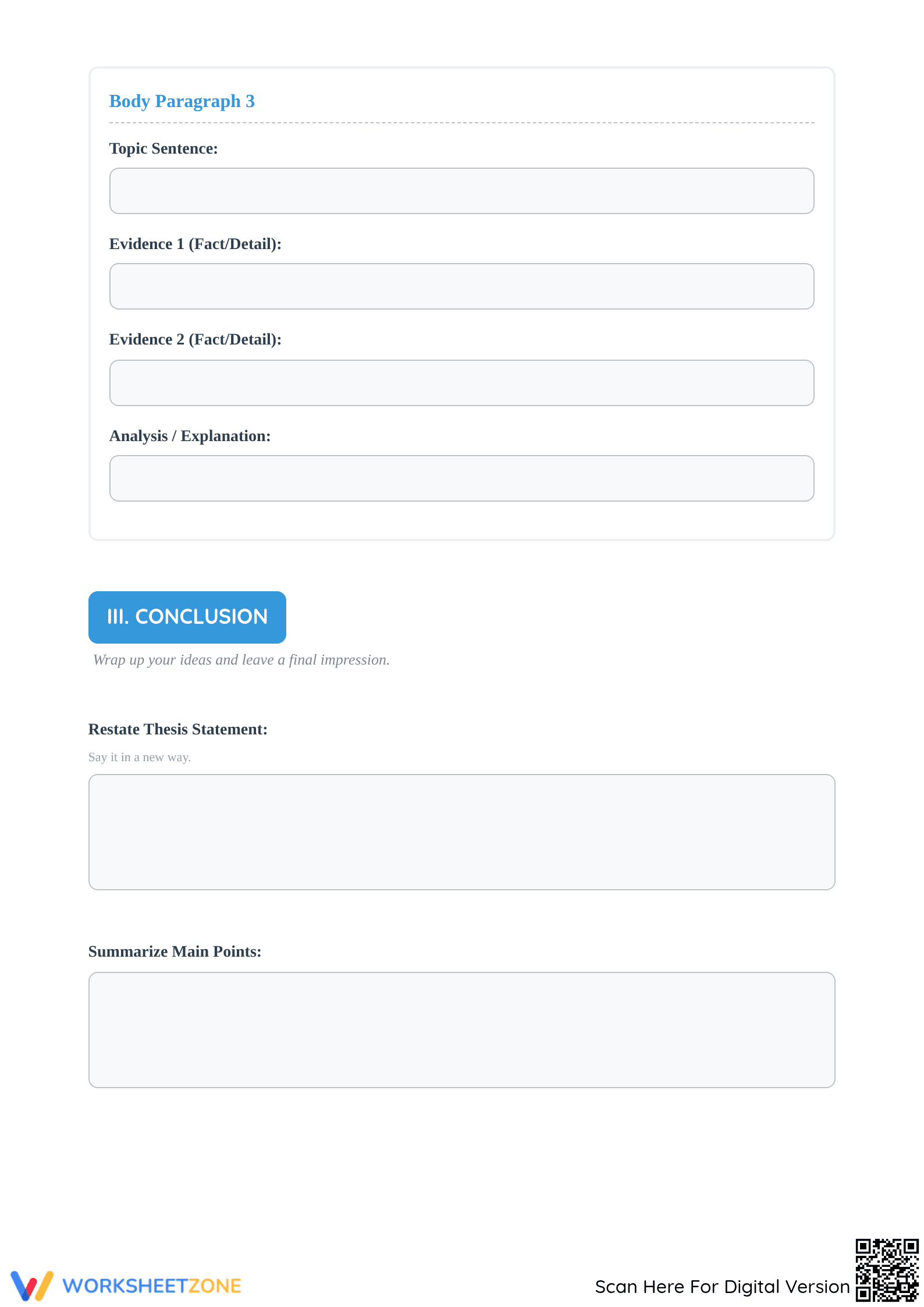
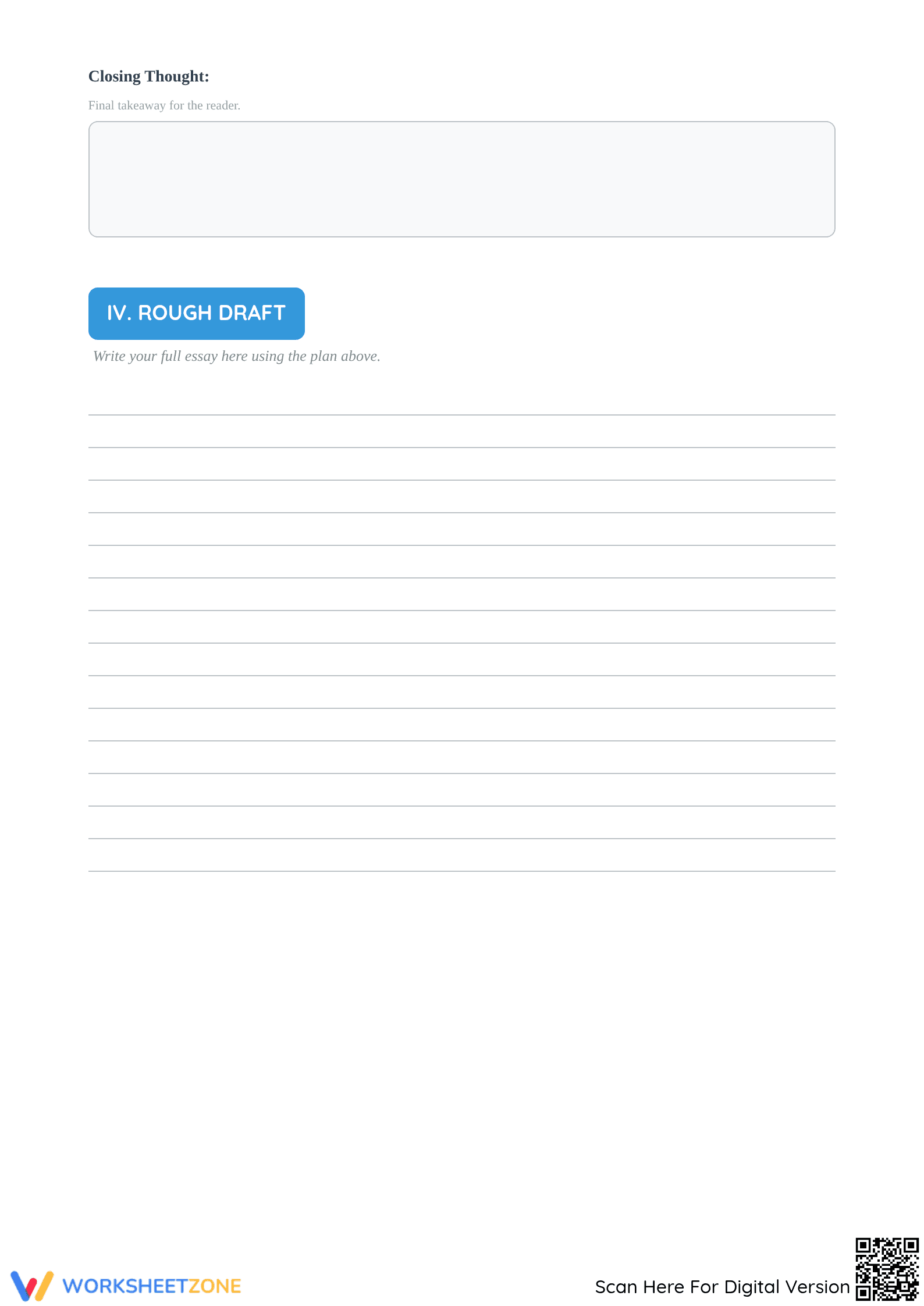
This 4-page PDF includes a dedicated Informative Essay Planner and a lined Rough Draft page. The planner features specific sections for the introduction (hook, background, thesis), three distinct body paragraph blocks (topic sentences, evidence, and analysis), and a conclusion section. The structured layout acts as a visual guide, ensuring students do not skip critical elements of expository prose while organizing their research and thoughts.
Zero-Prep Workflow:
- Print (1 minute): Select the 4-page PDF and print enough copies for your class.
- Distribute (1 minute): Hand out the packets during the pre-writing phase of your informative unit.
- Review (Ongoing): Use the structured boxes to quickly check student progress before they move to the final draft.
This resource requires zero teacher setup and is ideal for sub plans or independent writing centers.
The primary focus is CCSS.ELA-LITERACY.W.4.2, which requires students to "Write informative/explanatory texts to examine a topic and convey ideas and information clearly." This worksheet supports this by providing the organizational structure needed to group related information and include formatting, illustrations, and multimedia when useful. Both standard codes can be copied directly into lesson plans, IEP goals, or district curriculum mapping tools.
Use this planner during the "We Do" or "You Do" phase of a writing workshop. After introducing the concept of a thesis statement, have students fill out the first page to solidify their argument. It also serves as a formative assessment tool; by scanning the "Evidence" boxes in the body paragraph sections, teachers can immediately identify students who need more research support. Completion typically takes 45 to 90 minutes depending on research depth.
This resource is designed for upper elementary and middle school students (Grades 4-7) who are developing their formal writing voice. It is particularly effective for English Language Learners (ELLs) and students with executive functioning challenges who benefit from clear, segmented tasks. Pair this with a mentor text or an anchor chart on transition words for a complete writing lesson.
According to the RAND AIRS 2024 report on literacy instruction, providing explicit organizational scaffolds significantly improves the quality of student writing in the middle grades. This worksheet aligns with those findings by operationalizing the CCSS.ELA-LITERACY.W.4.2 standard into a step-by-step planning sequence. By requiring students to isolate their hook, thesis, and evidence before drafting, the resource reduces cognitive load and prevents common structural errors. Research from Fisher & Frey (2014) emphasizes that the gradual release of responsibility is most effective when students have clear templates to bridge the gap between instruction and independent application. This 4-page planner serves as that bridge, ensuring that students in grades 4 through 7 can produce coherent, evidence-based expository texts. The inclusion of a rough draft page allows for a seamless transition from planning to execution, a critical step in the writing process identified by NAEP as a marker of proficient writers.


