I remember watching a first-grader grip her pencil so tightly her knuckles turned white. She was determined to trace a simple curved line, but her hand shook and the pencil dragged across the page in a jagged, frustrated scrawl. That moment reminded me why fine motor skills pencil control worksheets matter so much in the early years of education. They are not just about holding a writing tool - they are about building the physical confidence a child needs to succeed on paper.
Pencil control develops through the small muscles of the hand and fingers working in coordination with the eyes. When children practice guiding a pencil along lines, curves, loops, and zigzag patterns, those repetitions strengthen the neural pathways that later support letter formation and legible writing. Teachers and parents who introduce structured printable practice at the right developmental stage often see a marked difference in how children approach writing tasks. The child who once avoided pencil activities starts leaning into the page with focus rather than frustration.
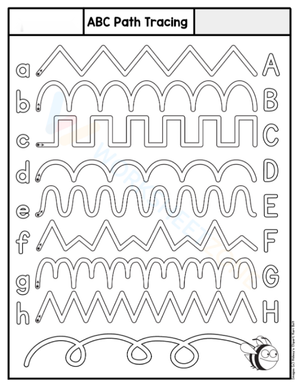
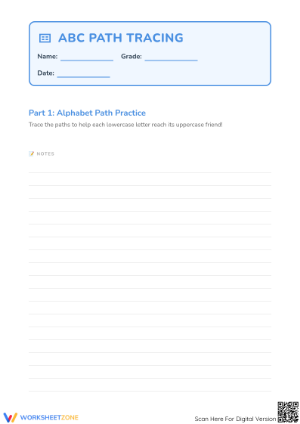
At Worksheetzone, the fine motor skills pencil control worksheets are designed with developmentally appropriate patterns that move from simple straight lines to more complex looping and spiraling paths. Each printable page gives students a low-pressure opportunity to build grip strength, improve hand-eye coordination, and practice the directional strokes that form the foundation of every letter in the alphabet. Educators can pair these worksheet activities with classroom lessons or send them home as targeted practice for students who need extra support. You can explore more ideas for building these foundational skills through fine motor activities for preschoolers on the Worksheetzone blog.
Parents who work with their children at home often tell us the same thing: structured practice with the right tools removes the guesswork. Instead of wondering whether a particular drawing or coloring activity is helping, a parent can sit beside their child with a focused pencil control page and watch real progress happen stroke by stroke. For families preparing children for kindergarten or supporting a child who is behind their peers, these worksheets bring targeted, printable practice into any home environment. Teachers looking for complementary classroom resources may also find value in handwriting activities for kindergarten, which extend pencil skills into early letter and word formation.
Every child deserves the chance to pick up a pencil and feel capable. Whether you are a classroom teacher building a writing skills unit, a parent coaching at the kitchen table, or a specialist working one-on-one with a student, fine motor skills pencil control worksheets give you a clear, printable path forward. Start with the patterns that match your learner's current level and build from there - small gains in pencil control lead to big leaps in writing confidence.
Frequently Asked Questions
Question 1: What age group benefits most from pencil control worksheets?
Children between ages three and seven typically benefit the most from fine motor skills pencil control worksheets. Preschoolers begin with wide, simple lines, while kindergarteners and first graders progress to curves, loops, and complex patterns. Teachers and parents can adjust the difficulty level to match each child's current developmental stage and pencil grip strength.
Question 2: How often should students practice with pencil with pencil control worksheets?
Short, consistent sessions of five to ten minutes daily produce better results than occasional long practice periods. Teachers often incorporate one worksheet page at the start of a writing lesson as a warm-up activity. Parents can build a similar routine at home, especially in the weeks before a child begins formal handwriting instruction in the classroom.
Question 3: What types of patterns are included in pencil control worksheets?
Pencil control worksheets typically include straight horizontal and vertical lines, diagonal strokes, gentle curves, zigzag paths, loops, spirals, and enclosed shapes. These pattern types directly correspond to the strokes used in letter formation, so students who practice them are also building the muscle memory needed for writing both print and cursive letters.
Question 4: How do pencil control worksheets support classroom writing goals?
Pencil control worksheets give teachers a structured, printable tool for addressing grip and stroke deficits before they affect handwriting quality. By isolating specific movement patterns, these worksheets help students gain the motor control that transfers directly to letter writing, enabling cleaner letter formation, steadier lines, and greater writing stamina across all subjects and grade levels.












 Interactive Worksheet Maker
 Quiz Maker
 Word Search Maker
 Crossword Puzzle Maker
 Word Scramble Generator
 Sentence Scramble Generator
 Handwriting Worksheet Generator
 Name Tracing Generator
 Fill In The Blank Generator