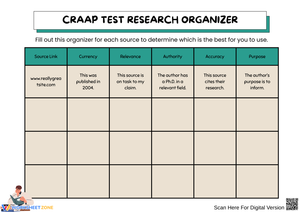
These research strategies worksheets resources give middle and high school teachers something genuinely hard to find: structured practice materials that move students through the full research process as a sequence of distinct, teachable skills — from forming a focused inquiry question through evaluating sources for hidden bias to formatting a citation correctly. The set treats topic development, database navigation, note-taking, bias analysis, and citation as separate competencies, each worthy of dedicated classroom time, rather than folding them all into one vague directive to "go research something."
What Each Worksheet Targets
Six phases of academic research each get their own worksheet, and the skills do not assume each other — a teacher can use the source evaluation worksheet without having used the topic development one, depending on where the class is in a unit:
- Topic development and question formation: Students move from a broad subject area to a focused, arguable inquiry question through KWL charts, synonym mapping, and a preliminary source preview that prevents topic abandonment halfway through a project.
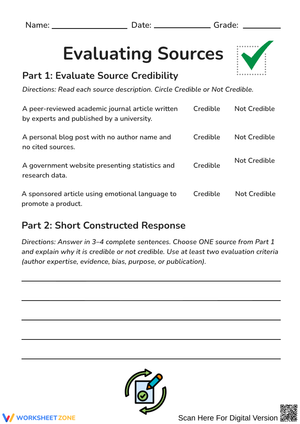
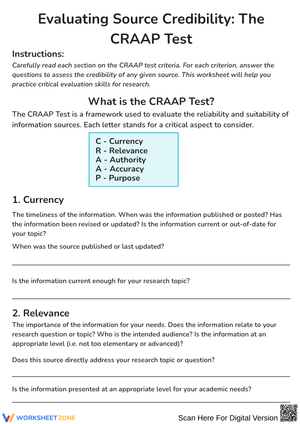
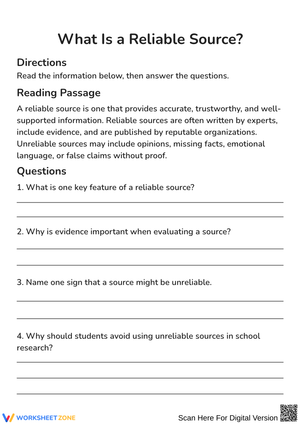
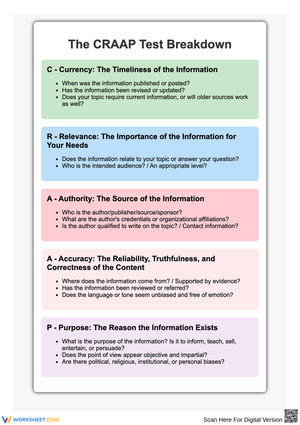
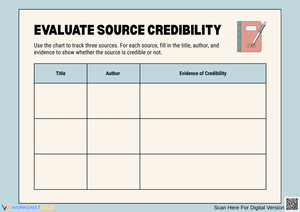
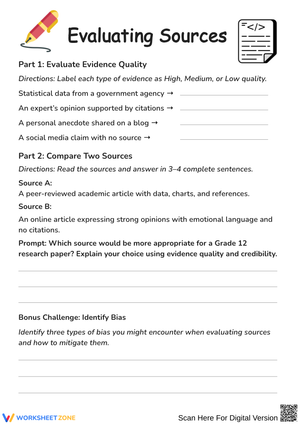
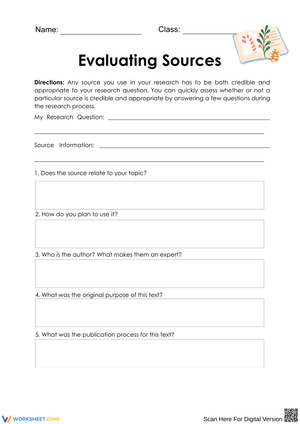
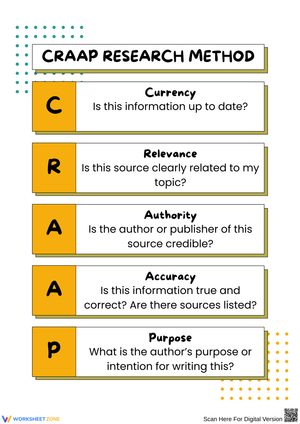
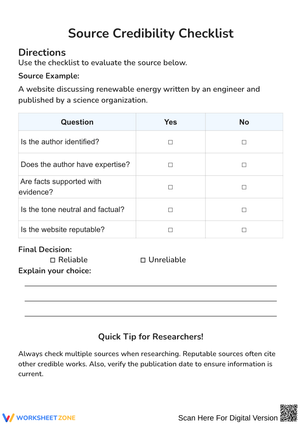
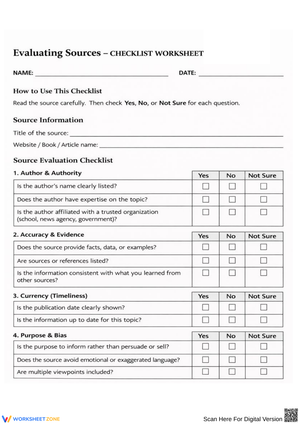
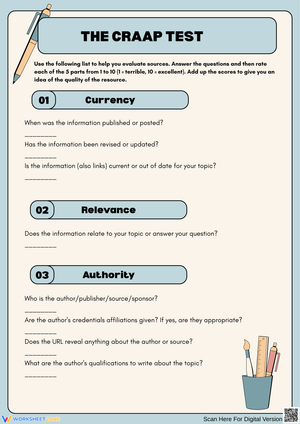
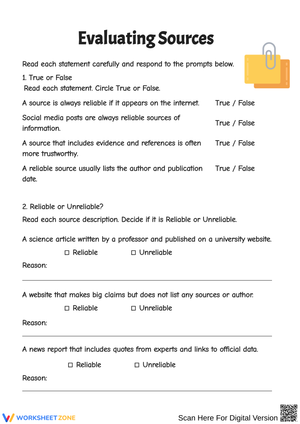
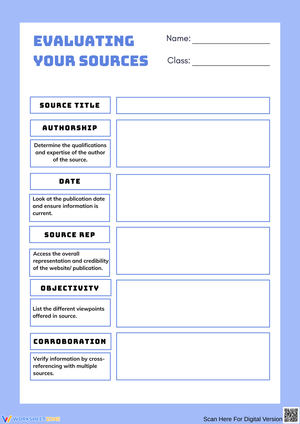
- Source evaluation using the CRAAP framework: Currency, Relevance, Authority, Accuracy, and Purpose are applied as a rubric to a real source the student has actually located — not a hypothetical example.
- Database navigation and Boolean logic: Students break a research question into concept terms, generate synonyms for each, and build a search string before touching the keyboard.
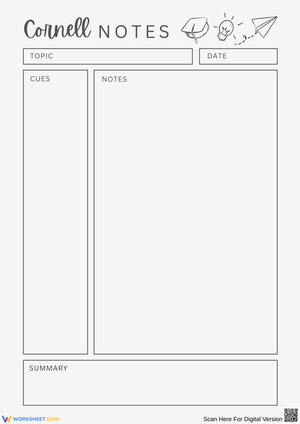
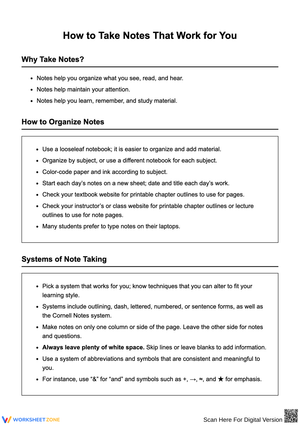
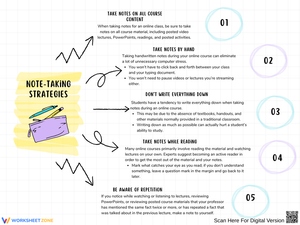
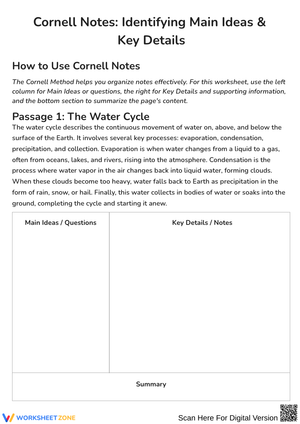
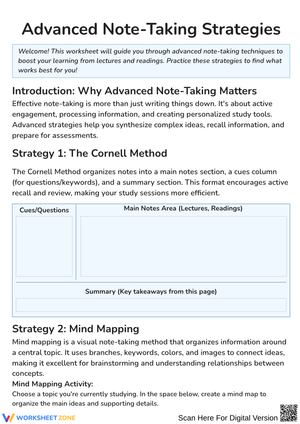
- Structured note-taking: Double-entry formats keep the source's words visually separate from the student's own reactions, with required fields for source title, paragraph or page number, direct quote, and paraphrase.
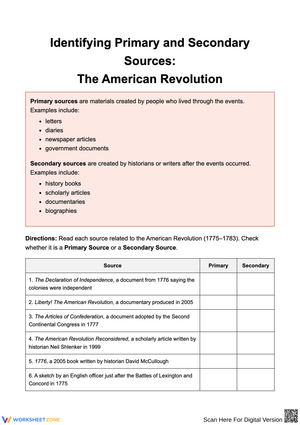
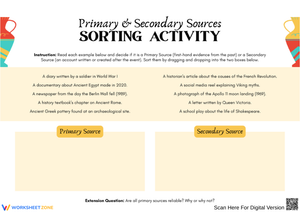
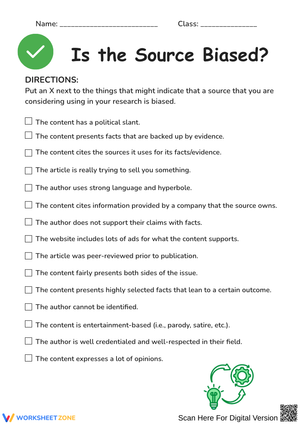
- Bias identification and comparative analysis: Paired excerpts on the same topic ask students to mark loaded language, identify the author's purpose, and note what evidence is absent from each version.
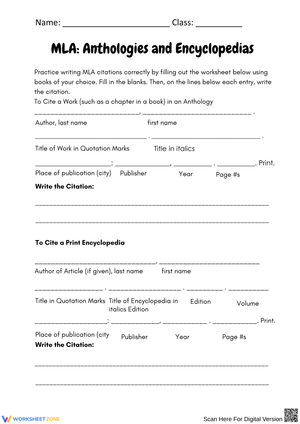
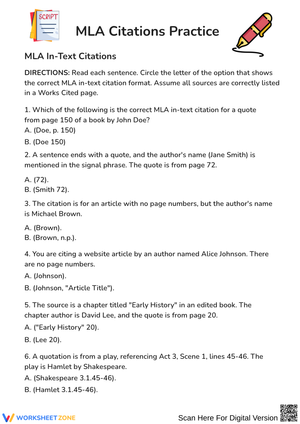
- Citation formatting: MLA and APA exercises break each format into individual fields rather than asking students to replicate a model they don't actually understand.
Frequent Student Errors Worth Watching For and Addressing
The most persistent failure at this level isn't plagiarism — it's scope collapse at the topic development stage. Students arrive with questions that are either assertions ("Social media is harmful to teenagers") or encyclopedia prompts ("What is the history of climate change?"). Neither version requires analysis, which means neither produces the kind of essay the assignment demands. The topic development worksheet addresses this by requiring students to rewrite their question three times, each iteration adding a constraint — a time period, a specific population, a causation angle — until the question genuinely requires a reasoned answer rather than a summary.
Source evaluation produces a different and subtler failure. Students learn to check for a byline and a publication date, then consider the job done. What they miss is the Purpose criterion of the CRAAP framework — the most revealing one. A student researching vaccination policy can locate an article with a credentialed author and a recent date that exists entirely to persuade rather than inform. The evaluation worksheet requires students to navigate to the publishing organization's "About" page and document what they find before marking Purpose as satisfied. That single step catches a category of bias that credential-and-date checks alone will never surface.
Boolean logic generates an observable, predictable failure. Most students type their entire research question into a database search bar — as a full sentence, including articles and prepositions — and then conclude the database has nothing useful. The database search worksheet breaks a sample research question into three concept columns and walks students through building a logical search string before they open any database. Students who found nothing in a professional database on day one will pull six relevant peer-reviewed articles after completing this worksheet, using the exact same database.
Fitting These Worksheets Into a Research Unit Without Losing Momentum
These worksheets serve the unit best as formative checkpoints rather than summative assessments. Collect the topic development worksheet before students leave on day two — not to grade it, but to scan quickly for scope failures and flag four or five examples to work through together the following morning. The ten minutes spent redirecting students at that stage eliminates weeks of essay-level confusion later. Many teachers use this collection moment as an informal conference trigger: any student whose question still reads as a topic sentence gets a two-minute redirect before the next class session begins.
The source evaluation worksheet serves a different classroom function: it creates intentional friction at the exact moment students want to move fastest. When building a source list, students are in accumulation mode — grabbing URLs, skimming abstracts, moving on. Requiring a completed evaluation form for each source a student intends to use slows that process down, and the slowdown is the point. Many teachers include these forms in the final project submission as a process portfolio component, which signals clearly that the research process itself is being assessed, not just the essay it produces.
A research strategies worksheets set also supports a library co-teaching model cleanly. A school librarian and a classroom teacher can divide responsibility without overlap: the librarian runs the database navigation and Boolean logic worksheet during a library period, and the classroom teacher handles note-taking and citation formatting during writing workshop time. This division prevents the situation — familiar to any teacher who has run a research unit — where students receive three slightly contradictory explanations of how to cite a website and conclude that citation rules are arbitrary.
Standard Alignment
The worksheets in this set align directly to CCSS.ELA-LITERACY.W.6-12.7, which requires students to conduct sustained research projects to answer a question or solve a problem. At the 8th grade level specifically, CCSS.ELA-LITERACY.W.8.8 specifies that students gather information from multiple print and digital sources, assess the credibility and accuracy of each source, and quote or paraphrase data selectively while avoiding plagiarism — the exact skills addressed by the source evaluation and note-taking worksheets. The citation exercises support CCSS.ELA-LITERACY.W.6-12.8's requirement to follow a standard format. Teachers in CCSS-aligned states can map each worksheet to a specific strand without modification. For states using alternate ELA frameworks, information literacy and inquiry skills at comparable grade bands typically follow the same instructional sequence, and these worksheets slot into those units without structural changes.
Adjusting the Worksheets for Different Student Levels
Students with executive function challenges or those working through a research assignment in English as a second language benefit from one specific modification to the note-taking worksheet: provide a completed model entry alongside the blank form. Not so students copy it, but because seeing one finished double-entry example removes the paralysis that comes from staring at an unfamiliar template. The blank form alone causes capable students to freeze; the model eliminates that barrier without removing the cognitive work of actually reading and summarizing a source.
Advanced students — particularly those preparing for AP coursework or dual enrollment — can be pushed further on the bias and comparative analysis worksheet. The standard task asks students to identify emotional language in two provided excerpts. An extension task asks students to locate a third source on the same topic independently, apply the same analysis, and write a paragraph explaining which source they would cite and why, including a specific acknowledgment of that source's limitations. Noting the limitations of a source you have chosen to use is a skill most first-year college students haven't developed, and this worksheet is an early opportunity to build it.
For mixed-ability classes, pair students intentionally during the Boolean logic exercise. The database search worksheet is structured so that two students can divide the concept columns and synonym generation, then combine their work to build a search string together. Students who catch on quickly explain their reasoning aloud to a partner, which reinforces their own understanding; students who need more time hear the logic in peer language rather than teacher language, which often lands differently.
Frequently Asked Questions
Can these worksheets be used in subjects other than English?
Yes. The CRAAP evaluation worksheet and the Boolean search worksheet transfer directly to any research assignment — a history document-based question, a science fair background paper, a social studies current events project. The citation worksheets are format-specific, so teachers in STEM courses requiring APA should confirm that version is included before downloading. The note-taking and bias analysis worksheets require no modification for cross-disciplinary use.
How long does each worksheet take to complete?
Most worksheets in the set take 20 to 35 minutes for students working at grade level. The source evaluation worksheet typically takes longer on the first use — closer to 40 minutes — because students need time to actually locate an author's credentials and an organization's "About" page rather than simply noting whether a byline exists. Budget a full class period for the first source evaluation lesson and plan to revisit the worksheet with a different source two to three weeks later. The second pass takes roughly half the time and shows students how much of the process they've internalized without realizing it.
What is the best way to introduce the CRAAP test before students use the evaluation worksheet independently?
Project a source the class can evaluate together — a Wikipedia article on a contested topic, a health information page from a .com domain, a news article from a recognizable outlet — and work through each criterion as a class before students apply the framework to their own sources. The evaluation worksheet works best as a guided-practice follow-up, not as an introduction on its own. Students who apply the worksheet before seeing a modeled example consistently misread the Purpose criterion as the author's topic rather than the author's intent, which undermines the entire evaluation.
Do these worksheets work for students researching online rather than with print sources?
A research strategies worksheets focused on source evaluation is especially relevant for students working online, since digital sources introduce currency, authority, and purpose issues that print materials in a school library have usually already been vetted for. The database navigation worksheet assumes students have access to a subscription database — EBSCO, JSTOR, or a state-provided alternative. If database access is unavailable, the Boolean logic sections still apply directly to Google Scholar and to advanced Google search operators, and teachers can adjust the exercise accordingly without rewriting it from scratch.












 Interactive Worksheet Maker
 Quiz Maker
 Word Search Maker
 Crossword Puzzle Maker
 Word Scramble Generator
 Sentence Scramble Generator
 Handwriting Worksheet Generator
 Name Tracing Generator
 Fill In The Blank Generator