


























Views
Downloads

Types of Expository Writing Worksheet | Grade 6 Printable
Paste this activity's link or code into your existing LMS (Google Classroom, Canvas, Teams, Schoology, Moodle, etc.).
Students can open and work on the activity right away, with no student login required.
You'll still be able to track student progress and results from your teacher account.
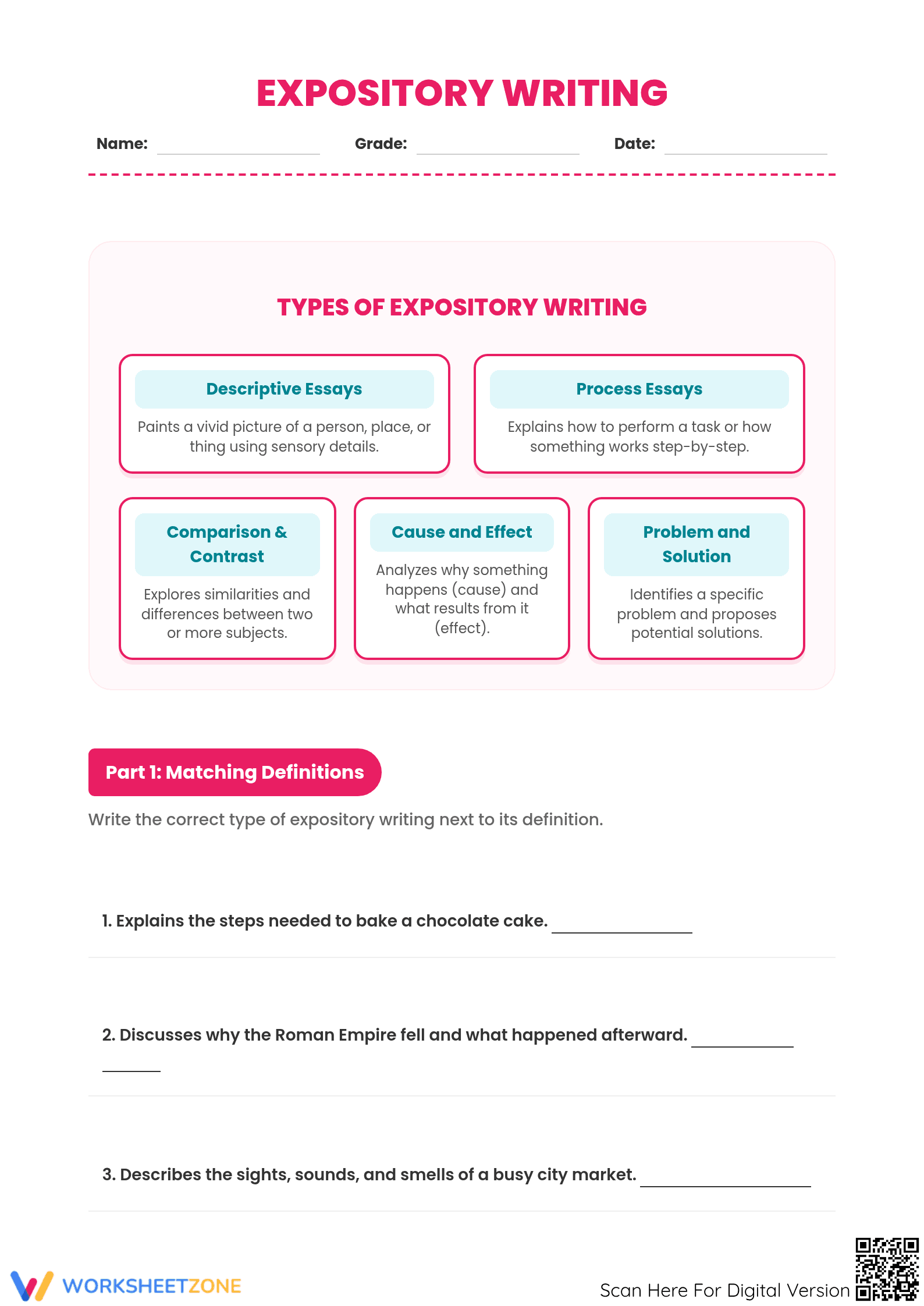
This Grade 6 expository writing worksheet helps students distinguish between five informational text structures. Before drafting essays, learners must understand descriptive, process, comparative, causal, and problem-solution formats. This resource provides clear definitions and immediate application exercises to solidify structural comprehension.
At a Glance
- Grade: 6 · Subject: ELA
- Standard:
CCSS.ELA-LITERACY.W.6.2— Write informative texts to examine a topic- Skill Focus: Identifying Expository Writing Types
- Format: 3 pages · 11 problems · Answer key included · PDF
- Best For: Independent practice and review
- Time: 20–30 minutes
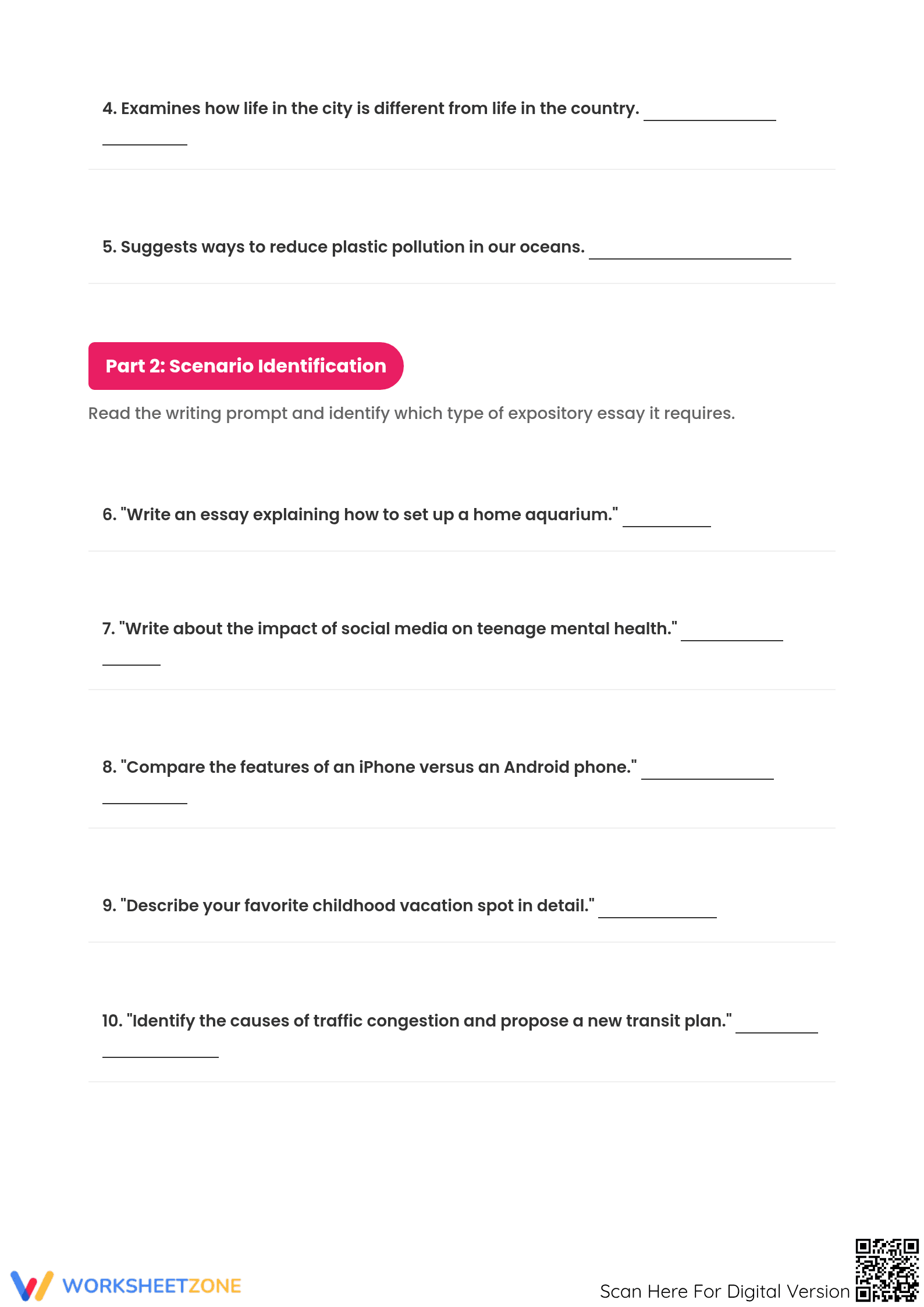
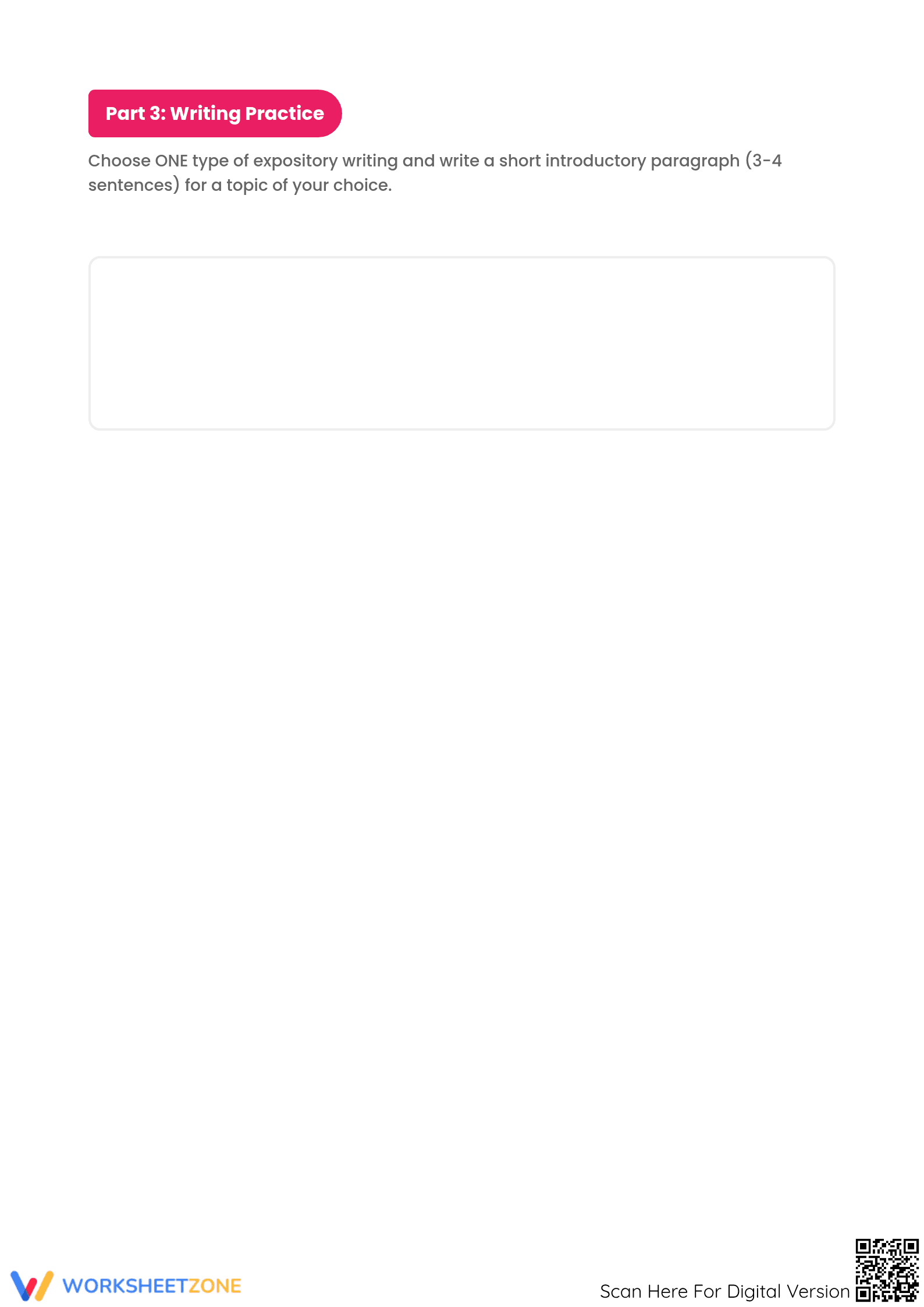
This resource opens with a reference guide defining five types of expository essays. Students then complete three task types across three pages. Part one features five matching questions connecting definitions to essay types. Part two presents five writing prompts, requiring students to identify the appropriate structure. Finally, part three offers writing practice where students draft an introductory paragraph. A complete answer key is provided.
- Guided practice: Students review definitions and match them to explanations, reinforcing foundational vocabulary.
- Supported practice: Learners analyze writing prompts, applying knowledge to determine the best text structure.
- Independent practice: Students synthesize their understanding by drafting a short introductory paragraph.
This gradual-release approach ensures students build confidence through the I Do, We Do, You Do instructional model.
Aligned to CCSS.ELA-LITERACY.W.6.2, this resource supports students as they write informative or explanatory texts to examine a topic and convey ideas. By identifying how structures serve different purposes, students build a foundation for effective composition. Both standard codes can be copied directly into lesson plans, IEP goals, or district curriculum mapping tools.
Deploy this worksheet during the introductory phase of an informative writing unit. It serves as excellent independent practice following a mini-lesson on text structures. As a formative assessment tip, review responses in the scenario identification section to ensure students accurately match prompts to structural formats. Expect completion within 20 to 30 minutes.
Designed for sixth-grade students, this material also functions as a review tool for seventh graders. The built-in reference guide provides excellent scaffolding for students requiring visual aids. Pair this worksheet with mentor texts so students can see these expository structures modeled in published articles.
Mastering informational writing is a critical component of middle school literacy. Aligned with CCSS.ELA-LITERACY.W.6.2, this resource helps students write informative texts to examine a topic by teaching them to identify structural patterns. According to Fisher & Frey (2014), providing explicit instruction on text structures significantly improves reading comprehension and the ability to organize written compositions. When learners distinguish between process, descriptive, comparative, causal, and problem-solution formats, they are equipped to select the most effective framework for their goals. This practice ensures students make intentional choices about presenting information clearly.


