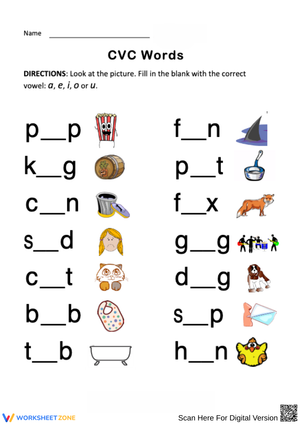
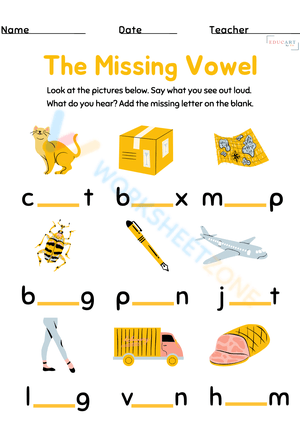
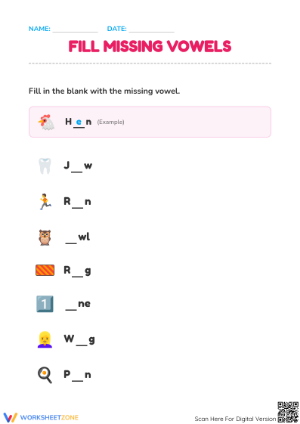
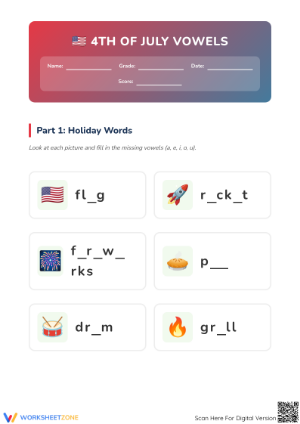
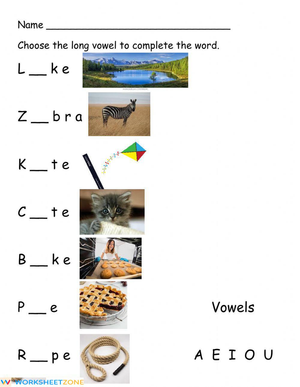
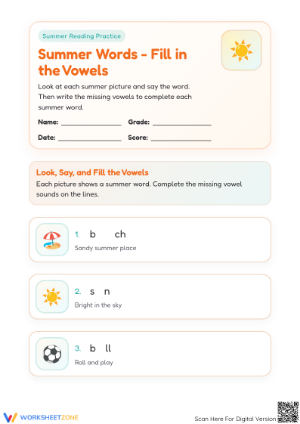
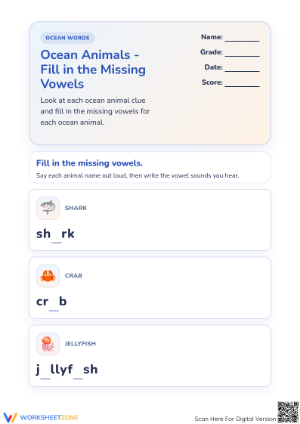
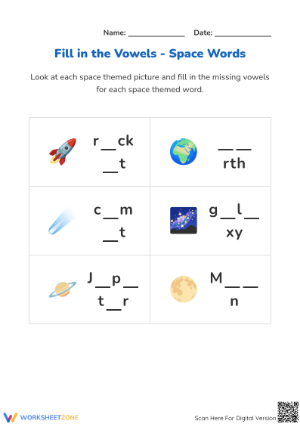
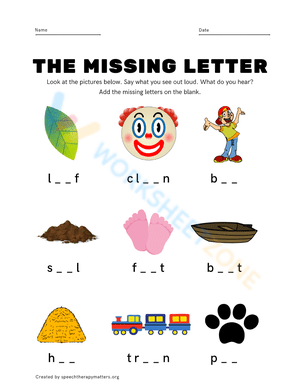
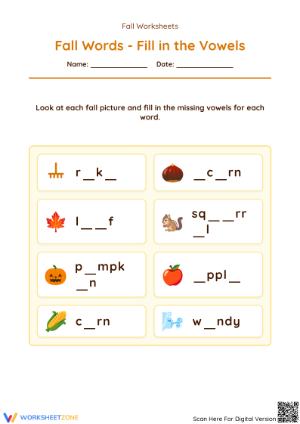
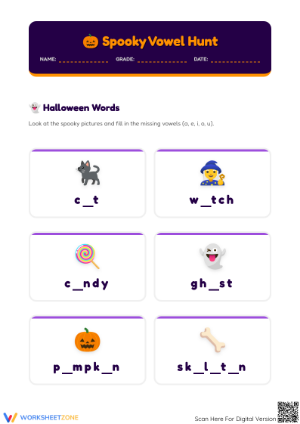
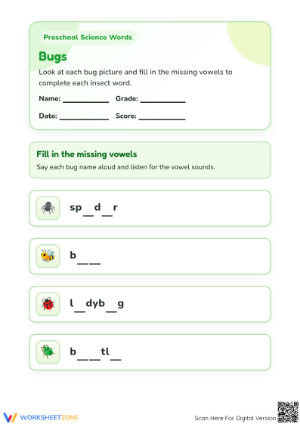
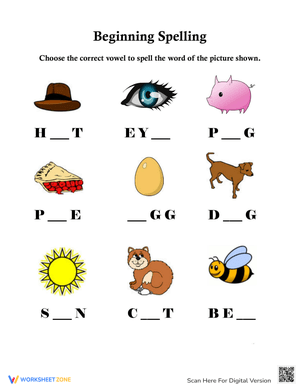
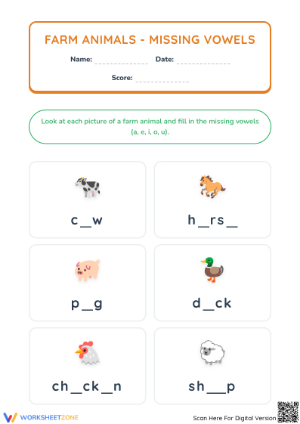
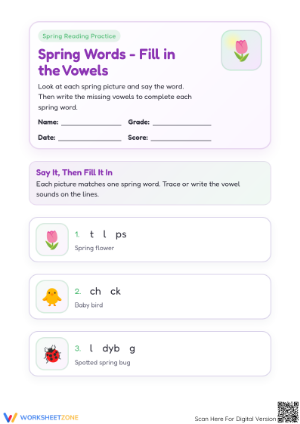
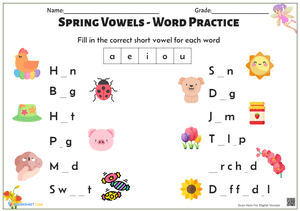
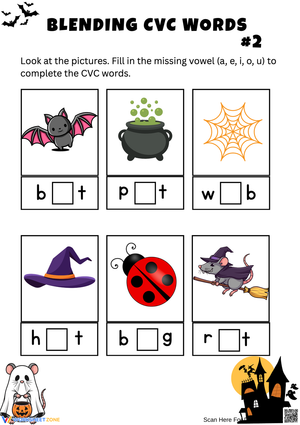
When a first grader stares at "c_t" and can't decide between a, e, or o, you're looking at a gap that missing vowels worksheets are built to close. These fill-in-the-blank tasks strip a CVC word down to its consonants and leave the vowel slot open, forcing students to isolate and produce the medial vowel sound instead of guessing the whole word from context or picture cues. For K-2 teachers and reading interventionists, that isolation is exactly the point: it turns a vague sense that "this student struggles with reading" into a specific, actionable data point about which vowel sounds are actually confused.
Where Missing-Vowel Fill-Ins Fit in a Phonics Scope and Sequence
In a structured, systematic phonics sequence, short-vowel CVC words come first, well before vowel teams, r-controlled vowels, or silent-e patterns. Missing vowels worksheets belong squarely in that early phase. They give students a controlled way to practice one skill at a time: recognizing that "b_g" could be bag, big, or bug, and using vowel sound knowledge (not memorization of whole words) to choose correctly.
Because students who have not yet mastered simple CVC words struggle to benefit from more advanced vowel pattern instruction, it's worth resisting the urge to rush ahead. A few extra weeks of missing-vowel practice in kindergarten or early first grade often pays off later when students hit long-vowel and vowel-team instruction with a firmer decoding base.
Using Missing-Vowel Worksheets as a Quick Formative Check
One of the most practical uses of these worksheets is as a two-minute formative check before you introduce new vowel content. Hand out a short set of CVC words with the vowel removed, and watch which sounds trip students up. A student who reliably fills in a, but freezes or guesses on e and i, is telling you exactly where to focus your next mini-lesson.
This kind of quick check is far less time-consuming than a full phonics inventory, and it can be repeated weekly to track whether targeted instruction is closing the gap. Because the task format stays constant, you're comparing like to like each time, which makes growth (or lack of it) easy to spot.
Classroom Implementation
Missing vowels worksheets are flexible enough to fit almost any part of the school day. Consider these implementation options:
- Use a short set as a warm-up during your phonics block, before introducing a new sound or pattern.
- Rotate a stack into a literacy center so students get independent, self-checking practice while you run small groups.
- Assign a quick set as an early-finisher task so vowel practice happens without extra planning.
- Pull a targeted set into intervention blocks for students flagged by screening or progress-monitoring data.
- Use results as a simple exit ticket to decide who needs a follow-up small group the next day.
Keep sets short, five to ten words is usually enough to get a clear read on a student's vowel knowledge without turning the task into a long, fatiguing worksheet.
Supporting Multilingual Learners with Short-Vowel Sounds
Many multilingual learners come from language backgrounds where vowel sounds are produced differently, or where the same five English vowel letters don't map onto the same short-vowel phonemes. That mismatch can make missing-vowel tasks harder, and also more valuable as a diagnostic. If a student consistently substitutes one vowel sound for another in a pattern that matches their home language's vowel system, that's useful information for planning targeted oral practice alongside the written worksheet.
Pair missing-vowel worksheets with brief oral production practice, saying the word aloud, isolating the vowel sound, then writing the letter, so multilingual learners get both the auditory and visual reinforcement they need before working independently.
Frequently Asked Questions
1. What grade level are missing vowel worksheets appropriate for?
These worksheets work best for kindergarten through early second grade, particularly for students still building CVC decoding skills, and for any older student receiving intervention support around short-vowel confusions.
2. How do missing-vowel worksheets support struggling readers or intervention groups?
They isolate the vowel phoneme so a teacher can pinpoint exactly which sounds a student confuses, then build targeted small-group practice around that specific gap rather than generic review.
3. How often should teachers use vowel fill-in practice each week?
Three to five short sessions a week, five to ten words each, is generally enough to build fluency without turning the task into a lengthy or fatiguing activity for young students.
4. How can teachers use these worksheets to assess specific vowel confusions?
Track which vowel substitutions a student makes across several worksheets; consistent swaps, especially between e/i or o/u, point directly to the sound pair that needs focused instruction.
5. Can missing-vowel worksheets help English language learners with short-vowel sounds?
Yes, when paired with oral practice. Saying the word aloud before writing the vowel helps multilingual learners connect the sound to the letter, which is especially useful when their home language doesn't distinguish English short-vowel sounds the same way.












 Interactive Worksheet Maker
 Quiz Maker
 Word Search Maker
 Crossword Puzzle Maker
 Word Scramble Generator
 Sentence Scramble Generator
 Handwriting Worksheet Generator
 Name Tracing Generator
 Fill In The Blank Generator