Where R-Controlled Vowels Fit in Your Phonics Scope and Sequence
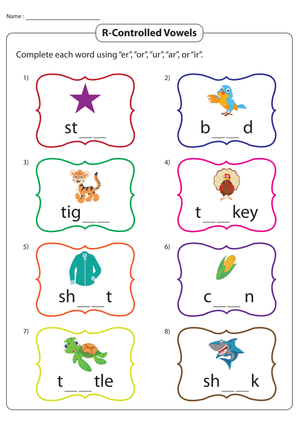
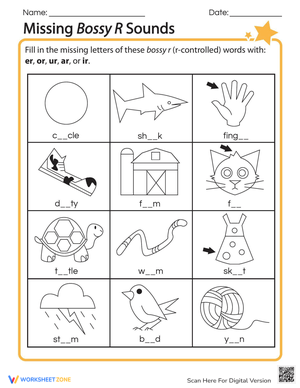
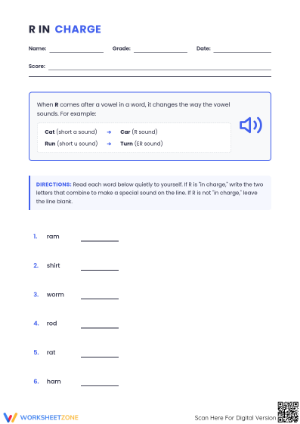
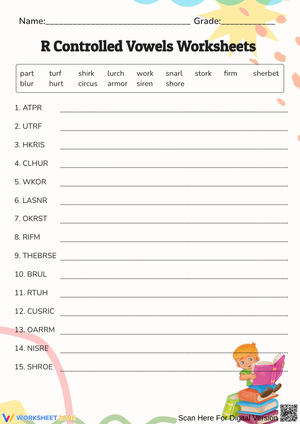
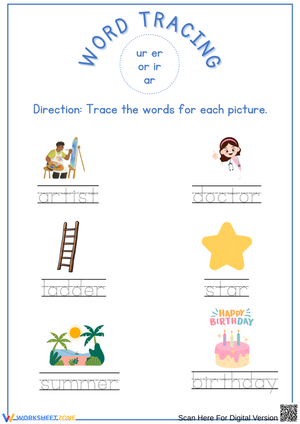
R-controlled vowels usually land at the end of first grade, once students can already decode short-vowel CVC words and a few common digraphs. When a vowel is followed by the letter r, it stops making its usual short or long sound and shifts into something new, which is why patterns like ar, or, er, ir, and ur deserve their own dedicated block of instruction. R-controlled vowels worksheets give you a structured way to introduce each pattern, review it across several days, and keep older students sharp when the skill resurfaces in multisyllabic words. This page focuses on how to sequence that practice, sort the tricky spellings, and read worksheet results so your small groups target the right pattern.
Start With Ar and Or Before Er, Ir, and Ur
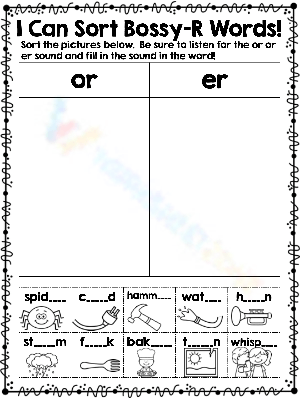
Not every r-controlled pattern is equally hard. Reading Universe recommends starting with ar because its sound is distinct and easy for young readers to hear and hold onto, followed by or, before you introduce the three spellings that all share the /er/ sound. Sequencing this way follows the same logic behind systematic phonics: teach the simple, reliable pattern first, then layer the harder ones on a foundation students already trust.
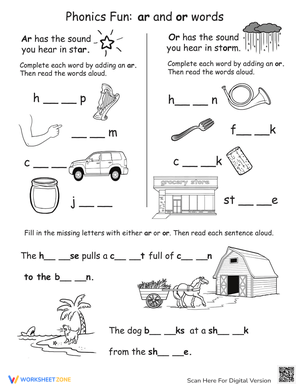
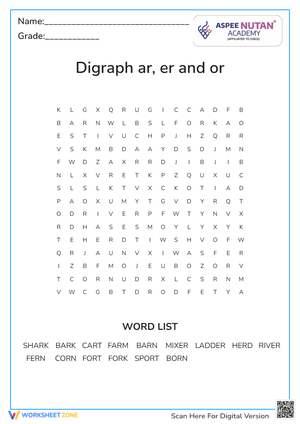
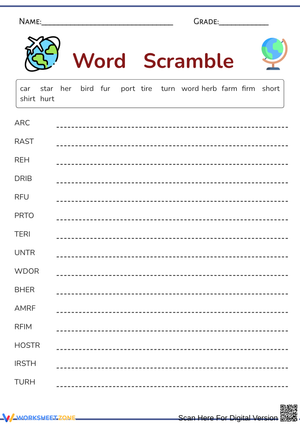
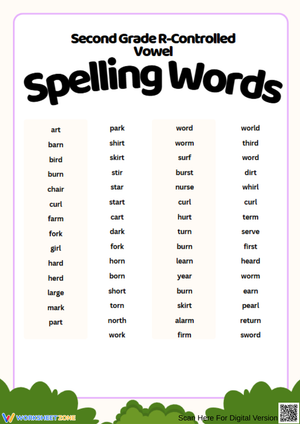
When you pull worksheets, match them to this order instead of dumping all five patterns on one page during week one. A first sheet might focus only on ar words like car, star, and farm. A few days later, add or with fork, storm, and corn. Holding the /er/ spellings until ar and or are solid keeps early practice clean and builds the cumulative review that helps the pattern stick.
Helping Students Untangle the Three Spellings of /er/
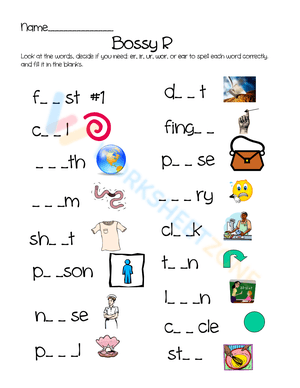
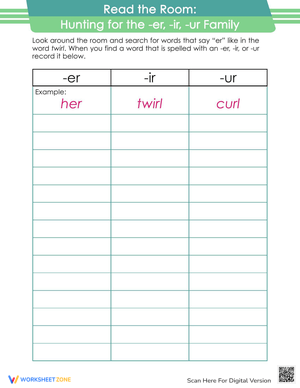
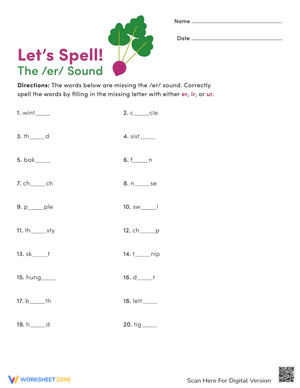
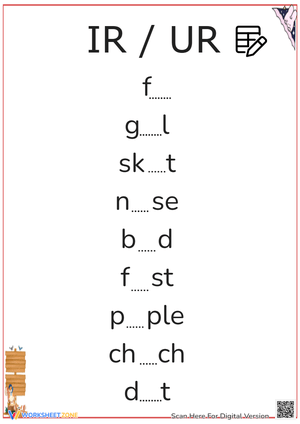
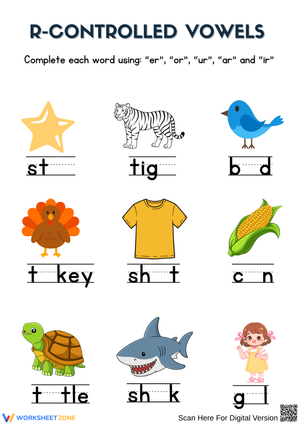
The real bottleneck isn't decoding r-controlled words; it's spelling them. The /er/ sound can be written three ways, er, ir, and ur, and nothing in the sound itself tells a student which spelling a given word uses. That means bird, fern, and turn all sound like they share a vowel, yet each takes a different letter pair. Worksheets that ask students to read the word test a different skill than worksheets that ask them to spell it, and your practice should include both.
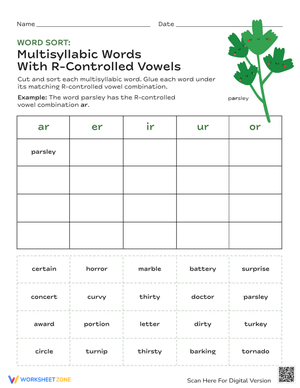
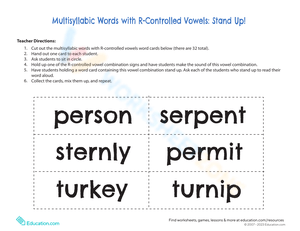
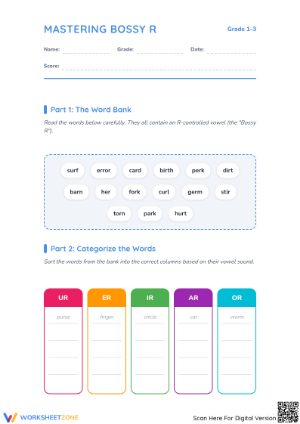
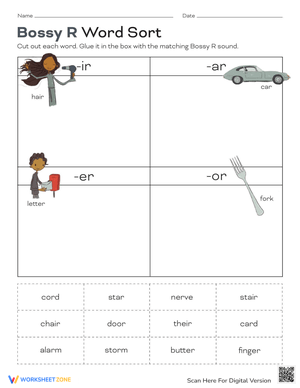
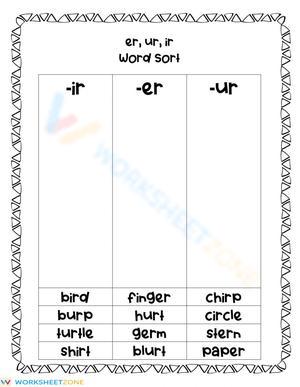
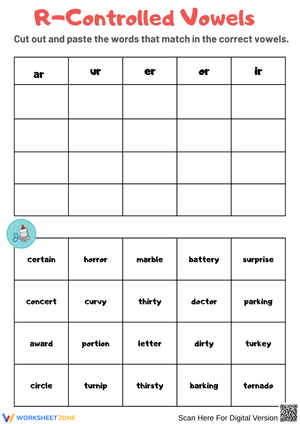
Word sorts are the strongest tool here. Give students a mixed set of /er/ words and have them sort by spelling, then read each column aloud. Over time they start to notice that er is by far the most common spelling, which gives them a sensible default when they're unsure. Sorting also turns a memorization task into pattern discovery, so students are reasoning about the spellings rather than guessing.
Classroom Implementation
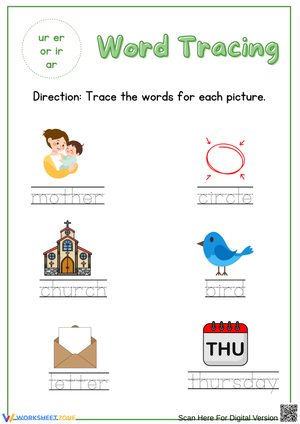
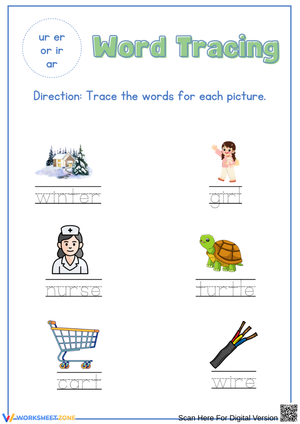
A predictable weekly routine makes r-controlled vowels worksheets far more effective than one-off practice. Try a five-day arc: introduce one pattern with a read-and-highlight sheet on day one, add a word sort on day two, move to spelling dictation on day three, mix in cumulative review on day four, and use a short application sheet on day five. Keep each sheet to a single focus so students aren't juggling five patterns at once.
For whole-class review, project a worksheet and work the first few items together, thinking aloud as you underline the r-controlled chunk before blending. Then release students to finish independently or with a partner. Fast finishers can flip their sheet and write two original sentences using the target words, which pushes the pattern from isolated words into connected writing.
Turning Worksheet Results Into Formative Data
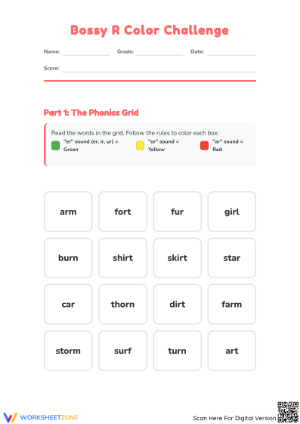
A completed worksheet is a quick assessment if you read it that way. Instead of marking a sheet simply right or wrong, scan for which pattern the misses cluster around. A student who nails ar and or but scrambles ir and ur doesn't need to reteach the whole skill, just the /er/ spellings.
Keep a simple grid with the five patterns across the top and student names down the side. As worksheets come in, jot the pattern each student missed most. Within a week you'll have grouping data grounded in student work, and your next small group can target one pattern instead of a vague sense that r-controlled vowels are hard. This ties practice directly to CCSS RF.1.3b, decoding regularly spelled one-syllable words, and gives you evidence of who has met it.
Pairing Worksheets With Decodable Texts
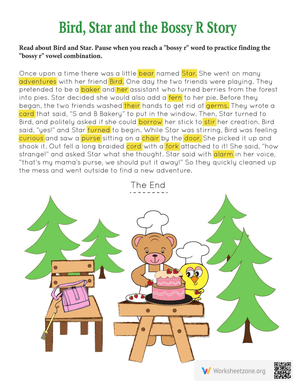
Worksheets build the pattern in isolation, but students need to meet r-controlled words in real reading too. After a sheet on ar, hand students a decodable passage loaded with ar words so they apply the skill in context the same day. Reading Universe points toward exactly this pairing: explicit, systematic practice followed by immediate application in connected text.
Close the loop by having students return to the worksheet and star any r-controlled words they also spotted in the reading. That small step connects the drill to authentic text and signals that these patterns show up everywhere, not just on practice pages. It also supports RF.1.3g, reading grade-appropriate irregularly spelled words, as students meet high-frequency r-controlled words in print.
Frequently Asked Questions
1. What grade level should r-controlled vowels be taught?
R-controlled vowels are typically introduced at the end of first grade, after students can decode short-vowel words and common digraphs. They continue to be reviewed in second grade, especially as students meet r-controlled patterns inside longer, multisyllabic words.
2. What order should teachers introduce ar, or, er, ir, and ur?
Start with ar because its sound is the most distinct and easiest to hear, then teach or. Introduce er, ir, and ur last, since all three spell the same /er/ sound and are easier to confuse.
3. Why do students struggle with r-controlled vowels?
The vowel changes its expected sound, and the /er/ sound can be spelled three ways with no reliable rule for choosing among them. Because r-control is a rare pattern across languages, students have little intuition to fall back on and need explicit, repeated practice.
4. How can worksheets be used alongside decodable readers?
Use a worksheet to introduce and drill one pattern, then hand students a decodable passage rich in that pattern so they apply it in connected text the same day. Afterward, have them mark the r-controlled words they recognized, linking isolated practice to real reading.












 Interactive Worksheet Maker
 Quiz Maker
 Word Search Maker
 Crossword Puzzle Maker
 Word Scramble Generator
 Sentence Scramble Generator
 Handwriting Worksheet Generator
 Name Tracing Generator
 Fill In The Blank Generator