The Phonetic Shift: Understanding Long and Short E in the Primary Classroom
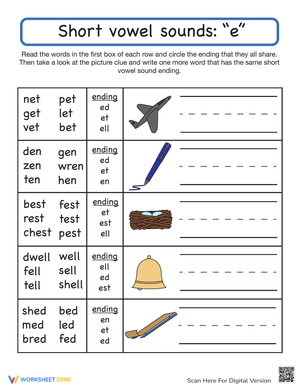
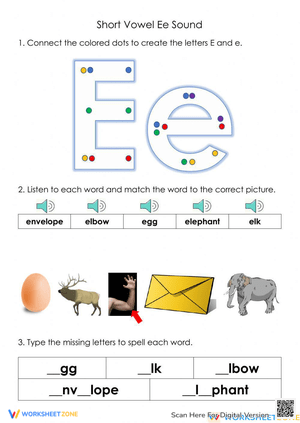
Teaching the distinction between the short /ɛ/ and the long /iː/ vowel sounds represents a significant milestone in early literacy. For students in kindergarten through second grade, the vowel 'e' often presents a unique challenge due to its acoustic similarity to other vowels in the English language. Teachers must provide clear, explicit instruction to help learners recognize when the letter 'e' says its name and when it produces the short sound found in words like 'egg' or 'bed'. Utilizing a comprehensive long e and short e worksheets allows teachers to provide consistent, repetitive practice that is necessary for phonetic mastery.
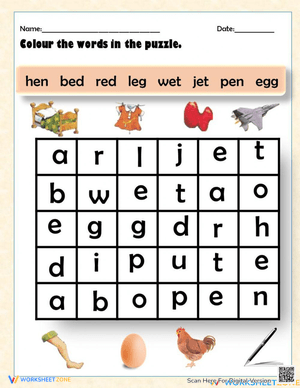
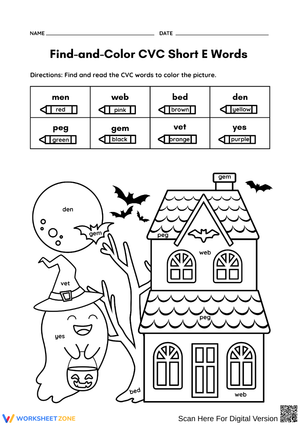
Instruction typically begins with the short 'e' sound, often referred to as the 'closed syllable' sound. Words like 'red', 'ten', and 'met' follow the standard consonant-vowel-consonant (CVC) pattern that students encounter early in their reading journey. Once a student demonstrates proficiency with these short sounds, the introduction of the long 'e' sound expands their decoding capabilities. Long 'e' can be represented by various graphemes, including the silent 'e' pattern, 'ee', 'ea', and sometimes 'y' at the end of a word. Providing structured worksheets that highlight these differences helps students build a mental map of English orthography.
Diagnostic Sorting: Identifying Vowel Sounds with Precision
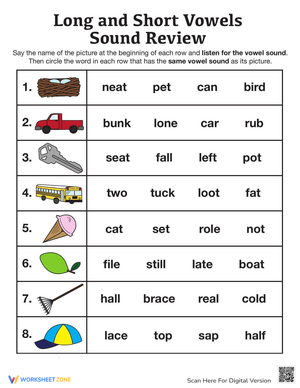
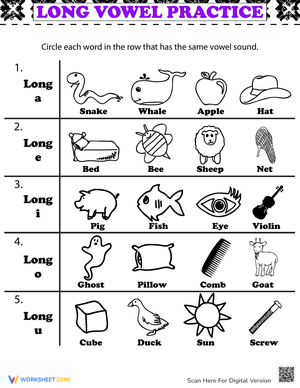
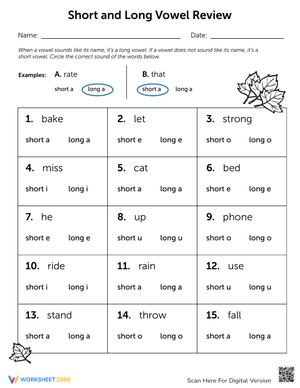
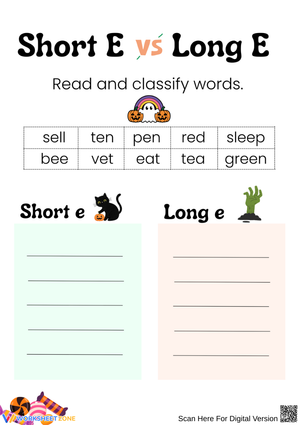
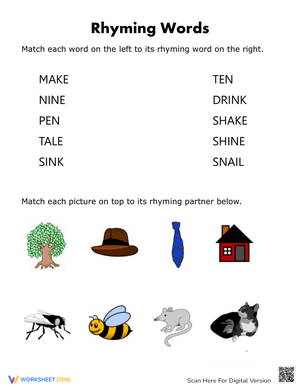
Sorting activities are perhaps the most effective tool in a teacher's arsenal for teaching vowel distinctions. When students engage in sorting, they are required to categorize words or pictures based on a specific phonetic rule. A long e and short e worksheets that focuses on sorting helps students actively compare the short /ɛ/ in 'desk' with the long /iː/ in 'tree'. This process of comparison forces the brain to attend to the subtle differences in mouth position and sound duration that define each vowel type.
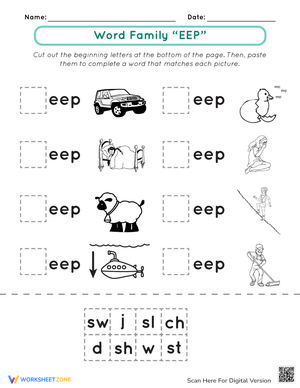
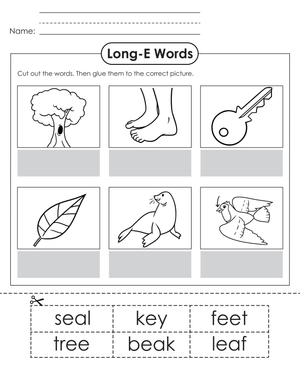
While many teachers focus solely on the auditory distinction, current research suggests that tactile vowel mapping—where students physically move tokens between 'e' and 'ee' columns—accelerates the transition from phonemic awareness to orthographic mapping. This physical movement of categories helps solidify the abstract concept of vowel length into a concrete action. By incorporating worksheets that involve cutting, pasting, and physically arranging word tiles, teachers can bridge the gap between abstract sound and written representation more effectively than through passive reading alone.
Pattern Recognition: Decoding 'ee' and 'ea' Digraphs
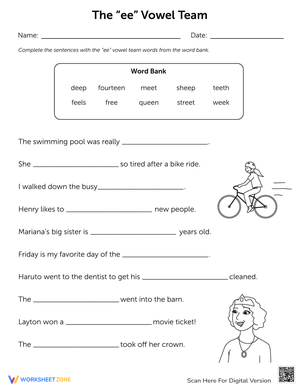
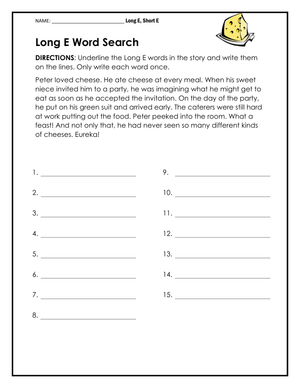
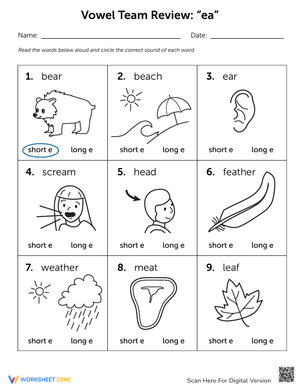
Moving beyond basic CVC words requires students to recognize common digraphs that produce the long 'e' sound. The 'ee' and 'ea' patterns are the most frequent representations of long 'e' in primary-level texts. Teaching students to spot these patterns is essential for fluent reading. Worksheets that isolate these digraphs allow students to practice looking for chunks within words. For instance, seeing 'leaf' as 'l' + 'ea' + 'f' rather than four individual sounds helps improve reading speed and accuracy.
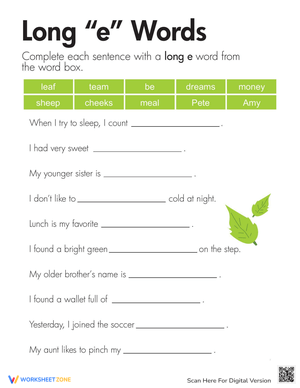
Instructional worksheets often use word ladders or fill-in-the-blank exercises to reinforce these patterns. A student might start with 'set' and change it to 'seat' by adding an 'a', or change 'met' to 'meet' by adding another 'e'. These types of word building exercises illustrate the power of a single letter to change the entire meaning and sound of a word. Teachers should emphasize that while 'ee' and 'ea' often make the same sound, their usage depends on specific spelling conventions that students will learn over time through exposure and practice.
Visual Phonics: Picture-Word Matching for Phonemic Awareness
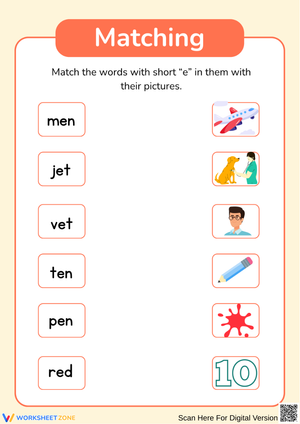
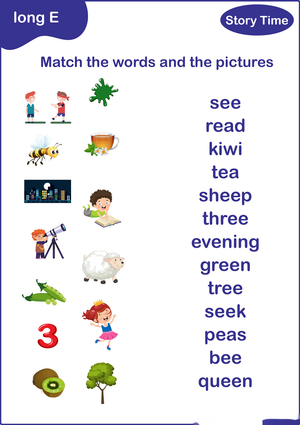
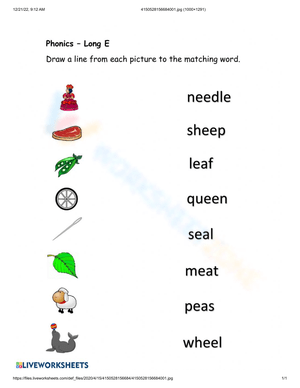
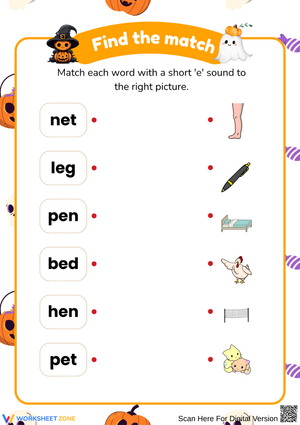
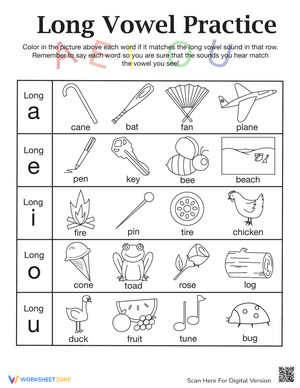
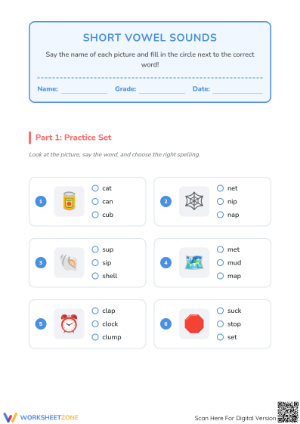
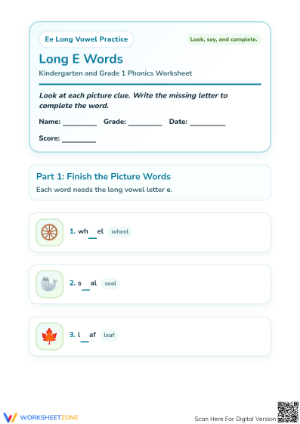
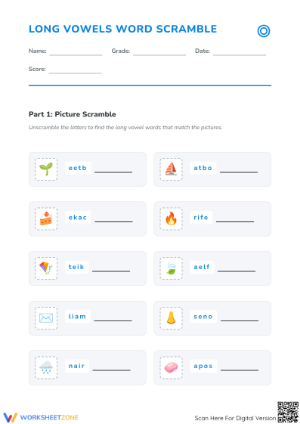
Visual aids play a vital role in phonics instruction, especially for English Language Learners and students with speech-language delays. Picture-word matching exercises in long e and short e worksheets help students connect a familiar object with its phonetic representation. For example, matching a picture of a 'net' with the word 'net' reinforces the short 'e' sound, while matching a picture of a 'bee' with the word 'bee' reinforces the long 'e' sound. This visual connection provides a semantic context that makes the phonics rule more memorable.
These activities also support the development of phonemic awareness by asking students to identify the medial vowel sound in a picture before they even see the printed word. A teacher might show a picture of a 'bell' and ask, 'Do you hear the short e sound or the long e sound?' This auditory-to-visual transition is a critical step in the reading process. Using high-quality PDF worksheets with clear, recognizable illustrations ensures that the focus remains on the phonics skill rather than on trying to figure out what the picture represents.
Effective Classroom Implementation for Vowel Instruction
Successful implementation of vowel instruction requires a balanced approach that includes whole-group lessons, small-group intervention, and independent practice. Teachers can start a unit on the vowel 'e' with a catchy song or a group chant that highlights the different sounds. Following the initial introduction, the long e and short e worksheets can be used to provide the necessary 'drill and kill' practice in a way that feels engaging and purposeful. For example, setting up a 'Vowel Detective' center where students use magnifying glasses to find long and short 'e' words on a worksheet can turn a standard task into an exciting game.
Formative assessment is another key component of classroom implementation. Teachers can use quick check-in worksheets at the end of a lesson to see which students have grasped the concept and which need more support. These exit tickets provide valuable data that informs future lesson planning. If a large portion of the class is still confusing the /ɛ/ in 'nest' with the /iː/ in 'neat', the teacher knows they need to revisit auditory discrimination before moving on to more complex spelling patterns. PDF worksheets are ideal for this because they can be easily modified or selected based on the specific needs of the current student cohort.
Evidence-Based Strategies for Vowel Mastery
Phonics instruction is most effective when it is systematic and cumulative. This means teaching sounds in a specific order and building upon what students already know. For the vowel 'e', this means starting with simple CVC words and gradually introducing more complex digraphs and long vowel patterns. Research has consistently shown that this structured approach leads to better long-term reading outcomes for all students, particularly those who are at risk for reading difficulties.
According to Teaching Short Vowels vs. Long Vowels (readingrockets.org), effective phonics instruction often requires 15 to 20 minutes of daily practice to achieve phonetic fluency. Students who engage in explicit vowel sorting activities show a 22% improvement in decoding accuracy compared to those using incidental reading exposure alone. This data underscores the importance of using targeted resources like long e and short e worksheets to ensure that every student receives the explicit instruction they need to succeed. Incidental learning is simply not enough for many students to master the complexities of English vowels.
Scaffolding Instruction: From CVC to Complex Digraphs
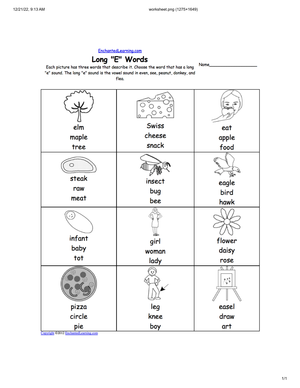
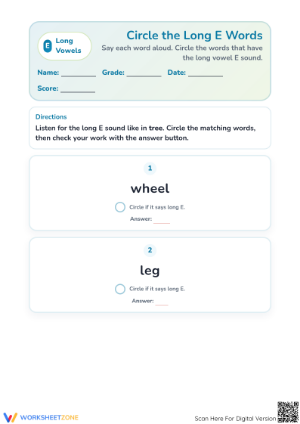
Scaffolding is the process of providing temporary support to students as they learn a new skill. In the context of vowel instruction, this might mean starting with highly supported tasks and gradually moving toward more independent work. For example, a teacher might begin with a long e and short e worksheets that has pictures and words already provided, requiring the student only to circle the correct sound. As the student becomes more confident, the teacher can provide worksheets that require the student to write the words or even generate their own examples of each vowel sound.
Frequently Asked Questions
1. How can I help my child distinguish between long and short vowel sounds?
The best way to help a child distinguish between these sounds is through consistent auditory and visual practice. Use a long e and short e worksheets to provide structured sorting activities. Start with clear, distinct examples like 'bed' (short e) and 'bee' (long e). Have the child say the words aloud, emphasizing the length of the vowel sound. According to Phonics Rules for Short and Long Vowels (education.com), practicing 10-15 words daily can significantly improve a child's phonetic awareness within just a few weeks.
2. What are some fun games for practicing long and short 'e' sounds?
Games make phonics practice more engaging for young learners. You can turn any long e and short e worksheets into a game by creating a 'Vowel Scavenger Hunt' or a 'Phonics Bingo' board. Another popular game is 'Vowel Hopscotch,' where students jump to a square containing a word and must correctly identify if it has a long or short 'e' sound before moving forward. These activities provide the necessary repetition while keeping the learning process enjoyable and active.
3. When is the right time to introduce long 'e' digraphs like 'ee' and 'ea'?
Teachers typically introduce long 'e' digraphs after a student has mastered short vowel CVC words and the concept of 'silent e'. This usually occurs in late kindergarten or early first grade. It is best to introduce 'ee' first as it is more consistent, followed by 'ea'. Using targeted worksheets that isolate these patterns allows students to build their decoding skills gradually without becoming overwhelmed by multiple spelling variations at once.












 Interactive Worksheet Maker
 Quiz Maker
 Word Search Maker
 Crossword Puzzle Maker
 Word Scramble Generator
 Sentence Scramble Generator
 Handwriting Worksheet Generator
 Name Tracing Generator
 Fill In The Blank Generator